The New Age of Restorations: A Patient's Guide to Crowns, Bridges, and Implants
Published 40 min read
Dental restorations have come a long way from the days of clunky metal crowns and ill-fitting dentures. Today, patients walking into a dental office have access to materials and technologies that were unimaginable just a few decades ago. Tooth-colored ceramics, digital scanning, computer-guided surgery, and biocompatible implant surfaces have completely transformed what it means to restore a damaged or missing tooth. Whether you're dealing with a cracked molar, a gap from a lost tooth, or years of dental neglect, modern restorative dentistry offers solutions that look, feel, and function remarkably close to your natural teeth.
This guide was written with one goal in mind: to help you understand your options clearly and confidently. Crowns, bridges, and implants are the three pillars of modern restorative dentistry, and each one serves a different purpose depending on your specific situation. By the time you finish reading, you'll have a solid grasp of how each restoration works, what the procedures involve, how much they typically cost, and what questions to ask your dentist. Think of this as your starting point — not a replacement for professional advice, but a tool to help you walk into that consultation room feeling informed and in control.
Understanding Modern Dental Restorations
Dental restorations are procedures and devices used to repair or replace teeth that have been damaged, decayed, or lost. While a basic filling addresses a small cavity by patching a hole in the tooth structure, restorations go further. They rebuild significant portions of a tooth, replace entire teeth, or anchor artificial teeth to existing bone and surrounding teeth. The scope of restorative dentistry ranges from a single crown placed on a weakened tooth to a full-arch implant solution replacing every tooth in the mouth. These are not cosmetic extras — they are medically important interventions that protect your oral health and overall well-being.
The main goals of modern dental restorations are function, aesthetics, durability, and the preservation of oral health. A restoration should allow you to chew comfortably, speak clearly, and smile without hesitation. It should also be strong enough to withstand the daily pressures of biting and grinding, and it should blend in naturally with your surrounding teeth. Beyond appearance and function, a good restoration protects the remaining tooth structure, prevents shifting of neighboring teeth, and helps maintain the bone in your jaw. When these goals are achieved together, the result is a restoration that genuinely improves your quality of life.
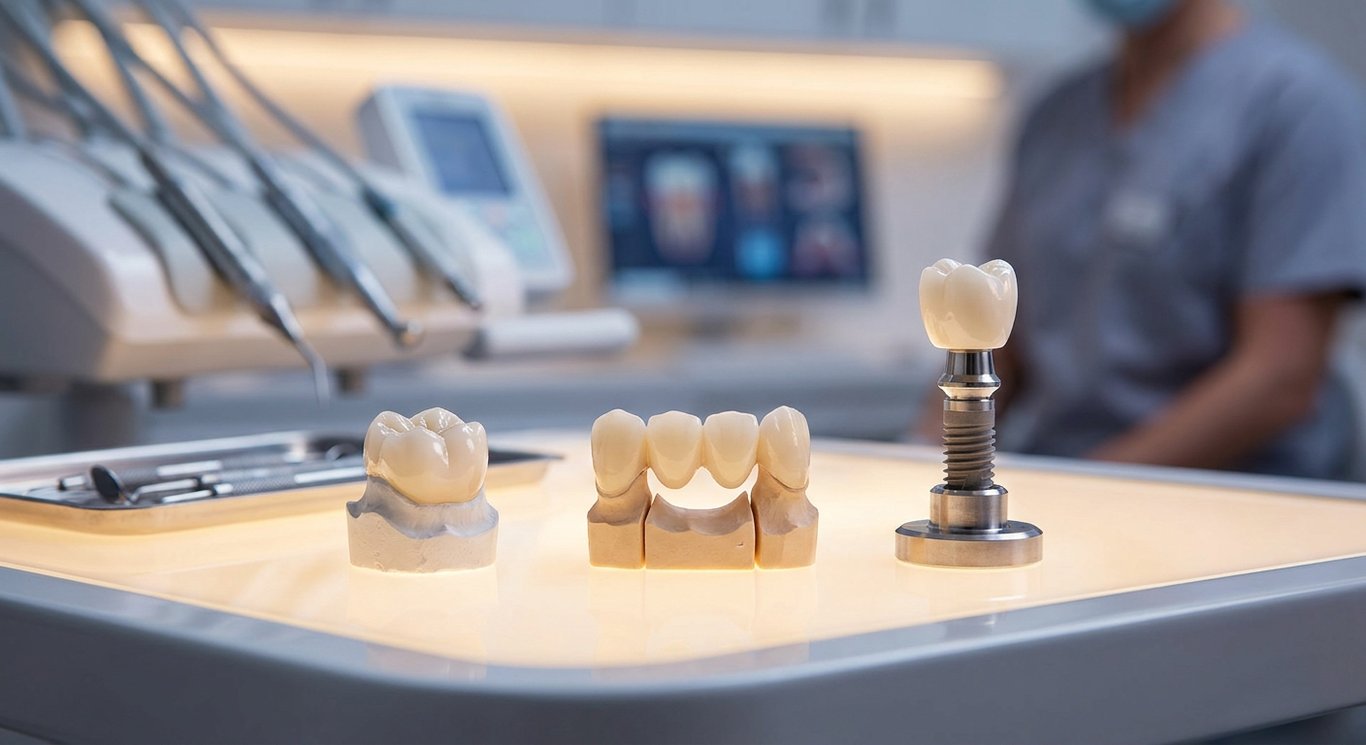
The three core solutions in modern restorative dentistry are crowns, bridges, and implants, and each one addresses a different clinical need. A crown caps and protects a damaged tooth that still has its root intact. A bridge fills the space left by one or more missing teeth by anchoring to the teeth on either side of the gap. An implant goes a step further by replacing the entire tooth — root and all — with a titanium post embedded in the jawbone. Each of these options has evolved significantly in recent years, and the sections that follow will take a deep dive into each one so you can understand exactly what they involve.
How Restorations Have Evolved Over Time
Dental restorations have been around for centuries, though the early versions were far from comfortable or attractive. Ancient civilizations used materials like ivory, bone, and even seashells to replace missing teeth. By the 19th and 20th centuries, dentistry had advanced to metal crowns, gold inlays, and removable dentures — functional solutions, but ones that often looked artificial and required significant alteration of healthy tooth structure. Traditional bridges meant grinding down perfectly healthy neighboring teeth to serve as anchors. Metal crowns were durable but visually obvious. Removable dentures were better than nothing, but they slipped, required adhesives, and did nothing to prevent bone loss in the jaw.
The shift toward modern restorations began in earnest in the latter half of the 20th century and has accelerated dramatically in recent decades. Minimally invasive techniques now allow dentists to preserve as much natural tooth structure as possible. Digital dentistry — including CAD/CAM (computer-aided design and manufacturing) technology — allows crowns and bridges to be designed and milled with extraordinary precision, often in a single appointment. New biocompatible materials like zirconia and high-strength ceramics are not only stronger than older alternatives but also far more natural-looking. Titanium implants, which bond directly to bone through a process called osseointegration, have given patients a tooth replacement option that is both permanent and remarkably lifelike. This is the "new age" of restorations, and it's a genuinely exciting time to need dental work.
Dental Crowns: Types, Uses, and What to Expect
A dental crown is a cap that fits over a damaged or weakened tooth, restoring its shape, size, strength, and appearance. Dentists typically recommend crowns in several situations: when a cavity is too large to be repaired with a filling alone, after a root canal treatment that leaves the tooth more brittle and vulnerable, when a tooth is cracked or fractured, or when a patient wants to improve the appearance of a severely discolored or misshapen tooth. Crowns can also be used as the visible portion of a dental implant or as the anchoring element in a dental bridge. Essentially, if a tooth needs significant structural support or protection, a crown is often the answer.
Not all crowns are made the same, and the material chosen can significantly affect both the look and longevity of the restoration. Porcelain crowns offer excellent aesthetics and are a popular choice for front teeth, though they can be slightly more prone to chipping under heavy biting forces. Porcelain-fused-to-metal (PFM) crowns combine a metal base for strength with a porcelain outer layer for appearance, making them a versatile option — though the metal margin can sometimes become visible at the gum line over time. Zirconia crowns have become increasingly popular because they offer both impressive strength and a natural tooth-like appearance, making them suitable for both front and back teeth. Gold and other metal crowns are highly durable and biocompatible, making them a solid choice for back teeth where appearance is less of a concern, though most patients prefer tooth-colored options when possible. Your dentist will help you weigh the pros and cons of each material based on the location of the tooth, your bite, your budget, and your aesthetic goals.
The crown procedure typically unfolds over two appointments, though same-day options are increasingly available. During the first visit, the dentist prepares the tooth by removing a small amount of enamel from the outer surface to make room for the crown. Impressions or digital scans of the prepared tooth and surrounding teeth are then taken so the crown can be custom-made to fit precisely. A temporary crown is placed to protect the tooth while the permanent crown is being fabricated — usually in a dental lab over one to two weeks. At the second appointment, the temporary crown is removed, the permanent crown is checked for fit and color, and then it is cemented into place. Any minor adjustments to the bite are made at this point to ensure comfort.
With proper care, a well-made crown can last anywhere from 10 to 15 years, and many last considerably longer. After placement, it's normal to experience some sensitivity to temperature or pressure for a few days as the tooth and surrounding tissues adjust. This usually resolves on its own. Caring for a crown is straightforward: brush twice a day, floss daily (including around the crown margin), and avoid habits like chewing ice or biting your nails that could chip or crack the material. Patients who grind their teeth at night should ask their dentist about a night guard to protect the crown. Regular dental checkups allow your dentist to monitor the crown's condition and catch any issues — like decay forming at the crown margin — before they become serious problems.
Advances in Crown Materials and Same-Day Crowns
Modern crown materials have raised the bar significantly compared to what was available even 15 years ago. Zirconia, in particular, has become a game-changer in restorative dentistry. It is incredibly strong — strong enough to withstand the forces of back teeth — while also offering a translucency and color that closely mimics natural enamel. High-strength ceramics have similarly improved, allowing dental technicians and milling machines to create restorations that are both durable and virtually indistinguishable from natural teeth. These newer materials also tend to be more biocompatible, meaning they are less likely to cause allergic reactions or gum irritation compared to some older metal-based options.
One of the most exciting developments in crown technology is the rise of same-day crowns, made possible by digital scanning and CAD/CAM technology. Instead of taking traditional putty impressions and sending them to an off-site lab, dentists equipped with in-office milling machines can scan your prepared tooth digitally, design the crown on a computer screen, and mill it from a ceramic block — all within a single appointment. This means no temporary crown, no second visit, and no waiting. The fit and aesthetics of same-day crowns have improved dramatically as the technology has matured, and many patients find the convenience alone to be a major advantage. For those with busy schedules or dental anxiety about multiple visits, same-day crowns are a genuinely appealing option.
These advances do come with some considerations around cost and accessibility. Same-day crown technology requires a significant investment in equipment, which means not every dental practice offers it. In-office milled crowns can sometimes cost slightly more than lab-fabricated ones, though the elimination of a second appointment and temporary crown can offset some of that difference in terms of overall convenience and time. In the long run, the improved materials and precision of modern crowns tend to translate into better-fitting, longer-lasting restorations, which can reduce the need for replacements and associated costs down the road. As the technology becomes more widespread, it is becoming more accessible to a broader range of patients.
Dental Bridges: Filling the Gaps Safely and Effectively
A dental bridge is a fixed restoration used to replace one or more missing teeth by literally "bridging" the gap between remaining teeth. Bridges are typically recommended when a patient has one or more adjacent missing teeth, has healthy and strong teeth on either side of the gap to serve as anchors, and either is not a candidate for implants or prefers a non-surgical option. They are a well-established, reliable solution that has been refined over decades. Unlike removable dentures, a traditional bridge is cemented permanently in place, which means it stays put when you eat, speak, and smile.
There are several types of dental bridges, each suited to different clinical situations. A traditional bridge — the most common type — uses crowns placed on the two teeth adjacent to the gap (called abutment teeth) to support a false tooth (called a pontic) in between. A cantilever bridge is used when there is only one adjacent tooth available to support the pontic, though this type puts more stress on that single anchor tooth and is used less frequently. A Maryland bridge, also called a resin-bonded bridge, uses a metal or porcelain framework bonded to the backs of adjacent teeth rather than full crowns, making it a more conservative option often used for front teeth. Finally, an implant-supported bridge replaces multiple missing teeth by anchoring the bridge to implants rather than natural teeth, avoiding the need to alter healthy adjacent teeth and providing superior stability.
The process of getting a traditional bridge is similar in many ways to getting a crown. During the first appointment, the abutment teeth are prepared by removing a portion of their enamel to make room for the crowns that will anchor the bridge. Digital scans or impressions are taken of the prepared teeth and the gap, and a temporary bridge is placed while the permanent one is being fabricated in a dental lab. At the second appointment, the temporary bridge is removed, the permanent bridge is checked for fit, color, and bite alignment, and then it is permanently cemented into place. Minor adjustments may be made to ensure a comfortable and functional bite. The entire process typically spans two to three weeks from start to finish.
Bridges offer several real advantages: they are generally less expensive than implants upfront, do not require surgery, and can be completed in a relatively short timeframe. However, they do come with some limitations worth considering. Preparing the abutment teeth involves removing healthy enamel, which permanently alters those teeth. Over time, the bone beneath the pontic (the artificial tooth) can begin to shrink because there is no tooth root stimulating it — this is a drawback that implants avoid entirely. Bridges typically last 10 to 15 years with good care, though they may need replacement eventually. When comparing bridges to implants, the right choice depends on your bone health, budget, timeline, and how you weigh the trade-offs of surgery versus altering adjacent teeth.
Maintenance and Common Issues with Bridges
Caring for a dental bridge requires a bit more attention than caring for natural teeth, but it is entirely manageable with the right tools and habits. Because the pontic sits above the gum line rather than being rooted in the bone, food and bacteria can accumulate in the space beneath it. Standard floss cannot easily pass under the bridge, so patients are encouraged to use floss threaders, super floss, or a water flosser to clean beneath the pontic daily. Interdental brushes can also be helpful for reaching the areas around the abutment crowns. Brushing twice a day with a soft-bristled toothbrush and fluoride toothpaste remains essential, and regular dental visits — typically every six months — allow your dentist to professionally clean areas you might miss and check the integrity of the bridge.
Like any restoration, bridges can develop problems over time. One of the more common issues is loosening of the cement that holds the bridge in place, which can allow bacteria to seep underneath and cause decay in the abutment teeth. If you notice any movement or a change in how your bite feels, contact your dentist promptly. Chipping or cracking of the porcelain is another possibility, particularly if you bite down on hard foods or grind your teeth. Gum irritation beneath the pontic can occur if the area is not cleaned regularly, potentially leading to inflammation or infection. Fortunately, many of these issues can be addressed if caught early, which is another reason why consistent dental checkups are so important for bridge wearers.
Even with excellent care, bridges do not last forever. Most traditional bridges have a lifespan of 10 to 15 years, though some last longer and others need attention sooner. Signs that a bridge may need repair or replacement include visible cracks or chips in the material, persistent sensitivity or pain in the abutment teeth, looseness or movement of the bridge, or changes in your bite. Sometimes a bridge can be recemented if it comes loose without any damage to the underlying structure. In other cases, new decay in the abutment teeth may compromise the bridge's foundation entirely, requiring a more involved treatment plan. Staying alert to these warning signs and maintaining regular dental appointments is the best strategy for getting the most out of your bridge.
Dental Implants: The Gold Standard for Tooth Replacement?
Dental implants are widely considered the most comprehensive tooth replacement option available today, and for good reason. An implant consists of three components: a titanium post that is surgically placed into the jawbone to act as an artificial tooth root, an abutment that connects the post to the visible portion of the restoration, and a crown that sits on top and mimics the appearance and function of a natural tooth. Because the titanium post integrates directly with the bone through a biological process called osseointegration, the implant becomes a stable, permanent part of your jaw — not just something sitting on top of it. This is what sets implants apart from every other tooth replacement option.
Not everyone is automatically a candidate for dental implants, and your dentist or oral surgeon will evaluate several factors before recommending the procedure. Adequate bone density is essential because the implant post needs sufficient bone to anchor into — patients who have experienced significant bone loss may need a bone graft procedure first. Healthy gums are equally important, as active gum disease can compromise the success of an implant. Certain medical conditions, such as uncontrolled diabetes or autoimmune disorders, and medications like bisphosphonates (used to treat osteoporosis) can affect healing and integration. Smoking significantly increases the risk of implant failure and is a major consideration in candidacy. Age is also a factor — implants are generally not placed in younger patients whose jaws are still developing, though there is no strict upper age limit for healthy adults.
The implant process unfolds over several months and involves multiple stages. It begins with a thorough consultation, including X-rays or 3D imaging, to assess bone volume and plan the placement. During the surgical phase, the titanium post is placed into the jawbone under local anesthesia. The healing phase that follows — called osseointegration — typically takes three to six months, during which the bone grows around and bonds with the implant post. Once the implant has fully integrated, an abutment is attached to the post, and impressions or digital scans are taken to fabricate the final crown. The crown is then attached to the abutment, completing the restoration. While the timeline is longer than that of a bridge, the result is a tooth replacement that functions and feels like the real thing.
The benefits of implants are substantial and well-documented. Because the titanium post stimulates the jawbone just like a natural tooth root, implants help prevent the bone loss that occurs after tooth extraction — a significant long-term advantage over bridges and dentures. Implants do not rely on neighboring teeth for support, so adjacent healthy teeth are left untouched. They are also incredibly stable, with no risk of slipping or clicking like removable dentures. With proper care, implants can last a lifetime, making them the most durable tooth replacement option available. That said, they are not without risks. Possible complications include infection at the implant site, damage to surrounding nerves or tissues, implant failure due to poor osseointegration, and a condition called peri-implantitis — an inflammatory disease affecting the tissues around the implant that is similar to gum disease.
Many patients approach the idea of implants with understandable apprehension, particularly around pain, recovery time, and cost. The good news is that the surgical placement of an implant is typically performed under local anesthesia, and most patients report that the procedure is more comfortable than they expected. Post-surgical discomfort is usually manageable with over-the-counter pain relievers, and most people return to their normal routines within a few days. The overall success rate for dental implants in healthy patients is consistently high — typically reported in the range of 95% or higher over 10 years — and modern surgical techniques and planning tools have made the procedure safer and more predictable than ever. Cost is often the biggest barrier, as implants have higher upfront fees than bridges, but many patients find the long-term value justifies the investment.
New Technologies Making Implants Safer and More Predictable
One of the most significant advances in implant dentistry over the past decade has been the widespread adoption of 3D imaging technology, specifically cone beam computed tomography (CBCT) scans. Unlike traditional 2D X-rays, CBCT scans provide a detailed three-dimensional view of the jawbone, sinuses, nerves, and surrounding structures. This allows the dental team to measure bone volume and density with precision, identify potential obstacles, and plan the exact position, angle, and depth of the implant before a single incision is made. The result is a procedure that is far more predictable and far less likely to encounter unexpected complications during surgery.
Building on that imaging data, guided implant surgery uses specially designed surgical templates — often 3D-printed — that fit over the patient's teeth and direct the drill to the exact planned position. This removes much of the guesswork from the procedure and significantly reduces the margin for error. Computer-aided design tools allow the surgical plan to be visualized and refined digitally before any surgery takes place. Additionally, newer implant surfaces — engineered with micro-textures and bioactive coatings — are designed to accelerate osseointegration and improve the bond between the implant and bone. These surface innovations have helped reduce healing times and improve success rates, particularly in patients with less-than-ideal bone quality.
The field of implant dentistry is also seeing exciting developments in treatment concepts that expand access and reduce treatment timelines. Immediate implants — placed directly into the extraction socket on the same day a tooth is removed — can shorten the overall treatment timeline significantly in appropriate cases. Mini implants, which are narrower than standard implants, offer an option for patients with limited bone volume who might not qualify for conventional implants. Perhaps most transformative is the all-on-4 (and all-on-X) concept, which uses just four to six strategically placed implants to support a full arch of teeth — providing a complete, fixed smile for patients who have lost most or all of their teeth, often in a single surgical appointment. These solutions have opened the door to implant-based restorations for a much broader population of patients.
Choosing Between Crowns, Bridges, and Implants: Key Decision Factors
Deciding between a crown, a bridge, and an implant is not always straightforward, and the right answer depends on your specific clinical situation. Crowns are recommended when a natural tooth is still present but significantly damaged — the root is intact and healthy, but the visible portion of the tooth needs to be rebuilt or protected. Bridges are the go-to option when one or more teeth are missing and the adjacent teeth are healthy enough to serve as anchors, especially when surgery is not preferred or the patient is not a good implant candidate. Implants are recommended when a tooth is missing entirely and the patient has sufficient bone and overall health to support the surgical procedure. Your dentist will evaluate your X-rays, oral health, and medical history to determine which option is most appropriate.
When comparing these three options side by side, several key factors come into play. In terms of durability, implants have the longest potential lifespan — often lasting a lifetime with good care — followed by crowns and bridges, which typically last 10 to 15 years before needing replacement. Aesthetically, all three modern options can be made to look very natural, though implants most closely mimic the look and feel of a real tooth. One important consideration is the impact on adjacent teeth: crowns affect only the tooth being treated, implants leave neighboring teeth completely untouched, but traditional bridges require the preparation and permanent alteration of the abutment teeth. In terms of reversibility, none of these options is truly reversible — once a tooth is prepared for a crown or bridge, that enamel is gone — but implants are the most independent and self-contained solution.
Beyond clinical factors, lifestyle and personal health considerations play a significant role in the decision. Patients who have excellent oral hygiene habits and commit to regular dental visits will get the most out of any restoration. Those who grind their teeth heavily (a condition called bruxism) may put extra stress on crowns, bridges, and even implants, making protective night guards an important part of their care plan. Medical conditions that affect healing — such as diabetes, osteoporosis, or immune disorders — may influence whether implant surgery is a safe option. Patients who smoke are advised to quit before pursuing implants, as smoking dramatically increases the risk of implant failure. Willingness to undergo surgery and a longer treatment timeline is also a personal factor that some patients weigh heavily when choosing between a bridge and an implant.
No matter how much research you do beforehand, there is no substitute for a thorough consultation with a qualified dental professional. A comprehensive evaluation — including clinical examination, X-rays, and often a 3D CBCT scan — is essential for developing a personalized treatment plan that accounts for your unique anatomy, health history, and goals. During this consultation, your dentist should explain all viable options, the pros and cons of each in your specific case, and the expected outcomes. This is also the time to ask every question you have. The more information you bring to the table and the more openly you communicate your concerns, preferences, and budget, the better equipped your dental team will be to design a treatment plan that truly works for you.
Cost, Insurance, and Long-Term Value
Cost is one of the most common concerns patients raise when discussing restorative dentistry, and it's a completely valid one. Generally speaking, dental crowns tend to range from a few hundred to over a thousand dollars per tooth, depending on the material used, the complexity of the case, and the geographic region. Dental bridges, which cover multiple teeth, typically cost more in total but less per unit than implants. Dental implants are the most expensive option upfront, with costs that can range from one thousand to several thousand dollars per implant when you factor in the surgical placement, the abutment, and the crown. These are general ranges, and actual costs can vary considerably based on your dentist's fees, the laboratory they use, and the specific materials chosen.
Dental insurance coverage for restorations varies widely depending on your plan. Most dental insurance plans cover a portion of crown and bridge procedures under their "major restorative" category, often reimbursing 50% of the cost after your deductible, up to your annual maximum. However, implants are a different story — many traditional dental insurance plans either do not cover implants at all or provide only very limited coverage, classifying them as a cosmetic or elective procedure despite their clinical benefits. It's worth calling your insurance provider directly to understand your specific coverage before committing to a treatment plan. Some dental offices also offer in-house membership plans or work with third-party financing companies to help spread the cost of treatment over manageable monthly payments.
When evaluating cost, it's important to think beyond the initial price tag and consider long-term value. A bridge that costs less upfront may need to be replaced once or twice over a patient's lifetime, and each replacement involves additional costs. Meanwhile, an implant — though more expensive initially — has the potential to last decades or even a lifetime with proper care, potentially making it the more economical choice in the long run. Additionally, the bone preservation provided by implants can prevent the need for more extensive (and expensive) bone grafting procedures down the road. Factoring in replacement costs, maintenance requirements, and the impact on adjacent teeth gives a more complete picture of the true cost of each option over time.
Pain, Recovery, and What Patients Can Expect
Fear of pain is one of the most common reasons people put off dental treatment, but modern dentistry has made significant strides in making restorative procedures comfortable and manageable. For crown and bridge procedures, local anesthesia is used to numb the area thoroughly before any preparation begins, so you should not feel pain during the procedure itself — just some pressure and vibration. For implant surgery, local anesthesia is also standard, and many practices offer additional sedation options (such as nitrous oxide, oral sedation, or IV sedation) for patients who experience significant dental anxiety. The goal is always to ensure you are comfortable throughout the procedure, and a good dental team will check in with you regularly and adjust as needed.
Recovery timelines vary depending on the type of restoration. After a crown or bridge procedure, it is common to experience some sensitivity to temperature and pressure for a few days to a couple of weeks as the tooth and surrounding gum tissue settle. This is typically mild and resolves on its own. Implant surgery involves a more involved healing process: the surgical site will be sore for several days after placement, and swelling and minor bruising are common. Most patients manage this discomfort with over-the-counter pain relievers like ibuprofen or acetaminophen and feel back to normal within a week. The longer osseointegration phase — during which the implant fuses with the bone — is not painful; it simply takes time, usually three to six months.
Aftercare in the days following any restoration procedure plays a big role in how smoothly you recover. For crowns and bridges, sticking to softer foods for the first day or two can reduce sensitivity, and avoiding very hot or cold foods can help while the tooth adjusts. Gentle brushing and flossing around the restoration are important from the start, though you should be careful not to disturb any temporary restorations. After implant surgery, your dentist will likely recommend a soft diet for the first week or two, along with specific instructions for keeping the surgical site clean without disrupting the healing tissue. Follow-up appointments are scheduled to check on healing and ensure everything is progressing as expected.
Knowing the difference between normal and abnormal symptoms after a procedure can save you a lot of unnecessary worry — or prompt you to seek help when you genuinely need it. Normal symptoms include mild soreness, sensitivity, and minor swelling that gradually improve over the first few days. Abnormal symptoms that warrant a call to your dentist include severe or worsening pain that is not controlled by medication, swelling that increases after the first 48 hours, fever, a bad taste or smell coming from the restoration site, or a crown or bridge that feels noticeably loose or shifted. For implants specifically, any signs of infection — including pus, significant redness, or increasing pain at the surgical site — should be reported promptly. Catching complications early almost always leads to better outcomes.
Longevity, Failure Rates, and How to Make Restorations Last
Understanding how long your restoration is likely to last can help set realistic expectations and guide your long-term planning. Dental crowns typically last between 10 and 15 years, though many last 20 years or more with excellent care. Dental bridges have a similar lifespan, generally ranging from 10 to 15 years before they may need to be replaced. Dental implants are in a class of their own — when properly integrated and maintained, they can last 20 to 30 years or even a lifetime, making them the longest-lasting tooth replacement option available. These figures are averages, and individual outcomes are influenced by a wide range of factors including the quality of the restoration, the skill of the dentist, and — perhaps most importantly — how well the patient cares for their teeth.
Patient habits have a profound impact on how long restorations last. Consistent brushing and flossing remove the plaque and bacteria that can cause decay around crown margins and beneath bridges. Regular professional cleanings allow dental hygienists to remove tartar buildup that home care misses and give dentists the opportunity to spot early signs of trouble. Diet also plays a role — frequent consumption of sugary or acidic foods and drinks creates an environment where decay can thrive. Bruxism, or teeth grinding, is a particularly significant threat to restorations because the repeated heavy forces can crack porcelain, loosen bridges, and even damage implants over time. Patients who grind should use a custom night guard to protect their investment. Smoking, meanwhile, impairs healing, increases the risk of gum disease, and significantly raises the likelihood of implant failure.
Even with excellent care, restorations can fail, and understanding the common failure modes helps patients recognize warning signs early. For crowned teeth, the most common issue is decay developing at the margin where the crown meets the natural tooth — an area that requires diligent brushing and flossing to keep clean. Bridges can loosen over time as the cement weakens, or the abutment teeth can develop decay beneath the crowns. For implants, the primary threat is peri-implantitis — a bacterial infection of the tissues surrounding the implant that, if left untreated, can cause bone loss and ultimately implant failure. Mechanical complications, such as a cracked crown or a loose abutment screw, can also occur and typically require a dental visit to address.
The good news is that with the right habits and professional support, most restorations can reach or exceed their expected lifespan. Brush twice a day with a fluoride toothpaste, floss daily using the appropriate tools for your specific restoration, and schedule professional cleanings at least twice a year. If you grind your teeth, invest in a custom night guard — it is far cheaper than replacing a cracked crown or a damaged implant. Avoid using your teeth as tools (opening packages, biting nails), and be mindful of hard foods like ice and hard candies that can fracture ceramic restorations. If anything feels off — a change in your bite, sensitivity, or any looseness — don't wait for your next scheduled appointment. Call your dentist and get it checked out. Early intervention is almost always simpler, less invasive, and less expensive than dealing with a problem that has been allowed to progress.
Aesthetics and Confidence: How Modern Restorations Look and Feel
One of the most impressive achievements of modern restorative dentistry is how convincingly today's restorations mimic natural teeth. Advanced ceramic materials like zirconia and lithium disilicate can be layered, shaded, and polished to match the color, translucency, and subtle variations of your natural enamel with remarkable precision. Digital shade-matching tools and skilled dental ceramists work together to ensure that a crown or bridge pontic blends seamlessly with surrounding teeth. For implant crowns, the same level of customization applies — the crown is designed to match not just the color but also the shape, size, and surface texture of your natural teeth. For most patients, the end result is a restoration that even they struggle to distinguish from the real thing.
Aesthetics alone are only part of the equation — how a restoration feels in your mouth matters just as much. A well-designed crown or bridge should feel natural when you bite and chew, without any high spots or uncomfortable pressure points. Proper bite alignment is critical; if a restoration is even slightly too high, it can cause discomfort, jaw pain, or headaches over time. Implants, because they are anchored in the bone, provide a stability and sensation during chewing that closely mirrors a natural tooth. Speech can also be affected by poorly fitting restorations, particularly bridges that alter the contour of the palate or implant-supported dentures that change the shape of the arch. A skilled restorative dentist will spend time adjusting and refining the restoration until it feels as natural as possible in function and not just in appearance.
Beyond the physical benefits, the psychological impact of a successful dental restoration should not be underestimated. Missing or severely damaged teeth can affect how people feel about themselves in social and professional settings, leading some to avoid smiling, laughing, or speaking openly. Restorations that look and feel natural can dramatically change that experience. Patients frequently report feeling more confident, more willing to engage socially, and simply happier after completing restorative treatment. The ability to eat comfortably, speak clearly, and smile without self-consciousness contributes to an overall improvement in quality of life that goes well beyond the dental chair. For many patients, the decision to pursue restorative treatment is one of the most positive investments they make in themselves.

Preparing for Your Consultation: Questions to Ask Your Dentist
Walking into a dental consultation feeling prepared makes a real difference in the quality of the conversation — and ultimately in the quality of your care. Start by asking your dentist which restoration options are appropriate for your specific situation and why. Ask about the expected outcomes for each option, including realistic timelines and what the final result should look and feel like. Don't hesitate to ask about the risks associated with each approach, including what happens if you choose to delay treatment. If your dentist recommends one option over another, ask them to explain their reasoning in plain language so you can make a truly informed decision rather than simply deferring to their recommendation without understanding it.
It's also worth digging into the technical side of how your restoration will be made and placed. Ask your dentist what materials they recommend and why — whether that's zirconia, porcelain-fused-to-metal, or another option — and what laboratory they use to fabricate the restoration. Inquire about the technology available in the practice: do they use digital scanning? Do they offer same-day crowns with in-office milling? For implants, ask whether they use CBCT imaging and guided surgery for placement. These questions help you gauge the quality and precision of the care you'll receive. Also ask about your dentist's experience with the specific procedure being recommended — how many of these restorations have they placed, and what is their approach to handling complications if they arise?
Finally, have an open and honest conversation about budget, insurance, and timeline. Ask your dentist's office to provide a written treatment plan with itemized costs so you can compare it with your insurance benefits and understand exactly what you'll be responsible for paying out of pocket. If the cost is a concern, ask whether there are alternative materials or approaches that would be more affordable while still meeting your clinical needs. Inquire about payment plans or financing options the practice offers. And get a realistic sense of the timeline from start to finish — particularly important for implant treatment, which can span several months. Feeling fully informed about the financial and logistical aspects of your treatment is just as important as understanding the clinical details, and a good dental team will be happy to walk you through all of it.
Frequently Asked Questions About Crowns, Bridges, and Implants
The questions below reflect some of the most common concerns that patients research when considering crowns, bridges, and implants. They've been compiled from the types of questions that come up repeatedly across dental and medical resources, and the goal is to give you clear, straightforward answers that help clarify any lingering doubts before your consultation. Think of this section as a quick-reference companion to everything covered in the guide above.
FAQ 1: Are dental implants better than bridges for missing teeth?
In many clinical respects, implants offer significant advantages over bridges for replacing missing teeth. Because the titanium post acts as an artificial tooth root, implants stimulate the jawbone and prevent the bone loss that naturally occurs after a tooth is extracted — something a bridge cannot do. Implants also leave adjacent healthy teeth completely untouched, whereas a traditional bridge requires permanently altering the neighboring teeth to serve as anchors. In terms of longevity, implants have the potential to last a lifetime, while bridges typically need replacement after 10 to 15 years. These are meaningful differences that make implants the preferred option from a purely clinical standpoint in many situations.
That said, "better" is not a one-size-fits-all answer. A patient who lacks sufficient bone density, has certain medical conditions, or is not willing to undergo surgery and a multi-month treatment process may be better served by a bridge. Upfront cost is also a real consideration — implants are significantly more expensive than bridges initially, even if the long-term value calculation favors implants over time. The right choice depends on your individual anatomy, health status, lifestyle, and financial situation. This is exactly why a thorough professional evaluation is so important — your dentist can assess all of these factors and help you understand which option makes the most sense for your specific circumstances.
FAQ 2: How long do crowns, bridges, and implants typically last?
Under good care, dental crowns typically last between 10 and 15 years, though many patients enjoy their crowns for 20 years or more. Dental bridges have a similar range, generally lasting 10 to 15 years before they may need to be replaced or repaired. Dental implants are in a different category altogether — with proper maintenance and good overall health, an implant can last 20 to 30 years or even a lifetime. The crown placed on top of an implant may need replacement after 10 to 15 years, but the implant post itself can remain functional indefinitely in many cases. These are averages based on clinical data, and individual results vary.
Several factors can significantly shorten or extend these averages. Patients who maintain excellent oral hygiene — brushing twice daily, flossing consistently, and attending regular professional cleanings — tend to get the most out of their restorations. On the other hand, habits like teeth grinding, smoking, and frequent consumption of hard or sticky foods can accelerate wear and increase the risk of failure. Medical conditions that affect healing or bone health, such as uncontrolled diabetes or osteoporosis, can also impact longevity. The quality of the original restoration — including the materials used, the precision of the fit, and the skill of the dentist — is another major variable. Investing in quality upfront and maintaining it diligently over time is the formula for making any restoration last as long as possible.
FAQ 3: Is getting a crown, bridge, or implant painful?
The honest answer is that most patients are pleasantly surprised by how comfortable these procedures are. For crowns and bridges, local anesthesia is administered before any tooth preparation begins, effectively numbing the area so that you feel pressure and vibration but not pain. Dental drills and instruments can feel intense even without pain, which is why some patients find the experience uncomfortable even when properly anesthetized — but actual pain during the procedure is not expected. For implant surgery, local anesthesia is equally effective, and additional sedation options are available for patients who experience significant anxiety. Most patients who have undergone implant placement report that the procedure was far less uncomfortable than they anticipated.
After the anesthesia wears off, some degree of discomfort is normal and expected. Following a crown or bridge preparation, you may experience sensitivity to hot and cold foods and drinks for a few days, along with some tenderness in the gum tissue. After implant surgery, soreness, swelling, and minor bruising are typical for the first several days. In most cases, over-the-counter pain relievers — such as ibuprofen or acetaminophen — are sufficient to manage post-procedure discomfort. Your dentist may also prescribe a short course of antibiotics after implant surgery to reduce the risk of infection. Following your aftercare instructions carefully and keeping follow-up appointments will help ensure that your recovery goes as smoothly as possible.
FAQ 4: How much do crowns, bridges, and implants cost and will insurance help?
Cost varies considerably based on the type of restoration, the materials used, the complexity of your case, and where you live. As a general guide, a single dental crown might cost anywhere from a few hundred dollars to well over a thousand dollars. A three-unit bridge (two crowns and a pontic) typically costs more in total, though the per-tooth cost may be lower than an implant. A single dental implant — including the post, abutment, and crown — can range from roughly $3,000 to $5,000 or more in many markets, with costs varying significantly based on whether additional procedures like bone grafting are needed. These are rough estimates, and your dental office should provide a detailed written cost breakdown specific to your treatment plan.
Most dental insurance plans classify crowns and bridges as major restorative procedures and cover a portion of the cost — often around 50% after the deductible, up to the plan's annual maximum. Implants, however, are frequently excluded from coverage or covered only partially, as many insurers still consider them elective rather than medically necessary. It's worth reviewing your specific plan documents and calling your insurance provider to understand your benefits before starting treatment. Many dental offices offer third-party financing options — such as CareCredit or similar programs — that allow patients to spread the cost of treatment over monthly installments, sometimes with low or no interest for an introductory period. Don't let cost be a barrier to asking about your options; most dental teams are experienced in helping patients navigate the financial side of care.
FAQ 5: How do I care for my new restoration to make it last?
Daily home care is the foundation of restoration longevity. For crowned teeth, brush thoroughly twice a day with a soft-bristled toothbrush, paying particular attention to the gum line where the crown meets the natural tooth — this margin is vulnerable to decay if plaque is allowed to accumulate. Floss daily around the crown, being careful to slide the floss gently beneath the gum line rather than snapping it down. For bridges, flossing requires a bit more effort: use a floss threader, super floss, or a water flosser to clean beneath the pontic and around the abutment crowns every day. For implants, the same principles apply — brush around the implant crown and use an interdental brush or water flosser to clean between the implant and adjacent teeth where standard floss may not reach easily.
Professional care is equally important. Schedule dental cleanings and checkups at least twice a year — or more frequently if your dentist recommends it — so that your hygienist can remove tartar buildup in areas you can't reach at home and your dentist can monitor the condition of your restorations. Beyond oral hygiene, lifestyle choices matter significantly. Limit sugary and acidic foods and drinks, which create an environment where decay and gum disease can thrive. If you smoke, quitting is one of the single best things you can do for the long-term health of both your natural teeth and any restorations. If you grind your teeth at night, ask your dentist about a custom night guard — it's a small investment that can protect your crowns, bridges, and implants from the damaging forces of bruxism for years to come.
Conclusion: Embracing the New Age of Restorations
Modern dentistry has fundamentally changed what it means to restore a damaged or missing tooth. Today's crowns, bridges, and implants are more natural-looking, more durable, and more precisely crafted than anything that came before them. Digital scanning, 3D imaging, CAD/CAM milling, and advanced biocompatible materials have transformed restorative procedures into safer, more predictable, and more aesthetically refined experiences. Understanding the differences between these three core options — what they are, when they're used, how they're placed, and what they cost — empowers you to engage meaningfully with your dental team and make choices that align with your health goals, lifestyle, and budget. The "new age" of restorations is not just a marketing phrase; it reflects a genuine and ongoing transformation in what dental care can achieve.
Use this guide — "The New Age of Restorations: A Patient's Guide to Crowns, Bridges, and Implants" — as your starting point for a deeper conversation with your dentist. Bring your questions, share your concerns, and don't be afraid to ask for clarification until you fully understand your options. Schedule a consultation that includes a thorough clinical examination and appropriate imaging so your dentist can evaluate your specific situation and recommend the most suitable treatment. Ask about materials, technology, timelines, and costs. Consider not just the upfront investment but the long-term value of each option. By approaching your restorative treatment as an informed and active participant, partnering with a dental professional you trust, and committing to the aftercare that protects your investment, you can restore not just your smile — but your confidence and quality of life along with it.