The Architect's Guide to Your Smile: A Deep Dive into Modern Dental Materials
Published 25 min read
Understanding the Building Blocks of Modern Dentistry
Every time a dentist repairs a chipped tooth, fills a cavity, or places a crown, they are working with carefully engineered materials designed to restore, protect, replace, or improve tooth structure. Think of your mouth as a construction site and your dentist as the architect — the materials they choose directly determine how well the finished result holds up over time. Dental materials must survive an incredibly demanding environment: constant chewing forces, temperature swings from hot coffee to cold ice cream, saliva, bacteria, and years of daily use. The science behind these materials has advanced dramatically over the past few decades, giving patients and dentists more options than ever before.
One of the most important distinctions in restorative dentistry is the difference between direct and indirect restorations. Direct materials — like composite resin or amalgam — are placed directly into the tooth during a single appointment, shaped, and hardened on the spot. Indirect restorations, on the other hand, are manufactured outside the mouth — either in a dental laboratory by a skilled technician or using computer-aided design and milling technology — and then bonded or cemented into place. The American Dental Association recognizes composites, amalgam, glass ionomer, and resin-modified glass ionomer among the most common direct restorative categories. Understanding this basic framework helps patients make sense of the many choices their dentist might present.
How Dentists Choose the Right Material
Choosing the right dental material is rarely as simple as picking your favorite color off a chart. Dentists weigh a wide range of factors before recommending any specific material, including the size and depth of the cavity, which tooth is affected, how much biting force that area receives, how well moisture can be controlled during placement, how much healthy tooth structure remains, the patient's cosmetic goals, any known allergies or sensitivities, the patient's budget, and how long the restoration is expected to last. A small cavity on a front tooth calls for a very different approach than a large cavity on a back molar that takes the full brunt of chewing forces every single day.
Beyond the clinical factors, good dentistry also involves shared decision-making between the patient and the provider. A dentist should walk through the effectiveness of each option, any potential risks or downsides, cost considerations, and how realistic each option is given the patient's specific oral health situation. Patient preferences genuinely matter — some people prioritize aesthetics above all else, while others are more focused on durability or cost. When effectiveness, possible harms, cost, patient preferences, and clinical feasibility are all considered together, the result is a treatment plan that actually fits the person sitting in the chair.
Composite Resin: The Tooth-Colored Workhorse
Composite resin is one of the most widely used restorative materials in modern dentistry, and for good reason. It is a tooth-colored material made from a mixture of plastic resin and fine glass or ceramic particles, and it is placed directly onto the prepared tooth in layers. A special curing light hardens each layer, bonding the material chemically and mechanically to the tooth surface. The result is a restoration that blends in naturally with the surrounding enamel, making it a popular choice for fillings, chips, and minor cosmetic repairs on visible teeth.
The advantages of composite resin are significant. Because it bonds directly to the tooth, dentists can often preserve more healthy tooth structure compared to older restorative approaches. Composite is also remarkably versatile — it can be used on front teeth and back teeth alike, shaped to match the natural contours of the tooth, and tinted to match virtually any shade. For small-to-moderate restorations where appearance matters, composite resin is often the go-to choice for both patients and dentists.
That said, composite resin does have its limitations, and it is important to understand them going in. The material is sensitive to moisture during placement, which means even a little saliva contamination can compromise the bond and lead to early failure. Over time, composite can stain from coffee, tea, or wine, and it may wear down or chip under heavy biting forces. Shrinkage during curing is another consideration, as it can create small gaps if not managed carefully. Despite these challenges, composite materials have demonstrated increasingly reliable survival rates as the technology and placement techniques have continued to improve.
Amalgam: Durability, Safety, and Ongoing Debate
Dental amalgam has been used in dentistry for well over 150 years, and its track record speaks for itself in many ways. It is made from a combination of metals — including silver, tin, copper, and mercury — that are mixed together to create a strong, durable, and relatively affordable filling material. Amalgam is particularly well-suited for large cavities in back teeth, where chewing forces are greatest and moisture control can be more challenging. Its strength and longevity have made it a reliable option for restorations that need to hold up under pressure for many years.
The mention of mercury in amalgam understandably raises questions for many patients. However, it is important to understand that the mercury in amalgam is chemically bound to the other metals, forming a stable alloy that behaves very differently from pure mercury or methylmercury found in certain fish. Major dental and health organizations have consistently concluded that amalgam fillings are safe for most patients. One important caution worth highlighting: having intact amalgam fillings removed is not recommended simply to eliminate alleged toxins in patients who are not allergic. Unnecessary removal can sacrifice healthy tooth structure and actually increases mercury exposure temporarily during the drilling process.
Environmental concerns about mercury are a legitimate part of the conversation, and amalgam use has been declining in many settings as tooth-colored alternatives have improved. Some countries and dental practices have moved toward phasing out amalgam for environmental reasons rather than safety concerns. Regardless of these trends, material selection should always be based on clinical need and informed patient choice. Amalgam still has a place in modern dentistry for the right patient in the right situation, and dismissing it entirely based on fear rather than evidence does a disservice to both patients and the science.
Glass Ionomer and Resin-Modified Glass Ionomer
Glass ionomer cements occupy a unique and genuinely useful niche in the world of dental materials. Unlike composite resin, which requires a bonding agent, glass ionomer materials chemically bond directly to tooth structure — both enamel and dentin — without the need for separate adhesives. One of their most celebrated properties is the ability to release fluoride over time, which can help protect the surrounding tooth structure from further decay. This makes them particularly valuable for use in cavities near the gumline, as liners or bases beneath other restorations, and in preventive applications for patients at high risk of decay.
Conventional glass ionomer, however, has some notable limitations — it is not as strong or as aesthetically pleasing as composite resin, and it can be more sensitive to moisture and drying during placement. Resin-modified glass ionomer was developed to address some of these shortcomings by incorporating resin components that improve handling, strength, and appearance while maintaining the fluoride-releasing benefits. The resin-modified version generally offers better aesthetics and moisture tolerance, making it more versatile in clinical practice. Both types remain valuable tools, but neither is a replacement for composite or ceramic restorations in high-stress or highly visible areas.
Ceramics and Porcelain: Designing Natural-Looking Restorations
When aesthetics are the top priority, ceramic materials are often the first choice dentists reach for. Ceramics — including various types of porcelain — are used to create a wide range of indirect restorations, including veneers, inlays, onlays, crowns, and bridges. These restorations are fabricated outside the mouth, either by a dental laboratory technician or using digital milling technology, and then bonded or cemented into place. The result can be strikingly lifelike, especially when crafted by a skilled ceramist who understands how light interacts with natural teeth.
What makes ceramics so visually impressive is their ability to mimic the optical properties of natural enamel. High-quality dental porcelain can be layered and glazed to achieve the right level of translucency, color depth, and surface texture, making it nearly impossible to distinguish from a natural tooth in many cases. Color stability is another major advantage — unlike composite resin, well-glazed porcelain resists staining from food and beverages over time. For patients who want restorations that look as natural as possible for as long as possible, ceramics are a compelling option.
Of course, ceramics are not without their drawbacks. Certain ceramic designs can be brittle, particularly in thinner sections or under heavy occlusal forces, which means they may chip or crack if the bite is not carefully managed. Placing a ceramic restoration typically requires removing more tooth structure than a direct composite filling, and repairs can be challenging if a chip or fracture occurs. Cost is another factor — ceramic restorations are generally more expensive than direct alternatives. On the positive side, dental ceramics are generally highly biocompatible and have low surface degradation rates, making them a safe and durable long-term choice when properly designed and maintained.
Zirconia: Strength Meets Digital Dentistry
Zirconia has become one of the most talked-about materials in modern dentistry, and it has earned that attention. Zirconia is a type of ceramic material — specifically, zirconium dioxide — that offers an exceptional combination of strength and tooth-like appearance. It is commonly used for crowns, bridges, implant-supported restorations, and any area of the mouth that experiences substantial chewing forces. Its ability to withstand high stress without fracturing has made it a go-to material for posterior restorations where traditional porcelain might crack under pressure.
Compared to other ceramics, zirconia stands out for its superior fracture resistance, but earlier generations of the material were criticized for being too opaque — meaning they did not transmit light the way natural teeth do, which could make restorations look flat or artificial. Newer formulations of high-translucency zirconia have addressed this concern significantly, offering improved aesthetics while maintaining excellent strength. Bonding zirconia to the tooth does require specific cement and surface treatment protocols, and its wear behavior on opposing teeth is an important consideration that dentists must evaluate carefully.
Getting a zirconia restoration right requires attention to several technical details. Proper fit, appropriate thickness, careful shade selection, and precise polishing all influence the final result. Zirconia that is too thin may fracture, while a restoration that is not properly polished can cause excessive wear on the opposing natural teeth. Current dental standards specifically address zirconia performance, including concerns about fracture and excessive wear, which is why professional design and clinical oversight are so important. This is not a material where cutting corners pays off in the long run.
Porcelain-Fused-to-Metal and Metal Alloys
For decades, porcelain-fused-to-metal (PFM) crowns were the gold standard for tooth-colored restorations that needed serious structural support. The concept is straightforward: a metal substructure — cast from a gold alloy, base metal alloy, or other metal — provides the strength and stability, while a layer of tooth-colored porcelain is fused on top to create a natural-looking exterior. This combination gives the restoration durability that pure porcelain alone cannot always match, particularly in areas of the mouth with heavy bite forces.
PFM restorations have a long and successful track record, but they do come with some aesthetic limitations worth knowing about. Over time, or if the gum line recedes slightly, a thin dark line from the metal margin can become visible at the edge of the crown near the gum. The porcelain layer can also chip away from the metal framework, exposing the underlying metal. For patients with metal sensitivities — particularly to base metals like nickel — PFM restorations may not be the best choice. That said, for patients who need durability above all else, or for restorations in less visible areas of the mouth, metal-based and PFM options remain clinically valid and cost-effective choices that a dentist may confidently recommend.
Veneers, Crowns, Inlays, and Onlays: Matching Material to Restoration
Understanding the difference between veneers, crowns, inlays, and onlays helps patients have more productive conversations with their dentist. A veneer is a thin shell of material — usually porcelain or composite — bonded to the front surface of a tooth, primarily for cosmetic improvement. An inlay fits within the cusps of a back tooth to restore a cavity or damaged area. An onlay extends further, covering one or more cusps of the tooth. A crown, by contrast, covers the entire visible portion of the tooth above the gumline and is used when significant damage, fracture, or structural compromise is present. The amount of damaged tooth structure, the tooth's location in the mouth, and the desired outcome all play a role in determining which restoration is appropriate.
Conservative options like veneers and inlays require removing less tooth structure, which is generally preferable from a long-term perspective. However, they may not provide enough coverage or strength in cases of extensive damage. Full-coverage crowns and onlays offer greater protection and structural support but do require more preparation. Appearance, repairability, and maintenance also vary by restoration type and material — a chipped porcelain veneer, for example, may be difficult to repair invisibly, while a composite veneer might be easier to patch but less durable overall. Each option involves trade-offs, and the best choice depends on the full clinical picture.
Patients often ask their dentist, "Which material is best?" and the honest answer is that there is no single universally superior material. The correct option depends on a careful diagnosis, the functional demands placed on that tooth, the patient's aesthetic priorities, known risk factors like grinding or acid reflux, and what the patient values most in a restoration. A material that is perfect for one patient in one situation may be entirely wrong for another. This is why a thorough examination and an open conversation about goals and expectations are essential before any treatment decision is made.
Dental Implants, Abutments, and Prosthetic Materials
A dental implant is not a single object — it is a system made up of several components, each with its own material considerations. The implant fixture is the screw-like post that is surgically placed into the jawbone to replace the root of a missing tooth. The abutment is the connector piece that sits on top of the fixture and supports the visible crown or prosthesis. The crown itself is the tooth-shaped restoration that everyone can see. Understanding these three distinct components helps patients ask better questions about what exactly is being recommended and why.
Titanium has been the dominant material for implant fixtures for many years, thanks to its exceptional biocompatibility and ability to fuse with bone through a process called osseointegration. Zirconia implants and abutments have gained popularity as metal-free alternatives, particularly for patients who prefer to avoid metal entirely or who have concerns about tissue appearance around metal components. The choice of crown material — whether porcelain, zirconia, or PFM — follows many of the same considerations as natural tooth restorations. Long-term maintenance is especially important with implants, as the health of the surrounding gum and bone tissue directly affects how well the implant system performs over time.
CAD/CAM, 3D Printing, and Same-Day Restorations
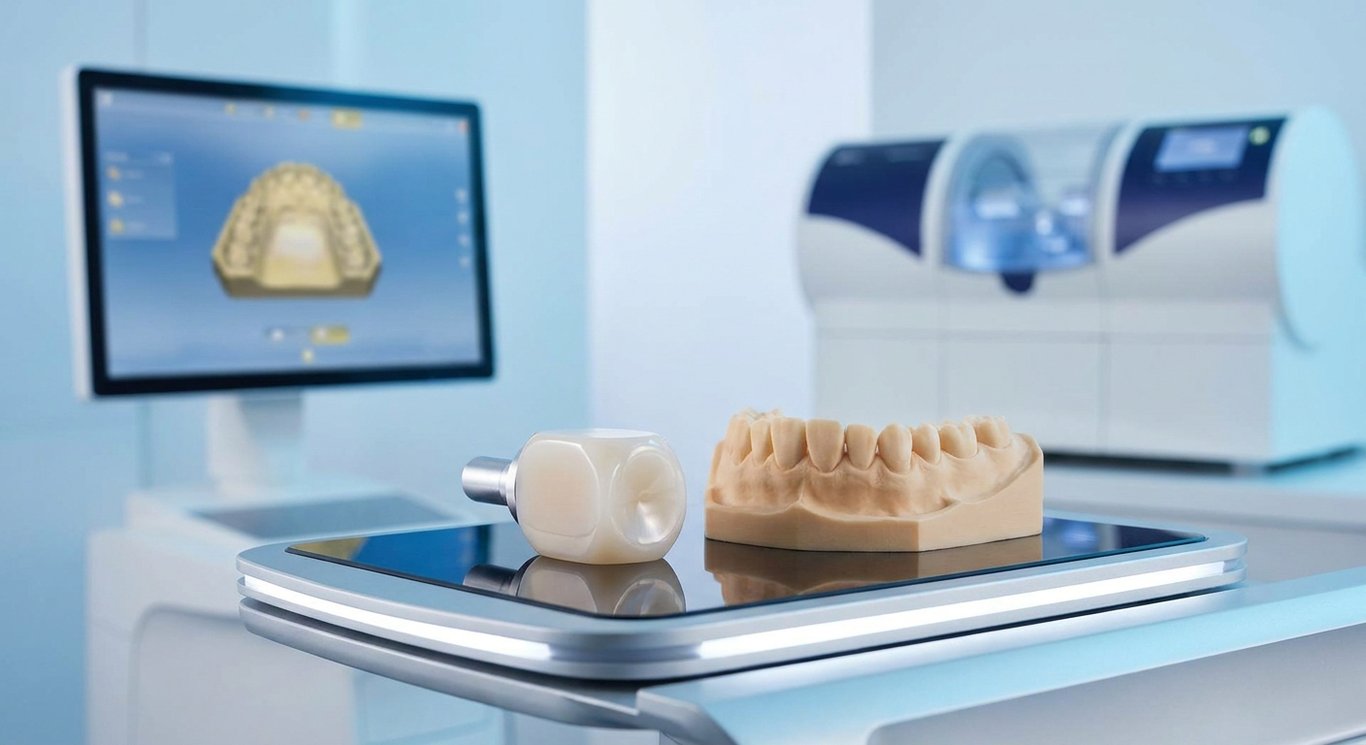
Digital technology has transformed how dental restorations are designed and fabricated. Computer-aided design and computer-aided manufacturing — commonly known as CAD/CAM — allows dentists and dental technicians to use digital scans of the mouth to design restorations on a computer screen and then mill them from blocks of ceramic, composite, or zirconia. Additive manufacturing, or 3D printing, is also making inroads in dentistry, enabling the production of certain restorations, surgical guides, and prosthetic components layer by layer from digital files. These technologies have changed the speed, precision, and workflow of restorative dentistry in meaningful ways.
The potential benefits of digital dentistry are genuinely exciting. Digital impressions are more comfortable than traditional putty-based impressions, and the digital files can be stored, shared, and referenced easily. Milled restorations can achieve a highly predictable fit, and in some cases, a crown can be designed, milled, and placed in a single appointment — eliminating the need for a temporary restoration and a second visit. Improved communication between the dentist and laboratory is another advantage, as digital files allow for precise specifications and easier adjustments before the restoration is finalized.
However, digital technology is not a magic solution, and it comes with its own set of limitations. The equipment required for in-office milling is expensive, which can affect the cost of treatment. Shade matching in a milled block can be less nuanced than hand-layered porcelain crafted by an experienced ceramist. Software accuracy, design quality, and the operator's skill all influence the final result. Perhaps most importantly, technology does not replace clinical judgment — a beautifully milled crown placed on a poorly diagnosed or inadequately prepared tooth will still fail. CAD/CAM has also blurred the traditional boundary between direct and indirect restorations, creating new possibilities but also new considerations for how we categorize and evaluate these treatments.
Biocompatibility, Allergies, and Material Safety
Biocompatibility refers to how well a material interacts with the body's tissues without causing harm. In dentistry, this means evaluating whether a material triggers inflammation, allergic reactions, toxic responses, or other adverse effects in the oral environment. Before recommending any restorative material, a dentist should review the patient's full medical history, including known allergies, sensitivities to specific substances, current medications, and any previous reactions to dental treatments. This information helps narrow down the safest and most appropriate options for that individual patient.
Reactions to dental materials do occur, though they are less common than many patients fear. Metal-related reactions — particularly to base metals like nickel and cobalt — account for many of the reported adverse reactions associated with indirect restorative materials. Some patients may also react to components in resin-based materials, such as certain monomers, or to specific cements used to bond restorations in place. Ceramics and zirconia are generally considered highly biocompatible, with very low rates of adverse reactions. It is worth noting that reported adverse reactions to indirect dental materials overall are uncommon, and most patients tolerate a wide range of restorative options without any issues.
Patients have every right to ask detailed questions about the materials being used in their mouth. Before treatment begins, it is entirely reasonable to ask what the restoration is made of, whether any components are known allergens, what alternatives are available, which cement will be used for bonding, and what evidence supports the proposed treatment. A good dentist will welcome these questions and provide clear, honest answers. If a patient has a known allergy or has experienced unexplained symptoms after previous dental work, that information should be shared proactively so the dentist can take it into account when planning treatment.

Longevity, Maintenance, and Failure Prevention
No dental restoration lasts forever, and the lifespan of any given restoration depends on a surprisingly wide range of factors. The material itself plays a role, of course, but so does the quality of placement, the design of the restoration, the patient's bite forces, their oral hygiene habits, their diet, whether they grind their teeth, exposure to acidic foods and beverages, smoking, and how consistently they attend professional check-ups. A beautifully placed composite filling in a patient who grinds their teeth and drinks soda all day will not perform nearly as well as the same filling in a patient with excellent hygiene and a gentle bite.
The good news is that patients have a lot of control over how long their restorations last. Daily brushing with fluoride toothpaste, consistent interdental cleaning with floss or an interdental brush, and regular professional examinations are the foundation of restoration longevity. Fluoride use helps protect the tooth structure around and beneath restorations. For patients who grind their teeth at night, a custom night guard can dramatically reduce the forces that wear down restorations prematurely. Any new sensitivity, cracking sensation, looseness, or change in bite should be evaluated promptly, as catching problems early almost always leads to simpler and less expensive solutions.
Even the most durable restorations will eventually need attention, whether that means polishing, repair, or full replacement. This is not a sign of failure — it is simply the reality of maintaining a living mouth over a lifetime. The goal of good maintenance is not just to protect the restoration itself but to preserve the underlying tooth structure, which becomes more valuable with every repair. A tooth that has been treated carefully over many years has a much better long-term prognosis than one that has been repeatedly drilled and rebuilt due to neglect. Think of maintenance as an investment in the foundation, not just the finish.
Cost, Insurance, and Value-Based Treatment Decisions
The cost of a dental restoration is influenced by many variables, and understanding them helps patients make more informed decisions. Material choice is one factor — ceramic and zirconia restorations generally cost more than amalgam or composite fillings. The type of restoration matters too, as a crown involves more preparation and laboratory work than a simple filling. Whether the restoration is fabricated in a dental laboratory or milled in-office, the geographic location of the practice, the dentist's level of expertise and specialization, the complexity of the tooth preparation, and any follow-up care required all contribute to the final price. Insurance coverage adds another layer of complexity, as many plans cover certain materials at a set percentage while excluding others entirely.
Rather than choosing a treatment based solely on the lowest upfront cost, patients are better served by thinking about total value over time. A less expensive restoration that fails in three years and requires replacement may end up costing more — in both money and tooth structure — than a higher-quality option that lasts fifteen years. It is worth asking your dentist to walk through the expected service life, maintenance requirements, appearance, comfort, and how much tooth structure each option preserves. A value-based treatment decision takes all of these factors into account and prioritizes long-term oral health over short-term savings.
What Patients Should Ask Before Choosing a Dental Material
Going into a dental appointment armed with the right questions makes a real difference. Before agreeing to any restorative treatment, patients should feel comfortable asking: What exactly is wrong with this tooth, and how was that determined? What materials are available for this type of restoration? How long is this restoration expected to last? What are the risks or potential complications? Are there any materials I should avoid given my allergies or medical history? How much tooth structure will need to be removed? Is this treatment reversible? What maintenance will be required? Can this restoration be repaired if it chips or fails, or would it need to be completely replaced? What is the estimated cost, and what does my insurance cover?
Beyond individual questions, patients should ask their dentist for a clear written treatment plan that identifies the recommended material, explains why it was chosen over alternatives, and outlines what happens if treatment is delayed or declined. Understanding the consequences of inaction is just as important as understanding the proposed treatment. A dentist who takes the time to explain options clearly and answer questions honestly is one who respects the patient's role in their own care — and that kind of partnership leads to better outcomes for everyone involved.
Frequently Asked Questions About Modern Dental Materials
What is the best material for a dental filling?
The honest answer is that the best material for a dental filling depends entirely on the specific situation. Cavity size, location in the mouth, how well moisture can be controlled during placement, the patient's appearance goals, the amount of chewing pressure that area receives, cost, and patient preference all factor into the decision. Composite resin is an excellent choice for visible teeth and small-to-moderate cavities where aesthetics matter. Amalgam remains a durable and cost-effective option for large cavities in back teeth, particularly when moisture control is difficult. Glass ionomer is well-suited for cavities near the gumline or in patients at high risk of decay, thanks to its fluoride-releasing properties. Resin-modified glass ionomer offers a middle ground with improved strength and aesthetics. No single material wins in every situation — the right choice is the one that fits the clinical reality and the patient's priorities.
Are tooth-colored fillings safer than amalgam fillings?
It is important to separate the question of appearance from the question of safety, because they are not the same thing. Amalgam has been used safely in dentistry for generations, and major health and dental organizations have consistently concluded that it is safe for most patients. The mercury in amalgam is bound within a stable alloy and behaves very differently from other forms of mercury. Composite resin, while tooth-colored and free of mercury, contains resin components that some patients may be sensitive to, and its long-term performance depends heavily on proper placement and maintenance. Neither material is universally safer than the other — each has its own risk profile and clinical context. A dentist should evaluate each patient's specific situation, medical history, and restoration needs individually rather than making a blanket recommendation based on color alone.
How long do crowns, veneers, and fillings last?
Longevity varies considerably depending on the material used, the quality of placement, the patient's bite forces, oral hygiene habits, diet, whether they grind their teeth, and how consistently they attend professional check-ups. Composite fillings might last anywhere from five to fifteen years or more under the right conditions, while well-maintained ceramic crowns can last fifteen to twenty-five years or longer. Veneers typically last ten to twenty years before they may need replacement. These are general ranges, not guarantees — some restorations fail early due to factors outside anyone's control, while others outlast all expectations. The most reliable way to maximize longevity is to maintain excellent oral hygiene, attend regular examinations, and address any signs of trouble — like sensitivity or a change in bite — promptly rather than waiting to see if the problem resolves on its own.
Is zirconia better than porcelain?
Whether zirconia is better than porcelain depends entirely on what you are asking it to do. Zirconia is significantly stronger and more fracture-resistant than most traditional porcelain materials, making it an excellent choice for high-stress areas like back teeth and implant-supported restorations. However, earlier zirconia formulations were more opaque and less aesthetically nuanced than hand-layered porcelain, which can be crafted to mimic the subtle translucency and color variation of natural teeth with exceptional artistry. Newer high-translucency zirconia has narrowed this gap considerably, but for highly visible front teeth where aesthetics are the top priority, some dentists and ceramists still prefer layered porcelain. Bonding considerations, restoration thickness, and the patient's functional demands also factor into the comparison. The bottom line: "better" is context-dependent, and the right material is the one that best matches the clinical requirements and the patient's priorities for that specific tooth.
Can people be allergic to dental materials?
Yes, allergic reactions to dental materials are possible, though they are less common than many patients worry. Among indirect restorative materials, metal-related reactions — particularly to base metals like nickel — are the most frequently reported. Some patients may also experience sensitivities to resin components found in composite materials or bonding agents, or to specific cements used during restoration placement. Ceramics and zirconia are generally very well tolerated and associated with low rates of adverse reactions. Patients with known allergies to specific metals, acrylics, or other substances should always disclose this information before treatment begins. Similarly, anyone who has experienced unexplained oral symptoms — such as persistent soreness, swelling, or a burning sensation — after previous dental work should bring this up with their dentist so that material choices can be made with that history in mind.
Conclusion: Building a Smile That Performs and Lasts
Modern dentistry offers a remarkable range of materials, each with its own strengths, limitations, and ideal applications. Composite resin provides a versatile, tooth-colored option that works well for a wide variety of restorations. Amalgam remains a durable and affordable choice in appropriate clinical situations, particularly where moisture control is challenging or bite forces are high. Glass ionomers serve specialized roles in preventive care and selected restorations, especially for patients at elevated decay risk. Ceramic materials prioritize aesthetics and biocompatibility, making them the preferred choice for highly visible restorations. Zirconia brings exceptional strength to the table for crowns, bridges, and implant restorations that need to withstand serious functional demands. In every case, material selection should be guided by a thorough diagnosis, an honest assessment of function and aesthetics, safety considerations, expected longevity, cost, and the patient's own values and preferences.
Think of this guide as the beginning of a better conversation, not the final word. The Architect's Guide to Your Smile: A Deep Dive into Modern Dental Materials is designed to give you the vocabulary and understanding you need to engage meaningfully with your dental provider. Schedule an examination, ask about the material alternatives available for your specific situation, and push for a treatment plan that is built around your long-term oral health rather than just the lowest price or the most attractive-sounding option. Your smile is worth the investment of a thoughtful, well-informed decision — and the right dentist will be glad to help you make it.
If you are ready to take the next step, reach out to a qualified dental professional in your area to schedule a comprehensive examination. Bring your questions, share your concerns, and ask to see the full range of material options before committing to any treatment. The more informed you are going in, the more confident you will feel about the path forward.