Protecting Your Investment: A Long-Term Care Guide for Dental Implants
Published 20 min read
Introduction: Why Long-Term Implant Care Matters
Dental implants are one of the most durable tooth replacement options available today, but "durable" does not mean "maintenance-free." A well-placed implant can last decades — some even a lifetime — but only when supported by consistent daily care and professional monitoring. Without proper attention, complications like peri-implantitis (an infection around the implant) and bone loss can develop quietly and cause serious damage before you even notice something is wrong. Think of your implant the way you would think of a high-quality car: it was built to last, but it still needs regular oil changes and tune-ups to stay on the road.
This guide is designed to walk you through everything you need to know about protecting that investment for the long haul. We'll cover the best daily home care habits, the right tools and products to use, how often you should visit your dental team, which foods and lifestyle habits can shorten your implant's lifespan, and what warning signs to watch for. We'll also answer the most common questions patients search for online, so by the end of this article, you'll have a clear, practical plan to keep your implant healthy for years to come.
How Dental Implants Are Different from Natural Teeth
To understand why implant care matters, it helps to know what you're actually working with. A dental implant restoration has three main parts: the implant fixture, which is a small titanium post surgically placed into the jawbone to act as an artificial root; the abutment, which connects the fixture to the visible part of the restoration; and the crown, which is the tooth-shaped cap you see and use to chew. Even though the crown is made from porcelain or a similar material that can't decay the way natural enamel does, plaque — that sticky film of bacteria — can still collect along the gumline and around the base of the crown just as easily as it does on natural teeth. If that plaque isn't removed regularly, the bacteria can irritate the surrounding gum tissue and eventually affect the bone holding the implant in place.
Because implants don't have a natural root with the same ligament structure as real teeth, they interact with the gum and bone a little differently. Natural teeth have a periodontal ligament that acts as a kind of cushion and early warning system — it can signal inflammation before things get serious. Implants don't have that ligament, which means they can be more vulnerable to infection spreading deeper without obvious early symptoms. This is exactly why cleaning around the gumline is so important, and why the cleaning approach for implants needs to be a bit more deliberate than what you might do for natural teeth. Protecting the gumline and the surrounding bone is the foundation of long-term implant success.
Daily Home Care Routine for Healthy Implants
The cornerstone of implant care is brushing — and doing it well. Brush at least twice a day using a soft-bristled toothbrush, ideally one with rounded bristle tips that won't scratch the implant crown or irritate the gum tissue around it. Use gentle, circular motions rather than a harsh back-and-forth scrubbing motion, and make sure you angle the brush slightly toward the gumline to clear away plaque where it tends to build up most. Pair your brushing with a non-abrasive toothpaste — one that doesn't contain baking soda or other gritty particles that could scratch the implant surface over time. Two full minutes of brushing, twice a day, goes a long way toward keeping your implant clean and healthy.
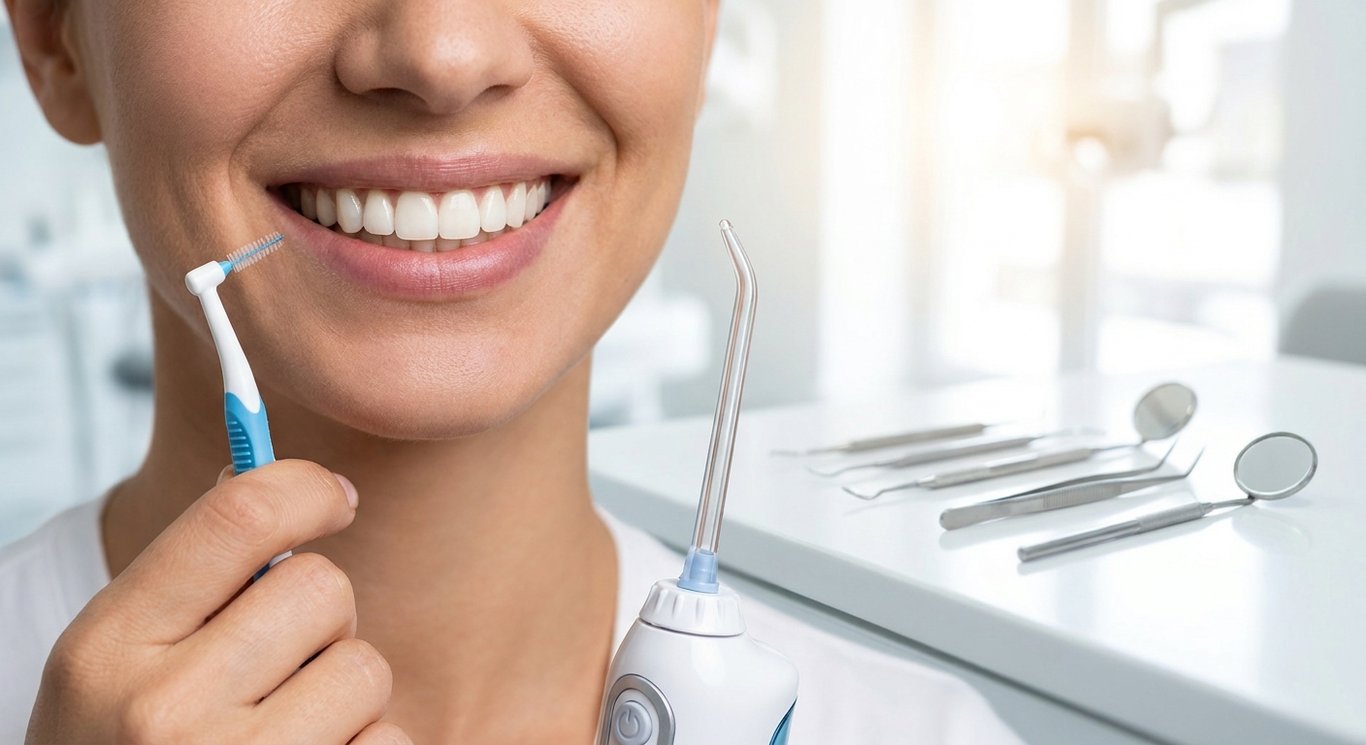
Brushing alone, however, doesn't reach the spaces between your implant and the neighboring teeth — and that's where interdental cleaning comes in. There are several effective options depending on your preference and the layout of your restoration. Implant-specific floss or PTFE floss (a smooth, non-shredding type) can be worked gently around the implant without fraying. Floss threaders make it easier to guide floss under a bridge or around an implant post. Interdental brushes — those small, cone-shaped brushes that fit between teeth — are great for cleaning around the base of the crown. And water flossers, which use a pulsing stream of water to flush out debris and bacteria, are a popular choice because they're easy to use and effective at cleaning areas that are hard to reach with traditional floss. Ideally, you should clean between your teeth and around your implant at least once a day.
Beyond brushing and interdental cleaning, a few helpful add-ons can round out your daily routine. An alcohol-free antimicrobial mouth rinse can help reduce bacteria in the mouth without drying out the gum tissue the way alcohol-based rinses sometimes do. Don't overlook tongue cleaning either — the tongue harbors a significant amount of bacteria that can contribute to bad breath and overall bacterial load in the mouth. Building a consistent morning and evening routine that includes all of these steps doesn't have to feel overwhelming. Once it becomes a habit, it takes just a few minutes and makes a real difference in the health of your implant over time.
Best Tools and Products for Implant Maintenance
When it comes to choosing your cleaning tools, you have options — and the good news is that both electric and manual toothbrushes can work well for implants as long as you're using a soft-bristled head and gentle technique. Electric toothbrushes with oscillating or sonic technology can be especially effective at disrupting plaque along the gumline with less physical effort, which makes them a solid choice for many patients. Water flossers like those made by Waterpik are frequently recommended for implant patients because they do an excellent job of flushing debris from around the implant base and under the gumline. If you prefer traditional floss, look for PTFE or implant-specific varieties that glide smoothly without shredding. Interdental brushes in the right size for your gaps can also be highly effective. The best tool is ultimately the one you'll actually use consistently.
Just as important as knowing what to use is knowing what to avoid. Hard-bristled toothbrushes are a common culprit for scratching implant surfaces and irritating gum tissue — always reach for soft or extra-soft bristles. Highly abrasive toothpastes, including some whitening formulas and baking soda-based products, can create micro-scratches on the crown surface over time, making it easier for bacteria to cling to the implant. Metal picks or overly aggressive dental tools used at home can scratch the implant or abutment and should be left to professionals. Similarly, toothpastes or rinses with high alcohol content can dry out the gum tissue and create an environment that's less hospitable to healing. When in doubt, ask your dental team for specific product recommendations tailored to your restoration.
Professional Maintenance Visits and Cleaning Schedules
No matter how thorough your home care routine is, professional visits are a non-negotiable part of long-term implant success. During these appointments, your dental team does much more than clean your teeth — they check the stability of the implant, assess bone levels through X-rays, evaluate the health of the surrounding gum tissue, and examine your bite to make sure nothing has shifted in a way that puts uneven pressure on the restoration. These checks can catch early problems long before they become serious, which is exactly where you want to be. Implant complications caught early are far easier — and far less expensive — to manage than those that have been allowed to progress.
For most patients, a professional visit every three to six months is a common recommendation for implant maintenance, though the right schedule for you depends on your individual risk factors. People with a history of gum disease, smokers, those managing conditions like diabetes, or patients with multiple implants may benefit from more frequent monitoring. On the other hand, someone with excellent oral hygiene, healthy gums, and stable bone may do well on a standard six-month schedule. Your dental provider is the best person to determine what frequency makes sense for your specific situation, and that recommendation may change over time as your circumstances evolve.

Foods, Habits, and Lifestyle Choices That Affect Implant Longevity
What you eat has a direct impact on how well your implant holds up over the years. While implant crowns are strong, they're not indestructible — very hard foods like hard candies, raw carrots, or crusty bread can put excessive pressure on the crown and potentially crack it or loosen the abutment connection. Sticky foods like caramel, chewing gum, or dried fruit can pull at the crown and create stress at the implant site. Even very crunchy foods, when eaten habitually and with force, can contribute to wear and stress on the restoration over time. This doesn't mean you have to avoid these foods entirely forever, but being mindful — especially in the early months after placement — is a smart strategy for protecting your investment.
Certain habits are particularly damaging to dental implants and are worth addressing directly. Smoking is one of the biggest risk factors for implant failure because it reduces blood flow to the gums, slows healing, and creates an environment where bacteria thrive. If you smoke, quitting is one of the most impactful things you can do for your implant's long-term health. Chewing ice is another habit that puts significant stress on the crown and can cause fractures. Biting your nails, chewing on pens, or using your teeth to open packages or tear tags off clothing all place unnatural forces on the implant and should be avoided. These habits might seem minor, but over months and years, they add up.
Beyond food and habits, broader lifestyle factors play a meaningful role in implant success. If you have diabetes, keeping your blood sugar well-managed is important because poorly controlled diabetes is associated with a higher risk of gum disease and slower healing — both of which can compromise implant stability. If you grind or clench your teeth at night (a condition called bruxism), your dentist may recommend a custom nightguard to protect your implant from the excessive forces that grinding generates during sleep. And if you play contact sports or activities where there's a risk of impact to the face, wearing a properly fitted mouthguard can protect your implant and surrounding teeth from trauma. Taking care of your overall health truly does translate into better outcomes for your implant.
Common Complications and Early Warning Signs
Knowing what to look for is one of the most valuable tools you have for protecting your implant. Early signs of inflammation around an implant — a condition called peri-implant mucositis — include redness or puffiness of the gum tissue around the implant, bleeding when you brush or floss, tenderness when you touch the area, and persistent bad breath that doesn't go away with brushing. These symptoms are your body's way of signaling that something is off, and they deserve attention. The encouraging thing is that peri-implant mucositis is considered reversible when caught early and treated promptly, so paying attention to these early signals really does matter.
If inflammation is left untreated, it can progress into peri-implantitis — a more serious infection that affects the bone around the implant. At this stage, warning signs become more pronounced and more urgent. You might notice pus around the implant site, a feeling that the implant or crown is loose or moving, changes in how your bite feels, pain or discomfort when chewing, or a crown that just feels "different" than it used to. Any of these symptoms should be treated as a prompt to contact your dental team right away, not something to wait out or hope will resolve on its own. The sooner a problem is evaluated, the more options are available for treatment.
Early evaluation truly is the key to preventing serious outcomes. When peri-implantitis is caught in its early stages, it can often be managed with professional cleaning, antimicrobial treatment, and improved home care. But when bone loss has progressed significantly, the treatment becomes more complex and the risk of implant failure increases substantially. Think of it this way: a small problem caught early is a minor inconvenience; the same problem ignored for months can become a major one. Don't hesitate to reach out to your dental provider at the first sign that something feels wrong — that's exactly what they're there for.
What to Do If an Implant Feels Loose, Sore, or "Off"
It's worth distinguishing between what's normal and what's not, especially in the weeks following implant placement or crown delivery. Some degree of soreness, sensitivity to pressure, and mild swelling is expected during the healing period and typically resolves as tissues settle. However, once the healing phase is complete — generally several months after the final restoration is placed — your implant should feel stable, comfortable, and fully integrated into your bite. Any new sensation of looseness, persistent soreness, or a feeling that something has shifted after that point is not a normal part of having an implant, and it warrants a call to your dental office.
If something feels off with your implant, the most important thing to do is resist the urge to poke at it, try to tighten it yourself, or ignore it hoping it will go away. Instead, keep the area as clean as possible with gentle brushing and rinsing, avoid putting excessive pressure on that side of your mouth when chewing, and contact your dental team promptly to schedule an evaluation. Describe your symptoms clearly — when they started, what makes them better or worse, and whether anything has changed recently in your routine or diet. Your dental provider can determine whether the issue is with the crown, the abutment, or the implant itself, and take appropriate steps to address it before the situation worsens.
Long-Term Care for Full-Mouth Implants and All-on-4 Restorations
Full-arch restorations like All-on-4 or All-on-6 implants present a unique set of maintenance challenges compared to a single implant crown. Because these restorations span the entire arch and are supported by just a few strategically placed implants, keeping them clean requires a bit more effort and technique. Food debris and plaque can accumulate underneath the prosthesis — the space between the underside of the bridge and the gum tissue — and if that area isn't cleaned regularly, it becomes a breeding ground for bacteria. Standard flossing isn't always practical or sufficient for these restorations, which is why a more targeted approach is needed.
Fortunately, there are effective strategies for keeping full-arch restorations clean. Water flossers are particularly valuable for these patients because the pulsing water stream can reach underneath the prosthesis and around each implant post with relative ease. Interdental brushes in the appropriate size can also be used to clean along the gumline and around the implant fixtures. Some patients with removable full-arch prostheses will take them out for cleaning, which allows for thorough access to both the prosthesis and the underlying gum tissue. Professional visits for these patients are often scheduled more frequently — sometimes every three to four months — because the complexity of the restoration requires closer monitoring. Working closely with your dental team to develop a personalized maintenance plan is especially important when you have a full-arch restoration.
Special Considerations After Surgery and During Healing
The period right after implant surgery is a critical window that sets the stage for long-term success. During the initial healing phase, your dental team will likely recommend sticking to soft foods — things like yogurt, mashed potatoes, scrambled eggs, and smoothies — to avoid putting pressure on the surgical site. Rest is important, as is managing swelling with ice packs as directed and keeping your head slightly elevated. If antibiotics or pain medications are prescribed, taking them as directed helps prevent infection and keeps discomfort manageable. Gentle cleaning is still essential during this period, but you'll want to avoid vigorous rinsing or brushing directly over the surgical site until your provider gives you the green light.
As healing progresses and the implant integrates with the bone — a process called osseointegration that typically takes several months — your care routine will gradually shift from post-op recovery to long-term maintenance. The transition isn't always clearly marked, which is why follow-up appointments are so valuable. Your dental team will guide you on when it's safe to return to a full brushing and flossing routine, when the permanent crown will be placed, and what your ongoing maintenance schedule should look like. Understanding that short-term healing care and lifelong maintenance are two different phases — with different rules and goals — helps you stay on track and avoid confusion about what's appropriate at each stage of the process.
How Diet and Oral Health Support Implant Success
What you put on your plate affects more than just your waistline — it has a real impact on the health of your gums and the strength of the bone supporting your implant. Calcium is essential for maintaining bone density, and getting enough of it through dairy products, leafy greens, almonds, or fortified foods supports the jawbone that holds your implant in place. Vitamin D helps the body absorb calcium effectively, and many people don't get enough of it — especially those who spend limited time outdoors. Vitamin C plays a key role in collagen production and gum tissue health, which is why a diet rich in fruits and vegetables contributes to a healthier oral environment overall. These nutrients won't replace good hygiene, but they provide the biological foundation that makes everything else work better.
Oral hygiene and gum health are deeply connected to implant stability, and it's a relationship that works in both directions. Healthy gums provide a stable seal around the implant, protecting the underlying bone from bacteria. Stable bone keeps the implant fixture firmly anchored. And a well-maintained implant, in turn, supports the surrounding teeth and prevents the kind of shifting that can create bite problems over time. Staying on top of your oral hygiene routine, managing gum health proactively, and addressing any signs of inflammation early all work together to create the conditions your implant needs to stay strong and functional for the long term. It's a system, and every part of it matters.
FAQ: Protecting Your Investment: A Long-Term Care Guide for Dental Implants
What is the best way to clean dental implants every day?
The best daily cleaning routine for dental implants involves brushing twice a day with a soft-bristled toothbrush and non-abrasive toothpaste, paying close attention to the gumline where plaque tends to collect around the implant base. After brushing, use an interdental cleaning tool — such as implant-specific floss, a floss threader, interdental brushes, or a water flosser — to clean the spaces between your implant and neighboring teeth. A water flosser is especially popular among implant patients because it's effective, easy to use, and reaches areas that are difficult to access with traditional floss. Finishing with an alcohol-free antimicrobial rinse adds an extra layer of bacterial control and helps keep the gum tissue healthy.
How often should dental implants be professionally cleaned?
Most implant patients benefit from professional cleanings and evaluations every three to six months, though the right frequency depends on your individual risk factors and overall oral health. Patients with a history of gum disease, those who smoke, or those managing systemic conditions like diabetes may need more frequent visits to stay ahead of potential complications. Your dental provider will assess your bone levels, gum health, implant stability, and bite at each visit and adjust your maintenance schedule accordingly. Following their recommended schedule is one of the most important things you can do to protect your implant over the long term.
Can dental implants get cavities?
No — dental implants themselves cannot get cavities because the crown, abutment, and fixture are made from materials that don't decay the way natural tooth enamel does. However, that doesn't mean implants are immune to problems. The gum tissue surrounding the implant and the bone beneath it can still develop disease if plaque is allowed to accumulate and bacteria are left unchecked. Peri-implant mucositis and peri-implantitis are the implant equivalents of gum disease, and they can cause significant damage to the soft tissue and bone that support the implant. So while you don't need to worry about cavities in your implant crown, consistent cleaning and professional monitoring are still absolutely necessary.
What foods should I avoid with dental implants?
While most foods are perfectly fine to enjoy with dental implants once healing is complete, there are some that are worth approaching with caution. Very hard foods — like hard candies, ice cubes, raw nuts, and crusty bread — can put excessive stress on the crown and potentially crack or loosen it over time. Sticky foods such as caramel, taffy, and chewing gum can pull at the crown and create unwanted pressure at the implant site. Beyond food, habits like chewing ice, biting your nails, opening packages with your teeth, or using your teeth as tools place unnatural forces on the implant and should be avoided. Being mindful of these choices, especially in the first year after placement, helps protect the restoration for the long term.
What are the signs that something is wrong with my implant?
Several symptoms can signal that your implant needs professional attention, and none of them should be ignored or waited out. Early warning signs include redness or puffiness of the gum tissue around the implant, bleeding when brushing or flossing, persistent tenderness, or bad breath that doesn't resolve with normal cleaning. More serious symptoms include the presence of pus around the implant site, a feeling that the implant or crown is loose or shifting, noticeable changes in your bite, pain when chewing, or any sensation that the implant just feels "different" than it used to. If you experience any of these symptoms — especially after the healing period is complete — contact your dental provider promptly so the issue can be evaluated and addressed before it progresses.
Conclusion: Keep Protecting Your Dental Implant Investment
Dental implants can genuinely be a lifetime investment — but only when they're cared for with the same consistency and attention you'd give to any other valuable asset. The key takeaways from this guide are straightforward: remove plaque daily through thorough brushing and interdental cleaning, use the right tools and products that are safe for implant surfaces, make smart food and lifestyle choices that reduce unnecessary stress on your restoration, and keep up with regular professional visits so your dental team can monitor what's happening below the surface. None of these steps are complicated on their own, but together they form a powerful system for long-term implant health.
Your implant was placed to improve your quality of life, your confidence, and your ability to eat and speak comfortably — and with the right care, it can do all of that for decades. Take this long-term care plan seriously, build your daily routine around it, and schedule your professional checkups consistently. And if something ever feels off — even slightly — don't wait to see if it resolves on its own. Reach out to your dental provider at the first sign of a problem. Early action is almost always easier, less expensive, and more effective than waiting. Your implant is worth protecting, and so is your smile.