Your Complete Guide to Overcoming Dental Anxiety
Published 25 min read
What Is Dental Anxiety?
Dental anxiety is the fear, nervousness, or distress that some people feel in connection with dental visits, examinations, or procedures. It can be triggered by specific things like the sound of a drill, the smell of the office, the sight of a needle, or simply the feeling of lying back in a chair with someone working inside your mouth. For many people, it is a mild but persistent unease that makes scheduling appointments harder than it should be. It is worth noting that dental anxiety sits on a spectrum — on one end, you have general nervousness, and on the other, a more severe condition called dental phobia, where fear becomes so overwhelming that a person avoids dental care altogether, even when they are in pain.
The symptoms of dental anxiety show up in both physical and emotional ways, and they can start well before you even set foot in the office. Racing thoughts, sweating, muscle tension, a rapid heartbeat, nausea, and difficulty sleeping the night before an appointment are all common experiences. Some people find themselves repeatedly rescheduling or canceling appointments, telling themselves they will go "next month" — and next month never comes. The good news is that these reactions are recognized and understood by dental professionals, and openly discussing them with your dental team gives them the information they need to adjust their approach and make your visit far more manageable.
Why Do People Develop Dental Anxiety?
For many people, dental anxiety has its roots in a previous experience that went badly. Maybe a procedure was more painful than expected, or a dentist seemed dismissive when you tried to express discomfort. Perhaps you felt rushed, or you signaled that you needed a break and were not taken seriously. Experiences like these leave a lasting impression, and the brain is very good at holding onto them as a warning for next time. It makes sense, then, that returning to a dental chair can feel threatening even years later, especially if the original experience happened during childhood when you had even less control over the situation.
Beyond past experiences, there are plenty of other reasons people feel anxious about dental care. Fear of needles is one of the most commonly reported triggers, closely followed by fear of pain, the sound of the drill, and the sensation of vibration or pressure in the mouth. Some people feel embarrassed about the condition of their teeth and worry about being judged. Others have a sensitive gag reflex that makes certain procedures feel unbearable. Concerns about cost, unexpected treatment recommendations, or not fully understanding what is happening during a procedure can also feed into the anxiety in a real and significant way.
Sometimes dental anxiety is connected to something broader. Generalized anxiety disorder, past trauma, sensory processing sensitivities, or a strong need for control can all make dental visits feel especially challenging. The feeling of lying back, being unable to speak, and having someone work in a very personal space can trigger a deep sense of vulnerability. Understanding what specifically drives your anxiety — whether it is a sound, a smell, a memory, or a feeling — is genuinely useful, because different triggers call for different strategies. Knowing your "why" is the first step toward finding a solution that actually works for you.
How Dental Anxiety Affects Oral Health
Avoiding the dentist might feel like the safest option in the short term, but over time it creates real problems for your oral health. Routine examinations and professional cleanings are designed to catch issues early, when they are small and straightforward to treat. When those appointments are skipped, cavities can deepen, gum disease can progress quietly, and infections can develop without any obvious warning signs until they become serious. By the time pain forces someone to seek care, what might have been a simple filling could have become a root canal or an extraction.
This creates what many dental professionals call the cycle of avoidance. Anxiety leads to missed appointments, missed appointments allow problems to worsen, and more complex dental issues require more extensive treatment — which in turn increases fear of future visits. It is a frustrating loop, and it is one that many people find themselves stuck in for years. Breaking that cycle by seeking care early, even for something as simple as a check-up, is one of the most effective things you can do for both your oral health and your long-term relationship with dental care. The earlier you go, the simpler the treatment is likely to be.
How to Find a Dentist Who Understands Dental Anxiety
Finding the right dental practice is one of the most important steps you can take, and it is worth putting some effort into the search. Start by asking friends, family members, or your primary care provider if they can recommend a dentist who is known for being patient and understanding with nervous patients. Online reviews can also be helpful — look specifically for comments that mention how the practice handles anxious patients, not just the quality of the clinical work. Professional directories sometimes allow you to filter by specialty or approach, and some practices actively market themselves as anxiety-friendly or phobia-aware.
Before booking an appointment, it is completely reasonable to call the office and ask a few questions. Find out whether the practice regularly treats nervous patients, whether they offer longer appointment slots to allow for a slower pace, and whether they explain procedures step by step before beginning. Ask about sedation options, whether you can bring a support person with you, and whether they are comfortable with patients requesting breaks during treatment. A practice that welcomes these questions is already showing you something important about how they operate.
When you do meet the dental team, pay attention to how they respond when you mention your anxiety. Empathy, patience, and clear communication are qualities that genuinely matter. A good dentist will not minimize your concerns or tell you there is nothing to worry about — they will acknowledge what you are feeling, take it seriously, and work with you to figure out how to make treatment possible. You deserve a dental team that respects your boundaries and treats your comfort as a priority, not an inconvenience.
What to Tell Your Dentist Before the Appointment
One of the most effective things you can do is tell the dental office about your anxiety before you even arrive. When you call to schedule, mention that you experience dental anxiety and ask whether the team has experience supporting nervous patients. Then, when you arrive for your appointment, bring it up again. It helps to be as specific as possible — let them know about any previous traumatic experiences, the particular triggers that bother you most, any sensory sensitivities you have, and how you prefer to receive information during treatment. The more the team knows, the better they can tailor their approach to suit you.
It is also worth thinking about how much information you want during the procedure itself. Some patients feel calmer when the dentist narrates each step — "I'm going to rinse now, then you'll feel a little pressure" — while others find that too much detail makes the anxiety worse. There is no right or wrong answer; it is simply a matter of knowing yourself. Along with your communication preferences, make sure you share your full medical history, including any medications you take, allergies you have, and any previous reactions to local anesthesia or sedation. This information is essential for safe and effective care.
If you are not sure how to start the conversation, a few simple phrases can help. You might say something like, "I feel very anxious about dental treatment and I want you to know that upfront," or "Please explain what you are going to do before you start so I know what to expect," or "I may need to take short breaks during the procedure — is that okay?" These are all reasonable, clear requests, and any good dental team will receive them without judgment. Speaking up before treatment begins sets the tone for a much more collaborative experience.
How to Create a Stop Signal and Maintain Control
One of the most powerful tools for managing dental anxiety is surprisingly simple: a stop signal. Before treatment begins, agree with your dentist on a hand signal — usually raising one hand — that means "please pause." This signal gives you a way to request a break, ask a question, or communicate discomfort without having to speak with instruments in your mouth. The key is that both you and the dental team agree on it in advance, and that you feel confident it will actually be respected when you use it. Knowing that you can stop at any time changes the entire experience from something that feels out of your control to something you are actively participating in.
Beyond the stop signal, there are other ways to increase your sense of control during treatment. You might ask to choose when treatment starts — for example, requesting a moment to settle in before the dentist begins. You could agree on regular check-ins, where the dentist briefly pauses to ask how you are doing. Some patients find it helpful to use a written communication card that lists their preferences and signals, which can be handed to the team at the start of the appointment. These strategies might seem small, but research consistently shows that a sense of patient control is one of the most important factors in reducing dental anxiety. You are not just a passive participant — you have a voice in how your care unfolds.
What to Do Before a Dental Appointment
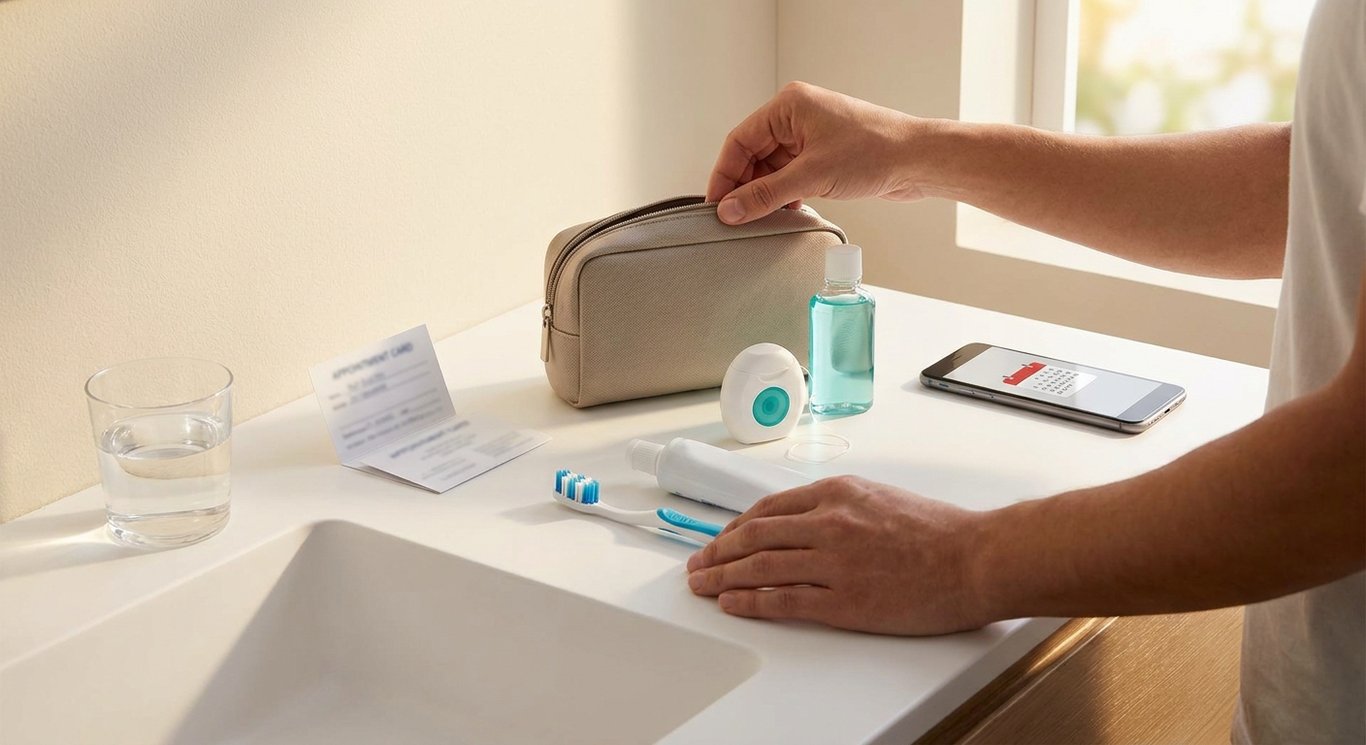
A little practical preparation before an appointment can make a meaningful difference in how you feel when you arrive. Confirm the appointment details a day or two in advance so there are no last-minute surprises. Plan your transportation ahead of time so you are not rushing or stressed before you even walk through the door. Arriving a few minutes early gives you time to settle in rather than feeling like you are being hurried. It also helps to write down any questions or concerns beforehand so you do not forget them in the moment — anxiety has a way of making your mind go blank right when you need it most.
In the days leading up to the appointment, taking care of your body can help reduce the physical symptoms of stress. Gentle exercise, adequate sleep, and a light meal before your visit — when medically appropriate — can all help you feel steadier. Limiting caffeine is worth considering too, since it can amplify feelings of anxiety and increase your heart rate. If the dental office has given you specific instructions about fasting or medications before a procedure, follow those carefully, as they exist for your safety.
Think about what comfort items you might want to bring with you. Headphones are one of the most popular choices — having your own music, a podcast, or an audiobook playing can create a private mental space that makes the appointment feel much less intense. A stress ball to squeeze, sunglasses to reduce the brightness of overhead lights, or a familiar scented item can also help. Check with the dental team in advance about what is practical to use during your specific procedure, and then pack your bag the night before so you are not scrambling on the day.
Breathing and Relaxation Techniques for the Dental Chair
Controlled breathing is one of the simplest and most accessible tools for managing anxiety, and the good news is that you can use it anywhere — in the waiting room, in the dental chair, or even in the parking lot before you go in. The basic idea is to slow your breathing down deliberately, because slow breathing sends a signal to your nervous system that you are safe. Try inhaling gently through your nose and exhaling slowly through your mouth, keeping both counts roughly equal. Even a few minutes of this kind of breathing can noticeably reduce your heart rate and help quiet the physical symptoms of anxiety. Practice it at home before your appointment so it feels natural when you need it.
If you want a slightly more structured technique, box breathing is worth trying. Inhale for four seconds, hold your breath for four seconds, exhale for four seconds, and hold again for four seconds before repeating the cycle. It sounds simple, and it is — but it is also surprisingly effective at interrupting the physical stress response. If at any point you start to feel lightheaded, stop the technique and return to your normal breathing pattern. Lightheadedness is a sign that you are breathing too deeply or too quickly, and normal breathing will bring you back to baseline.
Beyond breathing, there are a few other relaxation approaches that some people find genuinely helpful in the dental chair. A body scan involves mentally checking in with each part of your body from head to toe, noticing where you are holding tension, and consciously releasing it — starting with your jaw and shoulders, which tend to be the first places stress shows up. Progressive muscle relaxation takes this further by deliberately tensing and then releasing different muscle groups. Guided imagery is another option: close your eyes and picture a place that feels peaceful and familiar to you, whether that is a beach, a garden, or a quiet room in your home. These techniques take a little practice, but they can be genuinely powerful when anxiety starts to build.
Distraction Strategies That Can Make Treatment Easier
Distraction is one of the most widely used and well-supported strategies for managing dental anxiety, and there are plenty of options to choose from. Listening to music, a podcast, or an audiobook through headphones is a favorite for many patients because it gives your brain something else to focus on. Some dental offices have televisions mounted on the ceiling, which can also help. If you prefer something more tactile, squeezing a stress ball or focusing your eyes on a fixed point in the room can provide a helpful anchor. Visual counting — like counting ceiling tiles or tracking patterns — is another low-tech option that requires no equipment at all. Before your appointment, check with the dental team about which items are safe and practical to use during your specific procedure, since some tools may interfere with treatment.
It is important to understand that distraction works best as a complement to good communication, not a replacement for it. If you are in pain or feel distressed, do not push through it just because you have headphones in and music playing. Use your agreed-upon stop signal to let the dental team know. Distraction is meant to help manage background anxiety during routine moments, not to encourage you to silently tolerate discomfort. Keeping those lines of communication open — even while you are listening to your favorite playlist — is still essential to a safe and comfortable experience.
Understanding Pain Control During Dental Treatment
A lot of dental anxiety centers on the fear of pain, and it is worth understanding how modern dentistry approaches pain control. Local anesthesia is the most common method — it numbs a specific area of the mouth so that you do not feel pain during the procedure, though you may still feel pressure or movement. Before treatment begins, it is completely reasonable to ask how the dentist will check that the area is fully numb. Most will test the area with a probe or ask you to report any sensation, and treatment should not begin until you confirm that the numbness is adequate.
If needles are a source of anxiety for you, there are a few things that can help. Many dentists routinely apply a topical numbing gel to the gum before giving an injection, which reduces the sensation of the needle significantly. You can also ask for a slower injection, since the speed of delivery affects how much discomfort is felt. If you experience sensitivity or pain during a procedure, you have every right to signal for a pause and request additional anesthetic. It is not unusual to need a top-up, and a good dentist will not make you feel like you are being difficult for asking.
Perhaps the most important thing to understand about pain during dental treatment is this: you should never silently tolerate it. It can feel awkward to interrupt a procedure, especially if you are already anxious and just want it to be over — but pushing through pain without telling the dental team is not the right approach. Pain during treatment can have several causes, and the dentist needs to know about it so they can identify what is happening and adjust accordingly. Speaking up is not a sign of weakness; it is exactly what the stop signal and open communication are there for.
Dental Sedation and Other Anxiety-Management Options
For patients whose anxiety is significant enough that behavioral strategies alone are not enough, there are several sedation options that a dentist may discuss with you. Nitrous oxide — sometimes called laughing gas — is inhaled through a small mask and produces a relaxed, slightly floaty feeling while keeping you conscious and able to communicate. Oral sedation involves taking a prescribed medication before the appointment to reduce anxiety. Intravenous sedation is a deeper option administered directly into the bloodstream, typically by a specialist. Availability, suitability, monitoring requirements, recovery time, and cost all vary depending on the patient and the practice, so it is important to have a detailed conversation with your dentist before making any decisions.
One thing that is worth clarifying: sedation does not replace local anesthesia when a procedure requires numbing. Even if you are sedated, the dentist will still need to numb the area being treated. Sedation manages anxiety and awareness — it does not block pain signals the way local anesthetic does. Before any sedation option is recommended, your dentist will need to review your full medical history, current medications, allergies, and the specifics of the planned procedure to determine what is safe and appropriate for you.
If sedation is recommended, there are practical details you will need to plan for. Many forms of sedation require fasting for a set period beforehand, and you will typically need someone to drive you to and from the appointment. Depending on the type of sedation, you may need supervision for several hours after treatment and should avoid driving, operating machinery, or making important decisions for the rest of the day. Side effects vary but can include drowsiness, nausea, or a groggy feeling. Your dental team will give you specific instructions — follow them carefully, because they are there to protect your safety.
It is worth emphasizing that sedation is not something to request casually or without proper medical screening. It is a tool that can be genuinely life-changing for patients with severe anxiety, but it needs to be used thoughtfully and under appropriate supervision. For many patients, a combination of approaches works better than sedation alone — things like behavioral strategies, open communication, staging treatment across multiple shorter appointments, and longer appointment slots can all be part of a personalized plan that makes dental care feel genuinely manageable.

When Therapy Can Help With Dental Phobia
Sometimes dental anxiety goes beyond what practical coping strategies and a supportive dentist can address on their own. If fear is causing you to persistently avoid all dental care, if you experience panic attacks at the thought of an appointment, if past trauma is showing up in ways that feel overwhelming, or if you simply cannot complete necessary treatment despite your best efforts, it may be time to seek support from a psychologist, therapist, or other mental health professional. This is not a sign of failure — it is a recognition that dental phobia, at its most severe, is a clinical condition that responds well to professional treatment.
Cognitive behavioral therapy, commonly known as CBT, is one of the most well-researched approaches for dental phobia. It works by helping you identify the thought patterns that fuel your fear — things like catastrophic thinking or overestimating the likelihood of pain — and replacing them with more accurate, balanced perspectives. CBT often involves gradual exposure, where you practice approaching dental-related situations in small, manageable steps, building confidence along the way. Many people who have worked through dental phobia with a therapist find that they are eventually able to attend appointments with far less distress than they ever thought possible.
How to Prepare Children and Family Members for Dental Visits
Children pick up on the attitudes and emotions of the adults around them, which means that how parents and caregivers talk about dental visits matters more than most people realize. Using calm, age-appropriate language when discussing upcoming appointments helps set a neutral or positive tone. Avoid sharing your own frightening dental stories, even casually, and try not to use dental visits as a threat or punishment. Framing dental care as a normal, routine part of looking after your body — just like eating well or getting enough sleep — goes a long way toward helping children develop a healthy relationship with it from an early age.
There are also some practical steps that can make the experience easier for children. Let them ask questions and answer honestly in a way that is reassuring without being dismissive. Bringing a familiar comfort item from home — a stuffed animal, a favorite toy — can provide a sense of security in an unfamiliar environment. Practicing at home through pretend dental visits, where you take turns being the dentist and the patient, can help demystify the process. Choosing a dentist who has specific experience working with anxious children is also worth prioritizing, since pediatric-focused practices often have environments and communication styles designed with young patients in mind.
For adults accompanying children to dental appointments, the most important thing you can do is model calm behavior. Children are perceptive, and if they sense that you are tense or worried, they will mirror that. It is also worth resisting the urge to promise that treatment will never hurt, because that promise can backfire and damage trust when a procedure does cause some discomfort. Instead, use honest but reassuring language: "It might feel a little strange, but the dentist is going to take good care of you." When children use a coping strategy — taking a deep breath, squeezing a stress ball, staying still during a difficult moment — acknowledge it and praise the effort specifically. That kind of reinforcement builds real confidence over time.
What to Do After a Dental Appointment
After your appointment is over, take a few minutes to reflect on how it went — not to dwell on what was hard, but to gather useful information for next time. What helped? What triggered your anxiety more than expected? Was there a moment when a particular technique worked well, or a point where you wish you had asked for a break sooner? Writing these observations down, even briefly, helps you build a personalized plan that gets more effective with each visit. You might also want to note any questions you want to ask at your next appointment, or any changes you would like to request in how your care is delivered.
It is also important to recognize your progress, even when the appointment felt difficult. Showing up is genuinely hard when you have dental anxiety, and completing treatment — even imperfectly, even with some anxiety — is a real achievement. Progress in overcoming dental fear is rarely linear, and one challenging appointment does not erase the work you have done. Over time, as you build a relationship with a dental team you trust, as you learn which strategies work best for you, and as you accumulate positive experiences alongside the harder ones, the fear tends to lose some of its power. Follow-up appointments, gradual treatment, and consistent positive reinforcement all contribute to rebuilding trust — both in dental care and in your own ability to manage it.
Frequently Asked Questions About Overcoming Dental Anxiety
How can I stop being afraid of the dentist?
Fear of the dentist rarely disappears overnight, and that is completely normal. It tends to improve gradually through a series of supportive, manageable experiences rather than one dramatic breakthrough. The most effective approach combines several strategies: choosing a dentist who understands anxiety, being upfront about your specific triggers, agreeing on a stop signal before treatment begins, practicing breathing techniques, and using distraction tools like music or a stress ball. If your fear is more severe, therapy — particularly cognitive behavioral therapy — or sedation options may also be worth exploring with your dental team and a healthcare provider.
What should I do if I am too anxious to make a dental appointment?
If picking up the phone feels like too much right now, that is okay — there are other ways in. Many dental practices accept inquiries by email or online form, which removes the pressure of a real-time conversation. If calling feels necessary, asking a trusted friend or family member to make the call on your behalf is a completely valid option. When you do make contact, ask whether the practice offers a consultation-only visit, where you simply meet the team and see the space without any treatment taking place. Starting with a short, non-invasive appointment — like a check-up with no procedures — can help ease you in gradually.
Can a dentist help if I have a fear of needles or drilling?
Absolutely. A dentist who is experienced with anxious patients will have a range of options to discuss with you. For needle fear, topical numbing gel applied before the injection can significantly reduce the sensation, and slower injection techniques are also commonly used. For concerns about drilling, headphones and music can help mask the sound, while hand signals and agreed-upon breaks give you control over the pace. Sedation options may also be worth discussing after the dentist has reviewed your medical history and the specifics of your treatment needs. None of these options require you to simply push through — they exist precisely because your comfort matters.
Is dental sedation safe for anxious patients?
Sedation can be a safe and appropriate option for many anxious patients, but it is not a one-size-fits-all solution, and it should always be recommended and monitored by a qualified dental professional. Before any sedation is used, your dentist will need to review your health history, current medications, allergies, and the planned procedure to determine which option — if any — is suitable for you. Practical considerations like fasting requirements, transportation arrangements, recovery time, and possible side effects will also be discussed. Following the provider's instructions carefully before and after treatment is essential for your safety.
What if my dental anxiety comes from a traumatic past experience?
Past trauma deserves to be taken seriously, and you have every right to tell the dental team what happened and how it has affected you. Being specific about your boundaries — what you need the team to do or avoid — helps them provide care that feels safe rather than threatening. Requesting control over pauses and having a clear stop signal in place are especially important when trauma is involved. If the anxiety is significant, trauma-informed therapy alongside dental care can be genuinely helpful. Look for a practice that listens carefully, moves at a pace you are comfortable with, and treats your consent as something that matters throughout every step of treatment.
Conclusion: Taking the Next Step Toward Calm Dental Care
Dental anxiety is far more common than many people realize, and — crucially — it is manageable. The strategies covered in this guide work best when used together: honest communication with your dental team, a clearly agreed stop signal, breathing and relaxation techniques, distraction tools, thoughtful pain-control planning, and gradual appointments that build confidence over time. For those whose anxiety is more severe, therapy and sedation options offer additional pathways to care. There is no single right approach, but there is almost certainly a combination that will work for you.
Use this complete guide to overcoming dental anxiety as a starting point for building your own personalized appointment plan. Think about which strategies resonate most, write down what you want to tell your dental team, and then take one small step — whether that is sending an email, asking a friend to help you make a call, or simply looking up anxiety-friendly practices in your area. That first step, however small it feels, is the beginning of a different relationship with dental care — one built on communication, trust, and the understanding that your comfort genuinely matters.