When Implants Aren't Enough: The Role of Bone Grafting in Successful Restorations
Published 21 min read
Dental implants have earned their reputation as one of the most reliable solutions for replacing missing teeth. They look natural, feel stable, and can last a lifetime — but only when they have a solid foundation to anchor into. That foundation is your jawbone. What many patients don't realize until they're already in the dentist's chair is that years of bone loss from missing teeth, gum disease, trauma, or past extractions can leave the jaw too thin, too soft, or too short to support an implant. That's where bone grafting comes in. Far from being a setback, bone grafting is often the critical step that makes implant treatment not just possible, but truly long-lasting.
This article is designed to walk you through everything you need to know if you're considering dental implants and wondering whether your jawbone is up to the task. We'll cover why implants sometimes aren't enough on their own, when and why bone grafting is recommended, how the procedure actually works, what healing looks like, and what risks and costs to expect. Whether you're just starting to explore your options or you've already been told you need a graft, understanding the full picture will help you make confident, informed decisions about your care.
Understanding Dental Implants and Their Dependence on Jawbone Health
Dental implants are small titanium posts surgically placed into the jawbone to act as artificial tooth roots. Once in place, they support crowns, bridges, or dentures that look and function much like natural teeth. They're widely considered the gold standard for permanent tooth replacement because of their stability, natural appearance, and ability to preserve normal biting and chewing function. Unlike traditional dentures or bridges, implants don't shift around or rely on neighboring teeth for support — they stand on their own, rooted directly in the jaw.
What makes implants work so well is also what makes them so dependent on bone quality. The process is called osseointegration — a fancy term for the way bone tissue gradually fuses with the implant surface over several months. This biological bond is what gives implants their remarkable stability. But for osseointegration to happen successfully, the bone needs to have adequate height, width, and density. If the bone is too thin or too sparse, the implant won't integrate properly, and the whole restoration is at risk of failing before it even gets started.
Unfortunately, not every patient walks in with a jaw that's ready to receive implants. Bone loss is incredibly common, and it often happens silently over time — especially when teeth have been missing for months or years or when disease has quietly been eroding the jaw from within. This is where the conversation about bone grafting becomes essential. Rather than ruling out implants altogether, grafting gives patients the opportunity to rebuild the foundation they need and proceed with treatment that would otherwise be impossible.
Why Implants Sometimes Aren't Enough: Common Causes of Bone Loss
One of the most common reasons patients need bone grafting is simply that a tooth has been missing for a long time. Your jawbone stays healthy and dense because tooth roots constantly stimulate it through the forces of biting and chewing. When a tooth is lost, that stimulation disappears, and the bone begins to resorb — essentially shrinking and dissolving away. The longer the gap goes unfilled, the more the ridge narrows and loses height. What was once a solid foundation can become a thin, fragile ridge within just a year or two of tooth loss.
Beyond tooth loss itself, several other conditions can accelerate or worsen bone deterioration. Advanced periodontal disease, for example, destroys the bone and tissue supporting the teeth, sometimes leaving significant craters and defects in the jaw. Infections, cysts, and tumors can eat away at bone tissue, while facial trauma can fracture or crush sections of the jaw entirely. Even long-term denture wear contributes to the problem — because dentures rest on the gums rather than stimulating the bone, the underlying ridge continues to shrink with time, making future implant placement increasingly difficult.
There's also a very specific anatomical challenge that affects patients missing upper back teeth. The maxillary sinus — an air-filled cavity above the upper jaw — tends to expand downward as bone resorbs in that region. This means the space available for implant placement in the upper jaw gets smaller and smaller. Patients who have been missing upper molars for years often have only a few millimeters of bone between the sinus floor and the gum line, which simply isn't enough to place a standard-length implant safely. This situation typically calls for a specialized procedure known as a sinus lift.
Before any implant treatment begins, a thorough clinical examination combined with imaging — usually panoramic X-rays and often a 3D cone beam CT scan — gives the dental team a precise picture of the jaw's current state. These images reveal exactly how much bone is present, where it's deficient, and whether it's dense enough to hold an implant. When the bone is too thin, too short, or too soft to support an implant safely, grafting becomes the necessary next step before moving forward.
What Is Dental Bone Grafting? Key Concepts Explained
Dental bone grafting refers to a group of surgical procedures aimed at increasing the volume, shape, or density of the jawbone so that it can support implants or restore facial structure that has been lost. Despite how it might sound, bone grafting is not an unusual or experimental treatment — it's a routine and well-established part of modern implant dentistry, performed regularly by periodontists, oral surgeons, and specially trained general dentists around the world.
The basic principle behind grafting is straightforward: bone or bone-like material is added to the areas where the jaw is deficient, and over time, the body grows new bone around and through that material. Depending on where and how much bone has been lost, grafts can be placed in different locations. Socket preservation grafts are placed immediately after a tooth is extracted to prevent bone loss from occurring in the first place. Ridge augmentation grafts build up a narrow or flat ridge to give it more width or height. Sinus lift procedures add bone beneath the sinus floor in the upper jaw to create enough room for implants.
Not all bone grafts are the same in terms of complexity. Minor grafting procedures — like socket preservation or small ridge augmentations — are typically performed under local anesthesia in a dental office and involve relatively small volumes of graft material. Major grafting, on the other hand, might involve reconstructing large sections of the jaw, sometimes using bone harvested from another part of the patient's own body, and may require general anesthesia in a surgical setting. The scale of the procedure depends entirely on the extent of bone loss and the goals of the overall treatment plan.
Types of Bone Graft Materials and Techniques Used for Implant Patients
When it comes to graft materials, patients have more options than they might expect. The four main categories are autografts (bone taken from the patient's own body, often from the chin, jaw, hip, or shin), allografts (processed bone from a human donor), xenografts (bone derived from animal sources, most commonly bovine or cow bone), and alloplasts (synthetic materials made from calcium phosphate or other biocompatible substances). Each type has its own advantages — autografts integrate quickly and carry no risk of rejection, while allografts and xenografts are readily available without requiring a second surgical site, and synthetics offer a consistent, predictable option with no biological variability.
The techniques used to place graft material are equally varied. Socket preservation is performed at the time of tooth extraction, filling the empty socket to maintain bone volume while healing occurs. Guided bone regeneration uses a special membrane placed over the graft to keep soft tissue from growing into the space while new bone forms. Block grafting involves securing a solid piece of bone to the deficient ridge with small screws, which is useful for rebuilding larger areas. Sinus lift procedures either push the sinus membrane upward through the implant site or access it through a small window in the jaw wall, then pack bone material beneath it to increase height.
Choosing the right technique and material isn't a one-size-fits-all decision. Clinicians weigh several factors: the location and severity of bone loss, the patient's overall health and healing capacity, whether the graft will be placed before or at the same time as the implant, and the patient's own preferences regarding donor materials. A patient missing a single tooth in the front of the mouth has very different needs from someone who has lost all of their upper back teeth and has significant sinus involvement.
Fortunately, all of these methods are backed by decades of research and clinical use, and surgical planning has become remarkably precise. Most clinicians now use 3D imaging and digital planning software to map out exactly where graft material needs to go, how much is needed, and how the implants will ultimately be positioned. This level of customization significantly improves outcomes and reduces the guesswork that once made grafting feel unpredictable.
When Bone Grafting Is Recommended Before or During Implant Placement
There are several clinical situations where bone grafting becomes a clear recommendation rather than just a possibility. Teeth that have been missing for an extended period and have left a visibly shrunken or flat ridge are among the most common. Severe periodontal disease that has destroyed the supporting bone around teeth, bone damage caused by infection or trauma, and defects left behind by failed implants are all scenarios where grafting is typically necessary before a new implant can be placed with confidence.
Imaging plays a central role in making this determination. Panoramic X-rays provide a broad overview, but cone beam CT scans give a three-dimensional view of the bone's height, width, and density at every potential implant site. Most clinicians use established guidelines — often requiring a certain minimum amount of bone surrounding the implant on all sides — to decide whether grafting is needed. When the measurements fall short of those thresholds, grafting is the recommended path forward to ensure the implant will be stable and well-supported.
There's an important distinction between two different timing approaches. In some cases, small bone defects can be corrected during the same appointment as implant placement — the surgeon places the implant and adds graft material around it simultaneously. This is possible when the deficiency is minor and the implant can still achieve good initial stability on its own. In other cases, the bone loss is significant enough that a staged approach is needed: the graft is placed first, allowed to heal and mature over several months, and only then is the implant placed into the newly rebuilt bone.
It's worth pointing out that plenty of implant patients never need grafting at all. Many people have perfectly adequate bone and can move straight from consultation to implant placement without any additional procedures. Grafting is only recommended when it genuinely improves safety and long-term success — not as a routine add-on. If your clinician recommends it, it's because the imaging and examination have shown that skipping it would put your implant at real risk.
Step‑by‑Step: What to Expect During a Dental Bone Graft Procedure
The process begins well before the day of surgery. During your consultation, your dental team will review your medical and dental history, analyze your imaging, and discuss the specific type of graft being recommended. You'll talk through your options for graft material, the type of anesthesia that will be used, and how the timing of the graft fits into your overall implant treatment plan. This is also the time to ask questions, voice concerns, and make sure you fully understand what lies ahead.
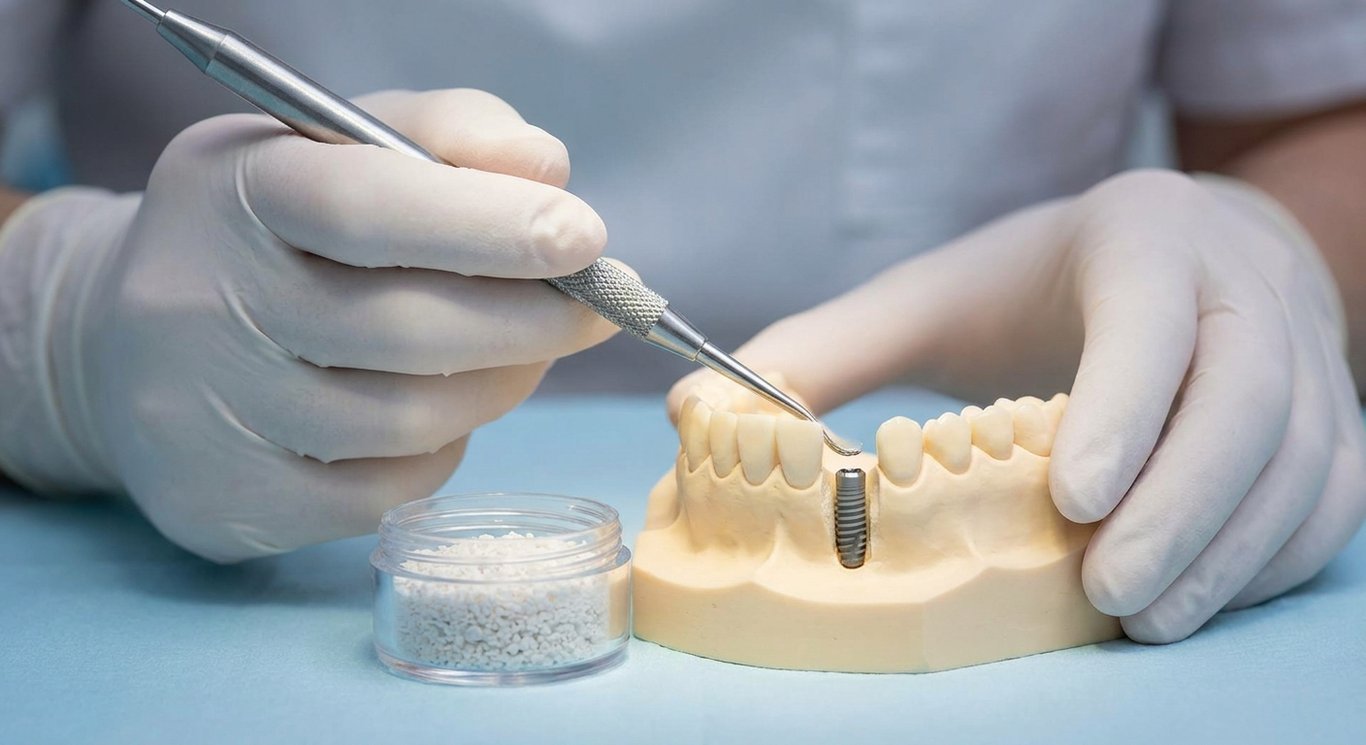
On the day of the procedure, the area is thoroughly numbed with local anesthesia — or, for more extensive procedures, general anesthesia is used. The surgeon makes a small incision in the gum tissue to expose the underlying bone, then prepares the site and places the graft material. Depending on the type of graft, a collagen membrane may be placed over the material to protect it and guide new bone growth. The graft is then secured in place, and the gum tissue is carefully sutured closed over the site to allow undisturbed healing.
The complexity of the procedure varies significantly based on the type of graft being performed. Socket preservation, for example, is relatively straightforward and can be completed in minutes immediately after a tooth is extracted. Sinus lifts and block grafts involve more steps, more precise tissue handling, and slightly longer time in the chair — but they're still outpatient procedures performed regularly in dental and surgical offices.
Most patients go home the same day, even after more involved procedures. Before you leave, you'll receive detailed post-operative instructions covering everything from what to eat and drink to how to care for the surgical site. Prescriptions for pain medication, antibiotics to prevent infection, and sometimes a mouth rinse are commonly provided. Having a trusted person drive you home and help you settle in for the rest of the day is always a smart move.
Healing Timeline, Pain, and Recovery After Bone Grafting
Healing after a bone graft happens in two distinct phases. The first phase — soft tissue healing — typically takes one to two weeks, during which the gum tissue closes over the graft site and initial recovery takes place. The second and longer phase involves the bone itself maturing and integrating with the graft material, which can take anywhere from three to nine months depending on the size and type of graft. Implants are generally not placed until imaging confirms that this bone maturation is complete and the site is ready.
As for pain, most patients are pleasantly surprised by how manageable the discomfort is. The procedure itself is painless thanks to anesthesia. Afterward, mild to moderate soreness and swelling are the most common experiences, typically peaking in the first two to three days and then gradually improving. Prescribed pain relievers or over-the-counter options like ibuprofen, combined with ice packs applied to the outside of the face, are usually enough to keep things comfortable. It's not a walk in the park, but it's also far from the ordeal many people fear.
Following your post-operative care instructions carefully makes a significant difference in how smoothly recovery goes. You'll be advised to avoid strenuous physical activity for several days, stick to soft foods that don't require much chewing, and steer clear of anything that could disturb the graft site — including smoking, which dramatically impairs healing and increases the risk of graft failure. Gentle saltwater rinses or prescribed mouth rinses help keep the area clean without disrupting the healing tissue. Keeping all follow-up appointments is also important so your clinician can monitor how things are progressing.
When the healing period is complete, your dentist or surgeon will evaluate the graft site using clinical examination and updated imaging to confirm that new bone has formed and the site is ready for implant placement. This is the moment when all of the waiting pays off. Patients who follow their care instructions closely and maintain good oral hygiene during recovery give themselves the best possible chance of a successful outcome — and a smooth path forward to their final restoration.
Risks, Complications, and Success Rates of Bone Grafting for Implants
Like any surgical procedure, bone grafting carries a degree of risk. The most commonly encountered complications include infection at the graft site, incomplete integration or partial failure of the graft, sinus-related issues following upper jaw procedures, and temporary nerve irritation that can cause numbness or tingling in the lip, chin, or tongue. Prolonged swelling, delayed healing, or exposure of the graft material through the gum tissue can also occur in some cases. These complications, while real, are not the norm — they're possibilities that patients should be aware of and discuss with their clinician.
The good news is that serious complications are relatively uncommon when the procedure is performed by an experienced clinician and when patients take their post-operative care seriously. Factors that increase risk include smoking, uncontrolled diabetes, certain medications that affect bone metabolism, and poor oral hygiene. Addressing these factors before surgery — quitting smoking, optimizing blood sugar control, reviewing medications with your doctor — can meaningfully reduce the likelihood of problems. No surgery is completely risk-free, but the risk profile for bone grafting is well understood and generally manageable.
When it comes to success rates, the research is encouraging. The vast majority of dental bone grafts heal successfully and provide the bone volume needed for implant placement. Studies consistently show that grafting significantly improves implant survival rates in patients who would otherwise have had inadequate bone, and that implants placed in grafted bone can perform just as well over the long term as those placed in native bone. Bone grafting is not a gamble — it's a predictable, evidence-based procedure that has become a cornerstone of modern implant dentistry for good reason.
Costs, Insurance, and Treatment Planning Considerations
The cost of bone grafting varies depending on several factors. The type and extent of the procedure play the biggest role — a simple socket preservation graft is considerably less expensive than a full sinus lift or a major ridge reconstruction using a block graft. The type of graft material chosen, the need for membranes or fixation hardware, anesthesia fees, and whether the procedure is performed by a general dentist, a periodontist, or an oral surgeon all contribute to the final cost. Geographic location also matters, as fees differ significantly from one region to another.
Insurance coverage for bone grafting can be a mixed bag. Some dental benefit plans cover bone grafting procedures — particularly when they're deemed medically or functionally necessary — while others classify them as elective and provide little or no reimbursement. Medical insurance may occasionally cover grafting when it's related to trauma or disease rather than routine implant preparation. The best approach is to request a pre-treatment estimate from your insurance provider before committing to any procedure, so you know exactly what you'll be responsible for out of pocket. Many dental offices can help you navigate this process.
It's also worth thinking about bone grafting in the context of your overall implant investment. Adding a graft to your treatment plan increases both the cost and the timeline, which can feel frustrating. But viewed from a long-term perspective, grafting is often what makes the difference between an implant that lasts decades and one that fails within a few years — requiring costly revision procedures. Most patients who understand the stakes come to see grafting not as an unnecessary expense, but as a worthwhile investment in the durability and success of their restoration.
Alternatives When Bone Grafting or Implants Are Not Suitable
There are situations where bone grafting or implant placement may not be the right path forward. Patients with uncontrolled systemic conditions such as unmanaged diabetes, severe osteoporosis, or certain blood disorders may face elevated surgical risks that make grafting inadvisable until those conditions are better controlled. Active smokers who are unwilling or unable to quit present a significantly higher risk of graft failure and implant complications. In some cases, the anatomical challenges are simply too complex to address safely, and a different approach is needed.
When implants aren't a viable option, there are still effective alternatives for replacing missing teeth. Traditional fixed bridges use the neighboring teeth as anchors to support a false tooth in between — a well-established solution, though it does require grinding down healthy teeth. Removable partial dentures replace one or more missing teeth and can be taken out for cleaning, but they tend to feel less stable than implants and don't prevent bone loss. Full dentures remain a common solution for patients who have lost all of their teeth, though they come with well-known challenges around fit, comfort, and bone resorption over time.
Even when full-sized implants and extensive grafting aren't suitable, there may still be implant-based options worth exploring. Mini implants — smaller diameter versions of standard implants — can sometimes be placed in areas with limited bone without requiring grafting. Shorter implants have also shown promising results in areas where bone height is restricted. For existing denture wearers, implant-supported overdentures offer a significant improvement in stability and comfort with fewer implants than a full fixed restoration requires. The right answer depends entirely on the individual patient, which is why a personalized treatment consultation is so important.
FAQs: Common Questions About Bone Grafting and Implant Success
Is bone grafting always necessary before getting dental implants?
Bone grafting is not a requirement for every implant patient. Many people have sufficient bone volume and density to support implants without any additional procedures. Grafting is only recommended when a thorough examination and imaging reveal that the bone is too thin, too soft, or too short to hold an implant securely. If your bone is in good shape, you may be able to move straight to implant placement without this extra step.
How long after a bone graft can I get my dental implant?
The waiting period between a bone graft and implant placement typically ranges from three to nine months, depending on the size and type of graft performed. Minor grafts, such as socket preservation, may be ready for implant placement on the shorter end of that range. Larger or more complex procedures — like sinus lifts or block grafts — require more time for the bone to mature and integrate before it can safely support an implant. Your clinician will use imaging to confirm when the site is ready.
Is a dental bone graft painful?
The procedure itself is performed under local or general anesthesia, so you won't feel pain during the surgery. Afterward, most patients experience mild to moderate soreness and swelling that is very manageable with prescribed or over-the-counter pain relievers, ice applied to the outside of the face, and rest. The vast majority of patients describe the post-operative experience as uncomfortable rather than severely painful, and most feel significantly better within the first week.
Are bone grafts safe, and what are the chances of failure?
Dental bone grafting is a well-established procedure with a strong safety record when performed by qualified professionals. While there is always a small risk of complications — including infection or incomplete integration — the majority of grafts heal successfully and provide the bone volume needed for implant placement. Your individual risk factors, such as smoking history, overall health, and oral hygiene, can influence outcomes, so it's worth having an open conversation with your clinician about your specific situation and what to expect.
What happens if I skip bone grafting and go straight to implants?
Placing implants in bone that doesn't have adequate volume or density is a recipe for problems. Without enough bone to support osseointegration, implants may fail to integrate properly, leading to loosening, infection, or complete implant failure. Aesthetic outcomes can also suffer when there isn't enough bone to support the surrounding gum tissue and give the restoration a natural appearance. In most cases, skipping a recommended bone graft doesn't save time or money in the long run — it often leads to more complex and costly problems down the road.
Conclusion: Ensuring Successful Restorations When Implants Aren't Enough
The bottom line is this: successful implant restorations depend on a healthy, adequate jawbone — and when that bone isn't there, grafting is often what makes the entire treatment possible. Throughout this article, we've covered why bone loss happens, what grafting involves, how different materials and techniques are used, what the healing process looks like, and what risks and costs patients can expect. The overarching message is that bone grafting isn't a complication or an obstacle — it's a well-researched, widely used tool that gives implants the foundation they need to last for decades and deliver the function and appearance patients are hoping for.
If you're considering dental implants and wondering whether your jawbone is ready, the most important thing you can do is schedule a professional consultation. A thorough examination with proper imaging will give you and your dental team a clear picture of your bone health and what your treatment plan should look like. Come prepared with questions, be honest about your health history and habits, and don't hesitate to ask about alternatives if grafting or implants aren't the right fit for your situation. With the right team and the right plan — one that addresses bone loss early and sets the implant up for long-term success — you can look forward to a restoration that looks natural, feels comfortable, and gives you back the confidence to smile without a second thought.