The Unseen Guardian: How Your Oral Microbiome Shapes Dental and Overall Health
Published 24 min read
Your mouth is home to a bustling, invisible world. Billions of bacteria, fungi, viruses, archaea, and other microorganisms live in your oral cavity right now, quietly going about their business on your teeth, tongue, gums, and in your saliva. This community is called the oral microbiome, and despite its microscopic scale, it plays a massive role in your daily health. Think of it as an unseen guardian — a living ecosystem that, when functioning properly, helps protect your teeth from decay, supports the very first stages of digestion, and sends important signals to your immune and metabolic systems throughout your body. Far from being something to fear, this microbial community is largely your ally.
However, when this delicate ecosystem tips out of balance — a state scientists call oral dysbiosis — the consequences can reach far beyond a cavity or a bout of bad breath. An imbalanced oral microbiome has been linked to serious dental problems like gum disease and oral infections, but also to systemic conditions including cardiovascular disease, diabetes, adverse pregnancy outcomes, and even neurodegenerative disorders. That's a lot riding on something most people never think about. In this article, you'll learn how the oral microbiome works, what throws it off balance, how it connects to your broader health, and — most importantly — practical, evidence-based steps you can take to protect it every single day.
Understanding the Oral Microbiome: Your Mouth's Hidden Ecosystem
The oral microbiome refers to the entire community of microorganisms that inhabit your mouth. This includes bacteria (the most abundant and well-studied members), fungi like Candida species, viruses including bacteriophages, and archaea — ancient single-celled organisms that don't quite fit into any other category. These microbes don't all live in the same place. Different species prefer different neighborhoods: some colonize the hard surfaces of your teeth, others cling to your tongue's rough texture, some nestle along the gum line, and still others float freely in your saliva. With over 700 species of bacteria identified in the oral cavity alone, the mouth ranks as one of the most diverse microbial habitats in the entire human body — more complex than many people would ever guess.
The key to a healthy oral microbiome isn't the absence of microbes — it's balance. In a well-functioning ecosystem, "friendly" or commensal microbes dominate the community and actively keep potentially harmful species in check. They compete for nutrients and space, produce antimicrobial compounds, and help maintain a neutral pH that protects tooth enamel from erosion. Beneficial bacteria also support the integrity of the mucosal barrier — the tissue lining your mouth — which acts as the first line of defense against pathogens. When this balance is maintained, the oral microbiome operates in a state of homeostasis, quietly protecting you without you ever noticing.
It's also worth understanding that the oral microbiome doesn't operate in isolation. It's deeply connected to the wider human microbiome network, which includes microbial communities in your gut, lungs, and other organ systems. Every time you swallow saliva, you're sending oral microbes into your digestive tract. Microbes can also be aspirated into the respiratory system, and in cases of gum disease, bacteria can enter the bloodstream directly through inflamed tissue. These shared pathways mean that what happens in your mouth doesn't stay in your mouth — it ripples outward into your broader biology in ways that researchers are only beginning to fully understand.
From Plaque to Protection: How the Oral Microbiome Influences Dental Health
You've probably heard that plaque is bad, and while that's not entirely wrong, the full story is more nuanced. Dental plaque is actually a biofilm — a structured community of microorganisms that stick to tooth surfaces and organize themselves into a complex, protective matrix. In a balanced oral microbiome, this biofilm is not inherently dangerous. It includes a diverse mix of species, many of which are beneficial or neutral. The trouble begins when the microbial balance shifts. When harmful species start to dominate the biofilm, it becomes pathogenic, producing acids, toxins, and inflammatory compounds that damage the very structures it coats.
Several well-known dental conditions are directly tied to oral microbiome imbalance. Dental caries, or cavities, develop when acid-producing bacteria like Streptococcus mutans thrive on dietary sugars and erode tooth enamel. Gingivitis and periodontitis — inflammatory gum diseases — arise when anaerobic, gram-negative bacteria proliferate along the gum line, triggering immune responses that damage soft tissue and eventually bone. Oral candidiasis, a fungal infection caused by Candida overgrowth, can occur when bacterial populations that normally keep fungi in check are depleted. And halitosis, or persistent bad breath, is often a sign of sulfur-producing bacteria running amok in the biofilm. In each case, the root cause is a disruption in the microbial community rather than a single "bad" germ.
A question many patients ask is: "Why do I keep getting cavities even though I brush every day?" The honest answer is that oral hygiene, while essential, is only one piece of the puzzle. Your microbial composition — the specific species living in your mouth — matters enormously. Some people naturally harbor higher levels of acid-producing bacteria, making them more susceptible to decay regardless of how diligently they brush. Saliva flow is another factor; saliva neutralizes acids and delivers minerals that repair enamel, so reduced saliva means less natural protection. Diet plays a role too, since frequent sugar consumption feeds harmful bacteria and tips the pH balance toward acidity. Understanding these layers helps explain why two people with similar hygiene habits can have very different dental health outcomes.
Beyond the Mouth: Links Between Oral Microbiome and Systemic Health
Your mouth is not a closed system — it's a regulatory hub with direct lines of communication to the rest of your body. When the oral microbiome becomes dysbiotic, those communication lines can carry harmful signals instead of helpful ones. One major pathway is bacteremia, where bacteria from inflamed or infected gum tissue enter the bloodstream. Another is aspiration, where oral microbes are inhaled into the lungs. A third is the oral–gut axis, where swallowed saliva continuously delivers oral microbes to the digestive tract, where they can influence the gut microbiome and, by extension, immune function and metabolism. These pathways are not theoretical — they're well-documented mechanisms that help explain why oral health and systemic health are so tightly intertwined.
The associations between oral dysbiosis and systemic disease are growing stronger with each passing year of research. Cardiovascular disease is perhaps the most studied connection: certain oral bacteria, particularly Porphyromonas gingivalis, have been found in arterial plaques, and chronic gum inflammation is associated with increased risk of atherosclerosis and stroke. People with poorly controlled diabetes tend to have worse gum disease, and the relationship appears to go both ways — oral inflammation can worsen insulin resistance. Adverse pregnancy outcomes, including preterm birth and low birth weight, have also been linked to periodontal disease, likely through inflammatory and bacterial mechanisms. Respiratory conditions like pneumonia, particularly in hospitalized or elderly patients, can result from the aspiration of oral pathogens into the lungs.
Some of the most intriguing — and still emerging — research involves the oral microbiome's potential links to neurodegenerative diseases, autoimmune conditions, and certain cancers. Porphyromonas gingivalis, the same bacterium implicated in gum disease, has been detected in the brains of Alzheimer's patients, and its toxic enzymes have been shown to cause neuronal damage in animal models. Oral bacteria have also been found at elevated levels in patients with rheumatoid arthritis, and certain species are being investigated as potential contributors to colorectal and pancreatic cancers. It's important to note that most of this research is still evolving — scientists are working hard to determine how much of this is correlation versus causation. But the pattern is consistent and compelling enough that researchers worldwide are taking it very seriously.
So, can gum disease actually affect your heart or your brain? The short answer is: possibly, and the risk is real enough to take seriously. The longer answer is that we can't yet say with certainty that gum disease directly causes heart attacks or Alzheimer's — the science isn't quite there yet. What we can say is that chronic oral inflammation and certain pathogenic oral bacteria are consistently associated with these conditions, and that the biological pathways connecting them are plausible and increasingly well-understood. Whether or not the causal links are fully confirmed, protecting your oral microbiome is a smart, low-risk investment in your overall health. The downside of good oral hygiene is essentially zero; the potential upside is significant.
What Disrupts Your Oral Microbiome? Lifestyle, Habits, and Medical Factors
Several everyday lifestyle choices can quietly destabilize your oral microbiome over time. A high-sugar diet is one of the most potent disruptors, because sugar is the preferred fuel of acid-producing bacteria like S. mutans — feeding them essentially gives harmful microbes a competitive advantage. Frequent snacking compounds this problem by keeping the oral environment acidic for extended periods, limiting the mouth's natural recovery time. Tobacco use — whether smoked or smokeless — dramatically alters the microbial landscape, reducing oxygen levels and favoring anaerobic bacteria associated with gum disease. Heavy alcohol consumption can dry out the mouth and alter pH, similarly favoring harmful species. Poor oral hygiene allows biofilm to accumulate unchecked, and chronic mouth breathing dries out the oral mucosa, removing the protective buffering action of saliva.
Beyond lifestyle, several medical conditions and medications can significantly disrupt the oral microbiome. Diabetes is a prime example — elevated blood sugar creates an environment that promotes the growth of pathogenic bacteria and impairs immune responses in the gum tissue. Immunosuppressive conditions or medications reduce the body's ability to keep opportunistic pathogens like Candida in check, leading to recurrent oral infections. Xerostomia, or dry mouth, is a common side effect of hundreds of medications — from antihistamines to antidepressants — and without adequate saliva, the mouth loses one of its most important natural defenses. Proton pump inhibitors, commonly used for acid reflux, can alter the oral pH environment. And frequent or inappropriate antibiotic use is particularly problematic, as antibiotics can wipe out beneficial bacterial populations and leave the door open for resistant or opportunistic species to take hold.
Stress, sleep, and aging are often overlooked factors that also shape the oral microbiome in meaningful ways. Chronic psychological stress triggers hormonal changes — particularly elevated cortisol — that can suppress immune function and alter saliva composition, subtly shifting the microbial balance toward dysbiosis. Poor sleep has similar immunosuppressive effects. As people age, the oral microbiome naturally shifts in composition, partly due to changes in immune function, partly due to accumulated medication use, and partly due to physical changes in the mouth like gum recession and reduced saliva production. Hormonal fluctuations at puberty, during pregnancy, and at menopause can also temporarily alter the oral environment, making certain life stages particularly important times to pay attention to oral health.
Supporting a Healthy Oral Microbiome: Evidence-Based Daily Practices
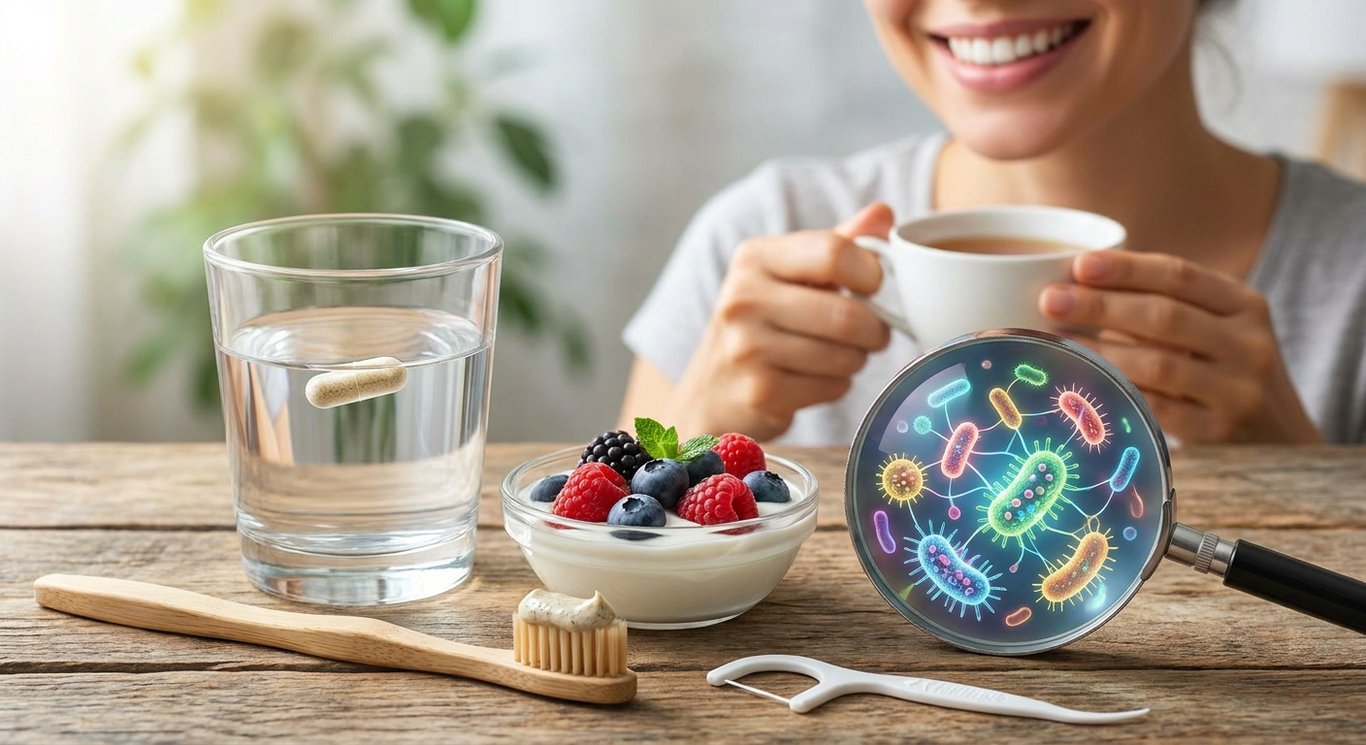
The foundation of a healthy oral microbiome starts with consistent, thoughtful oral hygiene — but the goal isn't to sterilize your mouth. You want to manage the biofilm, not eliminate all microbial life. Brushing twice daily with a fluoride toothpaste is the cornerstone practice: fluoride strengthens enamel and inhibits the metabolism of acid-producing bacteria, while the mechanical action of brushing disrupts harmful biofilm accumulation. Cleaning between teeth — with floss, interdental brushes, or water flossers — is equally important, since the spaces between teeth are prime real estate for pathogenic bacteria that a toothbrush simply can't reach. Adding tongue cleaning to your routine can also make a meaningful difference, as the tongue's surface harbors large microbial populations that contribute to bad breath and can recolonize tooth surfaces throughout the day.
Diet is arguably as important as hygiene when it comes to nurturing a healthy oral microbiome. Reducing your intake of free sugars — the kind added to processed foods and drinks — is one of the highest-impact changes you can make, since it directly starves acid-producing bacteria of their preferred fuel. Limiting acidic beverages like soda, sports drinks, and citrus juices helps maintain a more neutral oral pH. On the positive side, prioritizing whole foods and dietary fiber supports saliva production and provides nutrients that beneficial bacteria need to thrive. Staying well-hydrated is critical, since water keeps the mouth moist and helps wash away food particles and acids. Some research also points to the benefits of fermented foods and foods rich in polyphenols — like green tea and berries — for supporting microbial diversity, though more oral-specific evidence is still accumulating.
The question of mouthwash is one that comes up often, and the answer is more nuanced than most product labels suggest. Antimicrobial rinses containing chlorhexidine or strong concentrations of essential oils can be highly effective at reducing pathogenic bacteria — but they're not particularly selective. Used long-term, they can reduce overall microbial diversity, potentially disrupting the balance they're meant to support. Alcohol-based rinses can also dry out the oral mucosa with repeated use. That said, there are situations — acute gum infections, post-surgical care, or specific clinical conditions — where medicated rinses are absolutely appropriate and should be used as directed by a dental professional. For everyday use, gentler rinses formulated to support rather than eliminate the microbiome are a more balanced choice. When in doubt, ask your dentist.
Building a practical daily routine doesn't have to be complicated. In the morning, brush for two minutes with fluoride toothpaste and clean your tongue before eating or drinking anything other than water — this removes the bacterial buildup from overnight. During the day, drink plenty of water, limit sugary snacks and drinks, and try to give your mouth recovery time between eating occasions rather than grazing constantly. In the evening, floss or use interdental brushes before brushing again, and consider a gentle, alcohol-free rinse if desired. As for how often to brush: twice a day is the evidence-backed recommendation, though brushing after every meal isn't necessary and can actually damage enamel if done too aggressively right after eating acidic foods. The bottom line on mouthwash: it can be a useful addition but should never replace brushing and interdental cleaning as the core of your routine.
Probiotics, Prebiotics, and Novel Therapies for the Oral Microbiome
Oral probiotics are an exciting and growing area of research, offering a different approach to oral health — one that focuses on adding beneficial bacteria rather than simply eliminating harmful ones. Unlike the probiotic supplements you might take for gut health, oral probiotics are typically delivered via lozenges, chewing gums, or rinses designed to allow the beneficial bacteria to colonize the mouth rather than just pass through it. Strains like Lactobacillus reuteri, Lactobacillus rhamnosus, and Streptococcus salivarius K12 have received the most research attention, with proposed mechanisms that include competing with pathogens for space and nutrients, producing antimicrobial substances, modulating the local immune response, and helping maintain a more favorable oral pH. Early clinical studies are promising, particularly for reducing gingivitis, lowering levels of cavity-causing bacteria, and improving bad breath.
Prebiotic approaches offer a complementary strategy: rather than introducing new microbes, prebiotics selectively feed the beneficial ones already living in your mouth. Non-fermentable fibers and certain plant compounds can support the growth of commensal bacteria without fueling acid-producing species. Xylitol, a sugar alcohol found in some chewing gums and dental products, is one of the best-studied microbiome-friendly ingredients in oral care — it can't be fermented by S. mutans, which means it effectively starves cavity-causing bacteria while still satisfying their "appetite." Some studies suggest regular xylitol use can meaningfully reduce cavity risk. That said, it's worth noting that the evidence base for many prebiotic oral care products is still developing, and not all products marketed as "microbiome-friendly" have robust clinical data behind them.
Looking further into the future, the field of oral microbiome science is moving toward genuinely personalized approaches to dental care. Microbiome-based diagnostics — tests that analyze the specific microbial composition of a patient's mouth — could one day allow dentists to identify dysbiosis before clinical symptoms appear and tailor treatment accordingly. Targeted antimicrobials designed to eliminate specific pathogens without harming the broader microbial community are in development, as are bacteriophage therapies that use viruses to selectively destroy harmful bacteria. These innovations hold real promise, but it's important to approach them with realistic expectations: most remain in research or early clinical stages, and none of them are ready to replace the foundational practices of good hygiene, a balanced diet, and regular professional care. They're best understood as exciting additions to the toolkit, not replacements for what already works.
Life Stages and Special Situations: How Oral Microbiome Needs Change Over Time
The oral microbiome doesn't spring into existence fully formed — it develops gradually from the moment of birth. Infants are initially colonized by microbes from their environment, including from their mother during delivery, through skin contact, and through feeding. Whether a baby is breastfed or formula-fed can influence early microbial composition, as breast milk contains compounds that selectively support certain beneficial bacteria. When teeth begin to erupt, the oral environment changes significantly, introducing new surfaces for biofilm to colonize. The habits established in early childhood — including diet, pacifier use, and the introduction of oral hygiene practices — can shape microbial patterns that persist well into adulthood. This makes early childhood a particularly important window for building a resilient oral microbiome.
Adolescence and adulthood bring their own set of challenges. Braces and orthodontic appliances create additional surfaces and hard-to-clean spaces where plaque can accumulate, increasing the risk of dysbiosis and making thorough cleaning more important than ever. Hormonal changes during puberty can increase gum sensitivity and alter the oral environment, making adolescents temporarily more susceptible to gingivitis. Pregnancy is another significant hormonal event — elevated progesterone levels can exaggerate the gum tissue's inflammatory response to plaque, a condition sometimes called "pregnancy gingivitis." Lifestyle shifts in young adulthood, including changes in diet, increased alcohol or tobacco use, and irregular sleep, can also subtly but meaningfully alter the oral microbiome over time. Staying aware of these risk periods helps people take proactive steps when they need them most.
Older adults and medically complex patients face a unique set of oral microbiome challenges. Dry mouth — a near-universal consequence of the multiple medications many older adults take — is one of the most significant, since saliva is a critical pillar of oral defense. Dentures introduce new surfaces that can harbor Candida and other pathogens if not cleaned meticulously. Declining immune function makes it harder for the body to keep opportunistic microbes in check, and conditions like diabetes or heart disease can interact with oral health in complex ways. For caregivers supporting elderly individuals who may have limited mobility or cognitive impairment, maintaining oral hygiene can be a real challenge — but it's a critically important one. Simple adaptations like electric toothbrushes, foam swabs for those who can't tolerate standard brushing, and regular dental check-ups can make a meaningful difference in preserving oral and systemic health in later life.

Working with Dental and Medical Professionals to Protect Your Oral Microbiome
Regular dental visits are about much more than getting your teeth cleaned and checked for cavities. They're an opportunity for a trained professional to monitor the health of your entire oral ecosystem. Signs of oral dysbiosis — chronic gum inflammation, recurrent infections, unusual patterns of decay, or persistent bad breath — can be early indicators of systemic health issues or significant lifestyle risk factors. A dentist or hygienist who sees you regularly can track changes over time that you might not notice yourself, catching problems at a stage when they're far easier to address. Professional cleanings also remove calcified plaque (tartar) that no amount of home brushing can eliminate, helping to reset the microbial environment and give beneficial bacteria a better chance to thrive.
Increasingly, dental and medical professionals are recognizing the value of working together to address the interconnected nature of oral and systemic health. A patient managing poorly controlled diabetes, for example, may find that their periodontist and endocrinologist need to coordinate care, since improving gum health can support better blood sugar control and vice versa. Similarly, cardiologists and dentists may collaborate for patients with a history of heart disease or endocarditis. Autoimmune conditions like Sjögren's syndrome or rheumatoid arthritis have significant oral manifestations that require coordinated management. This kind of integrated, team-based approach to care is becoming more common — and for good reason. Your mouth and your body are not separate systems, and your care shouldn't treat them as if they were.
Taking an active role in your own oral microbiome health starts with asking the right questions at your next appointment. Consider asking your dentist or hygienist whether they see any signs of gum inflammation or unusual microbial activity, and what your personal risk factors might be for oral dysbiosis. Ask how often you should be coming in for check-ups given your health history — for some people, twice a year is appropriate; for others with higher risk, more frequent visits may be warranted. At home, watch for early warning signs like bleeding gums when you brush, persistent bad breath that doesn't improve with hygiene, recurring mouth sores, or teeth that feel increasingly sensitive. These symptoms don't always indicate serious disease, but they're worth discussing with a professional rather than ignoring. The more engaged you are in monitoring your oral health, the better positioned you'll be to catch and address problems early.
FAQs About the Oral Microbiome and Your Health
FAQ 1: What exactly is the oral microbiome, and why should I care?
The oral microbiome is the community of microorganisms — bacteria, fungi, viruses, and more — that live in your mouth. It might sound like something to worry about, but in reality, a balanced oral microbiome is one of your body's most important protective systems. It helps prevent cavities by keeping acid-producing bacteria in check, supports gum health by maintaining a stable microbial environment, and contributes to fresh breath by limiting the overgrowth of odor-producing species. Beyond your mouth, a healthy oral microbiome supports your immune system and may help reduce your risk of certain systemic diseases. Think of it as your unseen guardian — when it's balanced and thriving, it quietly protects you every single day.
FAQ 2: Can an unhealthy mouth really affect my heart or other organs?
Yes — the evidence linking oral health to systemic conditions is substantial and continues to grow. Chronic gum inflammation allows bacteria to enter the bloodstream, where they can trigger inflammatory responses throughout the body. Certain oral bacteria, particularly those associated with periodontitis, have been found in arterial plaques and are associated with increased risk of atherosclerosis and stroke. The relationship between gum disease and diabetes is bidirectional — each condition can worsen the other. Oral bacteria have also been linked to adverse pregnancy outcomes and respiratory infections. While researchers are still working to fully establish direct causal relationships, the consistent associations across many studies make a compelling case for treating your oral health as an integral part of your overall health.
FAQ 3: How can I tell if my oral microbiome is out of balance?
There are several practical signs that your oral microbiome may be out of balance. Frequent cavities — especially if they keep coming back despite good hygiene — can indicate an overgrowth of acid-producing bacteria. Bleeding, swollen, or tender gums are classic signs of gingivitis or early periodontitis, both of which involve dysbiotic microbial communities. Persistent bad breath that doesn't improve after brushing and flossing often points to an excess of sulfur-producing bacteria. Recurrent oral infections, such as cold sores, thrush, or mouth ulcers, can signal immune disruption or microbial imbalance. Unexplained tooth sensitivity may also be a sign that enamel is being eroded by acid-producing microbes. If you're experiencing any of these symptoms, it's worth scheduling a dental evaluation — many of these signs overlap with other conditions, so professional assessment is always the right first step.
FAQ 4: Do antibacterial mouthwashes and strong toothpastes harm my microbiome?
The answer depends heavily on how and how often these products are used. Antimicrobial mouthwashes — particularly those containing chlorhexidine — are highly effective at reducing pathogenic bacteria and are genuinely useful in specific clinical situations, such as managing active gum disease or preparing for oral surgery. However, used long-term without professional guidance, they can reduce overall microbial diversity, potentially disrupting the balance of your oral ecosystem and even affecting blood pressure regulation by eliminating bacteria involved in nitric oxide production. Similarly, very strong antibacterial toothpastes used daily may have unintended effects on beneficial microbial populations. The key is proportionality: use targeted antimicrobial products when clinically indicated and directed by your dentist, and choose gentler, microbiome-conscious options for everyday maintenance.
FAQ 5: What are the best steps I can take right now to support my oral microbiome?
The good news is that supporting your oral microbiome doesn't require an expensive supplement regimen or high-tech gadgets — it starts with a handful of consistent, evidence-backed habits. Brush twice daily with a fluoride toothpaste, clean between your teeth every day, and don't forget your tongue. Cut back on sugary and acidic foods and drinks, and try to give your mouth time to recover between eating occasions rather than snacking constantly. Stay well-hydrated — water is your mouth's best friend. If you smoke or use tobacco, quitting is one of the single most impactful things you can do for your oral microbiome. Keep your regular dental appointments, even when nothing hurts. And if you're curious about oral probiotics or microbiome-friendly products, ask your dentist — some have promising evidence behind them and can be a useful complement to your core routine, but they work best alongside strong foundational habits, not instead of them.
Conclusion: Embracing Your Unseen Guardian for Lifelong Dental and Overall Health
Your oral microbiome is one of the most remarkable and underappreciated systems in your body — a living, dynamic community of microorganisms working around the clock to protect your teeth, your gums, and far more. When kept in balance, it acts as a true unseen guardian: neutralizing acids, crowding out pathogens, supporting your immune system, and even influencing your metabolic health. Throughout this article, we've explored how this ecosystem functions, how it connects to conditions ranging from cavities and gum disease to cardiovascular disease and diabetes, what habits and circumstances can disrupt it, and what you can do — through daily hygiene, smart dietary choices, professional care, and emerging therapies — to keep it resilient. The central message is simple but powerful: your mouth is not separate from the rest of you, and caring for your oral microbiome is caring for your whole body.
Now is a great time to take a fresh look at your oral care routine and think about how it fits into your broader health picture. Start by evaluating the basics — are you brushing and cleaning between your teeth consistently? Is your diet working with your microbiome or against it? When did you last visit your dentist? From there, consider having a conversation with your dental or medical provider about your specific risk factors and whether any additional steps — like more frequent check-ups, a different oral care product, or exploring probiotic options — might be right for you. Small, consistent changes compound over time. Improving your hygiene habits, refining your diet, staying informed about microbiome science, and showing up for your dental appointments are all investments that pay dividends for decades. Your unseen guardian is always working for you — the least you can do is return the favor.