The Smart Smile: Navigating the New Era of Digital and Regenerative Dentistry
Published 26 min read
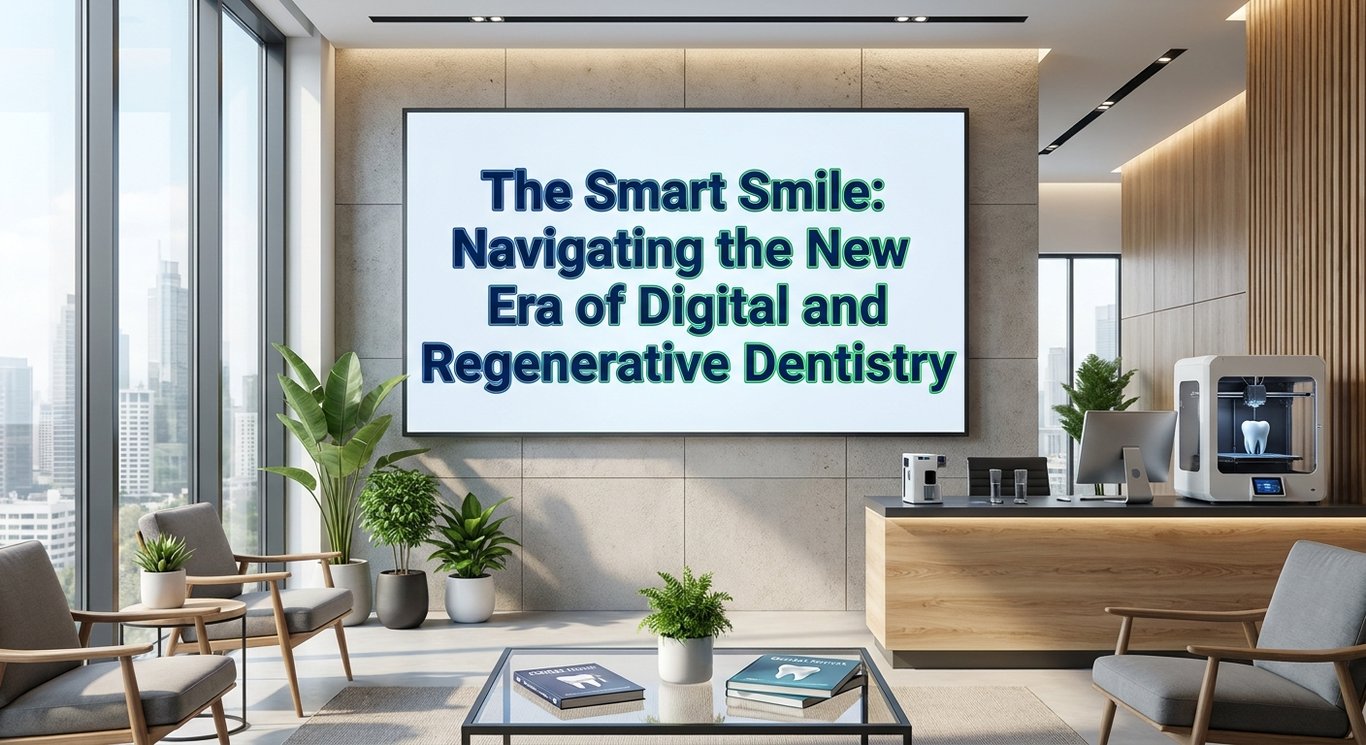
What Is Smart Dentistry?
Smart dentistry is a broad term that describes the integration of digital diagnostics, computer-aided treatment planning, artificial intelligence, connected technologies, and biologically focused care into modern dental practice. Rather than a single invention or technique, it represents a shift in how dentists gather information, design treatments, and deliver care. From high-resolution 3D scans to AI-powered cavity detection, these tools work together to give clinicians a clearer, more complete picture of a patient's oral health than was possible even a decade ago.
Importantly, smart dentistry is not about replacing the dentist with a machine. The goal is to improve accuracy, personalize treatment, reduce patient discomfort, and support long-term oral health in ways that traditional approaches sometimes cannot achieve on their own. Think of it as giving a skilled professional better instruments — the expertise still matters enormously, but the tools make that expertise go further. As these technologies continue to mature, they are gradually reshaping what a routine dental visit looks and feels like for millions of patients.
How Digital Dentistry Is Changing the Patient Experience
One of the most noticeable changes digital dentistry brings is a smoother, faster workflow that benefits patients directly. Digital processes can eliminate the need for messy physical impressions, shorten appointment times, and make treatment plans easier to understand and communicate. When a dentist can show you a 3D model of your own teeth on a screen and walk you through exactly what needs to happen and why, the experience feels far less mysterious — and far less stressful — than it used to be.
Beyond the chair itself, digital records, virtual consultations, patient portals, and treatment simulations are making dental care more convenient and transparent than ever before. Patients can review their records online, receive appointment reminders, and in some cases even preview what their smile might look like after treatment before committing to a procedure. Chairside technologies like digital shade matching and real-time imaging also help dentists make more confident decisions during the visit itself. Together, these tools are gradually turning dental care from something people dread into something they can actually engage with.
Digital Imaging and 3D Diagnostics
Intraoral Scanners and Digital Impressions
Intraoral scanners are small handheld devices that capture thousands of images per second to create highly detailed digital models of a patient's teeth and gums. These digital impressions can be used for designing crowns, clear aligners, bridges, implants, and orthodontic appliances — all without the gooey trays and gagging that traditional impressions are known for. The resulting files are precise, easy to store, and can be sent instantly to a dental laboratory or milling machine, which speeds up the entire process significantly. For patients with strong gag reflexes or dental anxiety, this technology alone can make a meaningful difference in comfort.
CBCT and Three-Dimensional Imaging
Cone-beam computed tomography, commonly called CBCT, takes dental imaging a significant step further by producing three-dimensional views of bone, tooth roots, nerve pathways, sinuses, and airways. This level of detail is especially valuable when planning dental implants, evaluating complex extractions, assessing jaw development, or investigating issues that flat X-rays might miss. That said, CBCT does involve more radiation than standard dental X-rays, so responsible clinicians use it only when the clinical benefit clearly justifies the exposure. Patients should feel comfortable asking their dentist why a CBCT scan is recommended and what information it will provide that simpler imaging cannot.
Combining Patient Data for Better Planning
Perhaps the most powerful aspect of modern digital diagnostics is the ability to combine multiple data sources into a single, unified picture. Intraoral scans, facial photographs, traditional radiographs, CBCT images, medical histories, and even bite recordings can all be layered together using specialized software to support more complete diagnoses. This kind of comprehensive data integration helps clinicians spot relationships between different findings — for example, how jaw structure relates to bite force, or how bone density affects implant placement. The result is a treatment plan that is tailored to the individual rather than based on generalized assumptions.
Artificial Intelligence in Modern Dentistry
Artificial intelligence is making its way into dental practices in a variety of practical ways. AI software can analyze X-rays and photographs to flag potential cavities, bone loss, cracked teeth, or other abnormalities that might be easy to overlook during a busy clinic day. Beyond image analysis, AI tools are also being developed for risk assessment, treatment planning suggestions, and even administrative tasks like scheduling and insurance processing. The technology is still evolving, but early evidence suggests it can serve as a useful second set of eyes in certain diagnostic contexts.
However, it is essential to understand what AI is and what it is not. AI is a decision-support tool, not a replacement for a licensed dental professional. No algorithm can replicate the full clinical judgment of an experienced dentist who can examine a patient in person, ask follow-up questions, feel tissue texture, and interpret findings in the context of that person's complete health history. AI-generated suggestions still need to be reviewed, confirmed, and acted upon by a qualified human clinician — and that is exactly how responsible practices are using these tools today.
There are also legitimate concerns that patients and providers should be aware of. Questions about AI accuracy, potential bias in training data, and the ability to explain why an algorithm reached a particular conclusion are all active areas of discussion in the research community. On top of that, digital health data raises serious issues around cybersecurity, patient consent, and who ultimately owns the information generated during a dental visit. Patients have every right to ask how their data is being used and what safeguards are in place to protect it.
CAD/CAM, 3D Printing, and Same-Day Dentistry
Computer-Aided Design and Manufacturing
CAD/CAM technology allows dental restorations to be designed on a computer and then manufactured with impressive precision — often right in the dental office. Crowns, veneers, inlays, onlays, dentures, and surgical guides can all be created using this approach, with digital consistency that reduces the variability that sometimes came with purely handcrafted restorations. The process typically involves scanning the prepared tooth, designing the restoration on screen, and then milling it from a ceramic or resin block. When done well, the fit, function, and aesthetics of CAD/CAM restorations are excellent, and the workflow is far more efficient than sending impressions to an off-site laboratory.
Dental 3D Printing Applications
Three-dimensional printing has opened up an exciting range of applications in dentistry. Dental labs and clinics are now using 3D printers to produce study models, clear aligners, temporary restorations, full dentures, implant surgical guides, and orthodontic appliances. The technology allows for rapid prototyping and customization that would have been time-consuming or cost-prohibitive using older methods. Researchers are also exploring the use of 3D printing to create patient-specific scaffolds for regenerative procedures — a development that could have significant implications for the future of tissue repair in dentistry, though those applications are still largely in the research phase.
Benefits and Limitations of Same-Day Treatment
The idea of walking into a dental office and walking out with a finished crown the same day is genuinely appealing, and in many cases it is entirely achievable with modern CAD/CAM technology. Fewer appointments, less time off work, and faster restoration delivery are real advantages. That said, same-day dentistry is not a magic solution for every situation. Material selection matters — not all ceramic blocks perform equally well under chewing stress. Case complexity plays a role too, as does the quality of the digital scan, the calibration of the milling machine, and the clinician's experience with the system. Same-day can be excellent, but the outcome still depends on the skill and judgment behind the technology.
What Is Regenerative Dentistry?
Regenerative dentistry is an emerging field that takes a fundamentally different approach to treating damaged or missing oral tissues. Instead of simply replacing what has been lost with artificial materials, regenerative dentistry seeks to repair or restore biological tissues using tools like stem cells, scaffolds, biomaterials, growth factors, and tissue engineering strategies. The underlying idea is that the body has some capacity for self-repair, and that science can learn to guide and amplify that capacity in targeted ways. It is a field that sits at the intersection of dentistry, biology, and materials science — and it is moving quickly.
To understand what makes regenerative dentistry different, it helps to contrast it with conventional restorative dentistry. A filling protects a damaged tooth. A crown covers it. An implant replaces a missing root. A denture substitutes for missing teeth. All of these are valuable, proven treatments — but none of them recreates living biological tissue. Regenerative approaches, by contrast, aim to stimulate or recreate structures like pulp, dentin, periodontal ligament, or even entire teeth using biological building blocks. The ambition is significant, and while many techniques are still under investigation, some are already making their way into clinical practice in carefully selected cases.
Regenerative Endodontics and Pulp-Dentin Repair
Regenerative endodontic procedures represent one of the more clinically advanced areas of regenerative dentistry. In certain cases — particularly in young patients with immature teeth that have suffered pulp damage from trauma or infection — these procedures may aim to preserve or restore pulp-like tissue rather than removing all of it through a traditional root canal. The goal is to allow the root to continue developing and the tooth to maintain some biological vitality, which can have long-term benefits for its strength and function.
The biological process behind these procedures involves several interacting components. Blood supply to the tooth needs to be reestablished or maintained. Stem or progenitor cells — often recruited from the surrounding tissues or from a blood clot intentionally created inside the root canal — provide the cellular raw material for new tissue formation. Signaling molecules help direct how those cells behave, and scaffolds provide a structural framework for tissue to grow into. It is a carefully orchestrated biological event, and when it works, the results can be genuinely remarkable in terms of root development and tooth preservation.
That said, it is important to set realistic expectations. Outcomes from regenerative endodontic procedures can vary considerably depending on the patient's age, the extent of infection, the tooth's stage of development, and the clinician's experience. Many of the more advanced cell-based techniques — such as those using isolated stem cell populations or engineered tissue constructs — remain under active investigation and are not yet part of routine clinical practice. Patients considering these procedures should have a thorough conversation with their endodontist about what is achievable in their specific situation.
Stem Cells, Biomaterials, and Tissue Engineering
Dental Stem Cell Sources
One of the most exciting aspects of regenerative dentistry is the discovery that the mouth is actually a rich source of stem cells. Dental pulp stem cells, periodontal ligament stem cells, stem cells from human exfoliated deciduous teeth (sometimes called SHED cells from baby teeth), and cells from the apical papilla — the tissue at the tip of developing tooth roots — are all being studied for their regenerative potential. These cells belong to a broader category known as mesenchymal stem cells, and they have shown promising abilities in laboratory settings to differentiate into various tissue types including bone, dentin, and soft tissue. The fact that these cells can be harvested from teeth that would otherwise be discarded — like baby teeth or extracted wisdom teeth — makes them an ethically appealing and practically accessible source for future therapies.
The Tissue-Engineering Triad
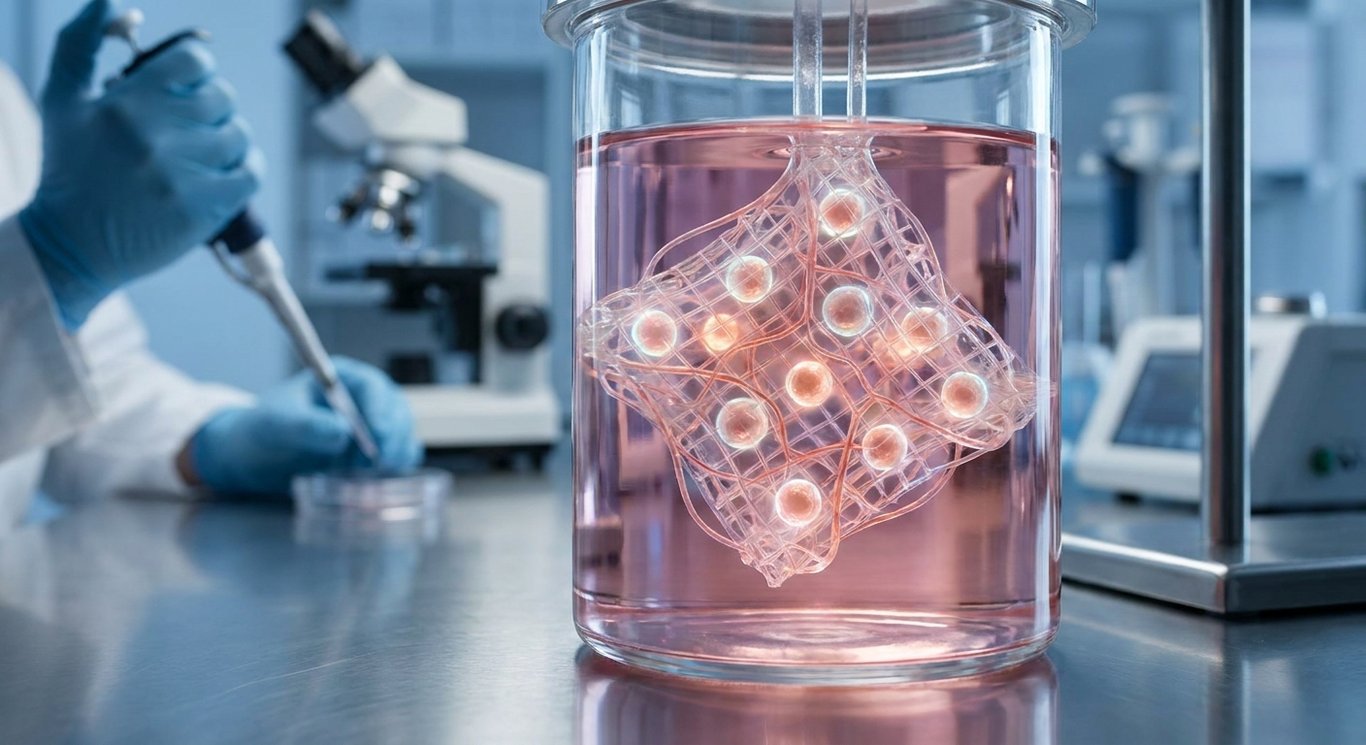
Most tissue engineering strategies in dentistry are built around three core components that work together: cells, scaffolds, and signaling factors. The cells provide the biological machinery for building new tissue. The scaffold — which might be made from natural materials like collagen or synthetic polymers — provides a three-dimensional structure that guides how cells organize and grow. Signaling factors, including growth factors and cytokines, tell the cells what to do and when to do it. Getting these three elements to work in harmony, in the right environment, over the right time period, is the central challenge of tissue engineering — and it is considerably more complicated inside a living patient than it is in a laboratory dish.
Why Clinical Translation Is Difficult
Moving from a promising laboratory result to a treatment that works reliably in patients is one of the hardest problems in all of medicine — and dentistry is no exception. Cell behavior changes when moved from a controlled lab environment into the complex biological landscape of the human mouth. New tissue needs a blood supply to survive, and integrating nerves is another significant challenge. Scaffold materials must be biocompatible, degrade at the right rate, and not trigger excessive inflammation. Beyond the biology, there are manufacturing challenges around producing cells and materials at consistent quality and scale, as well as regulatory hurdles, cost barriers, and the need for long-term safety data. None of these are insurmountable, but they explain why many regenerative approaches that look exciting in research papers are still years away from being available to everyday patients.
Can Dentistry Regenerate an Entire Natural Tooth?
The honest answer is: not yet, at least not as a routine clinical procedure. Complete biological tooth regeneration — growing a fully functional tooth from scratch inside a patient's jaw — is one of the most ambitious goals in dental research, and it remains exactly that: a goal. Scientists have demonstrated the ability to grow tooth-like structures in animal models, and there is genuine excitement about the direction the field is heading. But the gap between a laboratory proof of concept and a safe, reproducible, affordable treatment for human patients is substantial.
Research is advancing on multiple fronts simultaneously. Stem cell biology, organoid models that mimic tooth development, biomimetic materials that replicate the properties of natural tooth structures, 3D bioprinting of tissue scaffolds, and computational design tools are all contributing pieces to this puzzle. Some early-phase human studies are beginning to explore specific aspects of tooth regeneration, particularly in children with certain developmental conditions. But patients should be clear-eyed about the distinction between laboratory or early-stage findings and treatments that have been validated through rigorous clinical trials. The future looks genuinely promising — but it is still the future.
Personalized and Minimally Invasive Treatment Planning
One of the most meaningful shifts in modern dentistry is the move toward treatment plans that are built around the individual patient rather than a one-size-fits-all protocol. Digital scans, 3D imaging, genetic information, medical histories, oral risk assessments, and patient preferences can all be factored into a treatment plan that reflects that specific person's biology, lifestyle, and goals. This kind of personalized approach allows clinicians to identify problems earlier, choose interventions that are proportionate to the actual risk, and avoid unnecessary treatment — which is better for the patient and for the tooth.
Precise planning also supports a philosophy of minimally invasive care, which prioritizes preserving as much natural tooth structure as possible. When a dentist knows exactly where a cavity ends and healthy tissue begins — thanks to high-resolution imaging and digital analysis — they can prepare the tooth more conservatively. Guided implant placement reduces the risk of damaging nearby nerves or blood vessels. Customized orthodontic treatment can achieve tooth movement more efficiently and comfortably. Prevention-focused planning, informed by risk assessment data, can help patients avoid problems before they require significant intervention. In this way, better information leads directly to better outcomes.
Digital Dentistry and Dental Implants
Virtual Implant Planning
Dental implant placement has benefited enormously from digital planning tools. Using CBCT imaging combined with digital impressions and specialized planning software, clinicians can evaluate the volume and density of available bone, identify the precise locations of nerves and blood vessels, and design the optimal position, angle, and depth for each implant — all before the patient ever sits down in the surgical chair. This virtual planning process reduces uncertainty, allows for better communication between the dentist, the surgeon, and the laboratory, and helps ensure that the final restoration will fit and function as intended.
Guided Implant Surgery
Once a virtual plan is finalized, it can be used to fabricate a surgical guide — a custom-fitted device that fits over the patient's teeth or gums and directs the drill to the exact position and angle determined during planning. Guided implant surgery has the potential to improve positioning accuracy and make the procedure more predictable, particularly in complex cases involving multiple implants or limited bone volume. However, it is important to be clear that surgical guides do not eliminate risk. Proper surgical technique, patient anatomy, bone quality, and the clinician's experience all remain critical factors in the outcome. A guide is a tool, not a guarantee.
Future Regenerative Implant Solutions
Researchers are also working on ways to make the implant itself more biologically active. Rather than simply osseointegrating — bonding mechanically to the surrounding bone — next-generation implants may feature surfaces coated with growth factors, peptides, or other bioactive molecules that actively encourage faster and stronger bone integration. Tissue-engineered bone grafts and regenerative scaffolds are being investigated as alternatives or supplements to traditional bone grafting procedures, which are sometimes needed when a patient lacks sufficient bone for implant placement. The vision is an implant that works with the body's biology rather than simply coexisting with it — and while that vision is not yet fully realized, it is driving a significant amount of research activity.
Teledentistry, Remote Monitoring, and Connected Oral Care
Teledentistry has expanded significantly in recent years, driven partly by pandemic-related disruptions and partly by genuine improvements in smartphone camera quality and secure communication platforms. Virtual consultations allow patients to discuss concerns, share photographs, and receive preliminary guidance from a dentist without needing to travel to a clinic. Remote orthodontic monitoring platforms let patients submit regular scans from home so their provider can track tooth movement between in-person appointments. Digital symptom screening tools can help triage patients and direct them toward the right level of care. For people in rural areas, those with mobility challenges, or those who simply struggle to take time off work, these options can make a meaningful difference in access to care.
That said, teledentistry has real limitations that patients and providers need to acknowledge honestly. A smartphone photograph, no matter how good, cannot replace a hands-on clinical examination. Dentists cannot feel tissue, test bite force, probe gum pockets, or detect subtle findings through a screen. Image quality and lighting vary widely, which can affect the accuracy of remote assessments. Privacy and data security are genuine concerns with any digital health platform. And access to the technology itself is unequal — not everyone has a reliable smartphone, a strong internet connection, or the digital literacy to navigate these systems. Teledentistry works best as a complement to in-person care, not a replacement for it.

Safety, Privacy, Regulation, and Ethical Questions
As dental care becomes increasingly digital, patients have a responsibility — and a right — to ask hard questions about how their information is being handled. Digital images, intraoral scans, CBCT data, AI-generated assessments, and treatment records all contain sensitive personal health information. Patients should feel comfortable asking their dental provider where that data is stored, who has access to it, whether it is shared with third parties such as AI companies or insurance providers, how long it is retained, and what happens to it if the practice closes or changes ownership. These are not paranoid questions — they are reasonable ones, and any reputable practice should be able to answer them clearly.
Beyond data privacy, there are broader questions of safety and clinical standards. Digital devices used in dental care — including intraoral scanners, CBCT units, and AI diagnostic software — should be validated for their intended use and cleared or approved by relevant regulatory bodies. Clinicians using these technologies should have appropriate training and experience. Patients should also expect transparent pricing, clear explanations of what a procedure involves, and treatment recommendations that are grounded in evidence rather than driven by the appeal of cutting-edge technology. Infection control, radiation safety, and informed consent remain just as important in a high-tech practice as in a traditional one.
The regenerative dentistry space raises some additional ethical concerns that deserve attention. Stem-cell banking services marketed to parents of young children, clinics offering unproven regenerative injections, and practices that present research-phase techniques as established treatments are all areas where patients can be misled — sometimes at significant financial and physical cost. Clinical trials play a vital role in advancing regenerative medicine, but participation should always be voluntary, fully informed, and clearly distinguished from standard clinical care. Patients who are curious about regenerative options should approach them with genuine curiosity and healthy skepticism in equal measure.
Cost, Accessibility, and Insurance Considerations
The cost of digital and regenerative dental treatments varies widely, and understanding why can help patients make more informed decisions. Technology itself is expensive — CBCT machines, intraoral scanners, CAD/CAM milling units, and AI software all represent significant investments that practices recoup through their fees. Clinician expertise, laboratory involvement, material quality, treatment complexity, and geographic location all factor into pricing as well. Procedures that are considered experimental or not yet widely adopted tend to cost more and are far less likely to be covered by dental insurance. Patients should go into consultations with a clear understanding that innovation often comes with a premium price tag.
Fortunately, there are practical steps patients can take to navigate these costs more confidently. Asking for an itemized breakdown of fees is always reasonable. Checking with your insurance provider before committing to treatment can prevent unpleasant surprises. Many dental practices offer financing plans, and some community dental schools provide advanced treatments at reduced cost. Seeking a second opinion before agreeing to expensive or complex procedures is not only acceptable — it is wise. Patients should also ask about long-term maintenance requirements and the likelihood of needing additional treatment or replacement restorations over time, since the initial cost is rarely the only cost involved.
How to Choose a Dentist for Digital or Regenerative Care
Choosing the right provider for digital or regenerative dental care requires a bit more due diligence than selecting a dentist for a routine cleaning. Start by checking the clinician's professional credentials and verifying that they have received specific training in the technology or procedure you are considering. Experience matters — a dentist who has placed hundreds of guided implants using digital planning is in a very different position than one who has completed a weekend course. Facility standards, sterilization protocols, and whether the practice uses properly validated equipment are also worth investigating. A good clinician will welcome these questions rather than deflect them.
Once you are in the consultation, ask pointed questions about the evidence behind the proposed treatment. Is this procedure routinely performed, or is it investigational? What does the research actually show? What are the known risks and complications, and how are they managed? How will success be defined and measured over time? What are the alternatives, including doing nothing? A clinician who gives clear, honest answers to these questions — including acknowledging uncertainty where it exists — is demonstrating exactly the kind of transparency you want in someone responsible for your oral health.
Finally, trust your instincts when something feels off. High-pressure sales tactics, vague promises about stem-cell treatments, claims of guaranteed results, or reluctance to discuss alternatives are all red flags worth taking seriously. Marketing language that presents cutting-edge research as proven, available treatment is a common pattern in this space, and it can be genuinely difficult for patients to distinguish between the two. If a treatment sounds almost too good to be true, or if you feel rushed into a decision, it is always appropriate to slow down, seek a second opinion, and give yourself time to think.
What the Future of the Smart Smile May Look Like
Looking ahead, the trajectory of digital and regenerative dentistry points toward care that is increasingly precise, personalized, and proactive. Improved AI diagnostic tools may be able to detect disease at earlier stages than current methods allow. Digital twins — virtual replicas of a patient's mouth that can be updated over time — could allow clinicians to model the long-term effects of different treatment choices before committing to one. Smarter biomaterials that respond to the biological environment, bioprinted scaffolds tailored to individual anatomy, regenerative periodontal therapies that rebuild lost bone and attachment, and more integrated electronic health records that connect dental and medical care are all on the horizon. The cumulative effect could be a dental experience that is not just more comfortable, but genuinely more effective at preserving natural teeth for life.
However, the future of smart dentistry will only be as good as the foundations it is built on. Strong clinical evidence, standardized manufacturing processes, rigorous regulatory oversight, and long-term monitoring of patient outcomes are all essential if these technologies are to deliver on their promise. Equally important is the question of who gets access. Advanced dental technologies tend to reach affluent urban populations first, and ensuring that the benefits of digital and regenerative dentistry reach underserved communities — not just those who can afford premium care — will require deliberate effort from regulators, educators, and the profession as a whole. Innovation without equity is an incomplete victory.
Frequently Asked Questions About Digital and Regenerative Dentistry
What is digital dentistry?
Digital dentistry refers to the use of technology-driven tools and workflows to support dental diagnosis and treatment. This includes intraoral scanning for digital impressions, three-dimensional imaging like CBCT, CAD/CAM systems for designing and manufacturing restorations, AI-assisted diagnostic software, digital treatment planning platforms, and electronic patient records. These tools work together to make dental care more precise, efficient, and transparent. Rather than representing a single invention, digital dentistry is an evolving ecosystem of technologies that continues to expand as new innovations are developed and validated for clinical use.
Is digital dentistry better than traditional dentistry?
In many situations, digital tools offer real advantages — faster workflows, improved visualization, better communication between the dentist and patient, and more consistent precision in certain procedures. But "better" is not a blanket statement that applies in every case. The outcome of any dental treatment still depends fundamentally on accurate diagnosis, sound clinical judgment, appropriate material selection, patient cooperation, and ongoing maintenance. Digital technology enhances what a skilled clinician can do; it does not replace the need for that skill. Patients should evaluate digital options based on their individual needs and circumstances rather than assuming that newer automatically means superior.
Can stem cells regrow a missing tooth today?
Not as a routine clinical treatment, no. Complete regrowth of a missing natural tooth using stem cells is one of the most ambitious goals in dental research, and while significant scientific progress has been made — particularly in animal models and early laboratory studies — it has not yet been translated into a safe, reproducible procedure available to everyday patients. Researchers are actively investigating stem cells, scaffolds, signaling molecules, organoid models, and tissue-engineering approaches, and some early-phase human studies are underway. But patients should be cautious of any clinic claiming to offer complete tooth regeneration as a current treatment option — that claim is not supported by established clinical evidence at this time.
Are regenerative dental treatments safe?
Safety in regenerative dentistry depends heavily on the specific procedure being considered, the materials and techniques involved, the provider's qualifications, and whether the treatment has been reviewed and cleared by appropriate regulatory bodies. Some regenerative procedures — such as certain bone grafting techniques or regenerative endodontic protocols — have a reasonable evidence base and are performed routinely in specialist settings. Others, particularly those involving isolated stem cell populations or novel biomaterials, remain experimental and carry less certainty about long-term outcomes. Patients should always ask whether a proposed regenerative treatment is considered standard care or investigational, and what evidence supports its use in their specific situation.
How can patients tell whether a smart dental treatment is legitimate?
Evaluating the legitimacy of a digital or regenerative dental treatment requires a combination of research and direct questioning. Start by verifying the provider's credentials and confirming that they have relevant training and experience with the specific procedure. Ask what clinical evidence supports the treatment, whether it has been reviewed by a regulatory body, what the known risks and failure rates are, and what alternatives exist. Be skeptical of guaranteed results, vague claims about stem cells or biological regeneration, and high-pressure sales environments. If you are uncertain, seeking an independent second opinion from a qualified specialist is always a reasonable and responsible step — any provider worth their credentials will support that decision.
Conclusion: Making Informed Choices for a Smart Smile
The world of digital and regenerative dentistry is genuinely exciting, and for good reason. Digital tools are improving how dentists visualize, plan, and deliver care — making treatments faster, more precise, and more personalized than ever before. Regenerative approaches offer the tantalizing possibility of repairing biological tissues rather than simply replacing them with artificial substitutes. AI, 3D printing, stem cells, and advanced biomaterials are all contributing to a field that is evolving rapidly. At the same time, patients are best served by approaching these innovations with informed curiosity rather than uncritical enthusiasm. Evidence, safety, regulatory status, and individual clinical need should guide every decision — not marketing language or the appeal of novelty.
The smart smile is not just about having access to the latest technology — it is about making choices that are right for your health, your circumstances, and your long-term wellbeing. If you are curious about what digital or regenerative dentistry might offer you specifically, the best next step is a conversation with a qualified dental professional who can assess your individual needs and explain your options honestly. Ask questions, compare alternatives, and take the time to understand what you are agreeing to before you commit. We encourage you to schedule a personalized consultation to explore the digital and regenerative treatment pathways that may be available to you — because an informed patient is always in the best position to achieve a truly smart smile.