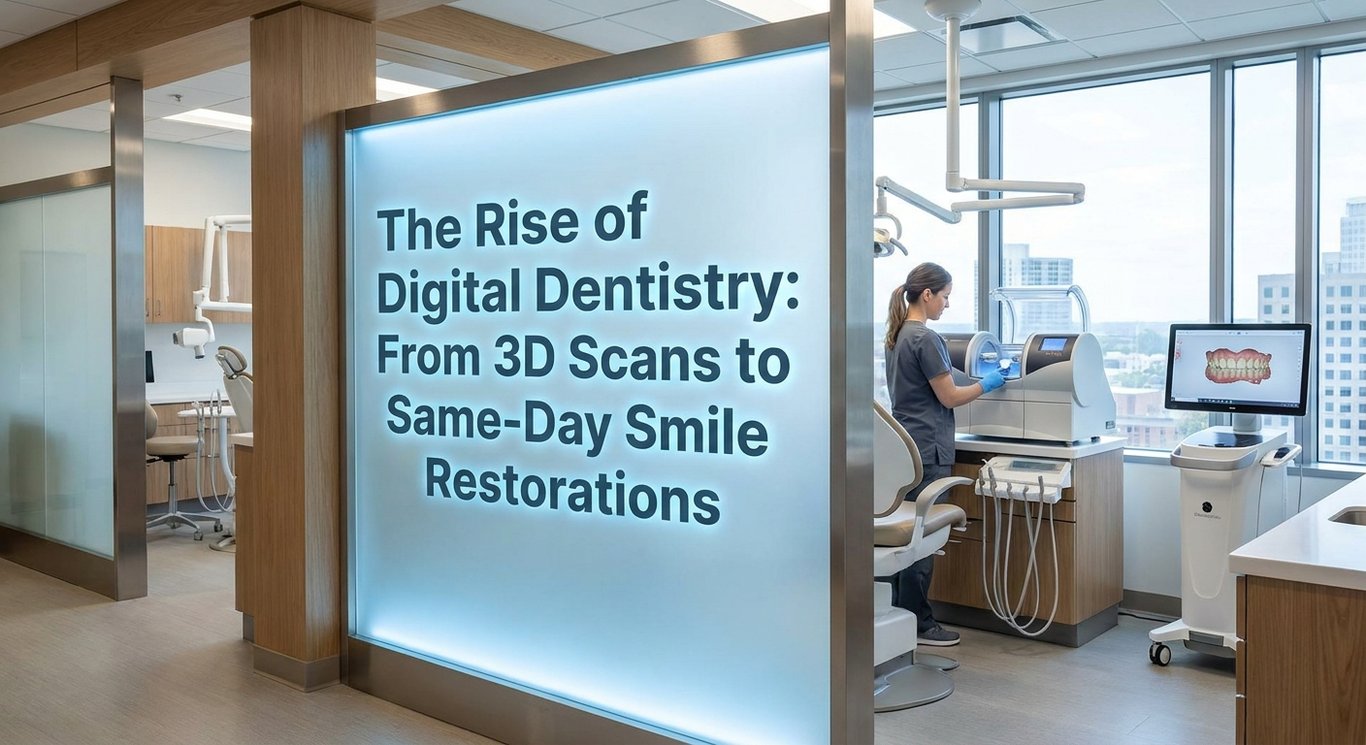
The Rise of Digital Dentistry: From 3D Scans to Same-Day Smile Restorations
Published 28 min read
What Is Digital Dentistry?
Digital dentistry is the use of technology-driven tools and software to diagnose, plan, and deliver dental care with greater precision and efficiency. Instead of relying entirely on physical molds, hand-drawn charts, and analog X-rays, modern dental practices are increasingly using digital imaging, intraoral scanners, CAD/CAM software, cone-beam computed tomography (CBCT), 3D printers, and connected treatment-planning platforms. Each of these tools plays a specific role, but what makes digital dentistry truly powerful is how they work together as a connected system — capturing detailed information, converting it into usable data, and turning that data into real, physical restorations that fit precisely in a patient's mouth.
Not long ago, getting a crown or a dental bridge meant biting into a tray of thick, goopy impression material and waiting weeks for a laboratory to fabricate your restoration. Today, that entire process is shifting. Digital workflows allow dentists to move from a single scan to a finished restoration in far less time, with fewer steps and often better communication between the dentist, the patient, and the dental laboratory. This shift isn't just about speed — it's about improving the accuracy of diagnoses, making treatment easier to understand, and delivering results that are more predictable from the very start.
How 3D Intraoral Scanning Is Changing Dental Care
At the heart of many digital dental workflows is the intraoral scanner — a small, handheld wand that a dentist or hygienist moves around the inside of your mouth to capture thousands of images per second. These images are stitched together in real time to create a highly detailed, three-dimensional digital model of your teeth, gums, and bite relationships. The result is a precise digital impression that can be used for everything from designing a crown to planning orthodontic treatment. Modern scanners can capture fine details like the edges of a tooth preparation or the subtle contours of gum tissue with impressive accuracy.
Compared to traditional putty impressions, digital scans offer some clear advantages. There's no sticky material to gag on, no waiting for the impression to set, and no risk of the mold distorting when it's removed from your mouth. Digital files don't warp, crack, or get lost in the mail. They can be stored indefinitely on secure servers and shared instantly with dental laboratories or specialists anywhere in the world. For patients who have a strong gag reflex or dental anxiety, this switch alone can make a meaningful difference in how comfortable a dental appointment feels.
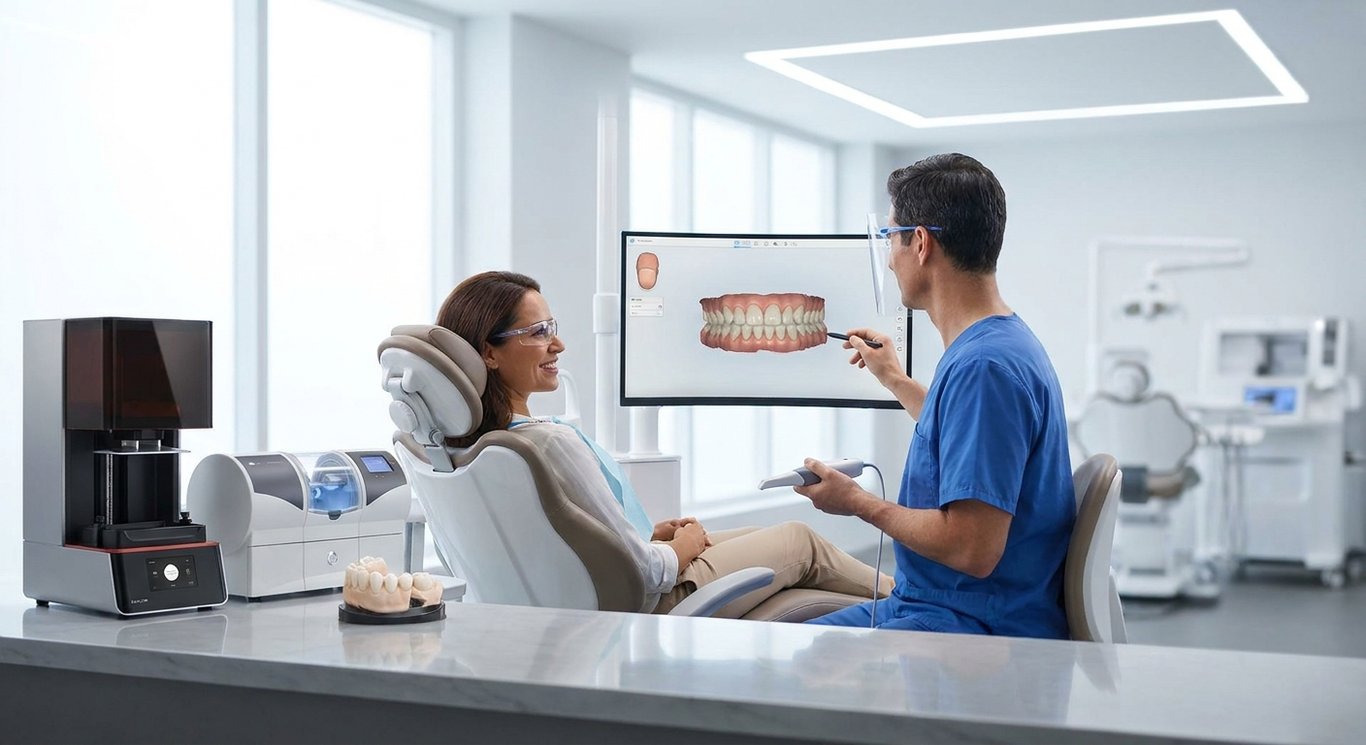
One of the more underappreciated benefits of intraoral scanning is how it changes the conversation between dentist and patient. Once your scan is complete, the three-dimensional model appears on a screen right in front of you. Your dentist can rotate it, zoom in, and point out exactly what's going on — whether that's a crack in a molar, a worn-down edge, or the gap left by a missing tooth. Seeing your own mouth in that level of detail makes it much easier to understand why a treatment is being recommended and what it's actually going to fix.
The Role of CBCT and Digital Imaging in Diagnosis
While intraoral scanners capture the surfaces of teeth and gums, cone-beam computed tomography — commonly called CBCT — goes much deeper. A CBCT machine rotates around the patient's head and captures hundreds of images from different angles, which are then reconstructed into a three-dimensional view of the teeth, jawbone, nerve canals, sinuses, and surrounding anatomical structures. Unlike traditional flat dental X-rays, which give a two-dimensional picture, CBCT allows a dentist to examine the mouth in all three dimensions, revealing details that simply aren't visible any other way.
This level of detail has made CBCT an essential tool for a growing range of dental procedures. In implant planning, it allows dentists to measure bone height and width precisely, identify the location of nerves, and choose the ideal implant position before surgery begins. In orthodontics, it helps evaluate root positions and jaw relationships. For root canal treatment, it can reveal extra canals or unusual root anatomy that might otherwise go undetected. It's also used in oral surgery planning, complex restorations, and assessing the risk of complications before treatment begins. When there's a question that a standard X-ray can't fully answer, CBCT often provides the missing piece.
Understanding CAD/CAM Dentistry
CAD/CAM stands for computer-aided design and computer-aided manufacturing, and it's the technology that bridges the gap between a digital scan and a finished dental restoration. Once an intraoral scanner captures the shape of a prepared tooth and the surrounding bite, that data is imported into specialized software where a dentist or dental technician can design a virtual restoration — a crown, veneer, bridge, or other appliance — that fits precisely into the space available. The software allows for fine adjustments to the shape, thickness, contact points, and bite relationship before anything is physically made.
Once the design is approved, the digital file is sent to either a milling machine or a 3D printer to be fabricated. Milling machines carve the restoration out of a pre-made block of ceramic, composite resin, or other material using precision cutting tools. After milling, the restoration may be glazed, stained, polished, or fired in a small oven to achieve the right shade and surface texture. The dentist then tries it in the patient's mouth, checks the fit and bite, makes any necessary adjustments, and bonds it permanently in place. The whole process — from scan to cementation — can sometimes happen in a single appointment.
The range of restorations that CAD/CAM technology can support is broad and continues to grow. Crowns and veneers are the most common applications, but the same workflow can be used for inlays, onlays, multi-unit bridges, implant-supported restorations, full-arch dentures, clear aligners, retainers, and temporary restorations placed while a final restoration is being made. As materials and software continue to improve, the clinical indications for CAD/CAM dentistry are expanding into more complex and demanding cases.
How Same-Day Smile Restorations Work
A same-day restoration appointment typically begins the same way any dental visit does — with an examination, a review of your dental history, and a discussion of your symptoms and goals. If a restoration is needed, the dentist will prepare the tooth by removing decay or damaged structure and shaping it to receive the new restoration. Once the tooth is prepared, an intraoral scanner captures a precise digital impression of the prepared tooth, the opposing teeth, and the bite. No trays, no putty, and no waiting for a mold to set.
With the digital scan complete, the dentist moves to the design phase. Using CAD/CAM software, they create a virtual restoration that matches the shape and size of the original tooth while fitting precisely into the prepared space. The software can suggest an initial design based on the surrounding teeth, which the dentist then refines. Once satisfied with the design, they select the appropriate material and shade to match the patient's natural teeth and send the file to an in-office milling unit or 3D printer. Depending on the system and material, fabrication can take anywhere from a few minutes to about an hour.
When the restoration comes out of the mill or printer, the work isn't quite finished. The dentist will try it in the patient's mouth to check the fit, the bite, and the appearance. Minor adjustments are made as needed — smoothing edges, refining contact points, or tweaking the bite. The restoration is then polished to a smooth finish, and if everything looks and feels right, it's bonded or cemented permanently into place. A final quality check confirms that the margins are sealed, the bite is even, and the patient is comfortable before the appointment ends.
It's worth being clear about something: same-day treatment isn't available for every patient or every situation. Whether you're a candidate depends on your specific diagnosis, the type of restoration needed, the condition of the tooth and surrounding bone, the technology available at the practice, and the clinical complexity of your case. Some situations — like teeth with significant gum disease, complex bite problems, or extensive structural damage — may still require a more traditional multi-appointment approach. Same-day dentistry is a powerful option, but it's not a universal solution.
Which Dental Treatments Can Be Completed Digitally?
Digital technology now supports a wider range of dental treatments than most patients realize. From simple restorations to full-mouth rehabilitation, the tools available today allow dentists to plan and deliver care with more precision than was possible even a decade ago. Here's a closer look at some of the most common treatments that can benefit from a digital workflow.
Same-Day Crowns
One of the most well-known applications of chairside CAD/CAM technology is the same-day crown. When a tooth is too damaged for a filling but doesn't need to be extracted, a crown is typically the recommended solution. With a digital workflow, the dentist can take a scan of the prepared tooth, design the crown on-screen, mill it from a ceramic block right in the office, and cement it in place — all in a single appointment. For patients who would otherwise need to wear a temporary crown for two or more weeks while waiting for a laboratory to fabricate the final restoration, this is a significant convenience.
Veneers, Inlays, and Onlays
Digital design is also well-suited to cosmetic and conservative restorations like veneers, inlays, and onlays. Veneers are thin ceramic shells bonded to the front surfaces of teeth to improve their shape, color, or size. Inlays and onlays are used when a tooth has too much damage for a filling but not enough to justify a full crown. With CAD/CAM software, dentists can design these restorations with careful attention to proportions, shade, and how they interact with the surrounding teeth. Patients can often preview how the final result will look before anything is fabricated, which makes the decision-making process much more informed and collaborative.
Implants, Dentures, and Orthodontic Appliances
Digital technology has also transformed implant dentistry, denture fabrication, and orthodontic treatment. CBCT imaging combined with digital scanning allows dentists to plan implant placement with surgical precision, often using a custom-made surgical guide that directs the drill to exactly the right position and angle. Dentures can now be designed digitally and milled or printed with consistent fit and aesthetics. Clear aligners — the transparent trays used to straighten teeth — are designed entirely using digital scans and treatment-planning software. Retainers, night guards, and other appliances can be fabricated from digital models as well, often more quickly and accurately than with traditional methods.
Benefits of Digital Dentistry for Patients
For many patients, one of the most immediate and welcome benefits of digital dentistry is the elimination of traditional impression materials. If you've ever had a dental impression taken, you know the experience — a tray loaded with thick, sticky material pressed into your mouth and held there until it sets. For patients with a sensitive gag reflex, this can be genuinely distressing. Intraoral scanners replace all of that with a small wand that glides around the mouth, capturing images in seconds. Most patients find the process quick, comfortable, and far less unpleasant than what they were expecting.
Beyond comfort, digital workflows can also save patients a significant amount of time. Traditional restorations often require at least two appointments — one to prepare the tooth and take an impression, and another weeks later to fit and cement the final restoration. In between, patients typically wear a temporary crown or veneer that can feel awkward, require dietary restrictions, and occasionally fall off. With same-day digital workflows, that waiting period can be eliminated entirely for appropriate cases. Faster laboratory communication also means that even when restorations are sent to an external lab, turnaround times are often shorter than with traditional physical models.
Digital visualization is another benefit that patients often find surprisingly valuable. When a dentist can show you a three-dimensional model of your own mouth, point out exactly where a crack is forming, or demonstrate how a proposed veneer will change the shape of your smile, treatment decisions become much less abstract. Some practices also use digital smile design software that lets patients preview potential cosmetic outcomes before committing to treatment. This kind of visual communication builds trust, reduces uncertainty, and helps patients feel genuinely involved in their own care rather than simply being told what needs to be done.
Finally, digital records offer a long-term benefit that's easy to overlook: the ability to monitor changes over time. Because digital scans are stored as permanent files, a dentist can compare your current scan to one taken a year or two ago and look for subtle changes — gradual tooth wear, early signs of gum recession, a crack that's slowly growing, or teeth that have shifted position. This kind of longitudinal monitoring can catch problems earlier, when they're still easier and less expensive to treat, rather than waiting until they become obvious on a routine exam.
Benefits for Dentists and Dental Laboratories
Digital dentistry doesn't just benefit patients — it also changes the way dentists and dental laboratories work together. Digital files can be shared instantly between a dental practice and a remote laboratory, eliminating the delays, costs, and occasional damage associated with shipping physical impressions. Case documentation is more complete and easier to organize. When a specialist needs to weigh in on a complex case, they can review the same digital records without needing to be in the same room. This kind of seamless collaboration improves the quality of care and makes it easier to coordinate treatment across multiple providers.
Standardized digital information also supports better quality control and more consistent outcomes. When a laboratory technician receives a precise digital scan rather than a physical impression that may have distorted slightly during shipping, they have a more accurate starting point for designing the restoration. CAD/CAM software includes tools for checking margins, verifying fit, and ensuring that the restoration meets defined parameters before it's ever fabricated. This doesn't eliminate the need for skilled craftsmanship — especially in complex cosmetic cases — but it does reduce the risk of errors that can occur when information is transferred manually between analog steps.
Perhaps the most exciting development for dental practices is the emergence of fully connected digital platforms that integrate all of these tools into a single workflow. Intraoral scans, CBCT images, digital radiographs, CAD/CAM design software, milling units, and 3D printers can all communicate with each other through a shared digital ecosystem. This integration reduces the friction between different steps of the treatment process, makes it easier to track cases from start to finish, and gives practices a more complete picture of each patient's oral health over time. For busy practices handling dozens of cases simultaneously, this kind of connectivity can be genuinely transformative.
Are Same-Day Restorations as Good as Traditional Restorations?
This is one of the most common questions patients ask, and the honest answer is: it depends. The quality of any dental restoration — whether it was made in an hour or in a laboratory over two weeks — depends on a combination of factors. Material selection, tooth preparation design, scanning accuracy, occlusal adjustment, bonding technique, the clinician's experience, and quality control all play a role. A same-day crown made with high-quality ceramic, careful preparation, and precise bonding can perform just as well as a laboratory-made crown. Speed alone doesn't determine quality, and neither does the method of fabrication.
That said, there are situations where sending a case to an experienced dental laboratory is the better clinical choice. Highly complex cosmetic cases — where shade matching, translucency, and surface texture need to be perfect across multiple teeth — often benefit from the skills of a master ceramist who can hand-layer and customize the restoration in ways that a milling machine cannot replicate. Extensive full-mouth rehabilitation, unusual anatomy, or cases involving multiple implants may also be better suited to laboratory fabrication. Same-day dentistry is a genuine advancement, but experienced dentists know when to use it and when to take a different approach.
If you're considering a same-day restoration, it's worth asking your dentist a few specific questions. What material will be used, and what is its expected lifespan? Does the practice offer any warranty or repair policy if the restoration chips or fails? Would this case benefit from laboratory fabrication instead? Is same-day treatment being recommended because it's clinically the best option for your situation, or primarily because it's more convenient? These aren't adversarial questions — they're the kind of thoughtful conversation that leads to better outcomes for everyone involved.
Limitations and Challenges of Digital Dentistry
Digital dentistry comes with real costs, and not just for patients. The equipment required to run a fully digital practice — intraoral scanners, CBCT units, CAD/CAM milling machines, 3D printers, and the software that connects them — represents a substantial financial investment. Maintenance contracts, software subscriptions, material costs, and ongoing staff training add to the overhead. Not every dental practice has the resources to acquire and maintain all of this technology, which is one reason why digital workflows are more common in larger practices and specialty clinics than in smaller general practices.
Even when the technology is available, intraoral scanning isn't always straightforward. Saliva, blood, and moisture can interfere with scan accuracy. Highly reflective surfaces — like certain metallic restorations — can be difficult for some scanners to capture cleanly. Deep preparation margins that extend below the gumline may be hard to scan completely. Patients who have difficulty keeping still, who have limited mouth opening, or who have significant swelling or tissue inflammation may present challenges that require additional steps or alternative approaches. A scan that looks complete on screen isn't always a guarantee of clinical accuracy.
Not every patient is a good candidate for same-day digital treatment, and it's important for both patients and clinicians to recognize this. Patients with active gum disease, significant bone loss, complex bite problems, or teeth that require extensive preparation may need a more staged approach before a definitive restoration can be placed. Cases involving surgical procedures, bone grafting, or multiple simultaneous restorations across different areas of the mouth often require careful planning and multiple appointments regardless of what technology is available. Rushing to same-day treatment in the wrong case can compromise the result.
There are also broader operational and ethical considerations to keep in mind. Digital dental records are subject to data security requirements, and practices need robust systems to protect patient information from breaches. Software compatibility between different systems isn't always seamless, and equipment downtime — a scanner that needs calibration, a milling unit that breaks down — can disrupt the workflow significantly. There's also a learning curve involved in adopting new technology, and the transition from analog to digital requires time, training, and a willingness to work through early mistakes. Perhaps most importantly, no amount of technology replaces the need for sound clinical judgment, honest communication, and patient-centered decision-making.
Digital Dentistry, Accuracy, and Patient Safety
The accuracy of digital dentistry depends on much more than having the latest scanner or the most advanced software. Accurate results require careful technique at every step — from keeping the scanning tip clean and dry, to capturing complete margins, to verifying the digital model against the clinical reality before sending a file for fabrication. Equipment needs to be regularly calibrated and maintained. Sterilization protocols for intraoral scanner tips must be followed consistently. And every digital record needs to be reviewed critically, not just accepted at face value because it looks impressive on a screen.
It's also important to understand that digital tools support clinical decision-making — they don't replace it. A three-dimensional scan or a CBCT image provides valuable information, but it needs to be interpreted in the context of a thorough clinical examination, a full set of appropriate radiographs, a detailed medical and dental history, and a careful assessment of the patient's symptoms and goals. A dentist who relies entirely on technology without integrating it with hands-on examination and professional judgment is not practicing good dentistry, regardless of how sophisticated their equipment is.
CBCT imaging, in particular, deserves thoughtful consideration when it comes to patient safety. While the radiation dose from a CBCT scan is generally lower than a conventional medical CT scan, it is still higher than standard dental X-rays, and it should not be used routinely or without clinical justification. Guidelines from dental and radiological organizations recommend that CBCT be prescribed selectively — only when the three-dimensional information it provides is expected to meaningfully change or improve treatment planning in a way that standard imaging cannot achieve. When used appropriately, it's a powerful diagnostic tool. When overused, it exposes patients to unnecessary radiation without a corresponding clinical benefit.
How Artificial Intelligence and 3D Printing Are Expanding Digital Dentistry
Artificial intelligence is beginning to make its presence felt in dental imaging and diagnosis, and the potential applications are genuinely exciting. AI algorithms trained on large datasets of dental images can assist dentists in detecting early cavities, identifying bone loss patterns, flagging suspicious lesions, and tracking changes across multiple scans over time. Some systems can analyze a full-mouth series of X-rays in seconds and highlight areas that warrant closer attention. While this technology is still evolving and varies considerably in its clinical validation, it represents a meaningful step toward more consistent and thorough diagnostic screening.
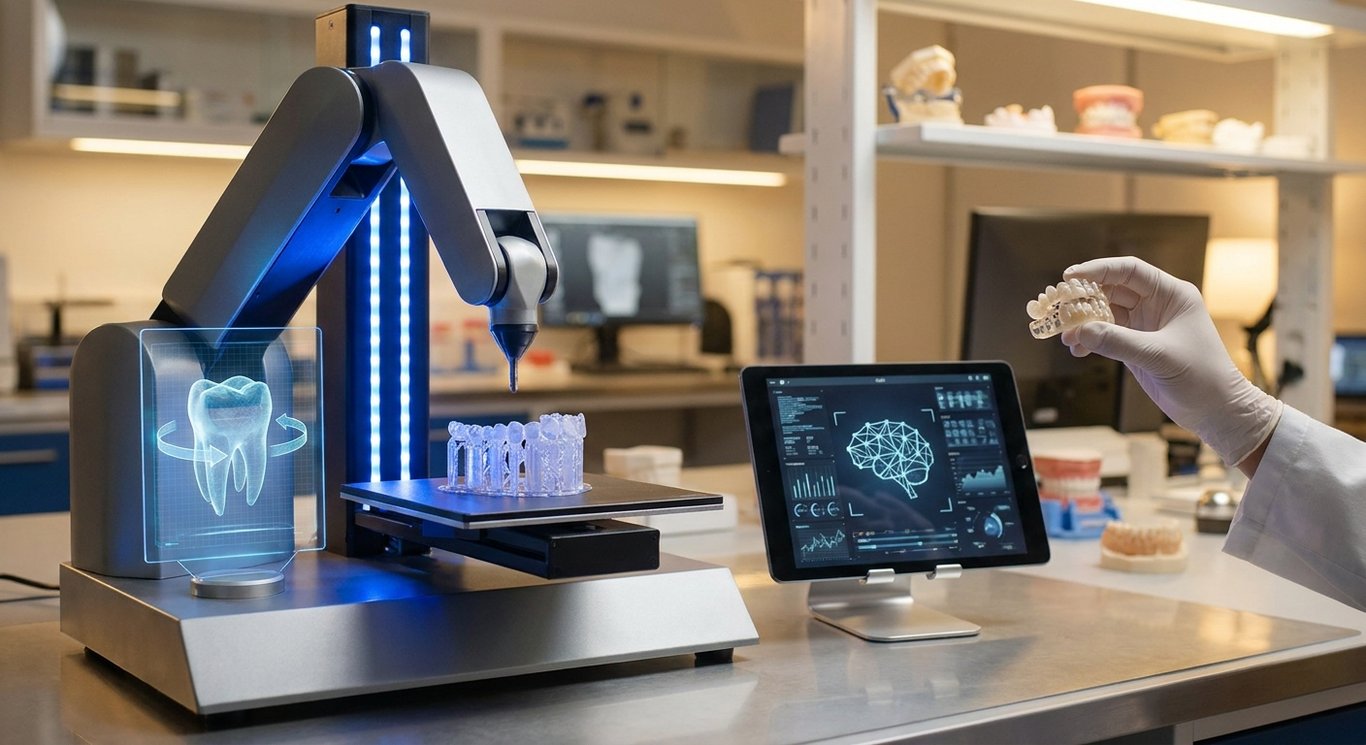
3D printing has also expanded what's possible in dental fabrication. While milling machines carve restorations out of pre-made blocks, 3D printers build objects layer by layer from liquid or powdered materials. In dentistry, 3D printers are used to produce diagnostic models, surgical guides for implant placement, provisional restorations, custom trays, orthodontic appliances, and increasingly, final prostheses. The technology allows for complex geometries that would be difficult or impossible to mill, and it's becoming faster and more material-versatile with each passing year. Practices that combine milling and printing in a single workflow have a broader range of fabrication options available to them.
It's worth being clear about something important, though: AI and automation are tools, not replacements for clinical professionals. An AI system can flag a potential cavity on an X-ray, but a dentist still needs to examine the tooth, consider the patient's history, and make the treatment decision. A 3D printer can produce a surgical guide, but a surgeon still needs to plan the procedure, obtain informed consent, and execute the surgery with skill and judgment. The value of these technologies lies in how they support and enhance what skilled clinicians can do — not in their ability to operate independently of human expertise.
How Much Does Digital Dentistry Cost?
The cost of digitally delivered dental treatment varies widely depending on a number of factors. The type of procedure matters enormously — a single same-day crown is priced very differently from a full set of clear aligners or a digitally planned implant restoration. The materials used, the clinician's level of experience and specialization, the geographic location of the practice, whether an external dental laboratory is involved, and whether advanced imaging like CBCT is required all influence the final fee. In general, digital workflows don't automatically mean lower costs for patients, because the technology itself represents a significant investment for the practice.
Same-day treatment is not inherently cheaper than traditional multi-appointment treatment. In some cases, the convenience of a single appointment may come at a premium. Insurance coverage for digitally fabricated restorations varies by procedure and by plan — most dental insurers cover the restoration type (such as a crown or veneer) rather than the method of fabrication, but it's always worth confirming your specific coverage before treatment begins. Some advanced digital services, like CBCT imaging or digital smile design, may not be covered at all and will be billed separately.
Before committing to any digitally delivered treatment, patients should feel comfortable asking their dental practice for a clear breakdown of fees. Questions worth asking include: What is the total cost of this treatment, including any imaging or scanning fees? Is there a warranty or replacement policy if the restoration fails? What are the expected costs of follow-up visits? If a laboratory is involved, is that fee included in the quoted price? Are there financing options available? A trustworthy dental practice will answer these questions clearly and without pressure, giving you the information you need to make a confident decision.
How to Choose a Dentist for Digital Restorations
Not all digital dental practices are created equal, and the presence of technology in a dental office doesn't automatically guarantee excellent outcomes. When evaluating a dentist for digital restorations, it's reasonable to ask specific questions about the equipment they use. Which intraoral scanner does the practice rely on? What CAD/CAM system or milling unit do they have, and how long have they been using it? Do they have an in-office printer, or do they send digital files to an external laboratory? What restorative materials do they use for crowns, veneers, and other restorations, and why do they prefer those materials? These aren't trick questions — they're the kind of details that help you understand whether a practice has genuinely invested in digital dentistry or simply uses it as a marketing term.
Experience matters just as much as equipment. Ask to see before-and-after examples of cases similar to yours. Find out how many same-day crowns or digital veneers the dentist has placed, and whether they have any additional training or certification in digital workflows. If laboratory work is involved, ask about the laboratory they partner with and how they communicate about complex cases. For cosmetic treatments, ask how the dentist approaches shade matching, proportions, and smile aesthetics — these are areas where digital tools can assist, but where clinical artistry and experience still make a significant difference in the final result.
Perhaps the most important question to ask is whether digital technology is being recommended because it's genuinely the best clinical approach for your situation, or primarily because it's faster, more marketable, or more profitable. A good dentist will be honest about when same-day treatment is appropriate for your case and when a different approach — including laboratory fabrication or a staged treatment plan — would serve you better. Technology should always be in service of your oral health, not the other way around.
What Patients Should Expect During a Digital Dental Appointment
A digital dental appointment typically begins much like any other dental visit. Your dentist will conduct a thorough clinical examination, review your medical and dental history, and discuss your symptoms, concerns, and treatment goals. Clinical photographs are often taken to document the current condition of your teeth and gums. Depending on your situation, standard dental X-rays or a CBCT scan may be taken to provide additional diagnostic information. All of this happens before any treatment decisions are made, because good digital dentistry starts with a complete and accurate picture of your oral health.
When it's time for the intraoral scan, you can expect the process to be quite different from a traditional impression. The dental team will insert a small handheld wand into your mouth and move it slowly around your teeth and gums. You'll likely see the digital model building in real time on a nearby screen, which many patients find fascinating. The scan typically takes a few minutes for a single arch or a full mouth, though it may take longer if your mouth is large, if there are challenging areas to capture, or if the scan needs to be retaken in certain spots. The experience is generally comfortable — there's nothing to bite down on, nothing to gag on, and no waiting for material to set.
After your restoration is placed — whether same-day or at a follow-up appointment — your dentist will give you specific post-treatment instructions. It's normal to experience some sensitivity in the treated tooth for a few days, particularly to temperature. You'll be asked to return for a bite check if needed, and to maintain good oral hygiene around the restoration. Depending on the material used, there may be dietary recommendations in the short term. If you notice that your bite feels off, if the restoration chips, or if you experience significant or prolonged sensitivity, contact your dental office promptly. Digital restorations are designed to last, but like all dental work, they benefit from regular professional monitoring and good home care.
Frequently Asked Questions About Digital Dentistry
What is digital dentistry?
Digital dentistry refers to the use of digital imaging, intraoral scanning, computer-aided design and manufacturing, 3D printing, and connected software platforms to diagnose, plan, create, and monitor dental treatment. Rather than relying on physical impressions, hand-drawn charts, and analog X-rays, digital dentistry uses precise data-driven tools to capture detailed information about a patient's mouth and use that information to deliver more accurate and efficient care.
Are digital dental scans better than traditional impressions?
Digital scans are often faster, more comfortable, and easier to share than traditional putty impressions, and they eliminate the risk of distortion during removal or shipping. However, accuracy depends on the specific scanner being used, the skill and technique of the operator, the conditions in the patient's mouth, and the type of treatment being planned. In most routine clinical situations, digital scans perform very well — but they're not immune to errors, and a skilled operator is still essential for a reliable result.
Can I really get a crown in one day?
Yes, some patients can receive a fully fabricated ceramic crown in a single appointment — but it depends on the clinical situation and the technology available at the dental practice. When the tooth is suitable for same-day treatment, the practice has compatible chairside CAD/CAM equipment, and the dentist is experienced with the workflow, a same-day crown is a genuine possibility. More complex cases — involving significant structural damage, gum issues, or unusual anatomy — may still require multiple appointments and laboratory involvement to achieve the best result.
Are same-day crowns as strong as laboratory-made crowns?
The strength and longevity of a same-day crown depend on the ceramic or other material selected, the quality of the tooth preparation, the bonding technique used, the bite forces the crown will be subjected to, and how well the patient maintains it over time. High-quality chairside ceramics can perform very well in appropriate clinical situations. That said, for cases involving extreme bite forces, highly aesthetic requirements, or complex anatomy, a laboratory-fabricated restoration may offer advantages that a chairside milled crown cannot match.
Is digital dentistry safe?
Intraoral scanning is completely safe — the scanner uses optical light to capture images and does not involve any ionizing radiation. CBCT imaging does involve radiation exposure, which is why it should only be prescribed when the three-dimensional information it provides is clinically justified and expected to meaningfully improve the patient's diagnosis or treatment plan. When used appropriately and with proper imaging protocols, the diagnostic benefits of CBCT outweigh the risks. Patients who have concerns about imaging should feel comfortable discussing them with their dentist before any scans are taken.
Conclusion: The Future of Same-Day Smile Restorations
Digital dentistry has genuinely changed what's possible in a dental office. Three-dimensional intraoral scans can replace many traditional impressions with a faster, more comfortable, and more accurate alternative. CAD/CAM workflows can compress multi-week treatment timelines into a single appointment for appropriate cases. Digital visualization tools help patients understand their oral health in ways that were simply not possible with traditional methods. And stored digital records allow for longitudinal monitoring that can catch problems earlier and support better long-term outcomes. These are real advances — not just marketing claims — and they're making dental care more precise, more efficient, and more patient-friendly in meaningful ways.
At the same time, digital dentistry works best when it's used thoughtfully, by skilled clinicians who know when to use it and when to take a different approach. If you're curious about whether digital scans, CAD/CAM treatment, or a same-day smile restoration might be right for you, the best next step is to schedule a consultation with a qualified dentist who can evaluate your specific situation. Come prepared with questions — about the materials being used, whether you're a good candidate, what the treatment will cost, how long the restoration is expected to last, and what follow-up care will look like. The technology is impressive, but the most important factor in your dental outcome is still the quality of the care you receive and the decisions you and your dentist make together.