The Long-Term Reality of Dental Implants: What to Expect 10, 15, and 20 Years Later
Published 22 min read
Dental implants have become one of the most trusted solutions for replacing missing teeth, and for good reason. But what most people want to know isn't just whether the surgery goes smoothly — it's what life looks like with implants a decade or two down the road. This article focuses on exactly that: the long-term reality of dental implants at 10, 15, and 20 years after placement. Modern implants boast impressive survival rates, but outcomes are shaped by a combination of factors including oral hygiene habits, overall health, and how consistently patients keep up with professional care. We'll cover both the encouraging success rates and the complications that can realistically arise over time.
Most online resources spend a lot of time on the implant surgery itself and the weeks of recovery that follow. That's useful, but it leaves a big gap for patients who are thinking years — or even decades — ahead. Whether you're considering implants for the first time or you already have them and want to know what's coming, understanding the long game matters. Throughout this article, we'll explore longevity statistics, how the implant and surrounding tissues change over time, what maintenance looks like, which risk factors can lead to problems, and what you can do to give your implants the best possible chance of lasting a lifetime.
Understanding Dental Implant Longevity: 10, 15, and 20-Year Survival Rates
When researchers study dental implants over time, they typically report "survival rates" — meaning the percentage of implants that are still in the mouth at a given point. Long-term clinical studies and meta-analyses consistently show survival rates of around 95–96% at the 10-year mark, which is genuinely impressive for any medical device. However, it's important to understand the difference between "survival" and "success." An implant that is technically still in place might still have complications like bone loss, inflammation, or a broken crown — so survival rates alone don't paint the full picture of how well implants are actually performing.
As the follow-up period extends beyond 10 years, survival rates tend to decline gradually. Studies tracking implants into the 15- and 20-year range sometimes report rates dropping into the high 80s or even lower, depending on the patient population and study conditions. This doesn't mean implants are unreliable — far from it. It simply reflects the reality that over longer periods, a minority of implants will fail, develop complications, or need significant intervention. For most patients, though, the odds remain strongly in favor of long-term function.
It's also worth noting that not all long-term studies are created equal. Differences in study design, the types of implant systems used, patient demographics, and how "failure" or "success" is defined can lead to a wide range of reported outcomes. Some studies follow highly selected, healthy patients in controlled clinical settings, while others reflect real-world populations with all their complexity. The takeaway is that long-term statistics are helpful guides, not personal guarantees — your individual outcome will depend on your unique circumstances.
What Happens to Dental Implants After 10 Years? Real-World Changes and Adjustments
For patients who have taken good care of their implants, the 10-year mark often looks reassuring. Most well-maintained implants at this stage are functioning comfortably, allowing patients to chew, speak, and smile with confidence. Some degree of bone remodeling and minor soft-tissue changes around the implant are completely normal over a decade — this is simply the body adapting to the presence of the implant, and it doesn't necessarily signal a problem. The vast majority of patients at this point report high satisfaction with their implants.
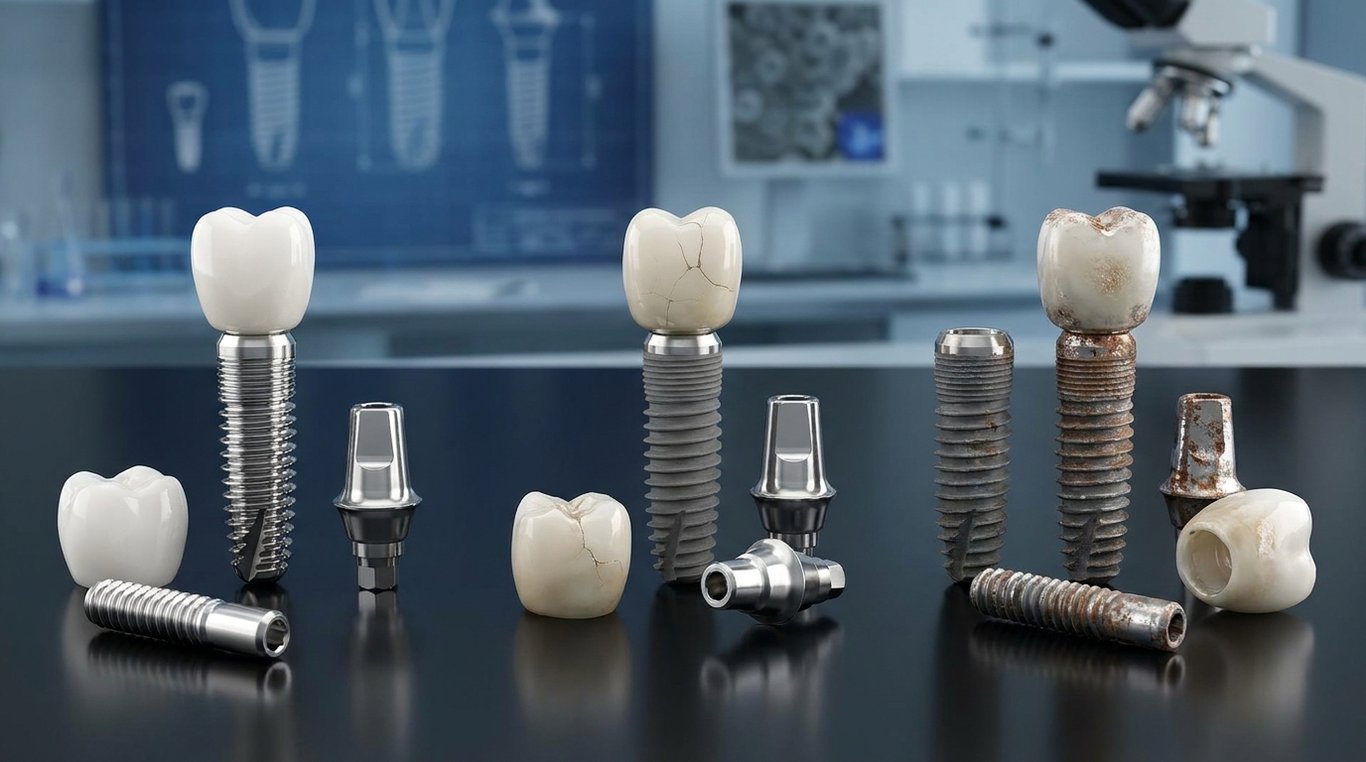
That said, the 10-year mark is also when some minor wear-and-tear issues tend to show up. The crown — the visible tooth-shaped cap on top of the implant — may show signs of chipping or surface wear, especially in patients who grind their teeth. Small aesthetic changes in the gum line, such as slight recession, can also appear. In some cases, the screw that connects the crown to the implant may loosen slightly and need tightening. The good news is that these are generally straightforward fixes when caught during routine check-ups.
At the 10-year milestone, the focus of your dental team shifts strongly toward monitoring and prevention. During visits, your dentist will typically review X-rays to check bone levels, measure probing depths around the implant to assess gum health, and evaluate how your bite is distributing force. These assessments allow subtle changes to be caught and managed before they become bigger problems. Think of it as quality control — the implant is working, and the goal is to keep it that way.
The 15-Year Milestone: Long-Term Success, Late Complications, and Risk Patterns
By the 15-year mark, long-term follow-up studies begin to show a more noticeable decline in cumulative survival rates, though the majority of implants are still functioning. What changes is the proportion of patients who have experienced at least one biological or mechanical complication along the way. "Late" complications — those that emerge after many years rather than shortly after placement — become more common as the follow-up period extends, and they require attention even when they don't immediately threaten the implant.
The types of issues that tend to emerge around the 15-year point include more significant bone loss in patients who are susceptible, progression of inflammatory conditions around the implant, fractures of prosthetic components, and loosening of internal hardware. It's important to understand that these complications don't always lead to implant loss — many can be treated with repairs, adjustments, or minor surgical procedures. However, they do require intervention, and delaying treatment can turn a manageable problem into a much more serious one.
Research has identified clear patterns in who tends to experience complications by the 15-year mark. Patients with poor oral hygiene, uncontrolled systemic diseases like diabetes, a history of smoking, or gaps in professional maintenance are consistently overrepresented in complication and failure statistics. This makes the 15-year point a meaningful checkpoint — it's where the cumulative impact of good or poor habits really starts to show. If you've been consistent with your care, the odds remain strongly in your favor.
Dental Implants at 20 Years: How Many Last, and What "Success" Looks Like Decades Later
Reaching the 20-year mark with a functioning implant is a realistic goal for many patients, and the data supports this. Meta-analyses and large case series often report 20-year survival rates above 80%, with some favorable studies showing figures around 90–92% under controlled conditions. These numbers reflect the remarkable durability of modern implant technology when combined with appropriate patient care. For most people who go into implant treatment in good health and maintain it well, two decades of function is entirely achievable.
But what does "success" actually mean at 20 years? It's more than just the implant still being in your mouth. True long-term success means the implant is functional, comfortable, and reasonably aesthetic — that it's serving its purpose without causing pain, significant bone loss, or major structural problems. Over 20 years, it's quite common for patients to have had their crown replaced once or even twice, undergone minor bite adjustments, or had small procedures to maintain the health of the surrounding gum tissue. These interventions are a normal part of the long-term picture, not signs of failure.
After two decades, age-related changes in bone density, cumulative wear on prosthetic materials, and the biological stresses of years of chewing all begin to add up. Some implants at this stage may no longer meet strict clinical "success" criteria — for example, they may show more bone loss than ideal — even if they are still technically functional and comfortable. This is why long-term success is best understood as a dynamic, ongoing process rather than a fixed destination. With continued professional support and attentive home care, many patients navigate this phase successfully.
Long-Term Biological Changes: Bone Loss, Gum Health, and Peri-Implant Diseases
Over many years, the bone and gum tissue around a dental implant go through predictable changes. In the first year or two after placement, a small amount of marginal bone loss is considered normal as the bone settles around the implant. After that initial phase, bone levels typically stabilize, and a healthy soft-tissue seal forms around the implant — a structure that helps protect the underlying bone from bacteria. This kind of limited, stable remodeling is expected and does not indicate disease.
However, two conditions — peri-implant mucositis and peri-implantitis — represent the more serious biological risks over the long term. Peri-implant mucositis is essentially inflammation of the gum tissue around the implant, similar to gingivitis around a natural tooth. It's reversible with treatment. Peri-implantitis is more serious: it involves progressive bone loss around the implant and, if left untreated, can ultimately lead to implant failure. Studies with 10 or more years of follow-up report varying prevalence rates for these conditions, with some research suggesting peri-implantitis affects a meaningful percentage of long-term implant patients. Differences in diagnostic criteria and patient populations make exact numbers hard to pin down, but the risk is real.
The main risk factors for peri-implant disease over time are well established: plaque accumulation, inadequate home care, smoking, uncontrolled systemic conditions, a history of periodontitis (gum disease), and irregular professional maintenance. The encouraging news is that early diagnosis makes a significant difference. When peri-implant mucositis is caught and treated before it progresses to peri-implantitis, bone loss can often be halted and the implant preserved. This is one of the strongest arguments for never skipping your maintenance appointments.
Technical and Mechanical Complications: Crowns, Screws, and Prosthetic Components Over Time
Beyond biological issues, dental implants are also subject to mechanical wear and tear over the years. The most commonly reported technical complications in long-term studies include loosening of the abutment screw (the screw that connects the crown to the implant), screw fractures, chipping or cracking of ceramic crowns, and general wear of prosthetic materials. These issues sound alarming, but in most cases they are repairable and do not mean the implant fixture itself — the titanium post in the bone — has failed. The implant and the restoration on top of it are separate components, and problems with one don't automatically doom the other.
The likelihood of mechanical complications over 10–20 years is influenced by several factors. Patients who grind or clench their teeth (a condition called bruxism) place far more stress on their implant restorations than average, increasing the risk of fractures and screw loosening. The design of the prosthesis also matters: a single crown on a single implant behaves very differently from a full-arch bridge supported by multiple implants, and each carries its own risk profile. Material selection plays a role too — some ceramic materials are more fracture-resistant than others, and your dental team should factor this in during treatment planning.
When mechanical complications do occur, the repair process is usually straightforward. Loose screws can be tightened and secured. Chipped or worn crowns can be repaired or replaced. Bite adjustments can redistribute forces more evenly across the restoration. In some cases, the entire prosthetic framework may need to be redesigned after many years of use. The key point is that patients should expect some level of technical upkeep over decades — much like maintaining a car or any other complex piece of equipment — and should budget for it accordingly.
Factors That Influence Long-Term Outcomes: Patient, Implant, and Clinical Variables
When it comes to long-term implant outcomes, patient-related factors carry enormous weight. Oral hygiene is arguably the most important variable — patients who consistently remove plaque from around their implants have dramatically lower rates of peri-implant disease. Smoking is another major risk factor, associated with higher failure rates and slower healing throughout the life of the implant. Systemic health conditions like diabetes and osteoporosis, along with certain medications, can affect bone metabolism and healing capacity. And patients with a prior history of gum disease are at elevated risk for developing peri-implantitis around their implants over time.
Implant-related factors also play a meaningful role. The surface characteristics, length, and diameter of the implant affect how well it integrates with bone and how it handles the forces of chewing over time. The position of the implant in the jaw — whether it's in the front or back, upper or lower — influences both the mechanical demands placed on it and the ease of cleaning. Certain implant systems and brands have more robust long-term data behind them than others. Proper treatment planning that accounts for load distribution, available bone volume, and the patient's specific anatomy is essential for setting the stage for long-term success.
Beyond the patient and the implant, the clinical team itself is a critical factor. Surgical precision, accuracy of implant placement, the quality of prosthetic work, and adherence to evidence-based protocols all influence how the implant performs over years and decades. Equally important is the practice's commitment to long-term follow-up — a dental team that actively monitors patients, catches early signs of complications, and provides timely interventions is a genuine partner in long-term success. In short, great outcomes over 20 years are a team effort between patient and provider.
Long-Term Maintenance: How Often to Visit, What to Monitor, and Daily Care Habits
Professional maintenance is not optional for implant patients — it's a core part of keeping implants healthy over the long haul. Most dental teams recommend check-ups every 6 to 12 months, though higher-risk patients may need more frequent visits. During these appointments, your dentist or hygienist will take X-rays to assess bone levels, probe around the implant to check for signs of inflammation or pocket deepening, and perform professional cleaning using instruments that won't scratch the implant surface. Extended gaps between professional care allow complications to develop silently, often reaching a more advanced stage before they're caught.
Daily home care is equally important and should be taken just as seriously as care around natural teeth. Brushing around implant crowns requires attention to the gum line, where plaque tends to accumulate. Interdental brushes, water flossers, and implant-specific floss are all useful tools for cleaning the areas between and around implant restorations that a regular toothbrush can't reach. Antiseptic rinses may be recommended in certain situations, particularly if there are early signs of inflammation. One of the most consistent findings across long-term implant research is that patients who maintain thorough daily plaque control have significantly better outcomes.
As years pass, maintenance needs may evolve. A patient in their 40s with implants may have different risk factors and physical capabilities than the same patient in their 60s or 70s. Age-related changes in dexterity, the development of new systemic conditions, or changes in medications can all affect a patient's ability to maintain oral hygiene and the body's response to implant care. Dental teams should adapt their maintenance recommendations accordingly, checking in regularly on how well patients are managing at home and adjusting strategies when needed. Long-term implant care is not a one-size-fits-all protocol — it should evolve with you.
Comparing Dental Implants to Other Tooth Replacement Options Over 20 Years
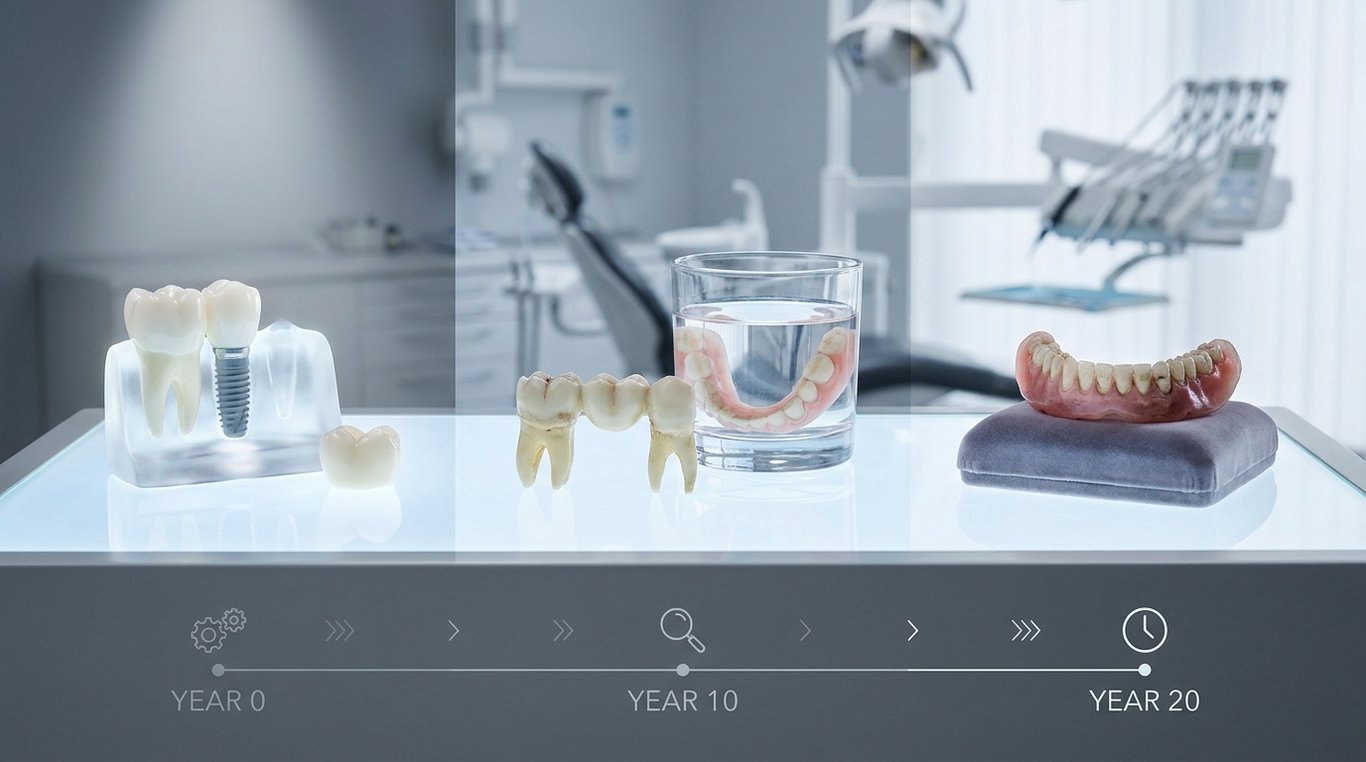
When considering tooth replacement over the long term, it helps to compare implants to the main alternatives: conventional fixed bridges and removable dentures. Traditional bridges are bonded to the natural teeth on either side of the gap, which means those neighboring teeth must be ground down and are permanently altered. Over 10–20 years, bridges can fail due to decay developing under the crowns, fracture of the supporting teeth, or failure of the cement bond — often requiring replacement or more complex treatment. Removable dentures, meanwhile, typically need periodic relines to account for bone shrinkage beneath them and may need complete replacement every 7–10 years. Each option has its own long-term maintenance demands and failure modes.
In terms of function and quality of life over decades, implants tend to have a meaningful edge. They restore chewing efficiency more closely to that of natural teeth, they don't shift or slip during eating or speaking, and — critically — they help preserve the jawbone by providing stimulation similar to a natural tooth root. Removable dentures, in contrast, can accelerate bone loss in the jaw over time because they sit on top of the gum rather than integrating with the bone. This bone loss can change the shape of the face and make dentures increasingly difficult to fit well. For most patients, implants offer more stable, comfortable function over the long term.
From an economic standpoint, implants have a higher upfront cost than bridges or dentures, which can be a barrier for many patients. However, when you factor in the long-term picture — fewer replacements, less need for adjacent tooth treatment, and lower rates of bone loss requiring additional procedures — implants can actually be cost-effective over 20 years. A bridge may need to be replaced multiple times, and each replacement may involve more extensive work on the supporting teeth. A well-maintained implant, by contrast, may only require a crown replacement and routine maintenance over the same period. It's worth having this conversation with your dental team when weighing your options.
Who Is a Good Candidate for Long-Term Implant Success? Setting Realistic Expectations
The patients who tend to achieve the best outcomes at 10, 15, and 20 years share some common characteristics. They typically start with good baseline oral health, have no history of severe gum disease (or have it well-controlled), are non-smokers or have successfully quit, and have systemic health conditions that are managed effectively. Crucially, they are committed to both professional follow-up and diligent home care over the long term. Candidacy for implants isn't just about whether your body can accept the implant at the time of surgery — it's about your willingness and ability to maintain it for decades.
Age is another factor worth discussing honestly. For younger patients in their 20s or 30s, an implant may need to last 40, 50, or even 60 years — a tall order for any medical device. For older adults, the goal is often to restore function and quality of life for the remaining years, which is a more achievable target. At any age, it's important to understand that even with excellent care, some risk of late complications or eventual failure remains. No implant comes with a lifetime guarantee, and setting realistic expectations from the start leads to better satisfaction and more informed decision-making.
The best way to evaluate your personal long-term risk profile is to have an open, detailed conversation with your dentist or implant specialist. Ask about your periodontal status, how your medical history might affect implant longevity, and what your expected outcomes look like at 10, 15, and 20 years given your specific circumstances. A good clinician will be honest about both the optimistic and less favorable possibilities. Going into implant treatment with clear expectations — and a plan for managing them — is one of the smartest things you can do for your long-term oral health.
Frequently Asked Questions About the Long-Term Reality of Dental Implants
The questions below represent some of the most common things patients search for when researching what life with dental implants looks like over the long term. Whether you're still deciding whether implants are right for you or you're already a few years in and wondering what's ahead, these answers are designed to give you clear, practical information about durability, complications, maintenance, and what to realistically expect as the years go by.
1. How long do dental implants usually last?
Many long-term studies report survival rates in the mid-90% range at the 10-year mark, and a large proportion of implants continue to function well at 15 and even 20 years. In practice, this means that for many patients, dental implants can last for several decades — often for the rest of their lives. The technology and materials used in modern implants are genuinely durable, and the long-term data supports cautious optimism.
That said, there's no fixed expiration date stamped on a dental implant. How long yours lasts depends heavily on your individual risk factors, how consistently you maintain your oral hygiene, and how regularly you attend professional check-ups. Some implants fail earlier than average, while others function trouble-free for a patient's entire lifetime. The best predictor of longevity isn't the implant itself — it's the care surrounding it.
2. Will I need to replace my implant or crown after 10–20 years?
It's important to distinguish between two separate components: the implant fixture (the titanium post that integrates with your jawbone) and the prosthetic crown or bridge that sits on top of it. The crown is the part that takes the brunt of daily wear and tear — chewing forces, grinding, and exposure to temperature changes — and it is more likely to need replacement over time due to wear, fracture, or changes in aesthetics.
The good news is that the underlying implant fixture often remains stable even when the crown needs to be replaced. Swapping out a crown is a relatively routine procedure and doesn't mean the implant has failed. Many patients over a 20-year period will have had their crown replaced at least once, and this is simply considered normal long-term maintenance rather than a sign that something went wrong.
3. What are the most common long-term complications I should watch for?
On the biological side, the main complications to be aware of are peri-implant mucositis (reversible gum inflammation around the implant) and peri-implantitis (a more serious condition involving progressive bone loss). Signs to watch for include bleeding when you brush around the implant, redness or swelling of the surrounding gum, discomfort, or changes visible on X-rays. These conditions are much easier to treat when caught early, which is why regular monitoring matters so much.
Mechanically, the most common issues include screw loosening, chipping or fracture of the crown, and wear of prosthetic materials over time. If you notice a change in how your bite feels, any movement or wobble in the crown, or a visible chip or crack, report it to your dentist promptly. Small mechanical problems that are addressed quickly rarely lead to bigger complications, but ignored issues can escalate in ways that are more difficult and costly to fix.
4. Do dental implants require more maintenance than natural teeth in the long term?
Implants require at least as much attention as natural teeth — arguably more in some respects. While implants can't develop cavities, the gum and bone tissue surrounding them are still vulnerable to plaque-related inflammation and disease. Peri-implant disease is driven by the same bacterial accumulation that causes gum disease around natural teeth, so the daily cleaning habits you develop around your implant are just as critical as those around your remaining natural teeth.
The techniques involved are slightly different: special interdental brushes, implant-safe floss, and water flossers are often more effective around implant crowns than standard floss alone. At the professional level, hygienists use instruments designed not to scratch the implant surface, and probing techniques may be adapted to assess implant health accurately. But the underlying principle is the same as it's always been — consistent plaque removal and regular professional monitoring are the foundation of long-term health.
5. Can health or lifestyle changes over 10–20 years affect my implants?
Absolutely. Systemic health changes that occur years after implant placement can have a real impact on implant stability. Developing type 2 diabetes, for example, can impair the body's ability to fight infection and heal, making peri-implant disease harder to control. Starting medications that reduce bone density or cause dry mouth can also affect the environment around the implant. Age-related changes in bone metabolism, immune function, and even manual dexterity for cleaning can all shift the risk picture over time.
Lifestyle changes matter just as much. Starting smoking after years of not smoking can significantly increase the risk of peri-implant complications. Changes in diet, increased stress leading to teeth grinding, or even shifts in sleep habits that affect oral health can all play a role. The message here is simple: keep your dental team informed about major changes in your health or lifestyle. That way, your maintenance plan can be adjusted to account for new risk factors before they have a chance to cause damage.
Conclusion: Key Takeaways and Next Steps for Understanding the Long-Term Reality of Dental Implants
Modern dental implants are genuinely impressive in their long-term performance. High survival rates at 10 years, continued function at 15 and 20 years, and decades of patient satisfaction data all support implants as a reliable tooth replacement option. But long-term success is not automatic. Biological complications like peri-implantitis, mechanical issues like crown fractures, and the gradual wear of prosthetic materials are all part of the realistic picture over decades. The encouraging truth is that many of these complications can be prevented, managed, or successfully treated when patients and dental teams stay engaged and proactive throughout the entire lifespan of the implant.
If you're considering dental implants — or you already have them and want to make sure you're doing everything right — the most important step you can take is to have an honest, detailed conversation with your dentist or specialist about what to expect at 10, 15, and 20 years based on your personal risk profile. Ask specifically about the difference between implant survival and success, discuss your individual risk factors, and commit to a maintenance plan that you can realistically stick to. Understand that occasional repairs or crown replacements are a normal part of long-term implant ownership, not failures. Prioritize consistent daily hygiene and never skip your professional check-ups. With the right mindset and the right support, dental implants can be one of the best long-term investments you make in your oral health and quality of life.