The Gut-Mouth Connection: Why Your Dentist is a Key Player in Your Digestive Health
Published 24 min read
Most people think of their dentist as someone who keeps their teeth clean and their smile bright. But there's a much bigger story happening inside your mouth — one that reaches all the way down to your gut. Scientists and healthcare professionals are increasingly recognizing what's called the "oral-gut axis," a powerful two-way communication system between your mouth and your digestive tract. The bacteria living in your mouth, the health of your gums, and even the way you chew can all have a direct impact on your digestive system. It turns out, the mouth isn't just where digestion begins — it's where your gut health can either thrive or start to unravel.
This topic is gaining serious traction in both dental and medical communities. Leading health organizations and research institutions have begun publishing findings that connect oral conditions like gum disease and tooth loss to gut disorders, systemic inflammation, and metabolic issues. In this article, you'll learn exactly how your oral health affects your digestive system, what your dentist can do to support your gut, and what practical steps you can take starting today. Whether you're dealing with digestive discomfort or just want to take better care of your overall health, understanding the gut-mouth connection could genuinely change the way you approach your wellness routine.
Understanding the Gut-Mouth Axis: How Your Mouth Influences Your Digestive System
The gut-mouth axis refers to the biological relationship between the oral cavity and the gastrointestinal tract. Your mouth is literally the gateway to your digestive system — it's where food enters, where chewing begins to break things down, and where saliva starts the chemical process of digestion. But it's not just food passing through. Microorganisms, enzymes, and inflammatory signals all originate in the mouth and travel downstream into the gut. Every time you swallow, you're sending a mix of bacteria, digestive enzymes, and cellular debris into your digestive tract, making the health of your mouth a direct input into the health of your gut.
One of the most important concepts here is the flow of bacteria from the oral cavity to the gut. The mouth hosts its own unique ecosystem — the oral microbiome — which is distinct from the gut microbiome, though the two are closely related. When the oral microbiome becomes imbalanced, a condition known as dysbiosis, harmful bacteria can multiply and make their way into the digestive system through normal swallowing. Research has shown that certain oral pathogens, like Fusobacterium nucleatum and Porphyromonas gingivalis, have been detected in the guts of people with various digestive conditions. This microbial migration can disrupt the delicate balance of the gut microbiome, triggering inflammation and other problems.
Emerging research is making this connection even harder to ignore. Studies have linked oral pathogens to gut conditions including irritable bowel syndrome (IBS), inflammatory bowel disease (IBD), and even metabolic disorders like type 2 diabetes. Scientists are particularly interested in how oral bacteria may colonize the gut and alter immune responses in ways that contribute to chronic disease. While this field of research is still developing, the evidence is compelling enough that gastroenterologists and dentists alike are starting to pay close attention. The gut-mouth axis isn't just a theoretical concept — it's a real, measurable pathway that has significant implications for how we think about whole-body health.
The Oral Microbiome 101: Good and Bad Bacteria in Your Mouth
Your mouth is home to one of the most diverse microbial communities in the human body. The oral microbiome consists of over 700 species of bacteria, along with fungi, viruses, and other microorganisms that live on your teeth, gums, tongue, cheeks, and the roof of your mouth. Far from being a sterile environment, your mouth is a thriving ecosystem that plays a critical role in your health. These microbes form biofilms — what most people know as plaque — and they interact with each other and with your immune system in complex ways that researchers are still working to fully understand.
Not all of these microorganisms are bad news. Beneficial bacteria like Streptococcus salivarius and certain species of Lactobacillus help maintain a balanced oral environment, produce antimicrobial compounds, and even support immune function. They keep harmful species in check and contribute to healthy saliva chemistry. On the other hand, harmful bacteria like Streptococcus mutans (associated with cavities) and Porphyromonas gingivalis (linked to gum disease) produce acids, toxins, and inflammatory compounds that damage oral tissues and, when they enter the bloodstream or digestive tract, can contribute to systemic inflammation. The balance between these two groups is what determines whether your oral microbiome is working for you or against you.
Several factors shape the composition of your oral microbiome, and many of them are within your control. A diet high in sugar and processed foods feeds harmful bacteria and promotes dysbiosis. Poor oral hygiene allows harmful species to accumulate unchecked. Smoking dramatically alters the microbial landscape of the mouth, reducing beneficial species and increasing harmful ones. Certain medications, particularly antibiotics and those that cause dry mouth, can also disrupt microbial balance. On the flip side, good hygiene habits, a nutrient-rich diet, and staying well-hydrated support a healthier oral microbiome — and by extension, a healthier gut.
How Dental Problems Can Disrupt Your Digestive Health
When dental problems go untreated, the consequences extend well beyond your mouth. Cavities, gum disease, and chronic oral infections create environments where harmful bacteria flourish. These bacteria don't just stay put — they enter the bloodstream through inflamed or damaged gum tissue and make their way into the digestive tract through swallowing. Once there, they can disrupt the gut microbiome, trigger immune responses, and contribute to low-grade systemic inflammation. The mouth essentially becomes a source of ongoing bacterial and inflammatory insult to the rest of the body, including the digestive system.
Beyond the microbial angle, dental problems can interfere with digestion in a very mechanical way. Pain from a toothache, missing teeth, or ill-fitting dentures can make chewing difficult or uncomfortable. When people can't chew properly, they tend to swallow larger pieces of food, which puts extra strain on the stomach and intestines. The digestive system is simply not designed to do the work that teeth are supposed to do. Poor food breakdown can lead to indigestion, bloating, gas, and altered nutrient absorption — particularly for nutrients that require adequate mechanical processing, like fiber and certain proteins. Over time, these changes can significantly impact nutritional status and digestive comfort.
The link between periodontal (gum) disease and broader digestive and metabolic health is one of the most well-studied aspects of the oral-gut axis. Chronic periodontal inflammation has been associated with increased intestinal permeability — commonly referred to as "leaky gut" — where the gut lining becomes more permeable and allows bacteria and toxins to pass into the bloodstream more easily. This can amplify systemic inflammation and has been connected to conditions like metabolic syndrome, insulin resistance, and even certain autoimmune conditions. The evidence suggests that treating gum disease isn't just about saving your teeth — it may also help reduce the inflammatory burden on your entire body.
Your Dentist's Role in Supporting a Healthy Gut
Your dentist does far more than clean your teeth twice a year. Routine dental exams and professional cleanings are powerful tools for controlling the bacterial load in your mouth, preventing gum disease from taking hold, and reducing the chronic inflammation that can ripple outward to affect your gut and overall health. When plaque and tartar are removed during a cleaning, the population of harmful bacteria is significantly reduced. When gum disease is caught early and treated, the inflammatory cycle that threatens systemic health is interrupted. In this way, your regular dental visits are a frontline defense not just for your smile, but for your digestive and immune health as well.
Dentists are also uniquely positioned to spot early warning signs of systemic and digestive problems. Chronic bad breath that doesn't respond to brushing can signal bacterial overgrowth or digestive issues. Recurrent mouth sores or infections may indicate immune dysfunction or nutritional deficiencies. Enamel erosion — where the outer surface of teeth is worn away — can be a telltale sign of acid reflux or frequent vomiting. Because dentists examine the mouth closely and regularly, they often notice these changes before a patient even connects them to a digestive problem. A good dentist won't just treat what they see — they'll ask questions and, when appropriate, refer patients to the right medical professionals.
Increasingly, forward-thinking dental practices are working as part of a broader healthcare team. Collaboration between dentists, general practitioners, gastroenterologists, and nutritionists allows for a more integrated approach to managing oral and digestive health. For example, a dentist who notices signs of acid reflux can communicate with a patient's gastroenterologist to ensure the underlying condition is being managed, which in turn protects the teeth from further erosion. Similarly, a nutritionist working with someone on gut health can loop in the patient's dentist to ensure that dietary changes are also supporting oral health. This kind of coordinated care is the future of medicine — and the gut-mouth axis is one of the clearest examples of why it matters.
Chewing, Saliva, and Digestion: What Your Dentist Wants You to Know
Chewing is the very first step in digestion, and it's one that often gets taken for granted. When you chew food thoroughly, you're doing two important things: breaking food into smaller pieces that are easier for your stomach and intestines to process, and stimulating the production of saliva. The mechanical action of chewing increases the surface area of food, which allows digestive enzymes to work more efficiently. It also sends signals to the rest of the digestive system to prepare for incoming food — triggering stomach acid production and enzyme release further down the tract. Simply put, good chewing sets the stage for everything that follows in digestion.
Saliva is far more remarkable than most people realize. It's not just water — it's a complex fluid containing enzymes, antimicrobial proteins, and buffering agents that play multiple roles in both oral and digestive health. The enzyme amylase, for example, begins breaking down carbohydrates right in your mouth before food even reaches your stomach. Saliva also lubricates food to make swallowing easier, neutralizes acids to protect tooth enamel, and contains antibodies that help control bacterial populations in the mouth. A healthy flow of saliva is essential not only for comfortable eating and speaking but also for maintaining the balance of the oral microbiome and supporting the first stages of digestion.
When dental problems interfere with chewing or saliva production, the downstream effects on digestion can be significant. A misaligned bite, jaw pain (such as from temporomandibular joint disorder), or missing teeth can all make it painful or difficult to chew effectively. Dry mouth — often caused by medications, medical conditions, or dehydration — reduces saliva flow and removes its protective and digestive benefits. Dentists address these issues through a range of treatments, including bite correction, restorative work like crowns or implants, and recommendations for saliva substitutes or stimulants. By restoring proper chewing function and saliva flow, dentists directly support the digestive process from its very first step.
Nutrition, Oral Health, and Gut Health: The Three-Way Relationship
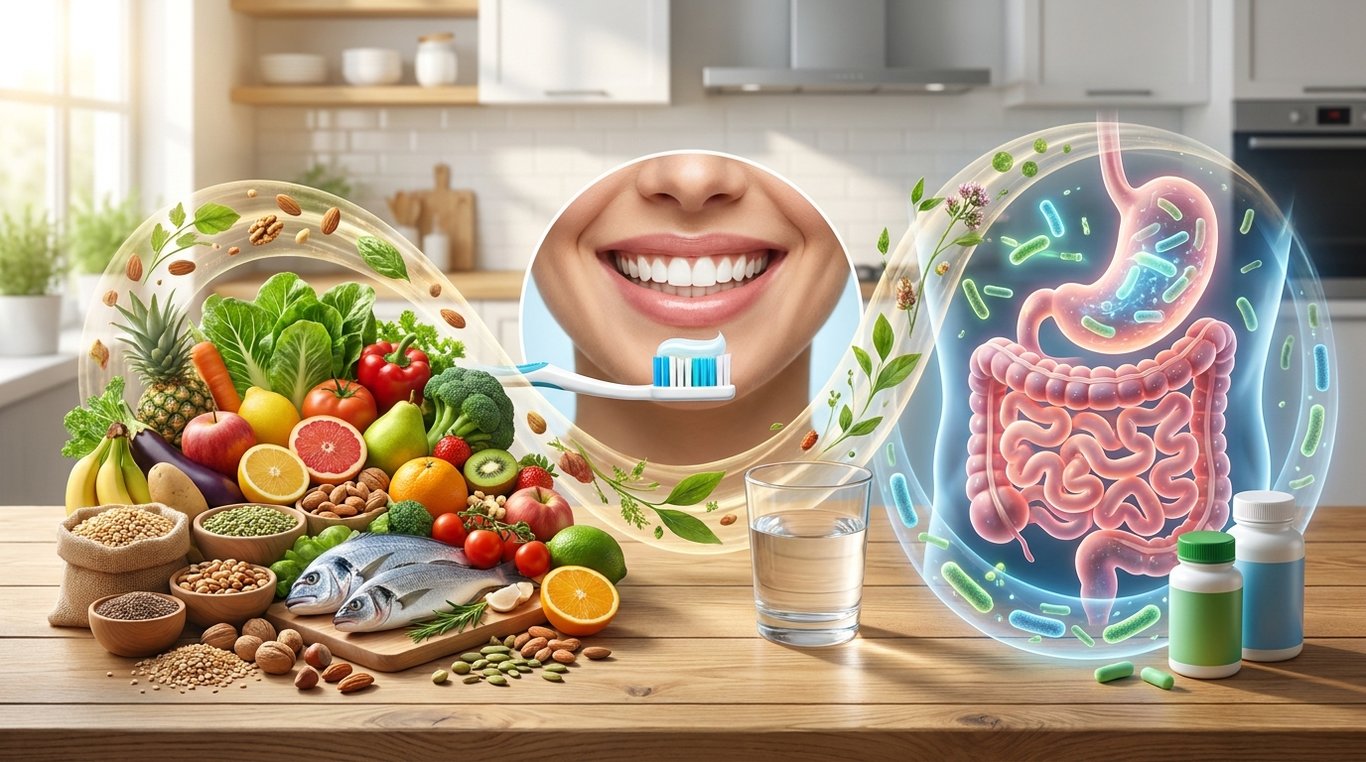
What you eat shapes your oral environment in very direct ways. Sugary and acidic foods feed the harmful bacteria in your mouth that cause cavities and gum disease. Highly processed foods tend to be low in fiber and nutrients that support beneficial bacteria, while high in refined carbohydrates that harmful bacteria thrive on. These same dietary patterns that damage your oral health are also known to negatively impact the gut microbiome — reducing microbial diversity, promoting inflammation, and disrupting the gut lining. In other words, a diet that's bad for your teeth is almost certainly bad for your gut as well, and vice versa.
On the positive side, foods that support gut health tend to support oral health too. Fiber-rich whole foods like vegetables, fruits, legumes, and whole grains promote the growth of beneficial bacteria in both the mouth and the gut. Fermented foods like yogurt, kefir, sauerkraut, and kimchi introduce beneficial bacterial strains that can positively influence both microbiomes. Anti-inflammatory foods rich in omega-3 fatty acids, polyphenols, and antioxidants help reduce the chronic inflammation that damages both gum tissue and the gut lining. Eating for your gut is, in many ways, eating for your mouth — and dentists are starting to embrace this connection in their patient conversations.
Dentists and dental hygienists are well-positioned to offer practical dietary guidance that supports both oral and gut health. During routine appointments, they can counsel patients on limiting sugary snacks and acidic beverages, spacing out meals to give saliva time to neutralize acids between eating, and staying well-hydrated to maintain saliva flow. They can also flag dietary patterns — like frequent snacking or heavy consumption of processed foods — that put both oral and gut health at risk. While dentists aren't nutritionists, their front-row seat to the effects of diet on the mouth makes them valuable allies in helping patients make food choices that benefit their whole body.
Holistic and Integrative Dentistry: A Broader View of Digestive Health
Holistic or integrative dentistry takes a whole-body approach to oral care, viewing the mouth not as an isolated system but as an integral part of overall health. Unlike conventional dentistry, which focuses primarily on diagnosing and treating oral conditions, holistic dentistry considers how oral health intersects with systemic health, lifestyle, nutrition, and even environmental exposures. Practitioners in this field often ask questions about diet, stress, sleep, and digestive health as part of a comprehensive assessment. The goal is to treat the person as a whole, not just the tooth or the gum.
In practice, this means that some dentists factor in gut health, immune status, and lifestyle when developing treatment plans. They may consider the biocompatibility of dental materials — for example, avoiding certain metals or chemicals in patients with known sensitivities or autoimmune conditions. They may prioritize infection control strategies that minimize disruption to the oral microbiome, such as using targeted antimicrobial treatments rather than broad-spectrum antibiotics when possible. They may also incorporate nutritional recommendations and stress management strategies into their preventive care advice, recognizing that these factors directly influence oral and digestive health outcomes.
Common holistic dental recommendations often align closely with what gastroenterologists and functional medicine practitioners advise for gut health. Reducing systemic inflammation through diet and lifestyle, minimizing exposure to endocrine-disrupting chemicals, supporting a balanced microbiome through good hygiene and nutrition, and addressing root causes of chronic infections rather than just managing symptoms — these are principles shared across both disciplines. For patients dealing with digestive issues, working with a dentist who embraces this integrative perspective can be a meaningful addition to their overall care strategy, helping to address the oral end of the gut-mouth axis more comprehensively.
Practical Steps: How to Work with Your Dentist to Support Your Gut
Building a proactive dental care routine starts with showing up consistently. For most healthy adults, seeing a dentist every six months for a checkup and cleaning is the standard recommendation. However, if you're dealing with gum disease, a chronic illness, or digestive issues, your dentist may suggest more frequent visits — sometimes every three to four months — to keep bacterial buildup and inflammation under better control. When you're at your appointment, don't just talk about your teeth. Mention any digestive symptoms you've been experiencing, like frequent heartburn, bloating, or changes in bowel habits. Share information about your diet and any medications you're taking. The more context your dentist has, the better equipped they are to connect the dots between what they see in your mouth and what might be happening elsewhere in your body.
Your daily oral hygiene habits are just as important as your dental visits — arguably more so, since you're doing them every single day. Brush your teeth at least twice a day using a soft-bristled toothbrush and fluoride toothpaste, and make sure you're using proper technique: small circular motions along the gumline, not aggressive back-and-forth scrubbing. Floss at least once a day to remove bacteria and food debris from between teeth where your toothbrush can't reach. Don't overlook your tongue — tongue cleaning with a scraper or your toothbrush removes a significant amount of bacteria that would otherwise be swallowed. If you use a mouthwash, choose one that targets harmful bacteria without completely wiping out your beneficial oral microbiome; alcohol-free formulas are generally gentler. These daily habits collectively reduce the harmful bacterial load in your mouth and support a more balanced oral ecosystem.
When you're at the dentist, don't be afraid to ask specific questions. You might ask whether your gum health could be contributing to systemic inflammation, or whether your dentist has noticed any signs of acid reflux or nutritional deficiencies in your mouth. Some dental practices now offer oral microbiome testing, which can identify the specific bacterial species present and help guide more targeted treatment. If your dentist identifies issues that may be connected to your digestive health, ask for a referral to a gastroenterologist or a registered dietitian. Being an active participant in your care — rather than a passive recipient — makes a real difference in outcomes.
There are several specific, immediately actionable steps you can take to support both your oral and gut health starting today. Wait at least 30 minutes after eating before brushing your teeth — brushing right after a meal, especially an acidic one, can damage softened enamel. Choose a toothpaste without harsh abrasives or unnecessary additives if you have a sensitive microbiome. Drink plenty of water throughout the day to support saliva production and flush away food particles and bacteria. Chew your food slowly and thoroughly — aim for at least 20 to 30 chews per bite for most foods. Reduce your intake of sugar and refined carbohydrates, which feed harmful bacteria in both the mouth and gut. And if you're a smoker, know that quitting is one of the single most impactful things you can do for both your oral microbiome and your digestive health. Small, consistent changes add up to significant improvements over time.

When Oral Symptoms Signal Possible Digestive Problems
Your mouth can act as a window into what's happening deeper in your body. Several oral symptoms are associated with digestive or systemic conditions and shouldn't be dismissed as minor inconveniences. Frequent mouth ulcers (canker sores) can be linked to inflammatory bowel disease, celiac disease, or nutritional deficiencies like iron, folate, or B12. Chronic bad breath that persists despite good oral hygiene may indicate bacterial overgrowth in the gut or liver issues. A burning sensation in the mouth or on the tongue — known as burning mouth syndrome — has been associated with nutritional deficiencies and hormonal changes. Dry mouth can be a side effect of medications commonly used to treat digestive conditions. And enamel erosion on the inner surfaces of the teeth is a classic sign of chronic acid reflux, where stomach acid repeatedly washes over the teeth.
Several well-known digestive and systemic conditions have characteristic oral manifestations that a dentist may be the first to notice. Acid reflux (GERD) causes enamel erosion, particularly on the back teeth. Celiac disease is associated with dental enamel defects, recurrent mouth ulcers, and dry mouth. Crohn's disease and ulcerative colitis can cause specific types of mouth sores, gum swelling, and lip changes. Iron deficiency anemia may present as a pale, smooth tongue and increased susceptibility to oral infections. Because these oral signs can appear before a patient has received a formal digestive diagnosis, a dentist's careful observation can be the first step toward getting the right medical care.
The key message here is simple: don't ignore persistent oral symptoms. If you've been dealing with recurring mouth sores, unexplained bad breath, a burning tongue, or noticeable changes in your tooth enamel, bring it up at your next dental appointment — or make an appointment specifically to discuss it. Your dentist can evaluate whether these symptoms might be connected to an underlying digestive or systemic issue and refer you to the appropriate specialist for further investigation. Early identification of conditions like celiac disease, IBD, or GERD can make a significant difference in treatment outcomes, and your dentist may be the one who sets that process in motion.
Special Considerations: Children, Older Adults, and People with Chronic Illness
Children's oral and gut microbiomes are still developing, which makes early dental care especially important. The microbial communities established in childhood can influence health trajectories for years to come. Diet plays a huge role — frequent sugar consumption, limited fiber intake, and early antibiotic use can all disrupt the developing oral and gut microbiomes in ways that have lasting consequences. Early dental visits, ideally starting around the first birthday or when the first tooth appears, help establish good oral hygiene habits, identify problems early, and give parents guidance on diet and oral care practices that support healthy microbial development. Setting children up with a healthy oral microbiome is, in a very real sense, setting them up for better gut health too.
Older adults face a unique set of challenges that make the oral-gut connection particularly relevant. Many older adults take multiple medications, several of which can cause dry mouth — reducing the protective and digestive functions of saliva. Tooth loss becomes more common with age, making effective chewing more difficult and increasing the risk of nutritional deficiencies and digestive discomfort. Ill-fitting dentures can make eating painful, leading people to avoid harder, fiber-rich foods in favor of softer, often more processed options that are less supportive of gut health. Additionally, older adults are at higher risk for gastric conditions, metabolic issues, and systemic inflammation. For all of these reasons, maintaining good dental health in later life is not just about keeping a nice smile — it's a genuine health necessity that directly supports digestion and overall wellbeing.
People living with chronic illnesses — including diabetes, autoimmune conditions, and gastrointestinal disorders — often experience bidirectional challenges between their oral and digestive health. Diabetes, for example, increases the risk of gum disease, and gum disease in turn makes blood sugar harder to control. Autoimmune conditions can affect both the oral tissues and the gut lining. People with IBD or celiac disease may have oral symptoms that need dental management alongside their gastroenterological care. For these individuals, coordinated care between their dentist, primary care physician, and relevant specialists is not a luxury — it's essential. Dentists who are aware of a patient's chronic health conditions can tailor their approach accordingly, helping to minimize oral complications and reduce the inflammatory burden that makes chronic illness harder to manage.
Frequently Asked Questions About the Gut-Mouth Connection
Can poor oral hygiene really affect my gut health?
Yes, it genuinely can. When oral hygiene is neglected, harmful bacteria are allowed to multiply in the mouth and form thick biofilms on teeth and gum tissue. These bacteria, along with the inflammatory compounds they produce, are regularly swallowed and introduced into the digestive tract. Over time, this can contribute to imbalances in the gut microbiome, promote low-grade systemic inflammation, and potentially worsen existing digestive conditions. The gut is remarkably sensitive to the microbial inputs it receives, and the mouth is one of its most significant sources. Keeping your mouth clean isn't just about avoiding cavities — it's about keeping the bacterial flow into your gut as healthy as possible.
How often should I see my dentist if I'm concerned about my digestive health?
For most people in good oral health, visiting the dentist every six months is the standard recommendation, and it's a good baseline for supporting both oral and gut health. However, if you have active gum disease, a history of frequent cavities, a chronic illness, or known digestive issues, your dentist may recommend more frequent visits — typically every three to four months. More frequent professional cleanings help keep harmful bacteria populations lower and reduce the inflammatory burden on your body. If you're unsure what schedule is right for you, have an open conversation with your dentist about your overall health picture and let them help you determine the best plan.
Are probiotics or special mouthwashes helpful for the oral-gut connection?
There's growing interest in both oral and gut probiotics as tools for supporting microbiome health, and early research is promising. Certain probiotic strains — particularly Lactobacillus reuteri and Lactobacillus rhamnosus — have shown some benefit for oral health, including reducing harmful bacteria and supporting gum health. Probiotic mouthwashes and lozenges are emerging products in this space, though the evidence is still developing. Similarly, gut probiotics may help restore microbial balance in the digestive tract. That said, these products should complement — not replace — solid oral hygiene practices and regular dental care. Talk to your dentist and doctor before adding new supplements or oral care products to your routine, especially if you have a chronic condition.
What should I tell my dentist about my digestive issues?
Be as open as possible. Share any diagnosed digestive conditions you have, such as acid reflux, IBS, IBD, or celiac disease, as well as any symptoms you're experiencing even if they haven't been formally diagnosed. Let your dentist know about all medications and supplements you're taking, since many can affect saliva production, gum health, and oral healing. If you have food intolerances or follow a restrictive diet, that's worth mentioning too, as it may affect your nutritional status and oral health. The more information your dentist has, the more effectively they can look for related oral signs, adjust their treatment approach, and coordinate with other members of your healthcare team when needed.
Can improving my oral health really help my digestion feel better?
For many people, yes — though individual results vary. Improving oral health can lead to better chewing function, which means food is more thoroughly broken down before it reaches your stomach and intestines. Reducing harmful bacteria in the mouth decreases the microbial and inflammatory load being delivered to the gut with every swallow. Treating gum disease can lower systemic inflammation, which may ease some of the inflammatory burden on the digestive tract. Over time, these cumulative improvements can contribute to better digestive comfort, more efficient nutrient absorption, and an overall healthier microbial environment. It's not a magic fix, but it's a meaningful piece of a larger wellness puzzle — and one that's often overlooked.
Conclusion: Bringing Your Dentist Into Your Digestive Health Journey
The big takeaway from everything we've covered is this: your mouth is the starting point of your digestive system, and what happens there matters far more than most people realize. The oral and gut microbiomes are deeply interconnected, with bacteria, inflammatory signals, and digestive processes flowing between them constantly. Dental problems — from gum disease to tooth loss to chronic infections — can disrupt this system in ways that affect not just your mouth but your gut, your immune system, and your overall health. Regular dental care, consistent oral hygiene, and awareness of the oral symptoms that can signal digestive issues are not optional extras in a healthy lifestyle — they're essential components of a well-rounded gut health strategy.
If you've been focused on gut health through diet, probiotics, and lifestyle changes but haven't thought much about your oral health, now is the time to change that. Schedule a dental appointment if you haven't had one recently, and when you go, bring up the gut-mouth connection. Tell your dentist about any digestive symptoms you've been experiencing and ask them to look for oral signs that might be related. Start implementing the daily habits outlined in this article — thorough chewing, consistent oral hygiene, a gut-friendly diet, and staying hydrated. By treating your dentist as a genuine partner in your overall health journey and paying attention to the oral-gut axis, you're taking a smarter, more comprehensive approach to your wellbeing — one that can reduce inflammation, support better digestion, and help you feel better from the inside out.