The Gateway to Your Health: A Definitive Guide to the Oral-Systemic Connection
Published 11 min read

What Is the Oral-Systemic Connection?
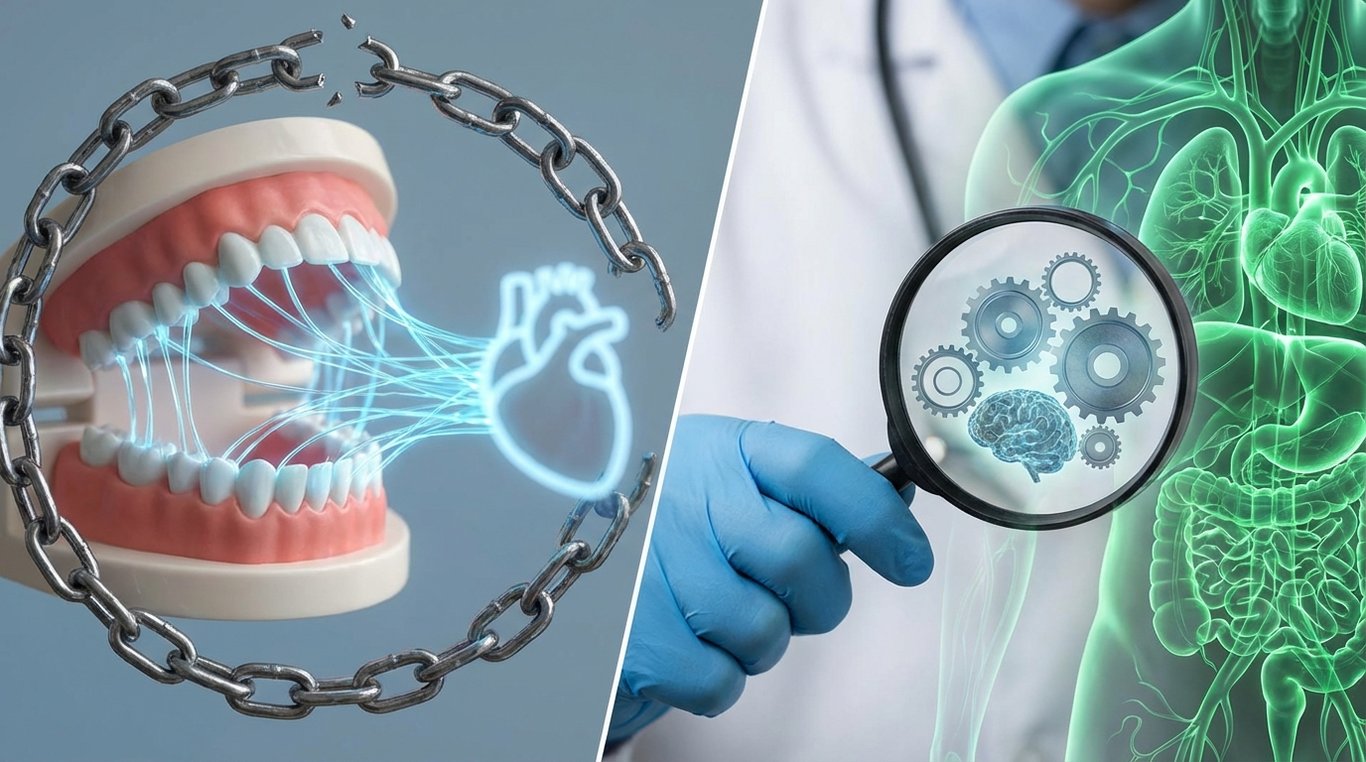
The oral-systemic connection is a fascinating and critical link between the health of your mouth and the rest of your body. Research shows moderate but undeniable associations between common oral conditions, like periodontitis and dental caries, and broader systemic diseases. Essentially, science has proven that what happens in your mouth does not stay in your mouth.
Think of your mouth as the ultimate gateway to your body, where oral issues can easily influence your overall health through various biological pathways. Every time you swallow or even chew, bacteria and inflammatory markers can travel from your gums directly into your bloodstream. This means a simple cavity or bleeding gums can eventually trigger a chain reaction that affects your major organs.
Fortunately, there is a growing recognition in the healthcare world regarding this deep interconnectedness. Doctors and dentists are increasingly teaming up to create integrated treatment approaches that treat the whole person rather than just isolated symptoms. This collaborative mindset is paving the way for better, more comprehensive healthcare that benefits everyone.
Why Does the Mouth Matter for Your Overall Health?
Poor oral health often acts as a visible indicator of broader, underlying health issues that might otherwise go unnoticed. Evidence from major national datasets, such as the National Health and Nutrition Examination Survey, highlights that people with severe dental problems frequently suffer from other chronic conditions. By paying close attention to the state of your teeth and gums, you can often catch early warning signs of systemic trouble before it escalates.
Despite decades of compelling research, the vital role of the mouth in systemic wellbeing has historically been neglected by mainstream medicine. For a long time, dental care was treated as completely separate from general healthcare, leaving a massive gap in how we approach wellness. Bridging this gap is absolutely essential because maintaining a healthy mouth is a cornerstone of living a long, vibrant life.
The Biological Mechanisms Linking Oral and Systemic Health
Several key biological mechanisms explain exactly how oral health impacts the rest of the body. The primary culprits include chronic inflammation, microbial dysbiosis, oxidative stress, and immune dysregulation, all of which can originate in a troubled mouth. Together, these microscopic battles create a toxic environment that easily spills over into your systemic circulation.
When you have periodontal disease, your body is locked in a state of chronic, low-grade inflammation that elevates dangerous markers in your blood. Specifically, this ongoing gum infection increases levels of interleukin-6 and C-reactive protein, which are well-known indicators of systemic stress. Over time, this constant immune response wears down your body's defenses and leaves you vulnerable to serious illnesses.
Furthermore, these biological effects are entirely bidirectional, meaning your bodily health also directly impacts your mouth. For instance, chronic hyperglycemia, or high blood sugar, leads to the creation of advanced glycation end products that cause severe oral inflammation. This creates a vicious cycle where poor systemic health worsens gum disease, and poor oral health worsens systemic conditions.
Oral Health and Diabetes: A Two-Way Street
The relationship between your oral health and diabetes is one of the most well-documented examples of the oral-systemic connection. Studies consistently present a moderate but significant association between severe periodontitis and diabetes, proving that these two conditions frequently go hand-in-hand. Understanding this link is crucial for anyone looking to manage their metabolic health effectively.
In fact, individuals diagnosed with diabetes are two to three times more likely to develop advanced periodontal disease compared to those without the condition. This happens because high blood sugar weakens the immune system, making it harder to fight off gum infections, which in turn severely impairs glycemic control. As a result, managing diabetes becomes an uphill battle when gum disease is left untreated.
The good news is that actively treating gum disease can lead to measurable improvements in diabetes management. Clinical evidence shows that successful periodontal therapy can actually lower HbA1c levels by a significant margin, typically between 0.4 and 0.7 percent. This remarkable improvement highlights just how powerful a professional dental cleaning can be for your blood sugar levels.
To reduce the risks and complications associated with diabetes, strict oral hygiene recommendations must be followed daily. Brushing twice a day, flossing regularly, and keeping up with routine dental visits are essential habits for anyone dealing with blood sugar issues. By prioritizing your smile, you are taking a massive step toward keeping your diabetes under control.
Periodontal Disease and Cardiovascular Risks
Your heart health is surprisingly tied to the condition of your teeth and gums. Research links common dental caries to an increased risk of hypertension, while severe periodontal disease can raise your overall risk of heart disease by up to 20 percent. These startling statistics prove that a healthy cardiovascular system relies heavily on a healthy mouth.
The connection largely comes down to the harmful bacteria and severe inflammation that originate in infected gums. When these bacteria enter the bloodstream, they contribute to atherosclerosis, which is the dangerous hardening and narrowing of the arteries. As your blood vessels become compromised, your heart has to work much harder to pump blood throughout your body.
Consequently, study data reveals strong associations between poor oral health and severe cardiovascular events like angina, heart attacks, and strokes. Patients with a history of severe gum disease frequently show up in cardiology wards, highlighting a pattern that cannot be ignored. Protecting your gums might just be one of the best things you can do to protect your heart.

Connections to Other Chronic Conditions
Rheumatoid Arthritis and Respiratory Diseases
The inflammatory pathways triggered by poor oral health also extend to conditions like rheumatoid arthritis and chronic respiratory diseases. When you inhale bacteria from an infected mouth into your lungs, or when oral inflammation triggers a systemic immune response, it can severely worsen joint pain and breathing issues. This shared inflammatory burden makes it incredibly difficult for the body to heal itself.
Because of these complex overlaps, there is an urgent need for close collaboration between dental and medical providers. A rheumatologist or pulmonologist can only do so much if a patient's mouth is constantly feeding inflammation into their system. By working together, healthcare teams can provide relief that addresses the root causes of these chronic conditions.
Alzheimer’s, Obesity, and Cancer
Beyond the heart and lungs, poor oral health has been associated with Alzheimer’s disease, dementia, obesity, metabolic disorders, and even certain cancers. While it is important to note that these links do not necessarily imply direct causation, the patterns of co-occurrence are too significant to brush aside. Researchers are actively exploring how the bacteria and inflammation from our mouths might influence these severe health challenges.
As science progresses, experts are carefully looking at potential confounding factors, such as lifestyle choices and genetics, that might influence these research trends. While we cannot say that skipping flossing directly causes dementia, the shared risk factors suggest a deeply intertwined relationship. Staying informed on these emerging trends is key to taking a proactive approach to your long-term health.
Does Improving Oral Health Improve Systemic Conditions?
A major question in modern medicine is whether fixing the mouth can actually reverse or improve systemic conditions. Current intervention data is highly promising, trending toward the idea that oral health improvements can indeed reduce risks for issues like atherosclerotic disease. By simply clearing up gum infections, patients often see a decrease in systemic inflammation markers that harm the heart.
We already see fantastic real-world examples of this when it comes to periodontal treatment aiding in diabetes management. When diabetic patients receive deep cleanings and proper gum care, their doctors frequently observe a noticeable stabilization in their daily blood sugar levels. This proves that dental interventions have tangible, measurable benefits for the rest of the body.
To fully understand the extent of these benefits, the medical community is calling for more longitudinal studies and integrated care plans. We need long-term data tracking patients over decades to see exactly how proactive dental care extends lifespans. Until then, treating the mouth as a primary medical intervention remains a highly logical and beneficial strategy.
Prevention Strategies: Protecting Oral and Systemic Health
Protecting both your oral and systemic health starts with mastering the basics of daily hygiene. Medical and dental professionals heavily promote regular brushing, daily flossing, routine dental check-ups, and strict glycemic control, especially for at-risk groups. Committing to these simple habits is your first line of defense against a cascade of health issues.
On a broader scale, we must advocate for widespread community education and stronger collaboration between different healthcare professionals. When communities understand that a healthy mouth prevents chronic disease, public health outcomes improve drastically. Empowering people with this knowledge helps bridge the gap between the dental chair and the doctor's office.
Finally, the healthcare industry needs to start incorporating routine oral assessments directly into systemic disease management. If a patient is diagnosed with high blood pressure or diabetes, a dental referral should be an automatic part of their treatment plan. Treating the whole patient means never leaving the mouth out of the equation.
Common Myths About the Oral-Systemic Link
There are several myths surrounding the oral-systemic connection, the most common being the complete denial of any causation between the two. While it is true that we must carefully clarify the difference between associations and direct causality due to confounding factors like smoking or diet, dismissing the link entirely is scientifically inaccurate. The evidence of shared inflammatory pathways is simply too strong to ignore.
Another dangerous misconception is the belief that oral health is entirely isolated from systemic health. For generations, people viewed dentistry as a cosmetic luxury rather than a medical necessity, which led to a dangerous disconnect in personal care. Breaking down this myth is essential because your mouth is a deeply integrated organ that constantly communicates with the rest of your body.
Role of Dental Professionals in Systemic Health
Dental professionals play a surprisingly vital role in monitoring and maintaining your overall systemic health. It is now highly emphasized that patients dealing with diabetes, hypertension, and other chronic conditions receive thorough dental evaluations as part of their standard care. Your dentist is often the first person to spot the warning signs of a systemic disease simply by looking at your gums.
Because of this unique vantage point, there is a massive need for interdisciplinary approaches in modern medicine. Dentists, primary care physicians, and specialists must share patient records and communicate openly to provide the best possible care. When your healthcare providers act as a unified team, your chances of living a healthy, vibrant life increase exponentially.
Latest Research and Future Directions
The scientific community is constantly uncovering new details about the oral-systemic connection through rigorous studies. Recent findings from national health surveys and deep dives into biological mechanisms have solidified the role of oral inflammation in whole-body health. This ongoing research continues to validate what holistic practitioners have suspected for years.
Despite these advancements, there are still research gaps and loud calls for more detailed causal pathway studies. Scientists want to know exactly how a specific oral bacterium travels and impacts a specific organ over time. As future research fills in these missing puzzle pieces, we can expect even more targeted therapies that heal the body by starting with the mouth.
FAQ
1. Can poor oral health cause heart disease?
Associations exist, with periodontal disease linked to a 20 percent higher heart disease risk via inflammation, but direct causation is not definitively proven.
2. Does treating gum disease help control diabetes?
Yes, studies show that periodontal treatment reduces HbA1c by 0.4 to 0.7 percent and significantly improves glycemic control.
3. Are there links between oral health and Alzheimer’s?
Significant associations have been noted, potentially through chronic inflammation, though other confounding factors do exist.
4. How does diabetes affect oral health?
Diabetics face a two to three times higher risk of gum disease due to elevated blood sugar and increased inflammation.
5. What daily habits support the oral-systemic connection?
Regular brushing, flossing, routine dental visits, and proper blood sugar management effectively reduce risks for both oral and systemic issues.
Conclusion
To recap, the evidence is clear that there are moderate, meaningful associations between oral issues like periodontitis or dental caries and systemic conditions such as diabetes and hypertension. Chronic inflammation serves as the core mechanism driving these connections, highlighting the undeniable benefits of integrated care for managing cardiovascular disease, rheumatoid arthritis, and beyond. Ultimately, your oral health serves as both a vital indicator and a highly preventable factor in your overall systemic wellbeing.
If you are ready to take control of your wellbeing, download and explore "The Gateway to Your Health: A Definitive Guide to the Oral-Systemic Connection" for in-depth strategies, research insights, and personalized prevention tips to optimize your oral and overall health today. Prioritize your routine dental check-ups and share this guide with your loved ones to foster better health outcomes for everyone.