The Digital Workflow: How CAD/CAM and 3D Printing Are Reshaping Modern Restorations
Published 19 min read
Introduction: Why Digital Restorations Matter Today
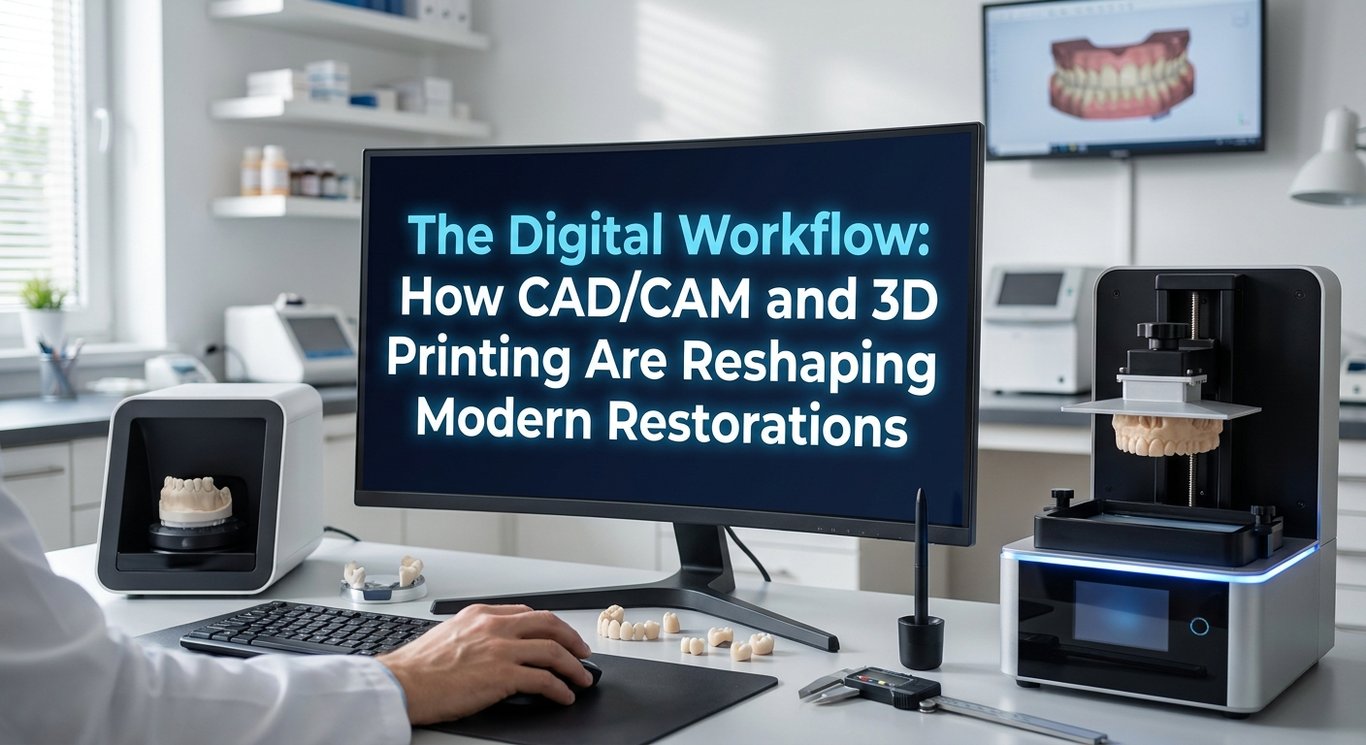
Digital dentistry is fundamentally changing how restorative care is delivered. By combining intraoral scanning, computer-aided design, and computer-guided fabrication into one connected workflow, clinicians can now produce restorations with greater speed and predictability than traditional methods allow. Modern literature consistently supports this shift, with studies showing that digitally fabricated restorations achieve high clinical quality and improved efficiency. Patients spend less time in the chair, and the risk of human error at each manual step is significantly reduced.
At the center of this transformation are two key technologies: CAD/CAM milling and 3D printing. Rather than replacing each other entirely, these two approaches serve different purposes depending on the clinical situation. The type of restoration, the material required, the level of precision needed, and the desired turnaround time all influence which method makes the most sense. This article breaks down how each technology works, where they perform best, and how clinicians and labs can use them together to deliver better outcomes.
What Is the Digital Workflow in Modern Restorations?
The digital workflow in restorative dentistry begins with an intraoral scanner capturing a precise three-dimensional image of the patient's teeth and surrounding structures. This digital impression replaces traditional polyvinyl siloxane or alginate impressions, eliminating the need for physical molds and the lab steps associated with pouring and trimming models. From the scan, the data is sent to CAD software where the restoration is designed, and then to a CAM system where it is physically fabricated. The result is a streamlined process that moves from patient to finished restoration with fewer manual handoffs.
Software plays a critical role in the middle of this process. Once the digital scan is imported, the clinician or dental technician uses design software to identify margins, plan occlusal contacts, refine the anatomy, and check proximal contacts. Advanced programs can even suggest restoration shapes based on the surrounding dentition, which helps maintain natural proportions. This virtual design phase allows for precise adjustments before any material is ever cut or printed, catching potential issues early and reducing the need for extensive chairside adjustments later.
Beyond the technical improvements, the digital workflow also transforms how clinicians and dental labs communicate. Files can be shared instantly, reviewed together, and revised without shipping physical models back and forth. In some cases, especially with chairside systems, the entire process can be completed in a single appointment. Even when lab involvement is required, the digital pathway tends to compress timelines and reduce the number of steps where errors can creep in, ultimately supporting a more consistent and efficient restorative process.
How CAD/CAM Technology Works in Dental Restorations
CAD/CAM stands for computer-aided design and computer-aided manufacturing. The CAD portion involves using specialized software to create a virtual model of the planned restoration, accounting for the tooth's anatomy, the bite, and the surrounding structures. Once the design is finalized, the CAM portion takes over, guiding a milling machine to carve the restoration out of a pre-fabricated block of dental material. This subtractive process is precise, repeatable, and well-suited to producing restorations with consistent dimensions and surface quality.
CAD/CAM technology has been applied to a wide range of restorative cases. Crowns, inlays, onlays, and veneers are among the most common applications, and the technology has also been extended to fixed partial dentures and implant-supported restorations. Ceramic materials, particularly lithium disilicate and zirconia, are especially well-suited to CAD/CAM milling, and this combination has become one of the most established approaches in modern restorative dentistry. The range of indications continues to grow as materials and software improve.
One of the most significant advantages of CAD/CAM systems is their track record. Decades of clinical use have produced a large body of evidence supporting the fit, strength, and longevity of milled restorations. The predictability of the milling process means that restorations are produced within tight tolerances, and the materials used have well-documented mechanical properties. For clinicians looking for a reliable, proven approach to fabricating fixed restorations, CAD/CAM milling remains the benchmark against which newer technologies are often compared.
How 3D Printing Fits Into Restorative Dentistry
Unlike milling, which removes material from a solid block, 3D printing builds restorations and dental appliances layer by layer from the ground up. This additive manufacturing approach offers a fundamentally different way of thinking about fabrication. Instead of being constrained by what can be carved out of a block, designers can create complex geometries and internal structures that would be difficult or impossible to achieve through subtractive methods. In dentistry, this opens the door to a broader range of customized designs.
3D printing has found a particularly strong foothold in specific areas of restorative and prosthetic dentistry. Interim restorations, diagnostic models, surgical guides, removable dentures, and orthodontic appliances are all areas where printing has proven its value. The ability to produce these items quickly and with a high degree of customization makes 3D printing a practical choice when flexibility and speed are priorities. It is also well-suited to producing multiple items simultaneously, which can improve efficiency in high-volume lab settings.
Current reviews of the literature highlight several areas where 3D printing is especially promising. Material efficiency is one advantage, since additive manufacturing uses only the material needed to build the object rather than discarding large amounts of unused block material. The technology also supports rapid prototyping and iteration, which is useful for complex prosthetic cases. While printed materials for permanent restorations are still evolving, 3D printing is already a well-established part of the digital toolkit for temporary and removable applications.
CAD/CAM vs. 3D Printing: Which Is Better for Restorations?
Comparing CAD/CAM milling and 3D printing is a bit like comparing a precision lathe to a 3D fabricator — both are powerful tools, but they shine in different situations. For high-precision fixed prostheses, milling is generally the preferred approach. The mechanical properties of milled ceramics, particularly zirconia and lithium disilicate, are well-documented, and the fit of milled restorations has been validated across many clinical studies. For custom, temporary, or removable applications, 3D printing is increasingly competitive and, in some cases, the more practical choice.
When it comes to accuracy and fit, recent evidence suggests that both technologies can achieve clinically acceptable results. Milled zirconia restorations, in particular, have shown strong marginal and internal fit in multiple studies. Printed restorations have also demonstrated acceptable accuracy for many applications, though results can vary based on the printer, the resin, and the post-processing protocol. The gap between the two technologies in terms of precision is narrowing as printing hardware and materials continue to improve.
Ultimately, choosing between milling and printing is not about declaring one technology superior across the board. The better option depends on several factors: the type of restoration, the material required, the strength demands of the case, and whether speed or customization is the higher priority. A clinician planning a definitive posterior crown will likely favor milling, while one producing a temporary restoration or a diagnostic model may find printing faster and more cost-effective. Understanding these distinctions helps practices make smarter decisions about when to use each tool.
Clinical Applications: Crowns, Veneers, Inlays, Onlays, and Dentures
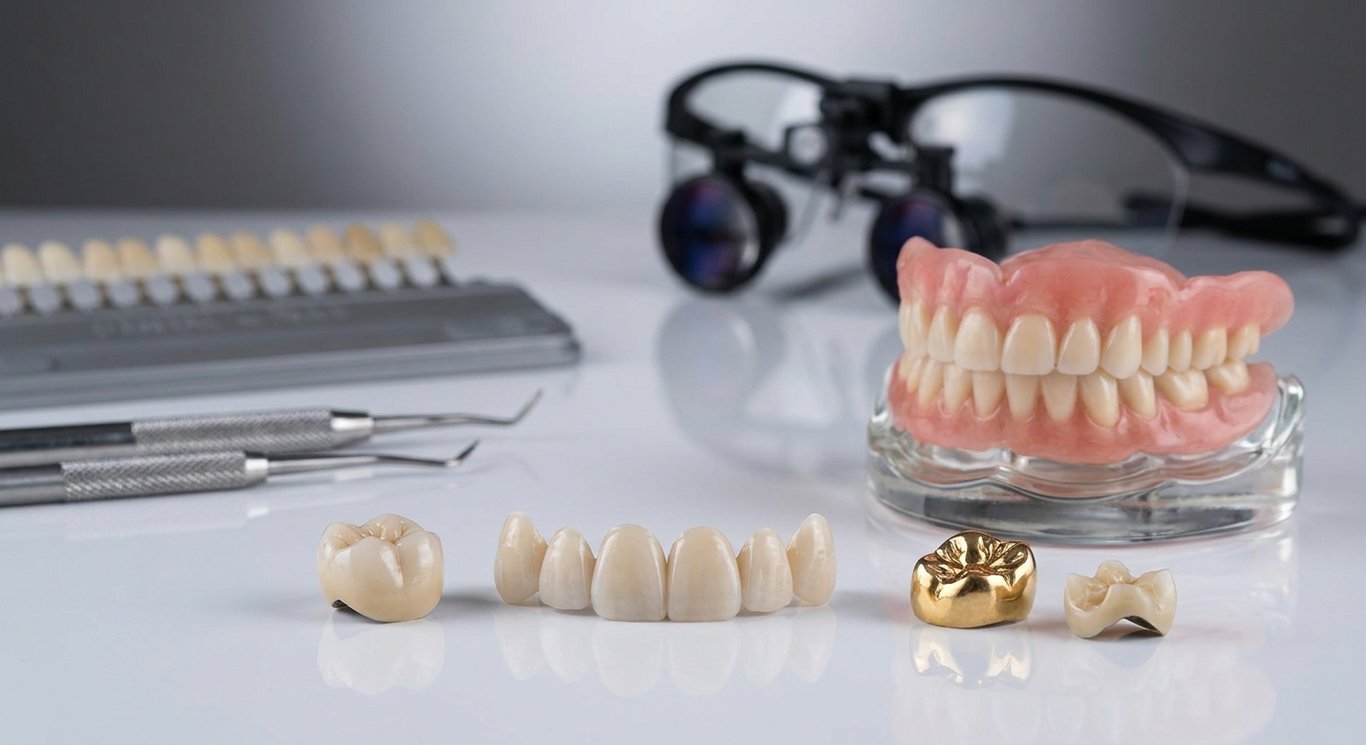
The range of restorations produced through digital workflows has expanded considerably over the past decade. Single-unit crowns are perhaps the most common application, but the digital workflow now supports veneers, inlays, onlays, implant-supported prostheses, and full-arch dentures as well. Each of these restoration types has its own requirements in terms of fit, strength, esthetics, and material selection, and the digital workflow can be tailored to meet those requirements across a wide range of clinical scenarios.
The choice between milling and printing often follows the nature of the restoration. Definitive ceramic crowns, veneers, and fixed partial dentures are typically milled from high-strength blocks, where the material properties and precision of the milling process are most critical. Interim restorations, on the other hand, are well-suited to 3D printing, which can produce them quickly and at lower material cost. Removable dentures represent an area where printing has made particularly strong inroads, with several systems now offering fully digital denture workflows that include both the denture base and the teeth.
Clinical reports and systematic reviews generally support the use of digital workflows across these applications. Fit, strength, and patient satisfaction have been evaluated in numerous studies, and the findings are largely positive for both milled and printed restorations when used for appropriate indications. Of course, the quality of any digital restoration depends on the accuracy of the scan, the skill of the designer, and the calibration of the fabrication equipment — but when these factors are well-managed, digital restorations consistently perform at a high clinical level.
What Are the Main Benefits of Digital Restorative Workflows?
Speed is one of the most immediately noticeable benefits of the digital workflow. Chairside CAD/CAM systems, in particular, can produce a finished crown in a single appointment, eliminating the need for a temporary restoration and a second visit. Even when lab fabrication is involved, digital files can be transmitted instantly and restorations produced faster than with traditional methods. This reduction in turnaround time benefits both the practice and the patient, making scheduling more flexible and reducing the overall burden of restorative treatment.
Beyond speed, the digital workflow offers meaningful improvements in reproducibility and resource management. Because designs are stored as digital files, a restoration can be reproduced exactly if it is lost or damaged — something that is simply not possible with conventional methods. Material waste is also reduced in both milling and printing compared to some traditional lab processes. The ability to document, archive, and revisit cases digitally adds a layer of quality control and continuity that supports better long-term patient care.
From the patient's perspective, the benefits of digital workflows extend beyond just faster treatment. Intraoral scanning is generally more comfortable than traditional impressions, particularly for patients with strong gag reflexes. Fewer appointments mean less time away from work or daily responsibilities. Digital communication tools also allow patients to see their planned restorations before fabrication, improving transparency and informed consent. Together, these advantages make the digital workflow not just a technical improvement, but a genuinely better experience for many patients.
What Are the Limitations and Challenges of CAD/CAM and 3D Printing?
Despite its many advantages, digital dentistry is not without its challenges. The upfront cost of equipment — including intraoral scanners, milling machines, 3D printers, and the associated software — can be substantial. Training is also required to use these systems effectively, and there is a learning curve for both clinicians and lab technicians. Proper case selection is essential, since not every restoration is well-suited to a digital workflow, and attempting to apply digital methods to inappropriate cases can lead to suboptimal outcomes.
Material limitations are another consideration, particularly for 3D printing. While printed resins have improved significantly, some printed materials still lag behind milled ceramics in terms of flexural strength and fracture resistance. Long-term clinical data for newer printed materials is also more limited compared to the extensive evidence base for milled zirconia or lithium disilicate. Clinicians should be aware of these differences when selecting materials for load-bearing or long-term restorations, and should consider the specific demands of each case before committing to a printed solution.
For certain complex cases, conventional or hybrid workflows may still offer advantages. Highly esthetic anterior restorations, for example, sometimes benefit from the nuanced layering and characterization that an experienced ceramist can provide by hand. Similarly, cases requiring maximum durability under heavy occlusal load may be better served by well-established milled materials with a long clinical track record. Digital dentistry is a powerful set of tools, but it works best when used thoughtfully alongside, rather than as a complete replacement for, traditional expertise.
How Accurate Are Digital Restorations Compared With Traditional Methods?
Accuracy and fit are among the most important factors in evaluating any restorative technique, and digital restorations have been scrutinized closely in this regard. The good news is that studies generally show acceptable marginal accuracy for digitally fabricated restorations, with many performing as well as or better than conventionally made alternatives. Marginal gaps within clinically acceptable ranges have been reported consistently for milled restorations, and printed restorations have also demonstrated reasonable precision for their intended applications.
Recent systematic reviews offer a clearer picture of where each technology excels. Milling tends to produce stronger results for fixed prostheses, where tight margins and high material strength are critical. Printed restorations perform well in selected interim or removable cases, where the precision demands may be somewhat different. Importantly, both technologies have continued to improve as hardware, software, and materials have advanced, and the performance gap between digital and traditional methods has narrowed considerably over the past several years.
It is worth noting that accuracy in digital restorations is not determined by any single factor. The quality of the intraoral scan, the design software used, the calibration of the milling machine or printer, and the post-processing steps all contribute to the final fit of the restoration. A well-executed digital workflow with careful attention at each stage can produce excellent results, while shortcuts or poorly calibrated equipment can undermine even the best technology. As with most clinical processes, the outcome reflects the care taken throughout.
What Materials Are Used in CAD/CAM and 3D Printed Restorations?
CAD/CAM milling relies on a range of well-established dental materials, each with distinct properties suited to different clinical applications. Lithium disilicate is a popular choice for anterior and premolar crowns due to its excellent esthetics and good strength. Zirconia offers superior strength and is often used for posterior crowns, bridges, and implant-supported restorations where durability is the priority. Hybrid ceramics and feldspathic ceramics round out the material palette, offering different combinations of esthetics, wear behavior, and machinability for specific indications.
3D printing in dentistry currently relies primarily on photopolymer resins, which are cured layer by layer using light. These resins are used to produce models, surgical guides, provisional restorations, denture bases, and orthodontic appliances. The range of printable materials is expanding, with newer formulations offering improved strength, color stability, and biocompatibility. Some resins are now specifically designed for longer-term interim use, though they are generally not yet equivalent to milled ceramics for definitive load-bearing restorations.
Material choice is one of the most consequential decisions in any digital restorative workflow. The right material affects not just the immediate outcome but also the long-term performance of the restoration. Factors like durability, polishability, wear resistance, and color stability all vary between materials and should be matched carefully to the clinical demands of each case. As both milling and printing technologies continue to develop, the range of available materials will expand, offering clinicians even more options for tailoring restorations to individual patient needs.
How to Choose the Right Digital Workflow for a Case
Choosing the right digital workflow starts with a clear understanding of what the restoration needs to accomplish. The purpose of the restoration, the load-bearing demands it will face, the esthetic requirements of the case, and the desired turnaround time all factor into the decision. A systematic approach to case planning — one that considers these variables before selecting a fabrication method — leads to better outcomes and fewer surprises at delivery. There is no single right answer for every case, but there is usually a best answer for each specific situation.
Milling is typically the better choice when the restoration must bear significant occlusal load, when a definitive ceramic material is required, or when the highest level of marginal precision is essential. Posterior crowns, fixed partial dentures, and implant-supported restorations in functional areas are strong candidates for milling. The long clinical track record of milled ceramics and the well-characterized properties of materials like zirconia and lithium disilicate make milling the go-to method when durability and proven performance are non-negotiable.
Printing, on the other hand, comes into its own when flexibility, speed, and customization are the primary goals. Temporary restorations needed quickly between appointments, diagnostic models for treatment planning, surgical guides for implant placement, and removable dentures are all areas where printing offers practical advantages. The ability to produce complex shapes efficiently and to iterate designs rapidly makes printing an excellent tool for cases where adaptability matters more than maximum material strength. Knowing when each approach fits the clinical picture is what separates good digital dentistry from great digital dentistry.
Future Trends in Digital Restorations
The future of digital restorations is being shaped by several converging developments. Artificial intelligence is beginning to play a role in restoration design, with software capable of suggesting anatomy, identifying margins, and even predicting occlusal wear patterns based on patient data. Intraoral scanners are becoming faster, more accurate, and easier to use. Hybrid workflows that combine milling and printing in a single case are also emerging, taking advantage of the strengths of each technology where they are most relevant. These trends point toward a future where digital dentistry is even more integrated, intelligent, and accessible.
On the manufacturing side, ongoing development is focused on expanding what 3D printing can do for permanent restorations. Researchers and material scientists are working on printable ceramics and high-strength polymers that could eventually compete with milled materials for definitive fixed restorations. Faster printing speeds and improved surface quality are also areas of active development. As these advances materialize, the line between what is appropriate for milling versus printing will likely shift, opening new clinical possibilities that are not yet practical today.
That said, enthusiasm for new technology should always be tempered by a commitment to evidence. Long-term clinical data for newer printed materials and AI-driven design systems is still accumulating, and it will take time before the full picture of their performance is clear. Clinicians and labs should stay engaged with the literature, participate in continuing education, and approach new tools with both curiosity and appropriate caution. The digital revolution in dentistry is real and ongoing, but its best outcomes will come from informed, evidence-based adoption rather than uncritical enthusiasm.
FAQ: Common Questions About CAD/CAM and 3D Printing in Restorative Dentistry
What is the difference between CAD/CAM and 3D printing? CAD/CAM refers to a process that combines digital design software with a subtractive milling machine, which carves a restoration out of a pre-made block of material. 3D printing, by contrast, is an additive process that builds the restoration or appliance layer by layer from a digital file. Both start with a digital design, but they fabricate the final product in fundamentally different ways, which affects the materials that can be used and the types of restorations each method handles best.
Are digital restorations as strong as traditional restorations? For many applications, yes. Multiple clinical studies have shown that digitally fabricated restorations, particularly milled ceramic crowns and bridges, achieve clinically acceptable strength and fit that is comparable to conventionally made restorations. Printed restorations have also demonstrated acceptable performance for interim and removable applications. While some newer printed materials are still being evaluated for long-term durability, the overall evidence base for digital restorations is strong and continues to grow.
Are CAD/CAM restorations used for same-day dentistry? Yes, chairside CAD/CAM systems are specifically designed to support same-day treatment. With an intraoral scanner, design software, and an in-office milling unit, a clinician can scan, design, mill, and deliver a crown all in a single appointment. This approach is particularly well-suited to single-unit restorations in appropriately selected cases, and it eliminates the need for a temporary restoration and a return visit, which many patients appreciate.
Is 3D printing good for permanent crowns? 3D printing shows real promise for permanent crowns, and the technology is advancing quickly. However, milling remains the more established and widely validated choice for definitive fixed restorations, particularly those in high-load posterior areas. Printed materials for permanent crowns are still being refined, and long-term clinical data is more limited compared to milled ceramics. For now, printing is most confidently recommended for interim restorations, models, guides, and removable prostheses, with permanent crowns remaining a growing but still developing application.
Which is more cost-effective: CAD/CAM or 3D printing? The answer depends on the specific case, the equipment available, the materials used, and the volume of restorations being produced. In general, digital workflows of both types can reduce production time and labor costs compared to fully conventional methods. 3D printing often has lower per-unit material costs for items like models and provisionals, while milling may represent a better investment for high-quality definitive restorations. Practices and labs should evaluate cost-effectiveness based on their own case mix and workflow rather than assuming one technology is universally cheaper than the other.
Conclusion: The Role of CAD/CAM and 3D Printing in the Future of Restorations
The digital workflow is not just a trend — it is a genuine shift in how restorative dentistry is practiced. By integrating scanning, design, and fabrication into a connected process, CAD/CAM milling and 3D printing have made treatment faster, more consistent, and more adaptable to the diverse needs of modern patients. CAD/CAM milling remains the benchmark for many definitive fixed restorations, backed by decades of clinical evidence and a strong range of high-performance materials. At the same time, 3D printing is expanding rapidly, proving its value in temporary, removable, and highly customized applications where flexibility and speed are key.
If you are a clinician or lab professional evaluating how to integrate or expand digital workflows in your practice, now is an excellent time to take a closer look at how CAD/CAM and 3D printing can improve efficiency, precision, and the overall patient experience. Consider which cases in your current workflow could benefit from digital fabrication, and explore how milling and printing might complement each other rather than compete. Stay informed about new materials, software updates, and hybrid workflow options as they emerge — because digital dentistry is evolving quickly, and the practices that keep pace with that evolution will be best positioned to deliver exceptional care.