The Digital Tooth: From 3D Scans to Same-Day Crowns
Published 23 min read
Introduction: What Does "The Digital Tooth" Really Mean?
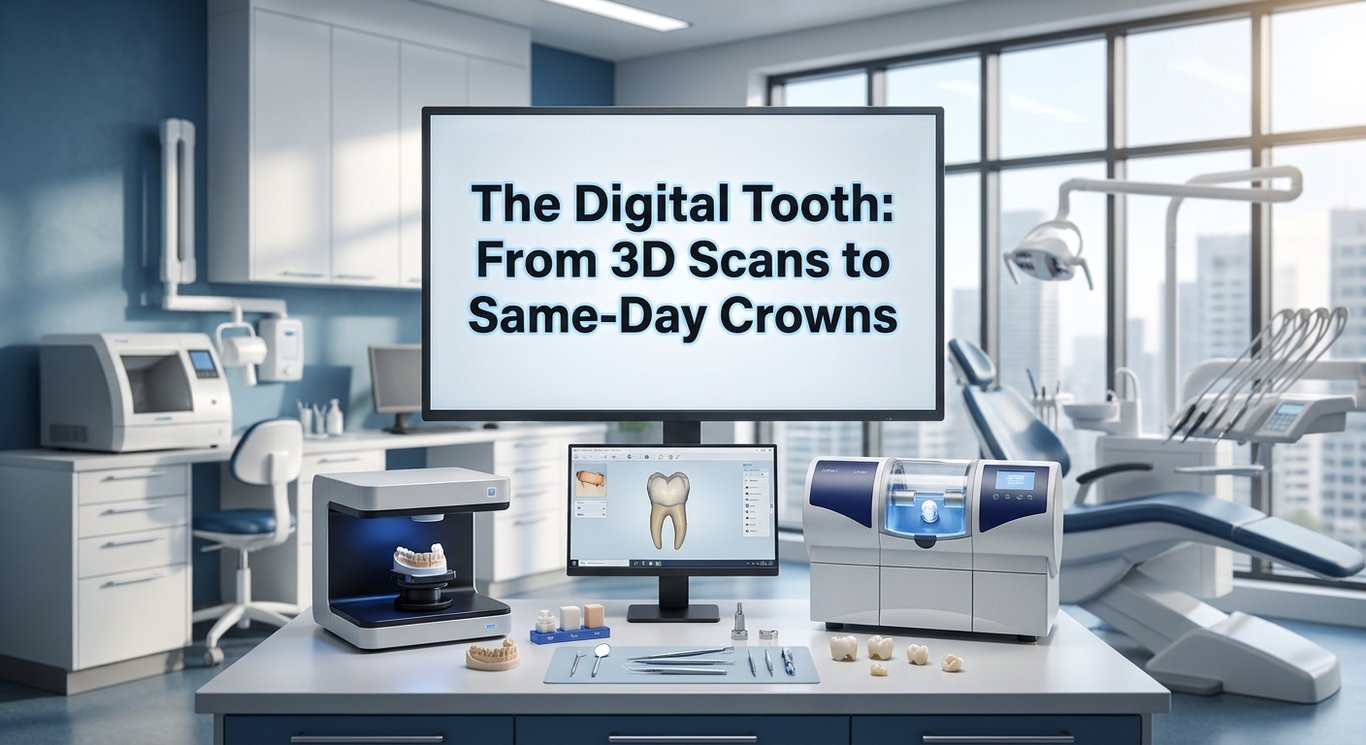
The phrase "digital tooth" might sound like something out of a science fiction movie, but it's very much a reality in modern dental offices today. A digital tooth refers to the entire process of designing and creating a dental restoration — like a crown — using digital technology rather than old-school manual methods. This includes taking 3D scans of your mouth with a handheld camera, using computer-aided design (CAD) software to craft a perfectly fitted crown, and then sending that design to an in-office milling machine or 3D printer to produce the final restoration. What once took two or three separate appointments and a dental lab can now happen in a single visit, often in under two hours.
This shift in how crowns are made is a genuinely big deal for patients. Traditional crown procedures came with a laundry list of inconveniences — goopy impression trays, uncomfortable temporary crowns that could fall off at the worst moments, and a waiting period of one to two weeks while a lab crafted the permanent crown. The digital approach changes all of that. It's faster, more comfortable, and often just as precise — if not more so — than conventional methods. For anyone who dreads dental appointments or simply has a packed schedule, the idea of walking in and walking out with a permanent crown the same day is a pretty compelling upgrade.
From Putty Impressions to 3D Scans: How Digital Imaging Works
For decades, taking a dental impression meant biting down into a tray filled with a thick, rubbery putty material and holding perfectly still while it set. It wasn't exactly pleasant. Beyond the discomfort, traditional impressions came with real technical limitations. The putty could shift slightly before it hardened, introducing small distortions into the mold. Those molds then had to be physically shipped to an off-site dental lab, where technicians would pour plaster models and hand-craft the crown — a process vulnerable to human error at multiple stages. If anything went wrong, the patient would have to come back and start over.
Digital intraoral scanning is a completely different experience. A dentist or hygienist uses a small, handheld wand-like camera to capture thousands of images of your teeth and gums in a matter of minutes. The scanner stitches those images together in real time, creating a precise 3D model of your mouth that appears on a screen right in front of you. There's no gagging, no mess, and no waiting for material to set. Patients often describe it as surprisingly easy — the wand moves gently around the mouth, and within a few minutes, a full digital map of their teeth is ready to work with.
Once the scan is complete, the resulting 3D digital model becomes the foundation for everything that follows. The software captures incredibly fine details — the exact contours of each tooth, the spacing between teeth, and the way your upper and lower teeth come together when you bite. This level of detail is essential for designing a crown that fits correctly and feels natural. The digital model can be rotated, zoomed in on, and examined from every angle, giving the dentist a much clearer picture than a plaster cast ever could. From this point, the data flows directly into design software, and the real magic begins.
Inside the Workflow: Step-by-Step Journey to a Same-Day Crown
The journey to a same-day crown starts with preparing the tooth. Before any scanning or designing can happen, the dentist needs to get the tooth ready to receive a crown. This involves removing any existing decay, old fillings, or damaged tooth structure, and then reshaping the remaining tooth into a form that the crown can sit over securely. Local anesthesia is used to keep the patient comfortable throughout this phase. The preparation is careful and precise, because the shape of the prepared tooth directly influences how well the final crown will fit.
Once the tooth is prepared, it's time for the digital impression. The intraoral scanner is brought in to capture a detailed 3D image of the prepared tooth, the surrounding teeth, and the opposing teeth that it bites against. This scan takes just a few minutes and sends the data wirelessly to the CAD software loaded on a nearby computer. The dentist can review the scan immediately on screen, checking for any areas that need to be rescanned or clarified. If the traditional method required shipping a physical mold across town, this step is essentially instant — the data is ready to design from within seconds of the scan being completed.
With the digital model in hand, the dentist — or a trained team member — opens the crown design in CAD software and begins customizing it. The software uses the scan data to suggest an initial crown shape based on the tooth's anatomy and the surrounding bite. From there, the dentist can fine-tune every detail: the height of the crown, the width, the curvature of the chewing surface, and how it contacts the neighboring and opposing teeth. This step is both a science and an art. Getting the bite right is critical, because a crown that's even slightly too tall can cause jaw pain and discomfort. The digital tools make it much easier to get this right before anything is physically made.
Once the design is approved, it's sent electronically to the in-office milling machine or 3D printer. The machine gets to work carving or building the crown from a block of dental-grade ceramic or zirconia material, a process that typically takes between 15 and 45 minutes. While the patient waits — sometimes relaxing in the chair, sometimes stepping out to grab a coffee — the machine does its thing with impressive precision. When the crown comes out, the dentist checks the fit, makes any minor adjustments, polishes it, and then bonds it permanently to the prepared tooth. The patient leaves with a finished, permanent crown — no temporary, no second appointment, no lab involved.
CAD/CAM, Milling, and 3D Printing: The Technology Behind Same-Day Crowns
CAD/CAM stands for computer-aided design and computer-aided manufacturing, and it's the backbone of same-day crown technology. In dentistry, CAD refers to the software used to design the crown digitally, while CAM refers to the automated machines that physically produce it. These two systems work together seamlessly — the design created on the computer is sent directly to the manufacturing machine without any human hands needing to transfer or interpret the data. This tight integration reduces the chance of error and keeps the entire process happening within the dental office, under the dentist's direct supervision.
In-office milling is currently the most common fabrication method for same-day crowns. The milling machine works a bit like a miniature CNC router — it takes a solid block of ceramic or zirconia and carves away material until the crown shape emerges. Modern milling machines operate with tolerances measured in microns, meaning the crown fits with extraordinary precision. The whole milling process typically takes between 15 and 45 minutes, depending on the complexity of the design and the material being used. Once milled, the crown is polished and sometimes glazed or stained to improve its appearance before being placed in the patient's mouth.
3D printing is a newer player in the same-day crown game, and it's evolving rapidly. While milling subtracts material from a block, 3D printing builds the crown up layer by layer using specialized dental resins or ceramics. Right now, 3D printing is most commonly used for temporary crowns, surgical guides, and certain types of restorations, though the technology is advancing quickly toward producing permanent crowns as well. The materials available for 3D-printed crowns are improving in strength and aesthetics with each passing year. It's very likely that within the next decade, 3D printing will become just as common as milling for producing permanent restorations chairside.
Materials and Aesthetics: How Natural Do Same-Day Crowns Look?
One of the most common questions patients ask is whether same-day crowns actually look like real teeth. The short answer is yes — and the longer answer involves some pretty impressive materials. The most commonly used materials for same-day crowns are high-quality dental ceramics and zirconia. These materials are specifically engineered to mimic the optical properties of natural tooth enamel, including its slight translucency and the way it reflects light. Unlike older metal-based crowns that could show a gray line at the gumline, modern ceramic and zirconia crowns blend in naturally with the surrounding teeth.
Color matching is a key part of making a crown look seamless. Before the crown is designed, the dentist takes a shade measurement of the surrounding teeth, often using a digital shade-matching tool that analyzes the exact color and tone of the natural enamel. This information is factored into the design and, in some cases, the milling machine uses pre-shaded ceramic blocks that already contain gradients of color — just like real teeth, which are darker at the base and lighter toward the biting edge. The dentist can also add staining or glazing after milling to fine-tune the appearance. The result is a crown that most people — including the patient — would have a hard time picking out of a lineup of natural teeth.
Beyond aesthetics, digital design also helps optimize the crown's function. The CAD software analyzes the bite data captured during scanning and uses it to shape the crown's chewing surface so that it meets the opposing teeth correctly. A crown that looks beautiful but doesn't fit the bite properly will cause problems over time — jaw soreness, uneven wear, and even cracking. By integrating aesthetics and function into the same digital design process, same-day crowns often achieve results that rival or even surpass what a traditional lab-made crown would deliver. It's not just about looking good; it's about working well too.
Same-Day Crowns vs. Traditional Crowns: Pros, Cons, and Patient Experience
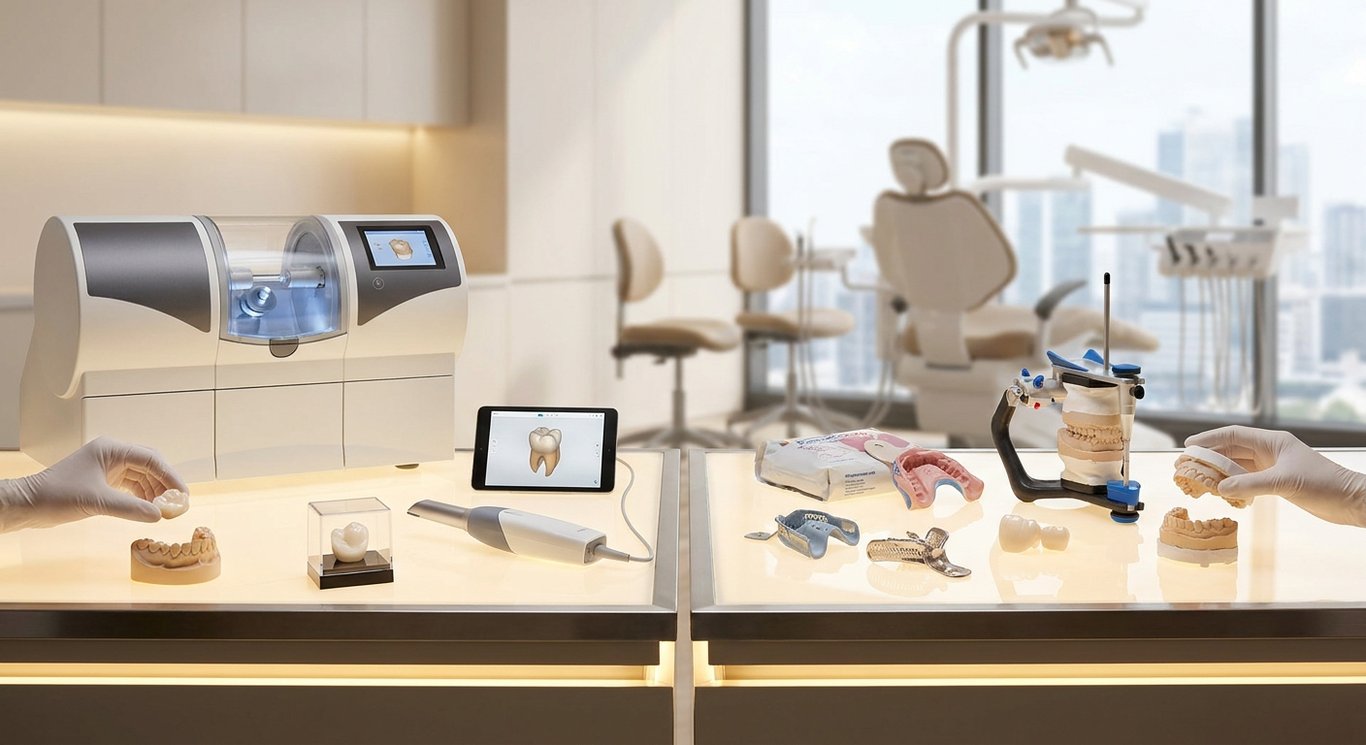
The most obvious difference between same-day and traditional crowns is the timeline. A traditional crown typically requires at least two appointments spread one to two weeks apart. The first visit involves tooth preparation and taking impressions, which are then sent to an off-site lab. A temporary crown is placed in the meantime. The second visit involves removing the temporary, checking the permanent crown's fit, and cementing it in place. Same-day crowns collapse this entire process into a single appointment. For most patients, that alone is a significant quality-of-life improvement.
Patient comfort is another area where same-day crowns have a real edge. Temporary crowns are notoriously unreliable — they can come loose, break, or cause sensitivity to hot and cold foods. Getting a temporary crown means enduring a second round of anesthesia at the follow-up visit, which nobody enjoys. With same-day crowns, there's no temporary restoration, which means no follow-up injection, no worrying about the temp falling off mid-week, and no period of heightened tooth sensitivity. The digital scanning process also eliminates the need for impression trays, which many patients find uncomfortable or triggering of a gag reflex.
When it comes to durability and fit, same-day crowns hold up very well. Digital impressions are generally more accurate than physical ones because they eliminate the variables introduced by putty distortion, shipping, and manual lab work. CAD/CAM milling operates at micron-level tolerances, producing crowns that fit with a precision that is difficult to match by hand. Studies and long-term clinical experience suggest that same-day ceramic crowns perform comparably to traditional lab-made crowns in terms of longevity, marginal fit, and patient satisfaction. In many cases, they actually require fewer adjustments at the delivery appointment.
That said, same-day crowns aren't the right solution for every situation. There are cases where a traditional lab-made crown is still the better choice. For example, if a patient needs a crown made from high-strength zirconia with very specific layering and aesthetic customization, a skilled dental lab technician may be able to achieve a more refined result than an in-office milling machine. Complex bite problems, full-mouth reconstructions, or cases involving multiple crowns that need to be precisely coordinated may also benefit from the detailed craftsmanship of a lab. A good dentist will evaluate each patient individually and recommend the approach that best fits their clinical needs and personal circumstances.
Accuracy, Longevity, and Safety: Are Digital Crowns Really Reliable?
One of the most important questions about any dental restoration is whether it will actually last. When it comes to accuracy, digital workflows have a distinct advantage. Intraoral scanners capture data at a resolution that far exceeds what the human eye can detect, and the CAD/CAM milling process operates within tolerances of just a few microns. This precision translates directly into better marginal fit — meaning the edge of the crown seals tightly against the tooth with minimal gap. A well-sealed margin is critical because gaps can allow bacteria to sneak underneath the crown and cause decay or sensitivity over time. Better fit means fewer problems down the road.
In terms of longevity, the clinical evidence is reassuring. Same-day crowns made from high-quality ceramics or zirconia have been shown in studies and supported by years of clinical practice to last 10 to 15 years or more with proper care. That's comparable to the lifespan of a traditional lab-made crown. The key factors that influence how long any crown lasts — regardless of how it was made — include the patient's oral hygiene habits, their bite forces, whether they grind their teeth, and how well the crown was bonded to the tooth in the first place. A same-day crown placed with proper technique and bonded correctly has every reason to last just as long as a conventional one.
Safety is another area where digital crown workflows perform well. The materials used — dental ceramics and zirconia — are biocompatible and have a long track record of safe use in dentistry. The scanning process uses optical light technology, not radiation, so there are no safety concerns associated with the imaging itself. Throughout the digital workflow, the dentist maintains oversight at every step — reviewing the scan, approving the design, checking the fit, and supervising the bonding process. Software built into CAD/CAM systems also includes quality checks that flag potential issues before the crown is even milled. It's a process that combines automation with professional judgment, which is exactly the right balance.
Time and Cost: What Patients Can Expect from Same-Day Crowns
One of the biggest selling points of same-day crowns is how much time they save. From the moment the tooth is prepared to the moment the final crown is bonded in place, the entire process typically takes between 60 and 120 minutes, depending on the complexity of the case and the specific equipment being used. That includes scanning, designing, milling or printing, and fitting. Patients can usually plan to be in the office for about two hours, though some straightforward cases move faster. Compared to the traditional two-appointment process spread over one to two weeks, that's an enormous time savings — especially for people with demanding schedules.
When it comes to cost, same-day crowns are generally priced similarly to traditional crowns. The fee for a crown — whether made chairside or in a lab — typically falls in the same range, and most dental offices don't charge a premium for the digital approach. Where patients can see indirect savings is in the reduced number of visits. Fewer appointments mean less time off work, less money spent on transportation, and no need to arrange childcare multiple times. There's also no risk of a temporary crown breaking or falling out and requiring an emergency visit — a cost that many patients don't think about until it happens to them.
Insurance coverage for same-day crowns is generally handled the same way as traditional crowns. Most dental insurance plans categorize crowns by tooth location and material type rather than by how they were made, so a same-day ceramic crown is typically reimbursed at the same rate as a lab-made one. That said, insurance policies vary, and it's always worth confirming the details with your provider before your appointment. Patients should ask their dentist's office to verify their benefits in advance and clarify what their out-of-pocket costs will be. A little bit of upfront homework can prevent any billing surprises after the fact.
Who Is a Good Candidate? Clinical Indications and Limitations
Same-day crowns are a great option for a wide range of common dental problems. They're frequently used to restore fractured teeth, replace large fillings that have compromised too much of the tooth structure to be repaired with another filling, and protect teeth that have been treated with a root canal — which can become brittle and prone to cracking without the support of a crown. They're also used for cosmetic upgrades, such as improving the shape or appearance of a misshapen or heavily discolored tooth. Basically, any situation where a full-coverage crown is clinically appropriate is a potential candidate for the same-day approach.
Certain patient factors also make same-day crowns particularly appealing. People with very busy schedules who can't easily take multiple days off work are obvious candidates. So are patients who live far from their dental office and would face significant travel to return for a second appointment. Patients who have dental anxiety may also benefit, since completing everything in one visit means less overall time in the chair and fewer opportunities for anxiety to build between appointments. The ability to see the crown being designed on screen and understand what's happening at each step can also help anxious patients feel more in control of their care.
Of course, same-day crowns aren't for everyone. Some cases are better suited to traditional lab-made restorations or alternative treatments altogether. If a patient needs a partial coverage restoration like an onlay or inlay, or if a veneer would be more appropriate for a cosmetic concern, those options should be explored first. Patients with very complex bite issues, significant jaw problems, or cases requiring coordination across multiple teeth may be better served by a more comprehensive treatment plan that involves a dental lab. The dentist's job is to evaluate each case individually and recommend the right solution — not simply to default to the same-day option because it's convenient.
Patient Experience: What to Expect Before, During, and After Your Visit
Before any crown — same-day or traditional — is placed, the dentist needs to thoroughly evaluate the tooth and the surrounding structures. This typically involves a clinical exam, dental X-rays, and a conversation about the patient's symptoms and goals. During this consultation, the dentist will explain why a crown is needed, discuss the options available (including same-day vs. traditional), and answer any questions the patient has. This is also the time to review the patient's dental history, check for any conditions that might affect treatment, and confirm that the tooth is a good candidate for a same-day restoration.
On the day of the procedure, the experience unfolds in a logical sequence. First, the dentist administers local anesthesia to numb the area completely. Once the tooth is numb, the preparation begins — removing damaged structure and shaping the tooth. After preparation, the intraoral scanner is used to capture the digital impression, and the patient can often watch the 3D model of their tooth appear on a nearby screen in real time, which many people find fascinating. The dentist then designs the crown using CAD software, sometimes talking through the design choices with the patient. Once approved, the design is sent to the milling machine, and the patient waits — comfortably — while the crown is fabricated.
When the crown comes out of the milling machine, the dentist checks it against the tooth before bonding. The fit is assessed, the bite is checked using articulating paper (a thin paper that marks where the teeth contact each other), and any minor adjustments are made with a polishing tool. Once everything checks out, the crown is bonded permanently to the tooth using a dental adhesive and cured with a special light. The patient bites down, the bite is checked one more time, and that's it — the crown is in place. Most patients report that the process was much smoother and less stressful than they expected.
After the appointment, some patients experience mild sensitivity in the crowned tooth for a few days, particularly to temperature changes. This is normal and usually fades on its own. The dentist will provide aftercare instructions, which typically include avoiding very hard or sticky foods for the first day or two, maintaining regular brushing and flossing, and using a soft-bristled toothbrush around the new crown. Patients who grind their teeth at night may be advised to wear a night guard to protect the crown. If sensitivity persists beyond a week or two, or if the bite feels off, patients should contact their dentist promptly. A quick adjustment is usually all that's needed to resolve any lingering issues.
Future Trends: The Next Generation of Digital Teeth
The technology behind same-day crowns is already impressive, but it's still evolving at a rapid pace. One of the most exciting developments on the horizon is the integration of artificial intelligence into the crown design process. AI-assisted CAD software is being developed that can analyze a patient's scan data and automatically generate a highly optimized crown design based on thousands of reference cases — essentially learning from patterns across a huge dataset of successful restorations. This could make the design process faster and even more accurate, particularly in complex cases. At the same time, improvements in 3D printing materials are pushing the boundaries of what can be fabricated chairside, with new resins and ceramics offering greater strength, better aesthetics, and faster print times.
Looking a bit further ahead, the future of digital dentistry involves fully integrated workflows where a patient's digital dental records — including scans, X-rays, bite data, and treatment history — are all stored in a single, interconnected system. This would allow dentists to track changes in a patient's teeth over time with extraordinary precision, catch problems earlier, and design restorations that account for the full history of the patient's oral health. Combined with better materials, smarter software, and more accessible in-office fabrication equipment, these advances will likely make same-day restorations the standard of care rather than a premium option. The digital tooth is not just a clever idea — it's the direction the entire field is heading.
FAQs: Common Questions About The Digital Tooth and Same-Day Crowns
1. How long does it really take to get a same-day crown?
Most patients can expect the entire process — from the initial scan to walking out with a permanently bonded crown — to take approximately one to two hours. The exact time depends on the complexity of the case, the specific CAD/CAM system being used, and how much adjustment is needed after the crown is milled. Simple, straightforward cases may wrap up closer to the one-hour mark, while more involved situations might take a bit longer. Either way, it's all done in a single visit, which is the real game-changer compared to the traditional two-appointment process spread over one to two weeks.
2. Are same-day crowns as durable as traditional crowns?
Yes — same-day crowns made from high-quality dental ceramics or zirconia are designed to last 10 to 15 years or more with proper care, which is comparable to the lifespan of a traditional lab-made crown. Longevity depends on several factors, including how well the crown was bonded, the patient's oral hygiene habits, bite forces, and whether the patient grinds their teeth. Taking good care of a same-day crown — brushing, flossing, attending regular checkups, and wearing a night guard if recommended — gives it the best possible chance of lasting for many years.
3. Do same-day crowns look as natural as lab-made crowns?
In the vast majority of cases, yes. Digital shade-matching technology allows the dentist to select a ceramic block that closely matches the color of the surrounding natural teeth, and the CAD software shapes the crown to blend seamlessly with the patient's smile. Post-milling staining and glazing can add additional nuance to the appearance. While a highly skilled lab technician working with premium layered porcelain can sometimes achieve a slightly more artistic result for very demanding cosmetic cases, same-day crowns routinely deliver natural-looking, aesthetically pleasing results that most patients are very happy with.
4. Are same-day crowns more expensive than regular crowns?
Generally speaking, the fees for same-day crowns and traditional crowns are quite similar. Dental offices don't typically charge a significant premium for using digital technology. Where patients often see real savings is in the indirect costs — fewer days off work, less transportation expense, and no risk of emergency visits due to a temporary crown breaking or falling off. The elimination of lab fees in same-day cases may also allow some practices to price their same-day crowns competitively. It's always a good idea to ask for a detailed cost breakdown before committing to treatment.
5. Is the digital scan uncomfortable or harmful?
Not at all. Intraoral scanning is one of the most patient-friendly parts of the entire same-day crown process. The scanner uses safe optical light technology — not radiation — to capture images of the teeth and gums. The handheld wand is small and moves gently around the mouth, and the whole scan typically takes just a few minutes. There's no messy impression material, no gagging, and no discomfort beyond what might naturally come from keeping your mouth open for a short period. There are no known harmful effects associated with intraoral scanning, making it a safe and comfortable alternative to traditional impression methods.
Conclusion: Why The Digital Tooth Matters for Your Smile
The digital tooth represents one of the most meaningful advances in modern dentistry for everyday patients. By combining high-resolution 3D scanning, intelligent CAD software, and precision in-office milling or 3D printing, same-day crowns deliver restorations that are accurate, durable, and natural-looking — all in a single appointment. The days of biting into trays of putty, wearing an unreliable temporary crown for two weeks, and making multiple trips to the dental office are rapidly becoming a thing of the past. For patients, the benefits are clear: greater comfort, fewer injections, no messy impressions, no temporary restorations, and highly customized results that fit beautifully and function correctly from day one.
If you've been told you need a crown — or if you've been putting off dental work because the process seems like too much of a hassle — it's worth having a conversation with your dentist about whether same-day treatment is right for you. Ask about their digital workflow, what equipment they use, and whether your specific situation is a good candidate for a chairside restoration. Understanding the technology behind The Digital Tooth: From 3D Scans to Same-Day Crowns puts you in a much stronger position to make informed decisions about your oral health. Choosing a dental practice that invests in modern, patient-centered technology isn't just about convenience — it's about getting the best possible care for your smile, your time, and your overall well-being.