The Digital Crown: How Technology is Transforming Dental Restorations
Published 22 min read
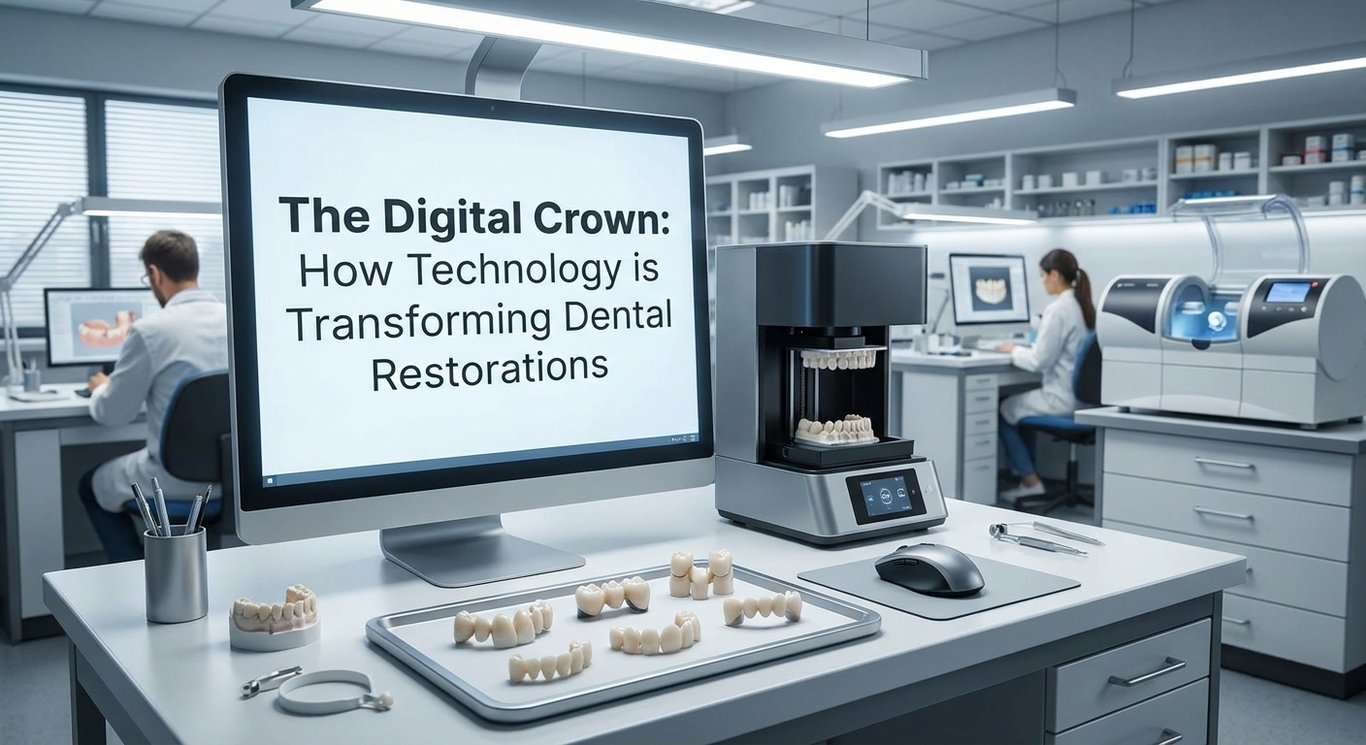
Dentistry has entered a new era, and the "digital crown" sits right at the center of it. Technologies like CAD/CAM (computer-aided design and computer-aided manufacturing), intraoral scanners, 3D printing, and artificial intelligence are completely reshaping how crowns and other restorations are designed, built, and delivered to patients. Instead of relying on physical impressions made from gooey materials and plaster models crafted by hand, modern dental practices are increasingly using data-driven, digital workflows that happen either right in the dental chair or in high-tech laboratories. This shift isn't just about using fancier equipment — it's about improving accuracy, reducing errors, and making the whole experience faster and more comfortable for everyone involved.
This article is your complete guide to understanding the world of digital crowns. We'll walk through how dental restorations evolved from traditional methods to today's digital systems, break down the core technologies making it all possible, and take you step by step through what a typical digital crown appointment looks like. Along the way, we'll cover the materials used, the real benefits for both patients and dentists, the honest limitations and challenges, and how costs and insurance factor in. We'll also look at exciting emerging trends and help you figure out whether a digital crown might be the right choice for you. By the end, you'll have a clear, practical understanding of what modern restorative dentistry can offer.
From Traditional Crowns to Digital Dentistry: A Brief Evolution
For most of dentistry's history, getting a crown meant going through a process that was, frankly, a bit of an ordeal. The dentist would prepare the tooth, then press a tray filled with a thick, sometimes uncomfortable impression material into your mouth to capture the shape of your teeth. That impression would be sent to a dental laboratory, where skilled technicians would pour plaster into it to create a physical model, then hand-craft a crown over several days. Meanwhile, the patient would walk around with a temporary crown that could sometimes fall off or feel awkward. Fit and appearance varied depending on the skill of the technician, the quality of the impression, and how well the physical model held up during the process. Multiple visits were simply part of the deal.
Then came the digital revolution. Starting in the 1980s and accelerating rapidly through the 2000s and 2010s, CAD/CAM systems, digital impression scanners, and new ceramic materials began entering dental practices. These tools transformed what was once a multi-step, multi-day process into something far more streamlined. Digital scanners replaced impression trays, virtual models replaced plaster casts, and milling machines began carving crowns from solid blocks of ceramic right in the office. The need for temporary crowns dropped significantly, and in many cases, patients could walk out with a finished, permanent crown the same day they came in. It was a genuine shift in how dentistry worked — and it's still evolving.
Core Technologies Behind the Digital Crown
At the heart of most digital crown workflows is CAD/CAM technology. CAD stands for computer-aided design, and CAM stands for computer-aided manufacturing — together, they form the backbone of how digital crowns are created. The process follows a logical sequence: scan, design, make, and fit. First, a digital scan captures the exact shape of the prepared tooth and surrounding teeth. That data is fed into software where a virtual model of the crown is designed on-screen. Once the design is approved, the file is sent to a milling machine or 3D printer that fabricates the actual crown from a block of material. This replaces the old-fashioned wax-up and physical impression process entirely, cutting down on human error and speeding up production significantly.
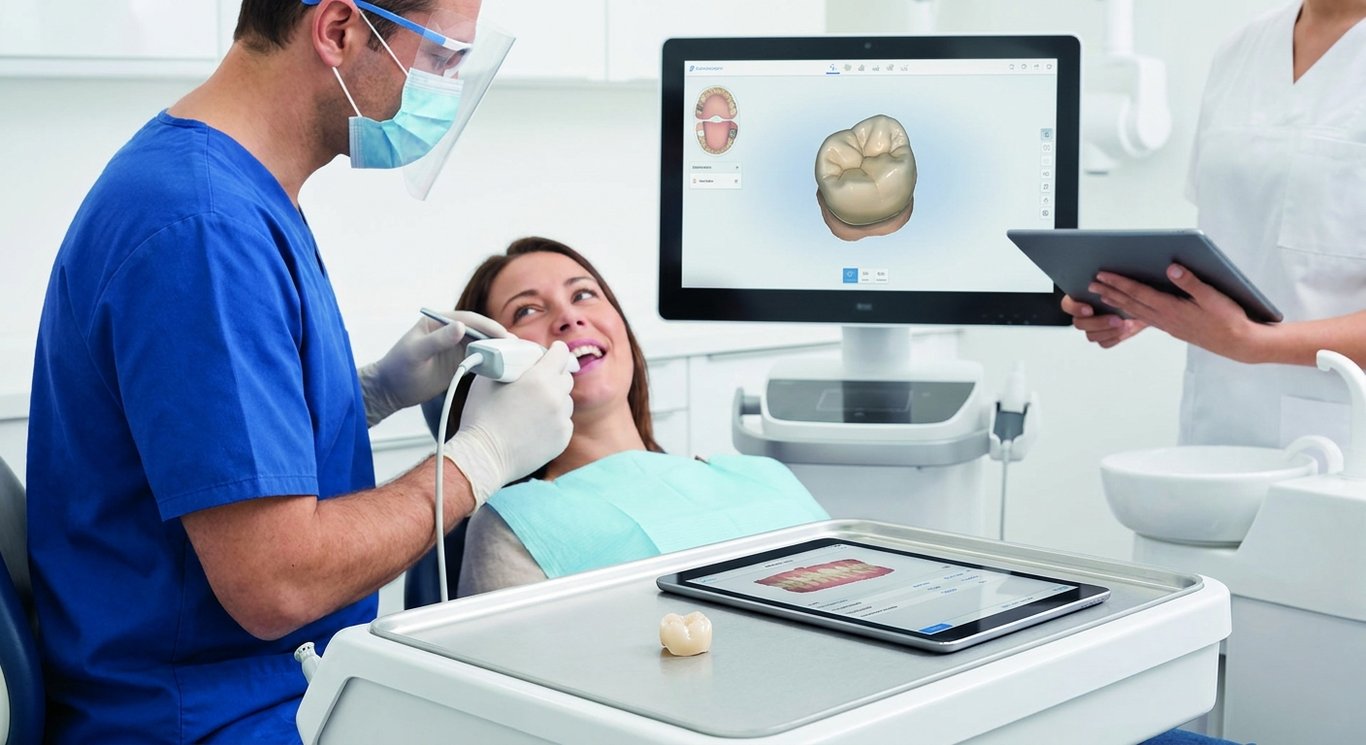
Intraoral scanners are the tools that make digital impressions possible, and they've become one of the most patient-friendly advances in modern dentistry. Instead of biting down on a tray full of impression material, the dentist simply moves a small, handheld wand around inside your mouth. The scanner captures thousands of images per second, building a precise, full-color 3D model of your teeth and bite in real time. Many patients find this dramatically more comfortable than traditional impressions, especially those with a strong gag reflex. Beyond comfort, intraoral scanners provide immediate visual data that both the dentist and patient can look at together, making it easier to understand the treatment plan and see exactly what's being worked on.
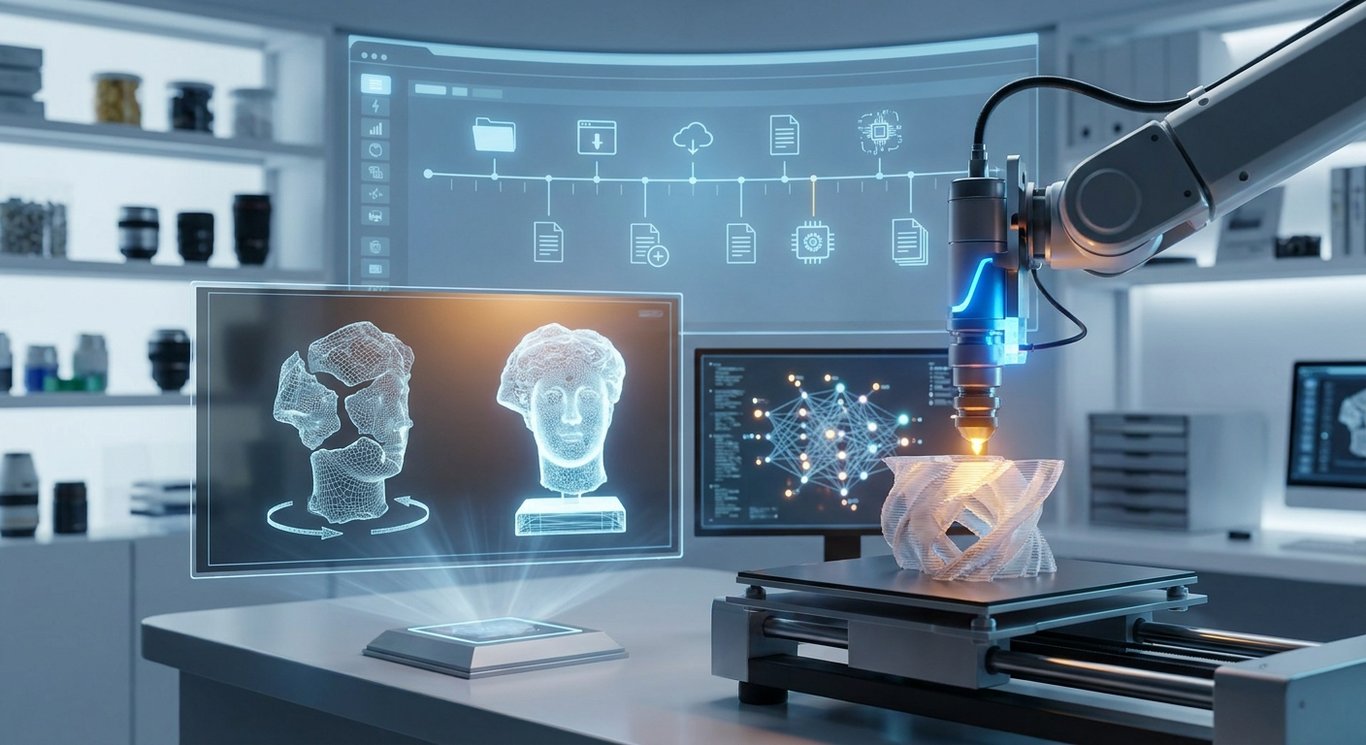
Beyond scanners and CAD/CAM, two other technologies are rapidly expanding what's possible in restorative dentistry: 3D printing and artificial intelligence. 3D printing has already proven useful for creating detailed models, surgical guides, and temporary restorations, and it's increasingly being used to fabricate certain types of permanent crowns and bridges as material quality improves. Meanwhile, AI is beginning to play a meaningful role in the design process itself — algorithms can analyze scan data to suggest ideal crown shapes based on the surrounding teeth, flag potential fit issues before fabrication even begins, and help with treatment planning by identifying areas of concern that might be easy to miss. These tools are still maturing, but they're already changing what dentists can do and how quickly they can do it.
Digital Crown Workflow: Step-by-Step Patient Journey
Understanding what actually happens during a digital crown appointment can make the whole process feel a lot less intimidating. It typically starts with diagnosis and treatment planning, where the dentist examines the tooth and determines that a crown is the right solution. X-rays and sometimes 3D cone beam scans may be taken to assess the tooth's root and surrounding bone. Once the plan is confirmed, the tooth is prepared — meaning the outer layer is carefully shaped to create room for the crown. At this point, instead of reaching for impression trays and gooey material, the dentist picks up an intraoral scanner and captures a precise 3D digital image of the prepared tooth, the opposing teeth, and the bite relationship. The whole scanning process usually takes just a few minutes.
Next comes the digital design phase, which is where things get genuinely impressive. The scan data is loaded into CAD software, and the dentist or a lab technician begins designing the crown on-screen. The software often suggests an initial shape based on the surrounding teeth, which can then be refined and adjusted. Occlusion — how the upper and lower teeth come together — is checked virtually, contacts with neighboring teeth are fine-tuned, and the overall shape and esthetics are reviewed. In many practices, the patient can actually watch this process on a screen, seeing the proposed crown design before it's ever fabricated. It's a level of transparency that simply wasn't possible with traditional methods, and it gives patients a real sense of involvement in their own care.
Once the design is finalized, it moves into manufacturing. In a chairside setup, the file is sent directly to an in-office milling machine, which carves the crown from a ceramic block in as little as 15 to 20 minutes. The crown is then polished, color-adjusted if needed, and tried in the patient's mouth to check fit and bite. After any minor adjustments, it's cemented permanently — all in a single visit. This is a dramatic change from the old process, which could stretch across two or three appointments over several weeks. For patients with busy schedules or dental anxiety, the ability to get a high-quality, permanent crown in one sitting is a significant improvement in the overall experience.
Materials in Modern Digital Crowns: Strength, Esthetics, and Longevity
The materials used in digital crowns have come a long way, and choosing the right one depends on where the crown is going and what it needs to do. The most commonly used materials include lithium disilicate, zirconia, and hybrid ceramics or composite resins. Lithium disilicate, often known by brand names like e.max, is popular for its excellent combination of strength and natural-looking translucency, making it a go-to choice for front teeth and premolars. Zirconia is exceptionally strong and fracture-resistant, making it well-suited for back molars that take on heavy chewing forces. Hybrid ceramics and composite resins offer a middle ground, with good esthetics and some flexibility that can be gentler on opposing teeth.
Esthetics matter a great deal to most patients, and digital workflows have made it easier than ever to achieve results that look genuinely natural. Modern CAD software allows clinicians to design crowns that closely mimic the shape and contour of surrounding teeth, while digital shade-matching tools help select the right color with greater consistency than the old visual comparison method. Translucency — how light passes through the crown material — is an important factor in making a crown blend in with natural teeth, and materials like lithium disilicate are specifically chosen for this quality. The digital process reduces the guesswork and subjectivity that sometimes led to color mismatches in traditional restorations.
When it comes to how long digital crowns actually last, the evidence is encouraging. Clinically fabricated digital crowns, when properly designed and placed, can deliver predictable fit and function that holds up well over time. The precision of computer-guided design and milling means that the crown fits the prepared tooth more accurately, which reduces gaps where bacteria can sneak in and cause problems. Less adjustment time at the chair means less risk of introducing fit errors. While no restoration lasts forever, the combination of high-quality materials and precise digital fabrication gives modern crowns a strong track record for durability — and that's good news for patients who want a long-term solution.
Benefits of Digital Crowns for Patients and Clinicians
For patients, the benefits of digital crowns are hard to argue with. The most obvious one is comfort — no more biting into impression trays filled with material that tastes odd and triggers your gag reflex. Digital scanning is quick, non-invasive, and far more pleasant. Beyond that, fewer appointments means less time off work or school, less time sitting in a dental chair, and less overall disruption to your routine. In many cases, you can walk in with a damaged tooth and walk out the same day with a permanent, well-fitting crown. The improved accuracy of digital design and fabrication also tends to mean a better fit right from the start, with less need for extensive adjustments that can extend the appointment.
Clinicians and dental practices also gain a lot from going digital. Workflows become more streamlined and efficient, reducing the back-and-forth communication that was sometimes needed with traditional lab work. Digital case files can be stored indefinitely, which means if a crown ever needs to be remade — due to a fracture or change in the tooth — the original design data can often be retrieved and used as a reference. Communication with dental laboratories improves too, since a precise digital file is much clearer than a physical impression that could distort in transit. Overall, digital workflows give dentists more control, better predictability, and the ability to deliver more consistent results across their patient base.
Zooming out even further, digital crown technology has broader implications for the health system as a whole. As these technologies become more widespread and the cost of equipment decreases over time, high-quality restorative care becomes more accessible to a wider range of patients. Efficiency gains in the dental office can translate to cost savings that eventually benefit patients. Digital records also support better continuity of care, especially when patients move or switch providers. While we're still in the early stages of this transformation at a population level, the direction is clear: digital dentistry has the potential to raise the standard of care for more people, not just those who happen to visit the most technologically advanced practices.
Limitations, Risks, and Challenges of Digital Crowns
As impressive as digital crown technology is, it's important to be honest about its limitations. The upfront cost of digital equipment — intraoral scanners, CAD software, milling machines — can be substantial, which is why not every dental practice has made the switch. There's also a real learning curve involved. Dentists and their teams need proper training to use these systems effectively, and mistakes made during scanning or design can lead to crowns that don't fit well. Not every clinical situation is a perfect candidate for a fully digital workflow either — some complex cases, particularly those involving multiple missing teeth or significant bite issues, may still require traditional or hybrid approaches.
Even within digital workflows, clinical risks and challenges exist. Scanning errors can occur if the intraoral scanner doesn't capture a clear image — for example, if there's bleeding in the area, excess saliva, or difficult access to the back of the mouth. Design errors in the CAD phase, if not caught before fabrication, can result in a crown that needs to be remade. Milling or printing inaccuracies, though uncommon with well-calibrated equipment, can also affect the final fit. The good news is that these risks can be managed through careful quality control, regular equipment calibration, and close collaboration between the dentist and an experienced dental laboratory. Skill and attention to detail still matter enormously, even in a digital world.
From the patient's perspective, there are practical considerations to keep in mind as well. Digital crowns can sometimes cost more than traditional crowns, depending on the practice and the materials used. Insurance coverage varies widely — some plans cover digital crowns under standard crown benefits, while others may have specific limitations. Access is also a real issue: if you live in a rural area or visit a smaller practice, digital crown technology may simply not be available to you yet. If you're curious about your options, the best move is to ask your dentist directly what technologies they use and what they recommend for your specific situation. Being informed helps you make the best decision for your oral health and your budget.
Chairside vs Laboratory Digital Crown Workflows
One of the most exciting aspects of digital dentistry is the option for chairside CAD/CAM — a setup where the entire crown process, from scanning to milling, happens right in the dental office during a single appointment. Systems like CEREC have made this possible for many practices. The dentist scans the tooth, designs the crown on a computer in the operatory, sends the file to an in-office milling unit, and has a finished crown ready to try in within the same visit. For patients, this means no temporary crown, no second appointment, and no waiting. For dentists, it means full control over the design and fabrication process without relying on an outside lab. It's a genuinely convenient option for straightforward single-tooth restorations.
That said, lab-based digital workflows have their own distinct advantages that shouldn't be overlooked. When a dentist takes a digital scan and sends the file to a professional dental laboratory, that lab has access to specialized technicians, a wider range of materials, and often more advanced equipment than what fits in a typical dental office. Complex cases — like multi-unit bridges, full-arch restorations, or situations requiring highly customized esthetics — often benefit from the expertise and resources available in a dedicated lab environment. Lab technicians can add hand-painted characterization, layered ceramics, and fine esthetic details that can be harder to achieve with purely chairside systems. In many cases, the best outcomes come from a thoughtful combination of chairside digital scanning and high-quality lab fabrication.
Emerging Trends: AI, 3D Printing, and the Future of Digital Restorations
Artificial intelligence is moving into restorative dentistry in ways that are genuinely exciting — and a little bit mind-bending. AI algorithms are being developed and refined to assist dentists at multiple stages of the crown process. During diagnosis, AI can analyze X-rays and scans to flag areas of decay or structural weakness that might require a crown. During design, algorithms can propose crown morphology based on the patient's existing teeth, their bite pattern, and clinical guidelines, giving the dentist a strong starting point that can be refined. Some systems are even beginning to use AI for quality assurance, checking the digital design against fit criteria before the crown is ever fabricated. This doesn't replace the dentist's judgment — it supports it.
3D printing is another area where the pace of change is rapid. While early dental 3D printers were mostly used for creating models and surgical guides, the technology has advanced to the point where certain types of crowns and bridges can now be printed directly in biocompatible resins and ceramics. The advantages are compelling: 3D printing can produce highly customized shapes with minimal material waste, and it can do so quickly and at a relatively low cost per unit. As printable dental materials continue to improve in strength, durability, and esthetic quality, 3D printing is expected to play an increasingly central role in both chairside and lab-based restoration workflows. It's not a replacement for milling yet, but the gap is narrowing.
Looking further ahead, the future of digital restorations is heading toward even greater integration and automation. Researchers and technology developers are working toward fully automated chairside workflows where a single system could handle scanning, AI-assisted design, fabrication, and even placement guidance with minimal manual intervention. New bio-compatible materials are being explored that could better mimic the mechanical and optical properties of natural tooth structure. Perhaps most significantly, digital systems for crowns, implants, orthodontics, and full-mouth rehabilitation are increasingly being designed to work together seamlessly, sharing data and informing each other's planning. The "digital crown" of the future may be just one component of a fully integrated digital oral health ecosystem.
Cost, Insurance, and Accessibility of Digital Crowns
When it comes to cost, digital crowns don't always come with a dramatically different price tag than traditional crowns — but the factors that influence what you pay are worth understanding. The type of material used, the technology available at the practice, and the geographic location of the clinic all play a role in determining the final cost. Practices that have invested heavily in chairside CAD/CAM systems may charge slightly more to offset equipment costs, while others may find efficiencies that keep prices competitive. For patients, the value calculation should also include the time savings from fewer appointments, the reduced likelihood of needing adjustments or remakes, and the overall improvement in comfort and experience that digital workflows provide.
On the insurance side, many dental plans categorize digital crowns under the same benefit as traditional crowns, which means your coverage level may be similar regardless of the method used. However, coverage details vary significantly between plans, and it's always worth confirming with your insurance provider before committing to treatment. Accessibility remains a genuine challenge — not every dental practice has adopted digital technology, and patients in rural or underserved areas may have fewer options. If you're wondering what's available to you, don't hesitate to ask your dentist directly: What scanning or CAD/CAM technology do you use? Do you work with a digital lab? What are the full costs involved? Being proactive with these questions puts you in a much stronger position to understand your options and plan accordingly.
How to Decide if a Digital Crown is Right for You
Deciding whether a digital crown is the right choice involves thinking through a few key factors with your dentist. The condition of the tooth being restored matters — some situations, like a tooth with very little remaining structure or one that needs significant bite reconstruction, may be better suited to a more complex approach. Your esthetic goals are important too: if you're restoring a front tooth and want a result that blends perfectly with your natural smile, the material and design precision of digital workflows can be a real advantage. Time constraints and personal preferences also come into play — if convenience and fewer visits are priorities for you, chairside digital crowns are worth asking about specifically. The best decisions are made when you and your dentist look at all of these factors together.
When you go in for a consultation, come prepared with questions. Ask your dentist how much experience they have with digital crowns and which systems they use. Find out what the expected timeline looks like — will it be a same-day crown or will it go to a lab? Ask about aftercare, what to expect during the adjustment period, and how the crown's longevity compares to traditional options. If cost is a concern, ask for a detailed estimate and clarify what your insurance will cover. The more you understand about the process, the more confident you'll feel about your decision. Shared decision-making — where the dentist brings clinical expertise and you bring your personal values and priorities — consistently leads to better outcomes and higher satisfaction with treatment.
FAQ: Common Questions About Digital Crowns and Technology in Dental Restorations
Are digital crowns really more accurate than traditional crowns?
Many studies and clinical reports do indicate that digital crowns can achieve a very precise fit, thanks to high-resolution scanning and computer-guided design and fabrication that eliminate some of the variability inherent in physical impressions and manual lab work. That said, accuracy isn't automatic — it also depends on the operator's skill level, the quality of the equipment being used, and the complexity of the case. A well-trained dentist using a well-calibrated system on a straightforward case can achieve excellent results, but digital tools are only as good as the people using them. Overall, the evidence is favorable, and digital workflows are widely considered to offer a meaningful improvement in fit consistency compared to traditional methods.
Can I get a digital crown in one visit?
Yes, in many cases you can — and this is one of the most appealing features of chairside CAD/CAM systems. With the right setup, a dentist can scan your prepared tooth, design the crown on-screen, mill it from a ceramic block, and cement it in place all within a single appointment, often in a few hours. It's a remarkable shift from the old process that required multiple visits spread over weeks. That said, not every case is suitable for a same-day crown. Complex situations — such as multi-unit bridges, cases requiring highly specialized esthetics, or teeth with unusual anatomy — may still benefit from lab involvement and additional visits. Your dentist will be able to tell you upfront what to expect for your specific situation.
Are digital crowns more expensive than traditional crowns?
Prices vary depending on the practice, the materials chosen, and your location, but digital crowns can be comparable to or slightly higher in cost than traditional crowns. The technology investment required to run a digital workflow does factor into pricing at some practices. However, it's worth looking at the bigger picture: fewer appointments means less time away from work or daily life, and a better-fitting crown may mean fewer follow-up visits for adjustments or early replacements. These factors can influence the overall value you get for your money. Always ask for a detailed cost estimate before treatment, and don't be shy about asking how the digital approach compares financially to a traditional crown in your dentist's office.
What materials are used for digital crowns, and are they safe?
Digital crowns are most commonly made from ceramic materials such as lithium disilicate, zirconia, or hybrid ceramics, all of which are widely used in dentistry and generally considered safe and biocompatible for most patients. These materials have been extensively tested and have strong track records in clinical use. They don't contain metals, which is a preference for some patients, and they're designed to be durable and resistant to wear. As with any dental material, it's a good idea to let your dentist know about any known allergies or sensitivities before treatment, and to discuss which material makes the most sense for your specific tooth location, bite forces, and esthetic goals.
Is a digital crown right for front teeth as well as back teeth?
Digital crowns work well on both front (anterior) and back (posterior) teeth, though the material choice and design priorities differ depending on the location. For back teeth, strength and fracture resistance are the top priorities, which is why high-strength zirconia is often chosen for molars. For front teeth, esthetics take center stage — the crown needs to look natural, match the surrounding teeth in color and translucency, and blend seamlessly into your smile. Materials like lithium disilicate are popular for anterior crowns because of their excellent light-transmitting properties that mimic natural enamel. Digital design tools make it easier to customize the shape and shade to achieve a result that looks like it was always part of your smile.
Conclusion: Embracing the Digital Crown Era in Restorative Dentistry
The key takeaways from this article are clear: digital crowns represent a genuine leap forward in restorative dentistry. Technologies like CAD/CAM, intraoral scanning, 3D printing, and AI are working together to improve accuracy, efficiency, comfort, and esthetics in ways that simply weren't possible with traditional methods. Patients now have real options for fewer appointments, better-fitting restorations, and more predictable outcomes. Clinicians benefit from streamlined workflows, richer digital records, and better tools for communication and quality control. The materials available today are strong, beautiful, and proven in clinical practice. And while limitations and challenges remain — from cost and access to the learning curve involved — the overall direction of the field is unmistakably positive.
If you've been thinking about a dental crown, now is a great time to explore what digital options might be available to you. Schedule a consultation with your dentist and ask specifically about digital crown technology — what systems they use, whether same-day crowns are an option, and how they'd approach your particular case. Understanding how the digital crown process works puts you in the driver's seat, helping you make informed decisions, ask the right questions, and feel confident about the care you're receiving. Modern restorative dentistry has more to offer than ever before, and taking the time to learn about your options is the first step toward making the most of it.