The Dental Office of the Future: How AI, Regenerative Materials, and Teledentistry Are Shaping a New Era of Care
Published 28 min read
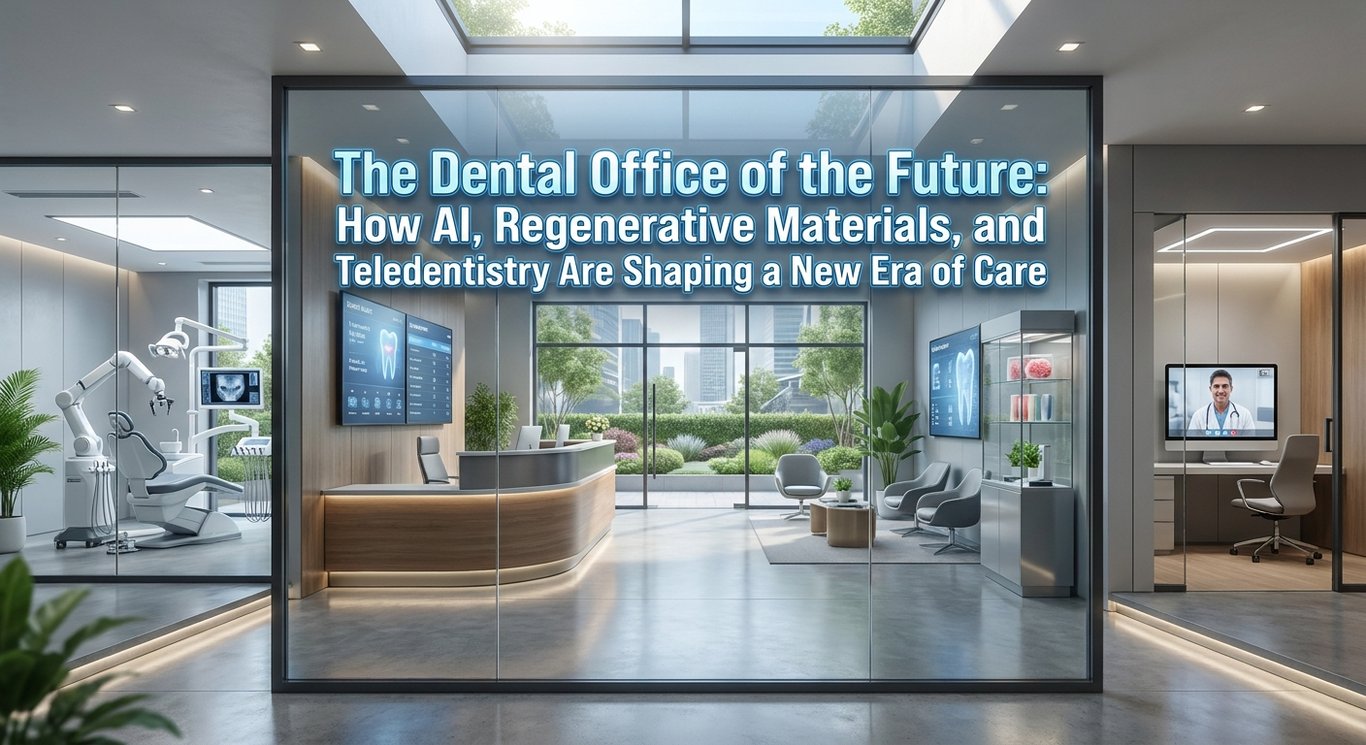
What the Dental Office of the Future Looks Like
The dental office is changing in ways that would have seemed far-fetched just a decade ago. Traditional dentistry has long followed a familiar rhythm — you schedule an appointment, sit in the chair, get an X-ray, and hope for the best. But that model is giving way to something far more connected and proactive. Artificial intelligence, digital workflows, regenerative materials, remote consultations, and continuous patient monitoring are beginning to work together, creating a system where oral health is tracked, analyzed, and managed in a more personalized and data-driven way. This shift isn't just about flashy technology — it's about catching problems earlier, reducing invasive procedures, and making dental care more accessible to more people.
That said, it's important to be realistic about where things actually stand. Some of these technologies are already making their way into dental practices right now — AI-assisted imaging tools, digital impressions, and teledentistry platforms are real and growing. Others, like biological tooth regeneration or fully autonomous robotic dental procedures, are still in research and development phases that require extensive clinical validation, regulatory approval, and time before they become part of everyday care. The future of dentistry is genuinely exciting, but it's also being built carefully, one evidence-backed step at a time.
How Artificial Intelligence Is Transforming Dental Diagnosis
One of the most immediate and impactful ways AI is entering the dental world is through diagnostic imaging. AI systems can analyze dental radiographs, intraoral photographs, 3D scans, and patient records to help identify cavities, bone loss, periodontal concerns, soft tissue lesions, and other abnormalities that might be easy to miss during a busy clinical day. These tools process enormous amounts of visual data quickly, flagging areas of concern and giving clinicians a second set of eyes — one that doesn't get tired or distracted. For patients, this means a higher chance that a small problem gets caught before it becomes a big one.
It's worth being clear, though: AI is a support tool, not a replacement for the dentist sitting across from you. The clinician is still the one responsible for making the diagnosis, explaining it to the patient, developing a treatment plan, and obtaining informed consent. AI can highlight a suspicious area on an X-ray, but it takes a trained professional to put that finding in context — to consider the patient's history, symptoms, and overall health picture. Think of it less like a robot taking over and more like a very smart assistant that helps the dentist focus their attention where it matters most.
Of course, not all AI tools are created equal, and that's where things get complicated. For AI systems to be trustworthy in a clinical setting, they need to be trained on validated, diverse datasets that represent a wide range of patients. Accuracy and specificity matter enormously — a tool that flags too many false positives can lead to unnecessary treatment, while one that misses real problems is dangerous. Transparency about how these algorithms work, strong data privacy protections, and safeguards against algorithmic bias are all essential considerations. The ADA identifies independent validation and secure data practices as important considerations for dental image-analysis tools, and that guidance reflects the kind of careful scrutiny these systems deserve.
AI-Assisted Treatment Planning and Precision Dentistry
Beyond diagnosis, AI has the potential to support a more personalized approach to treatment planning. By combining imaging data, medical history, occlusion measurements, periodontal findings, and even patient preferences, AI systems may be able to help clinicians map out treatment paths that are tailored to the individual rather than based on a one-size-fits-all approach. This kind of precision dentistry could mean fewer unnecessary procedures and better long-term outcomes for patients who have complex or overlapping dental needs.
The potential applications span virtually every specialty. In implant planning, AI can help analyze bone density and placement angles. In orthodontics, it can predict tooth movement. In endodontics, it can assist with identifying canal anatomy. In prosthodontics and oral surgery, it can support case planning with greater detail than traditional methods allow. Risk prediction tools could even flag patients who are likely to develop certain conditions before symptoms appear. All of this sounds impressive — and it is — but clinician oversight remains non-negotiable. AI suggestions need to be reviewed, questioned, and approved by a qualified dental professional before any treatment begins.
AI in Dental Practice Management
AI isn't just changing what happens in the treatment room — it's also reshaping the front desk and the back office. Administrative applications are already gaining traction, including tools that handle appointment scheduling, patient reminders, insurance verification, documentation, claims processing, and patient communication. These systems can work around the clock, sending follow-up messages, flagging overdue recalls, and reducing the mountain of paperwork that dental teams deal with every day.
When repetitive administrative tasks are automated, dental teams get something valuable back: time. Time that can be redirected toward patient education, relationship-building, and clinical care. However, automation in practice management also brings responsibilities. Cybersecurity is a serious concern — dental offices hold sensitive health and financial data that can be attractive targets for breaches. Data governance policies, staff training, and regular human review of automated outputs are all necessary to make sure these tools serve patients well rather than creating new vulnerabilities.
Regenerative Materials and the Move Beyond Traditional Dental Repairs
Regenerative dentistry is built around a compelling idea: instead of simply patching damaged teeth or replacing missing ones with artificial materials, what if we could encourage the body to heal and rebuild its own tissues? That's the core philosophy behind this growing field. Rather than relying exclusively on conventional fillings, crowns, implants, or dentures, regenerative approaches aim to stimulate or restore biological structures — working with the body's natural repair systems rather than around them.
Several emerging areas are driving this field forward. Bioactive restorative materials are designed to interact with oral tissues in ways that support healing rather than just filling space. Tissue-engineering scaffolds provide a structural framework that can guide the growth of new bone or soft tissue. Growth-factor delivery systems introduce biological signals that encourage cellular repair. Stem-cell research is exploring ways to use the body's own cells to regenerate dental pulp, periodontal ligament, and even entire tooth structures. Remineralization technologies are helping to restore early-stage enamel damage without drilling. Together, these approaches represent a meaningful shift in how dentistry thinks about repair.
However, it's important to pump the brakes a little before getting too carried away. Many of these regenerative approaches are still under development, and promising results in a laboratory setting don't automatically mean a treatment is ready for the dental chair. Clinical trials take time. Regulatory pathways are thorough for good reason. And the gap between "this works in a controlled study" and "this is safe and effective for routine use in diverse patients" can be significant. Patients and clinicians alike should look for strong clinical evidence before embracing any regenerative therapy as a proven solution.
Bioactive and Biomimetic Dental Materials
Bioactive dental materials represent one of the more immediately relevant developments in this space. Unlike traditional restorative materials that simply sit passively in a tooth, bioactive materials are designed to interact with the surrounding oral environment. They may release ions like calcium, phosphate, or fluoride that support remineralization, help seal the interface between the material and the tooth structure, or even encourage the formation of new mineral deposits over time. Biomimetic materials take this a step further by attempting to mimic the natural properties of enamel and dentin — matching their strength, flexibility, and biological behavior more closely than older materials could.
In practical terms, these advances sound exciting — and they genuinely are. But dentists evaluating these materials still need to weigh a range of practical factors. Durability under chewing forces, long-term safety, handling characteristics, cost, and most importantly, whether there's solid clinical evidence showing real benefits for patients — all of these matter. A material that performs beautifully in a lab but degrades quickly in the mouth, or one that's prohibitively expensive for most patients, isn't really a step forward. The best bioactive materials will be the ones that combine biological promise with proven, practical performance.
3D Printing and Chairside Manufacturing
Digital manufacturing is already transforming how dental restorations are made. Through a combination of digital impressions, CAD/CAM design software, milling machines, and 3D printing, dental practices and labs can produce crowns, aligners, surgical guides, dentures, night guards, and temporary restorations faster and with greater precision than traditional methods allowed. In some cases, patients can walk in with a damaged tooth and leave the same day with a permanent restoration — something that used to require multiple visits and weeks of waiting for a lab to process.
As this technology continues to evolve, future practices may rely even more heavily on in-office manufacturing workflows using validated biocompatible materials. The vision is appealing: fewer appointments, less inconvenience, and restorations that fit better because they're designed digitally from the start. But getting there responsibly means maintaining rigorous quality control, following proper sterilization procedures, documenting manufacturing processes carefully, and knowing when to collaborate with specialized dental laboratories rather than handling everything in-house. Speed and convenience are great — but not at the expense of the quality and safety patients deserve.
Could Tooth Regeneration Replace Dental Implants?
This is the question that captures a lot of people's imagination, and understandably so. The idea of growing back a lost tooth — a real, biological tooth — rather than placing a titanium implant is genuinely fascinating. Researchers around the world are investigating methods that could encourage the formation of new dental tissues or even entire teeth, using approaches that range from stem-cell therapy to molecular signaling to gene-based techniques. Some early-stage research has produced encouraging results in animal models, and the field is actively moving forward.
Still, patients should hold their expectations carefully. Tooth-regeneration therapies are a long way from being a routine clinical option. Before any such treatment could replace implants or prosthetics as a standard of care, researchers would need to demonstrate consistent safety across diverse patient populations, predictable and durable outcomes, clear criteria for patient selection, and reliable long-term results. That kind of evidence takes years — often decades — to accumulate. For now, dental implants remain a well-established, evidence-backed solution for tooth loss, and any emerging alternative will need to meet that same high bar before patients can count on it.
Teledentistry as the New Front Door to Oral Healthcare
Teledentistry is exactly what it sounds like: dental care delivered remotely using technology. But within that broad definition, there are two meaningfully different approaches. Synchronous teledentistry involves a live, real-time video consultation between a patient and a dental provider — similar to a video call with your doctor. Asynchronous teledentistry, sometimes called "store-and-forward," involves a patient submitting photographs, records, or written questions that a dental professional reviews and responds to later. Both models have their place, and understanding the difference helps patients and providers choose the right approach for the right situation.
The range of services that teledentistry can support is broader than many people realize. Remote care is well-suited for triage — helping patients figure out whether a symptom needs urgent attention or can wait. It works well for consultations, second opinions, preventive guidance, post-operative check-ins, and orthodontic progress monitoring. It can also facilitate referrals, connecting patients with specialists they might not otherwise have easy access to. For routine check-ins and education, teledentistry can reduce the number of trips patients need to make to a physical office, which is a real benefit for many people.
At the same time, teledentistry isn't a free pass to cut corners. Remote services need to be built on clinically sufficient information — blurry photos or incomplete records don't give a dentist enough to work with safely. Patient privacy must be protected through secure platforms that comply with applicable laws. Documentation standards should be the same as those expected for in-person care. The ADA states that remote examinations must be based on adequate information for diagnosis and treatment planning, and that standard reflects a simple truth: the medium of delivery changes, but the duty of care does not.
Who Benefits Most from Teledentistry?
Teledentistry has the potential to make a meaningful difference for communities and individuals who face real barriers to in-person dental care. Rural communities where dental offices are few and far between stand to benefit enormously. So do older adults in nursing facilities, people with mobility limitations, patients without reliable transportation, and busy families juggling work and school schedules. Schools and community health programs can use teledentistry to screen children and connect them with care they might not otherwise receive. In short, teledentistry can reach people where traditional dental offices simply can't.
Beyond individual patients, teledentistry can strengthen the connections between different types of providers. General dentists can consult more easily with specialists. Dental hygienists working in community settings can get clinical support from supervising dentists. Physicians and caregivers can loop in dental professionals when they notice oral health concerns. All of these connections improve the quality and coordination of care. That said, teledentistry isn't a substitute for everything — there are situations where a physical examination, hands-on assessment, or in-person procedure is simply necessary, and recognizing those limits is just as important as embracing the technology's strengths.
Remote Patient Monitoring and Preventive Dentistry
Remote monitoring is where teledentistry starts to overlap with the broader vision of connected, preventive care. Patients can use smartphone cameras to send photos of their teeth and gums between appointments. Intraoral scanners used at home or in community settings can capture detailed images of dental changes over time. Wearable technologies and connected devices may eventually track habits like grinding, brushing frequency, or even early signs of gum disease. Patient-reported information — how something feels, what symptoms have changed — adds another layer of data that helps providers spot problems earlier.
The potential here is genuinely exciting: earlier intervention, better adherence to treatment plans, and a more continuous relationship between patients and their dental teams rather than a once-a-year snapshot. But challenges exist. Image quality from consumer devices can vary widely. Not all patients are comfortable with or capable of using digital tools consistently. False alerts can cause unnecessary anxiety. And any system that collects and transmits health data carries cybersecurity responsibilities that must be taken seriously. Remote monitoring works best when it's designed thoughtfully, with patient support built in and clear protocols for how data is reviewed and acted upon.
Digital Imaging, Intraoral Scanning, and the Connected Patient Record
Digital technology has already transformed how dental information is captured and stored. Digital radiography reduces radiation exposure compared to traditional film X-rays and produces images that can be enhanced, stored, and shared instantly. Intraoral scanners create precise 3D models of teeth and gums without the mess of traditional impressions. Cone beam computed tomography (CBCT) provides detailed 3D views of bone structure, tooth roots, and surrounding anatomy. Facial scans add another dimension of data for restorative and orthodontic planning. When all of this information flows into a well-organized electronic health record with a patient portal, clinicians get a far more complete picture of a patient's oral health than was ever possible with paper charts and film X-rays.
But capturing all this data is only half the challenge — sharing it effectively is the other half. Interoperability, the ability of different software systems to exchange information securely and accurately, is a persistent issue in healthcare, and dentistry is no exception. A dental practice, a specialist's office, a dental laboratory, a medical provider, an insurer, and a patient all have legitimate reasons to access parts of the same health record. Building systems that allow that kind of secure, coordinated information sharing — without creating privacy risks or data silos — is one of the more complex infrastructure challenges the field needs to solve as digital dentistry matures.
Robotics, Augmented Reality, and Smart Dental Equipment
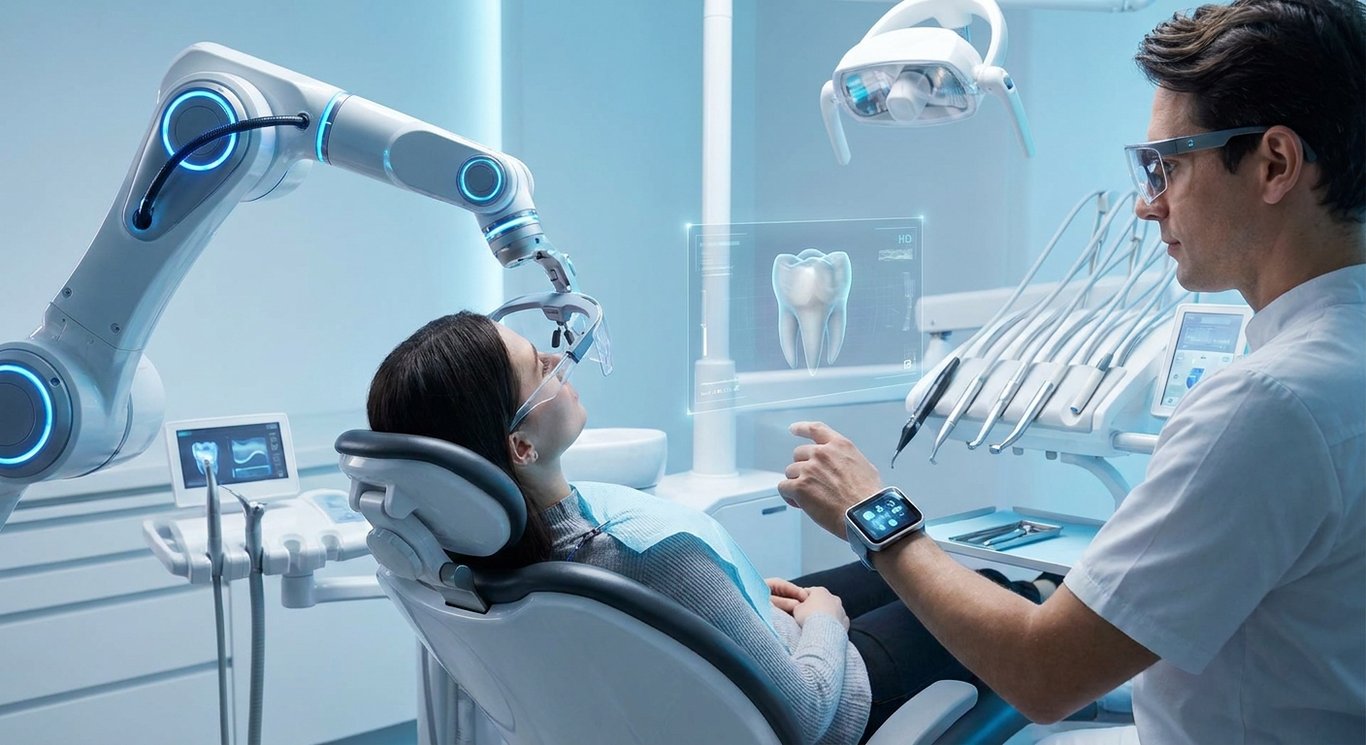
The dental operatory of the future may look quite different from today's familiar setup. Robotic assistance is beginning to appear in dental research and some specialized clinical settings, with systems designed to support precise implant placement, guided bone surgery, and other procedures where accuracy is critical. Augmented reality overlays digital information onto a clinician's view of the patient, potentially helping with everything from treatment visualization to surgical navigation. Haptic feedback systems can simulate the sensation of working on a tooth, making them valuable for dental education and training. Automated disinfection systems and intelligent dental chairs that adjust to patient and clinician positioning are also emerging areas of development.
These technologies share a common goal: improving precision, consistency, ergonomics, and training quality in dental care. A robotic system that helps guide implant placement to within fractions of a millimeter can reduce the risk of surgical error. Augmented reality tools can help students develop clinical skills in a safe environment before working on real patients. Smart equipment can reduce physical strain on dental professionals, which matters for careers that take a real toll on the body over time. But it's worth saying clearly: none of these tools replace the judgment, experience, and human connection that a skilled dental professional brings to every patient encounter. They are instruments in skilled hands, not substitutes for those hands.
How the Future Dental Office Will Improve the Patient Experience
For patients, the future dental office promises a significantly smoother journey from start to finish. Online intake forms mean no more clipboards in the waiting room. Remote triage helps patients understand whether they need to come in urgently or can schedule at their convenience. Digital consent processes are clearer and easier to review. AI-supported explanations can help patients understand what's happening in their X-rays or scans in plain language. Fewer messy impressions, thanks to digital scanning. Customized treatment simulations that let patients see what a proposed outcome might look like before committing. Shorter appointments for certain procedures. Coordinated follow-up that doesn't rely on the patient remembering to call back.
Beyond convenience, the future dental office should also be more inclusive and personalized. Multilingual communication tools can help patients who don't speak English as a first language feel understood and informed. Anxiety-reduction technologies — from virtual reality distraction to better sedation monitoring — can make dental visits less stressful for the many people who experience dental fear. Transparent treatment estimates, presented clearly and in advance, help patients make informed decisions without financial surprises. Flexible scheduling and telehealth options give patients more control over when and how they access care. And as digital health records become more sophisticated, patients should have greater control over their own data and a stronger voice in their treatment decisions.
Benefits of AI, Regenerative Materials, and Teledentistry
The potential benefits of these converging technologies are substantial. Earlier detection of dental disease means smaller problems get addressed before they become expensive and painful ones. More personalized care means treatment plans that reflect the individual's biology, history, and preferences rather than a generic protocol. Reduced travel and remote access mean people who previously couldn't easily see a dentist now have options. Faster digital manufacturing means fewer appointments and less waiting. Minimally invasive treatment approaches preserve more natural tooth structure. Continuous monitoring catches changes between visits. And teledentistry platforms can connect patients in underserved areas with specialists they'd otherwise have to travel hours to see.
For dental teams, digital workflows offer meaningful efficiency gains. Automating repetitive administrative tasks frees up staff to focus on patients rather than paperwork. Streamlined communication between providers — through shared digital records and secure messaging — reduces errors and delays. AI-assisted image review can help clinicians manage high patient volumes without sacrificing diagnostic quality. When the team spends less time on logistics and more time on care, everyone benefits.
Ultimately, though, these technologies are tools — and like any tool, their value depends entirely on how they're used. Improved outcomes require strong evidence behind each technology, high-quality implementation, affordability that makes access realistic for diverse patient populations, and the kind of thoughtful clinical judgment that no algorithm can fully replicate. The promise is real, but so is the work required to fulfill it responsibly.
Risks, Limitations, and Ethical Questions
No honest conversation about the future of dental technology can skip over the risks. AI systems can produce inaccurate results, especially when applied to patient populations that weren't well-represented in their training data. Biased datasets can lead to biased outputs — meaning certain groups of patients may receive less accurate assessments than others. Privacy breaches and cybersecurity threats are real concerns in any system that handles sensitive health data. Technology failures can disrupt care at critical moments. Poor-quality images submitted through teledentistry platforms can lead to incomplete or incorrect assessments. And there's a genuine danger of overreliance on automated recommendations — treating an AI output as a final answer rather than a starting point for clinical judgment.
The ethical dimensions run just as deep. Patients deserve to know when AI is being used in their care and how it influences the recommendations they receive. Who owns health data — the patient, the practice, the software company? What happens to that data if a vendor changes its policies or goes out of business? How do we ensure that advanced dental technologies don't become luxuries available only to wealthy patients in well-resourced areas, widening the already significant disparities in oral health outcomes? Digital literacy is another real barrier — not everyone is equally comfortable navigating apps, portals, and video platforms, and systems designed without those users in mind will leave them behind.
These aren't hypothetical concerns — they're active challenges that require active responses. Dental practices adopting new technologies should establish governance policies that define how tools are selected, monitored, and reviewed. Regular audits of technology performance help catch problems before they affect patient care. Staff training ensures that everyone using a system understands both its capabilities and its limitations. Clinical decisions should always be documented clearly, with a record of who made them and on what basis. And patients should always have a clear path to question, appeal, or opt out of automated processes that affect their care.
Regulation, Reimbursement, and Standards for Future Dental Care
Technology moves fast, but regulatory and policy frameworks tend to move more slowly — and that gap creates real complexity for dental practices trying to adopt new tools responsibly. Licensing rules and scope-of-practice requirements vary by state and country, affecting what dental professionals can legally do through teledentistry platforms or with AI-assisted tools. Medical device regulations govern which AI diagnostic tools can be marketed and used clinically, and navigating FDA clearance or approval processes is a meaningful hurdle for developers. Privacy laws like HIPAA in the United States set baseline standards for how patient data must be handled, but enforcement and interpretation can vary. Professional standards from organizations like the ADA provide important guidance, but they're not always binding. Payer policies — what insurance companies will and won't reimburse — have an enormous practical influence on which technologies actually get used.
Reimbursement is particularly important for teledentistry. If remote consultations aren't covered by insurance, many patients simply won't use them, regardless of their clinical value. Consistent documentation standards for remote services help ensure that claims are processed accurately and that the clinical record reflects the care provided. The ADA supports coverage of eligible teledentistry services comparable to equivalent in-person services, and that position reflects a straightforward principle: if a service delivers real clinical value, patients shouldn't be penalized for accessing it remotely. Advocacy for fair reimbursement policies is part of building a future where these technologies actually reach the people who need them most.
How Dental Practices Can Prepare for the Future
For dental practices thinking about where to start, the first step is assessment rather than acquisition. Before investing in any new technology, it's worth taking a clear-eyed look at the practice's specific situation: Where are the access gaps? Which workflows are creating bottlenecks? What are the clinical priorities? What are the staff's current capabilities, and where would training be needed? What's the available budget, both for upfront investment and ongoing costs? A needs assessment that answers these questions honestly will lead to much better technology decisions than simply chasing the latest trend.
Once priorities are clear, the process of selecting and implementing technology should be methodical. Evidence-based tools — ones with published clinical validation, not just impressive marketing — should be the standard. Vendor claims should be verified independently where possible. Interoperability with existing systems matters enormously; a tool that doesn't communicate with the practice's current EHR or imaging software creates more problems than it solves. Patient data protection needs to be evaluated carefully, including how data is stored, who has access, and what happens in the event of a breach. Staff training should be built into the implementation plan from the beginning, not treated as an afterthought. And measurable success criteria — what does "this is working" actually look like? — should be defined before rollout begins.
The wisest approach is usually a phased one. Starting with practical, lower-risk tools — digital imaging, electronic intake forms, secure video consultation platforms, automated appointment reminders, or AI-assisted radiograph review — builds confidence and competency before taking on more complex investments. Once a practice has experience managing digital workflows and evaluating technology performance, it's in a much better position to consider more advanced capabilities like in-office manufacturing or regenerative material applications. Slow and steady, in this case, genuinely wins the race.
What Patients Should Ask About New Dental Technologies
Patients have every right to ask questions about the technologies being used in their care, and good dental providers should welcome those questions. When a new tool or approach is introduced, it's reasonable to ask: How does this technology work, and what does it actually do in my care? Does a dentist review its results before any decisions are made? What evidence supports its use — are there published studies showing it's safe and effective? How is my personal health data stored, and who has access to it? Are there alternative approaches available if I'm not comfortable with this one? These aren't difficult or confrontational questions — they're exactly the kind of informed engagement that leads to better care.
Beyond understanding the technology itself, patients should also think through the bigger picture of any proposed treatment. What are the expected benefits, and how likely are they based on the evidence? What are the risks? How much will this cost, and what does insurance cover? How long is the restoration or treatment expected to last? What kind of follow-up will be needed? And importantly — what happens if I choose to delay or decline this treatment? Having clear answers to these questions puts patients in a much stronger position to make decisions that genuinely align with their health goals, values, and circumstances.
Frequently Asked Questions About the Dental Office of the Future
Will AI replace dentists?
No — AI is not expected to replace dentists, and it's important to understand why. AI tools are being developed and used to assist with specific tasks: analyzing images for signs of disease, assessing risk factors, automating documentation, and streamlining administrative workflows. These are areas where pattern recognition and data processing can genuinely support clinical work. But diagnosis is not just pattern recognition — it involves integrating complex information, communicating with patients, understanding their values and concerns, and making judgment calls that require both expertise and human empathy. Treatment decisions, informed consent, hands-on procedures, and the ongoing patient relationship all remain firmly in the domain of the dental professional. AI makes dentists more capable; it doesn't make them unnecessary.
Is teledentistry as effective as an in-person dental visit?
The honest answer is: it depends on what you need. Teledentistry can be genuinely effective for a range of services — screening, consultations, triage, patient education, post-operative follow-up, and orthodontic monitoring — when the right information is available and the service is clinically appropriate. For these purposes, a well-conducted remote visit can deliver real value and save patients significant time and effort. However, many examinations and treatments simply cannot be performed remotely. A dentist can't probe gum pockets, feel for lumps, take a radiograph, or perform a filling through a video screen. The ADA notes that remote services should be clinically appropriate and supported by adequate records, which is another way of saying: teledentistry is a powerful tool when used for the right situations, not a universal substitute for in-person care.
Can regenerative materials grow back a lost tooth?
This question deserves a careful answer because it involves two very different things. Some bioactive and remineralizing materials can support the repair of early enamel damage or encourage healing in soft tissue and bone — and that's genuinely meaningful progress. But growing back a complete, functional tooth that has been lost is an entirely different challenge, and it's not something current regenerative therapies can reliably accomplish. Experimental research into biological tooth regeneration is ongoing and genuinely promising, but it has not yet produced a therapy that is safe, predictable, and ready for routine clinical use. For patients who have lost teeth today, implants, bridges, and dentures remain the established and evidence-supported options.
Are AI dental tools safe and accurate?
Safety and accuracy aren't universal qualities that apply to "AI dental tools" as a category — they vary significantly depending on the specific product, what it's designed to do, the dataset it was trained on, how rigorously it was validated, and the clinical setting in which it's used. Some AI tools have gone through careful regulatory review and have strong published evidence behind them; others are marketed with impressive claims but limited independent validation. Patients who want to understand whether a specific tool is trustworthy can ask their dentist whether it has appropriate regulatory authorization, what evidence supports its accuracy, how patient data is protected, and what role the dentist plays in reviewing its outputs. A good tool, used by a well-trained clinician, should be able to answer all of those questions clearly.
Will future dental care cost more?
In the short term, advanced dental technologies often come with higher upfront costs — for equipment, software, training, and maintenance — and some of those costs may be reflected in what patients pay. But the longer-term picture is more nuanced. Automation can reduce administrative overhead. Digital manufacturing can lower the cost and time involved in producing certain restorations. Preventive monitoring that catches problems early can reduce the need for expensive interventions later. Teledentistry can eliminate travel costs and reduce the number of in-person visits needed for routine follow-up. Whether these efficiencies translate into lower costs for patients will depend heavily on insurance coverage policies, local market conditions, and how practices choose to price their services. It's not a simple story of "more technology equals higher bills" — but patients should absolutely ask about costs upfront and understand what their insurance will and won't cover.
Conclusion: Building a More Connected and Biological Future for Dentistry
The key takeaways from everything covered here are worth holding onto. AI can support earlier, more consistent diagnostic decision-making — not by replacing dentists, but by giving them better tools to work with. Regenerative materials and biological approaches may make dental treatment more compatible with the body's own healing processes, even if many of the most exciting possibilities are still being validated. Teledentistry can extend access to oral healthcare for people who face real barriers to in-person visits, improving continuity and convenience without sacrificing standards of care. And digital manufacturing is already making certain procedures faster, more precise, and more personalized. Together, these threads point toward a version of dentistry that is more proactive, more connected, and more tailored to the individual patient.
If you're a patient, the best next step is a conversation with a qualified dental professional about which of these technologies might be relevant and appropriate for your specific situation. If you're a dental practice, now is the time to evaluate evidence-based tools thoughtfully, strengthen your data privacy and oversight practices, train your team, and begin planning for the road ahead. The dental office of the future isn't a distant dream — it's being built right now, one careful, evidence-backed decision at a time. Don't wait to be part of shaping what The Dental Office of the Future: How AI, Regenerative Materials, and Teledentistry Are Shaping a New Era of Care looks like in your community. Start the conversation today.