Saving Your Smile: Advanced Techniques to Rescue a Failing Tooth (and Avoid an Implant)
Published 26 min read
Losing a tooth doesn't always have to be the outcome. Modern dentistry has come a long way, and in many cases, a tooth that seems beyond saving can actually be rescued with the right combination of diagnosis, endodontic treatment, restorative care, and periodontal therapy. The goal of preserving a natural tooth is worth pursuing whenever the tooth is structurally and biologically treatable — and that's exactly what this article is about. That said, whether a tooth can be saved depends on several important factors: how much healthy structure remains, where a crack is located, how much bone still supports the tooth, whether infection is present, and the patient's overall health. Understanding these factors is the first step toward making a smart, informed decision about your smile.
What Does It Mean When a Tooth Is "Failing"?
A failing tooth is one that has been significantly compromised by one or more problems — extensive decay, a bacterial infection inside the pulp, a fracture, failed previous dental work, severe wear from grinding, or advanced loss of the surrounding gum and bone. The word "failing" can sound like a death sentence for the tooth, but that's not necessarily true. A tooth can be in rough shape and still be a candidate for treatment, depending on the nature and extent of the damage.
Dentists evaluate whether a tooth is restorable by looking at several key factors. These include how much healthy tooth structure is left above and below the gumline, the depth and direction of any cracks, the condition of the roots, the amount of bone still supporting the tooth, how the tooth fits into the patient's bite, current symptoms, and whether the patient can realistically maintain the restoration long-term. It's a big-picture assessment — not just a single X-ray or a quick look in the mouth.
Early Warning Signs You Should Not Ignore
Your mouth is pretty good at sending signals when something is wrong. Common warning signs of a failing tooth include a persistent toothache, sensitivity to hot or cold that lingers, sharp pain when biting down, swelling in the gum or face, a small pimple-like bump on the gum (called a gum boil or sinus tract), a bad taste in the mouth, a tooth that feels loose, a tooth that looks darker than the others, a cracked or broken filling, and food getting stuck in the same spot repeatedly. Any one of these symptoms is worth a dental visit — don't wait until things get dramatic.
Here's something that surprises a lot of people: the pain from a tooth infection can actually disappear on its own, even though the infection is still there. This happens because the nerve inside the tooth dies as the infection progresses, which removes the pain signal. The infection, however, doesn't go anywhere — it can spread to surrounding bone and tissue. That's why prompt dental evaluation matters, even when the pain has eased up. Waiting for severe pain or facial swelling before seeking care can turn a manageable situation into a much more complicated one.
How Dentists Determine Whether a Tooth Can Be Saved
Clinical Examination and Bite Testing
The clinical examination is where the dentist gathers hands-on information about what's happening with the tooth. This includes checking for visible cracks, measuring gum pocket depths, assessing how much the tooth moves, evaluating tenderness to touch, reviewing the bite contacts, and inspecting the condition of any existing fillings or crowns. The dentist may also perform specific tests — applying cold to check pulp vitality, using an electric pulp tester, tapping on the tooth (percussion), pressing on the surrounding gum (palpation), or having the patient bite on a small stick to identify pain from a specific cusp or crack. Together, these tests build a clearer picture of what's going on inside and around the tooth.
Dental X-Rays and 3D Imaging
X-rays are an essential part of evaluating a failing tooth. Periapical X-rays — the kind that show the full length of the tooth and its surrounding bone — can reveal bone loss around the root, abscesses at the root tip, the extent of decay, and whether the tooth has had a previous root canal. In more complex situations, cone-beam computed tomography (CBCT) may be recommended. This 3D imaging technology gives a much more detailed view of root anatomy, hidden canals, suspected fractures, and areas that flat X-rays simply can't show clearly. It's particularly useful when planning retreatment or evaluating whether surgery might be needed.
Restorability and Prognosis
There's an important distinction between treating an infection inside the tooth and actually rebuilding a tooth that has lost most of its physical strength. A root canal can eliminate the infection, but if there isn't enough healthy tooth structure left to support a stable restoration afterward, the tooth's long-term prognosis becomes guarded or poor. Specific situations that can push a tooth into the "difficult to save" category include cracks that extend below the gumline or into the bone, a tooth that has split into two separate pieces, or a situation where there simply isn't enough sound tooth structure left to anchor a crown reliably. Prognosis is always a conversation — not a guarantee — and it should be discussed honestly before treatment begins.
Root Canal Treatment: Removing Infection Without Removing the Tooth
Root canal treatment is one of the most well-known tooth-saving procedures in dentistry, and it's also one of the most misunderstood. The procedure involves removing the inflamed or infected pulp tissue from inside the tooth, thoroughly cleaning and disinfecting the canal system, and then filling and sealing it to prevent bacteria from re-entering. The key point is that the outer structure of the tooth — the crown, the roots — stays in place. The goal is to eliminate the internal problem while preserving the tooth itself.
The treatment generally unfolds in several stages. After diagnosis, the dentist or endodontist administers local anesthetic to numb the area, then creates a small opening through the top of the tooth to access the canals. The infected or inflamed pulp tissue is removed, the canals are carefully cleaned and shaped using specialized instruments, and antimicrobial irrigation solutions are used to reduce bacterial load throughout the system. The canals are then filled with a biocompatible material and temporarily sealed. A permanent filling or crown is typically placed soon after to protect the now-weakened tooth from fracture. Skipping or delaying that final restoration is one of the most common reasons a successfully treated tooth eventually fails.
Advanced Endodontic Techniques That May Improve Tooth-Saving Outcomes
Microscope-Assisted Root Canal Treatment
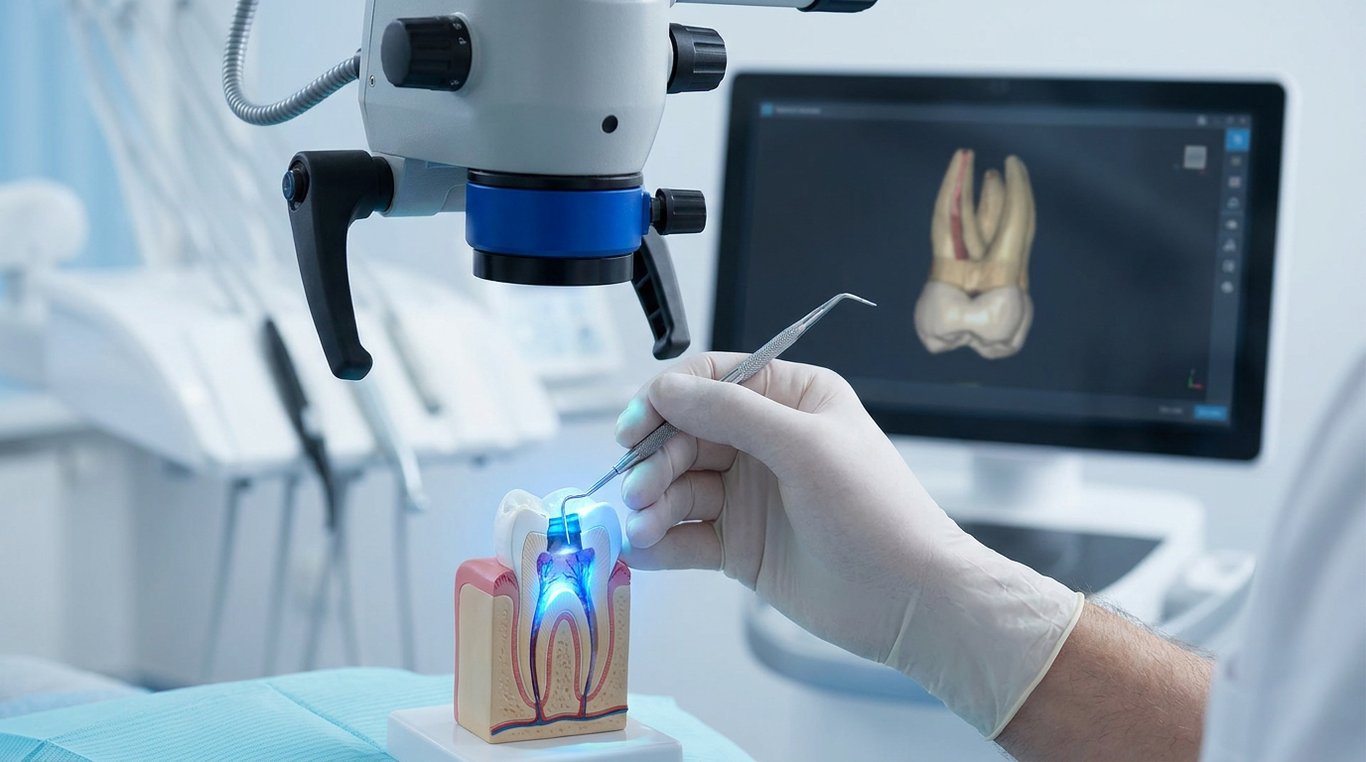
An operating microscope gives the treating clinician a dramatically magnified, well-lit view of the inside of a tooth — and that level of detail makes a real difference in complex cases. With magnification, tiny canals that might otherwise be missed become visible, calcified canals can be carefully navigated, hairline cracks can be identified, and unusual root anatomy can be treated more precisely. Microscope-assisted treatment also helps when removing old filling materials during retreatment. It's worth noting, though, that magnification is a tool — it improves precision and visualization, but it doesn't make every tooth treatable. The underlying condition of the tooth still determines whether saving it is realistic.
Nickel-Titanium Instruments and Enhanced Irrigation
Modern endodontic instruments made from nickel-titanium alloy are significantly more flexible than older stainless steel files, which allows them to navigate curved and complex canals more effectively without as much risk of breakage or canal transportation. Electronic apex locators help measure the exact working length of each canal, reducing reliance on X-rays alone. Beyond the mechanical cleaning, the irrigation phase has also advanced considerably — techniques that activate the irrigating solution (such as sonic or ultrasonic activation) help it penetrate deeper into canal irregularities and lateral branches where instruments can't reach. The goal of all these technologies is the same: cleaner canals, fewer residual bacteria, and a better-sealed result.
Regenerative Endodontic Procedures
Regenerative endodontic procedures represent a different approach to treating certain infected teeth — specifically, immature permanent teeth in younger patients where the roots haven't fully developed yet. In these cases, the objective isn't just to clean and fill the canals, but to encourage the tooth's own biological processes to continue root development and strengthen the root walls. This can improve the long-term durability of a tooth that would otherwise have thin, fragile roots. Candidacy for this type of treatment is specific and depends on the patient's age, stage of tooth development, severity of infection, and clinical circumstances — it's not a universal solution, but it's a meaningful option for the right patients.
Root Canal Retreatment: Can a Previously Treated Tooth Be Rescued?
A root canal that was done years ago isn't automatically a guarantee of lifelong success. Several things can cause a previously treated tooth to develop new problems: a canal that was missed during the original treatment, persistent bacteria that weren't fully eliminated, leakage under a poorly fitting restoration, inadequate sealing of the canal system, new decay that allows bacteria back in, or a fracture that developed over time. The important thing to understand is that ongoing symptoms or a new infection around a treated tooth don't automatically mean extraction is the only path forward.
Retreatment involves reopening the tooth, carefully removing the old canal filling material, searching for any previously missed or untreated canals, re-cleaning and reshaping the entire system, placing new filling material, and sealing the tooth before the definitive restoration is placed. It's a more technically demanding procedure than the original treatment, and for complex cases — unusual anatomy, separated instruments inside the canal, or significant calcification — evaluation and treatment by an endodontist (a root canal specialist) is often the best course of action. A fresh set of expert eyes and specialized equipment can make a real difference.
Endodontic Surgery: Saving a Tooth When Conventional Treatment Is Not Enough
Sometimes, conventional root canal treatment or retreatment isn't able to fully resolve the problem — and that's where endodontic surgery comes in. The most common procedure is called an apicoectomy, which involves making a small incision in the gum to access the tip of the root, removing a few millimeters of the root tip along with any infected tissue, and then sealing the end of the root with a small filling. This approach is considered when there's a persistent infection that conventional treatment hasn't resolved, when the canal is blocked by a post or separated instrument that can't be removed, or when the root anatomy makes it impossible to clean the canals from the top of the tooth.
However, surgery isn't the right answer for every failing tooth, and case selection matters enormously. The tooth needs adequate bone and periodontal support to justify a surgical approach, the remaining crown needs to be in good condition, and the infection must be in a location that's surgically accessible. Before recommending surgery, a complete diagnostic evaluation should be done to weigh the realistic chances of success against the alternative options. When the conditions are right, endodontic surgery can be a genuinely effective way to rescue a tooth that would otherwise be lost.
Repairing Cracked, Chipped, or Fractured Teeth
When a Crack May Be Treatable
Not every crack is a reason to extract a tooth. Some cracked teeth can absolutely be preserved, particularly when the crack is confined to the crown portion of the tooth, the surrounding bone and gum support are intact, and the fracture hasn't extended into an area that would compromise the root or create an isolated periodontal defect. When the crack has reached the pulp and caused inflammation or infection, root canal treatment is typically needed alongside a full-coverage crown. The crown plays a critical role here — it wraps around the tooth and helps prevent the crack from spreading further under the forces of chewing.
When a Crack Has a Poor Prognosis
On the other end of the spectrum, some cracks simply cannot be repaired in a predictable way. A tooth that has split into two separate pieces, a vertical root fracture (where the crack runs along the length of the root), or a crack that extends deeply below the gumline or into the bone — these situations often make reliable repair impossible. Certain symptoms can raise concern, such as an isolated deep gum pocket on one side of a tooth, repeated abscesses in the same location, or pain that occurs specifically when releasing bite pressure. These signs can point toward a fracture, but a proper diagnosis still requires a thorough examination and appropriate imaging — symptoms alone aren't enough to know for certain.
Crowns, Cuspal Coverage, and Bite Protection
One of the most important things a crown does for a compromised tooth is hold it together. When a tooth has been weakened by a large filling, a root canal, or a crack, a full-coverage crown or other cuspal-coverage restoration limits the flexing and splitting forces that occur during chewing. Beyond the restoration itself, it's also important to address the forces being placed on the tooth. If a patient has a heavy bite, grinds their teeth at night, or clenches under stress, those forces can overwhelm even a well-placed crown over time. Adjusting the bite, discussing the habit with the patient, and recommending a night guard when appropriate are all part of giving a rescued tooth the best possible long-term environment.
Restorative Techniques That Rebuild a Damaged Tooth
Bonded Fillings and Direct Composite Repairs
Tooth-colored composite resin is a versatile and conservative option for repairing teeth with limited decay, minor chips, or moderate structural loss — as long as enough healthy enamel and dentin remain to support the bonded restoration. The preparation for a composite filling is typically more conservative than what's needed for a crown or inlay, which means more natural tooth structure is preserved. That said, composite restorations do have limitations. They can wear over time, the bond can develop small leaks, and recurrent decay can develop at the margins. Regular monitoring at dental checkups is important to catch any early signs of breakdown before they become bigger problems.
Inlays, Onlays, and Overlays
When the damage to a tooth is too extensive for a simple filling but a full crown feels like overkill, indirect restorations — inlays, onlays, and overlays — can offer a middle ground. These restorations are made in a dental laboratory from materials like ceramic or composite resin, then bonded precisely to the prepared tooth. An onlay, for example, might replace one or more damaged cusps while leaving the rest of the natural tooth structure intact. This approach is often a good fit for back teeth that have significant decay or fracture but still have healthy walls and a sound root structure. Preserving as much natural tooth as possible is generally a good principle in restorative dentistry.
Posts, Cores, and Full Crowns
After a root canal, there's sometimes very little tooth structure left above the gumline to support a crown. In these cases, a post may be placed inside one of the root canals to help anchor a core buildup, which then gives the crown something solid to hold onto. It's worth clarifying a common misconception here: a post doesn't strengthen the root — it simply helps retain the core material when there isn't enough natural tooth structure to do that on its own. In fact, unnecessary posts can introduce risks, including root fracture. The crown itself is what provides protection and restores function. Getting the crown placed in a timely manner after root canal treatment is one of the most important steps in the entire process.
Treating Gum Disease to Preserve the Tooth's Foundation
A tooth is only as stable as the foundation supporting it. Periodontal disease — infection and inflammation of the gums and bone — can silently destroy that foundation over time, causing bleeding gums, deep pockets between the tooth and gum, gum recession, tooth mobility, and eventually tooth loss. This is a critical point: if a tooth is failing primarily because of severe bone and gum loss, treating the root canal alone will not fix the problem. The periodontal disease has to be addressed directly, or the tooth will continue to lose support regardless of what's done inside it.
Fortunately, periodontal disease is treatable — especially when caught before bone loss becomes too severe. Non-surgical therapy typically involves professional debridement (deep cleaning below the gumline), improved daily home care, and more frequent maintenance visits. For more advanced cases, periodontal surgery or regenerative procedures may be considered to address specific bone defects. The prognosis for a periodontally compromised tooth depends on how much bone support remains, how well inflammation can be controlled, whether the patient smokes (which significantly worsens outcomes), how well diabetes is managed if applicable, and whether the patient commits to regular professional monitoring.
Tooth-Saving Regeneration and Minimally Invasive Periodontal Procedures
In selected cases, regenerative periodontal procedures can help rebuild some of the bone and tissue that has been lost around a tooth. Techniques such as guided tissue regeneration, bone grafting, the use of biologic membranes, and soft-tissue grafting are designed to encourage the body to regrow supporting structures in specific defect patterns. These aren't miracle solutions — they work best in contained, well-defined defects with adequate remaining bone walls — but for the right patient and the right defect, they can meaningfully improve a tooth's support and long-term outlook. What they cannot do is rescue a tooth that is already structurally split or non-restorable.
Minimally invasive principles also play an important role in tooth-saving care more broadly. The idea is to preserve as much healthy tooth structure as possible at every stage — using magnification to improve precision, limiting the removal of sound tissue during access and preparation, and planning restorations with the tooth's long-term biomechanics in mind. A tooth that's been treated conservatively throughout its history tends to have more options available if problems develop later. Whether minimally invasive techniques are appropriate for a specific situation needs to be determined through a proper clinical examination, imaging, and periodontal evaluation.
When Extraction May Be Safer Than Trying to Save the Tooth
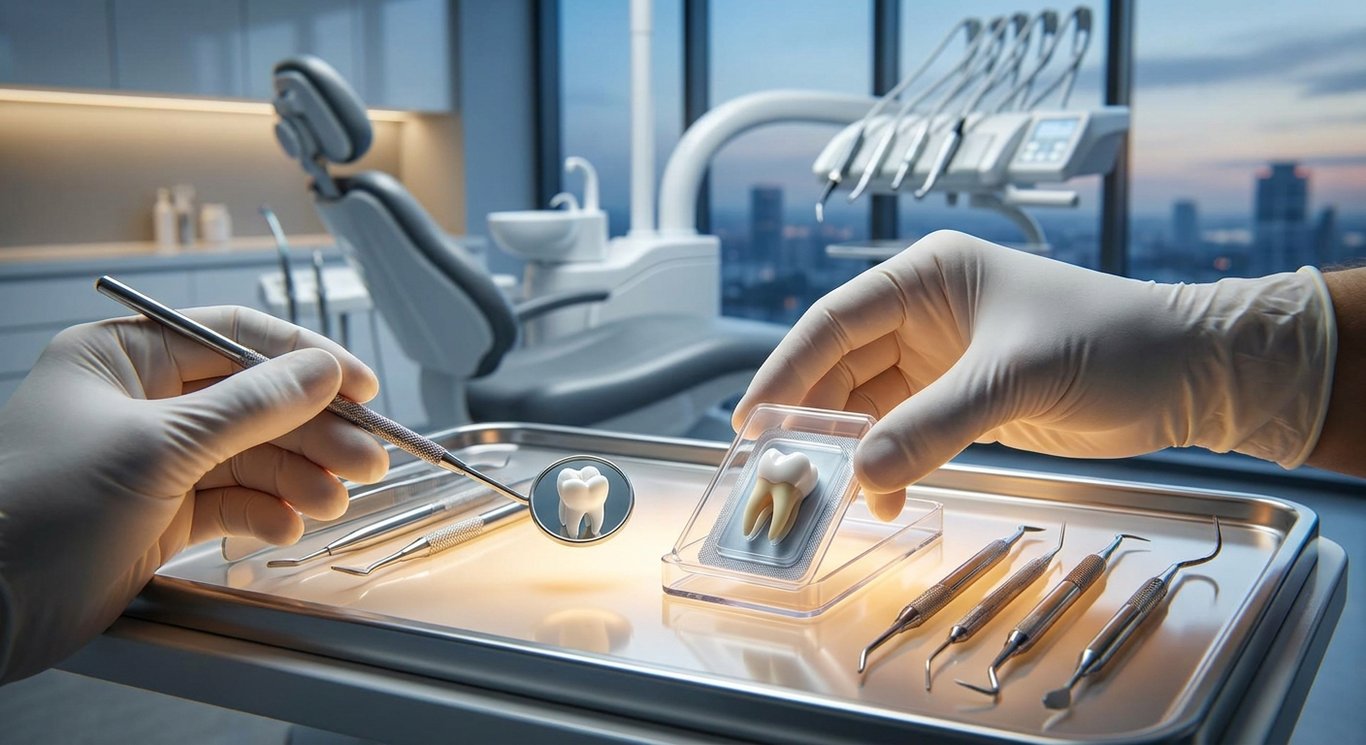
As much as tooth preservation is the goal, there are situations where extraction is genuinely the safer and more sensible choice. These include teeth that are completely split, teeth with a hopeless vertical root fracture, teeth that lack enough remaining structure to achieve what's called an adequate "ferrule" for a crown, teeth with severe bone loss that can't be predictably treated, and teeth that simply cannot be sealed and restored in a stable, long-term way. Trying to save a tooth that falls into one of these categories can sometimes do more harm than good — prolonging discomfort, delaying proper treatment, and potentially causing additional bone loss that complicates future options.
Delaying a necessary extraction carries real risks. The infection can worsen and spread to neighboring teeth or surrounding bone. Bone volume can decrease over time, making future implant placement more difficult. Swelling and pain can escalate. And the overall complexity — and cost — of treatment tends to increase the longer the problem is left unaddressed. If there's genuine uncertainty about whether a tooth should be saved or extracted, getting a second opinion from an endodontist or restorative dentist is a completely reasonable step. A fresh perspective from a specialist can either confirm that saving the tooth is realistic or give you the clarity to move forward with extraction confidently.
Natural Tooth Versus Dental Implant: What Patients Should Compare
When a tooth's prognosis is uncertain, many patients wonder whether they should try to save it or just move to an implant. It's a fair question, and the honest answer is that neither option is universally better — it depends entirely on the specific situation. Comparing the two involves looking at treatment time (saving a tooth may be faster in some cases; implants require healing time after extraction and osseointegration), the number of procedures involved, overall cost, the condition of the surrounding bone, what kind of restoration will ultimately be needed, how each option is maintained long-term, esthetic outcomes, and what happens to the neighboring teeth. A bridge, for example, requires grinding down healthy adjacent teeth — a trade-off that many patients don't initially consider.
It's also worth understanding that a dental implant, while an excellent tooth replacement option, comes with its own maintenance requirements. Implants can develop a condition called peri-implantitis — essentially gum disease around the implant — which can lead to bone loss and implant failure if not managed properly. Daily cleaning and professional care are just as important around an implant as around a natural tooth. On the other hand, a natural tooth that has been properly treated and restored can function well for many years. The general principle is this: a restorable natural tooth is usually worth the effort to preserve, while an implant becomes the more predictable path when the natural tooth truly has a hopeless prognosis.
What to Expect During Recovery After Tooth-Saving Treatment
After root canal treatment, endodontic surgery, or significant restorative work, some degree of post-treatment discomfort is completely normal. Most patients experience mild tenderness around the treated tooth, some sensitivity in the surrounding area, and occasional discomfort when biting — particularly in the first few days. These symptoms typically improve on their own. In the meantime, it's important to follow any instructions given by the dentist or endodontist, take any prescribed or recommended medications exactly as directed, avoid chewing hard or crunchy foods on a temporary restoration, and make sure to schedule the final restoration appointment promptly. That last point matters more than most people realize — a temporary filling is not a long-term solution.
While mild discomfort is expected, certain symptoms should prompt a call to your dental provider right away. These include swelling that is increasing rather than improving, a fever, pain that is getting worse instead of better after the first couple of days, a bite that feels noticeably uneven, a temporary filling that has come loose or fallen out, or any signs of an allergic reaction to a medication. Difficulty swallowing or breathing, or significant facial swelling, are urgent warning signs that require immediate care — not a scheduled callback. When in doubt, it's always better to reach out and check than to wait and see.
How to Make a Rescued Tooth Last Longer
Saving a tooth is only half the battle — keeping it healthy afterward is the other half. The basics matter enormously here: brushing twice daily with a fluoride toothpaste, cleaning between teeth with floss or an interdental brush every day, limiting how frequently you consume sugary or acidic foods and drinks, avoiding habits like chewing on ice or biting hard objects (pen caps, fingernails, hard candy), and attending regular dental examinations and professional hygiene visits. A tooth that has been through root canal treatment and restoration is still vulnerable to new decay and gum disease — it doesn't get a free pass just because it's been treated.
Beyond the basics, protecting the restoration and managing the forces on the tooth are equally important. If you clench or grind your teeth — a habit called bruxism — those forces can crack restorations, fracture weakened tooth structure, and undo a lot of careful dental work over time. A dentist-recommended night guard can significantly reduce those forces while you sleep. Managing systemic conditions like diabetes, which affects healing and increases infection risk, also plays a role in long-term dental health. And avoiding tobacco in all forms is one of the most impactful things a patient can do to protect both natural teeth and any restorations — tobacco significantly increases the risk of gum disease, infection, and implant failure.
Common Cost, Timing, and Specialist Questions
The cost of saving a tooth can vary quite a bit depending on a number of factors. The location of the tooth in the mouth, the complexity of the root canal system, whether retreatment or surgery is needed, what type of periodontal treatment is required, the kind of crown or restoration that will be placed, whether sedation is used, how much your dental insurance covers, and any laboratory fees for custom restorations all contribute to the final number. It can feel overwhelming when you're trying to plan financially for treatment. Asking your dental provider for a written treatment plan that clearly separates urgent care from the definitive restoration steps is a smart move — it helps you understand what needs to happen first and what can be staged over time if needed.
Knowing when to see a specialist can also make a meaningful difference in the outcome. An endodontist specializes in root canal treatment, retreatment, and endodontic surgery, and is the right referral for complex canal anatomy, persistent infections, or cases where the original treatment has failed. A periodontist focuses on gum and bone disease, regenerative procedures, and implant placement. A prosthodontist specializes in complex restorative work, including crowns, bridges, and full-mouth reconstruction. An oral and maxillofacial surgeon handles extractions, implant surgery, and jaw-related conditions. When seeing any specialist, don't hesitate to ask direct questions: What is the prognosis for this tooth? What are my alternatives? How many visits will this take? What are the risks? When should the final restoration be placed? And — importantly — what happens if treatment doesn't work as planned?
FAQ: Saving a Failing Tooth and Avoiding an Implant
Can a badly damaged tooth really be saved?
Yes — some severely damaged teeth can be successfully restored, but it depends on the specifics. The key factors are whether enough healthy tooth structure remains to support a stable restoration, whether the surrounding bone and gum tissue provide adequate support, and whether there is any fracture pattern that makes predictable repair impossible. You can't determine restorability from a photo or a description alone — a proper clinical examination that includes vitality testing, periodontal probing to measure bone levels, and appropriate X-rays or 3D imaging is needed to make that call accurately.
Is a root canal better than having the tooth removed?
Root canal treatment is generally preferable when the tooth is restorable, because preserving a natural tooth maintains the bone around it, keeps neighboring teeth in position, and avoids the need for a replacement prosthesis. However, when a tooth has a genuinely hopeless prognosis — due to an untreatable fracture, severe bone loss, or insufficient remaining structure — extraction may be the more predictable and cost-effective choice. After extraction, a replacement option such as an implant or bridge needs to be considered, each with its own procedures, costs, and maintenance requirements. The decision should always be individualized based on a thorough evaluation, not a one-size-fits-all recommendation.
Can a cracked tooth heal on its own?
Unlike a broken bone, a cracked tooth does not have the biological ability to heal itself. The crack won't close up or fuse back together on its own. What can be done, in selected cases, is to stop the crack from getting worse — through early stabilization with a crown, protecting the bite with a night guard, and performing root canal treatment if the pulp has been affected. These interventions may prevent the crack from progressing to a point where extraction becomes necessary. However, if the crack has already extended deeply into the root or the tooth has split completely, no amount of treatment will make it reliably restorable, and extraction becomes the appropriate next step.
What happens if a root canal fails?
When a root canal doesn't hold up over time, the tooth needs to be re-evaluated to understand why. The dentist or endodontist will look for possible causes: a canal that was missed during the original treatment, leakage under an old or poorly fitting restoration, new decay that has allowed bacteria to re-enter, a fracture that developed after treatment, or a persistent infection that wasn't fully eliminated. Depending on what's found, the options may include nonsurgical retreatment to clean and reseal the canal system, endodontic surgery to address the root tip directly, replacement of the restoration to eliminate leakage, or extraction when the tooth is determined to be non-restorable. Each case is different, and the right path depends on what the evaluation reveals.
How long can a tooth last after root canal treatment?
There's no single answer to this question, and anyone who gives you a guaranteed number of years is oversimplifying. The longevity of a root canal-treated tooth depends on many variables: how much natural tooth structure was present before and after treatment, how quickly and how well the final restoration was placed, the health of the surrounding gum and bone, the bite forces the tooth is exposed to, the patient's oral hygiene habits, diet, any trauma the tooth experiences, and whether the patient keeps up with regular dental visits. Teeth that are properly restored with a well-fitting crown and maintained with good oral hygiene and regular professional care have the best long-term outcomes. Proper follow-up isn't optional — it's central to the whole effort.
Conclusion: Take Action Before a Failing Tooth Becomes Non-Restorable
The key message throughout this article is straightforward: act early, and act informed. Persistent pain, temperature sensitivity, swelling, visible cracks, and loose or broken restorations are all signs that something needs attention — not signs to wait out. Root canal treatment can eliminate infection inside the tooth while preserving its outer structure. Retreatment and endodontic surgery offer additional options when initial treatment hasn't fully resolved the problem. Crowns and cuspal-coverage restorations protect weakened teeth from the fractures that can make them non-restorable. Periodontal treatment addresses the foundation the tooth sits in. And not every damaged tooth — not even a badly damaged one — automatically requires an implant. Many can be saved with the right approach and the right timing.
The most important next step is scheduling a comprehensive examination with a dentist, and when the situation warrants it, getting a referral to an endodontist or periodontist who can provide specialist-level evaluation and care. When you're in that appointment, ask the questions that matter: Is this tooth restorable? What advanced techniques might apply to my situation? How urgent is treatment? What are my realistic options, and which one offers the most predictable long-term result? Getting clear, honest answers to those questions puts you in the best possible position to make a decision you feel confident about — and to take meaningful action toward Saving Your Smile: Advanced Techniques to Rescue a Failing Tooth (and Avoid an Implant).
If you're experiencing any of the warning signs discussed in this article, don't put it off. Contact your dental provider to schedule an evaluation as soon as possible. The sooner a failing tooth is assessed, the more options are likely to be available — and the better your chances of keeping your natural smile intact for years to come.