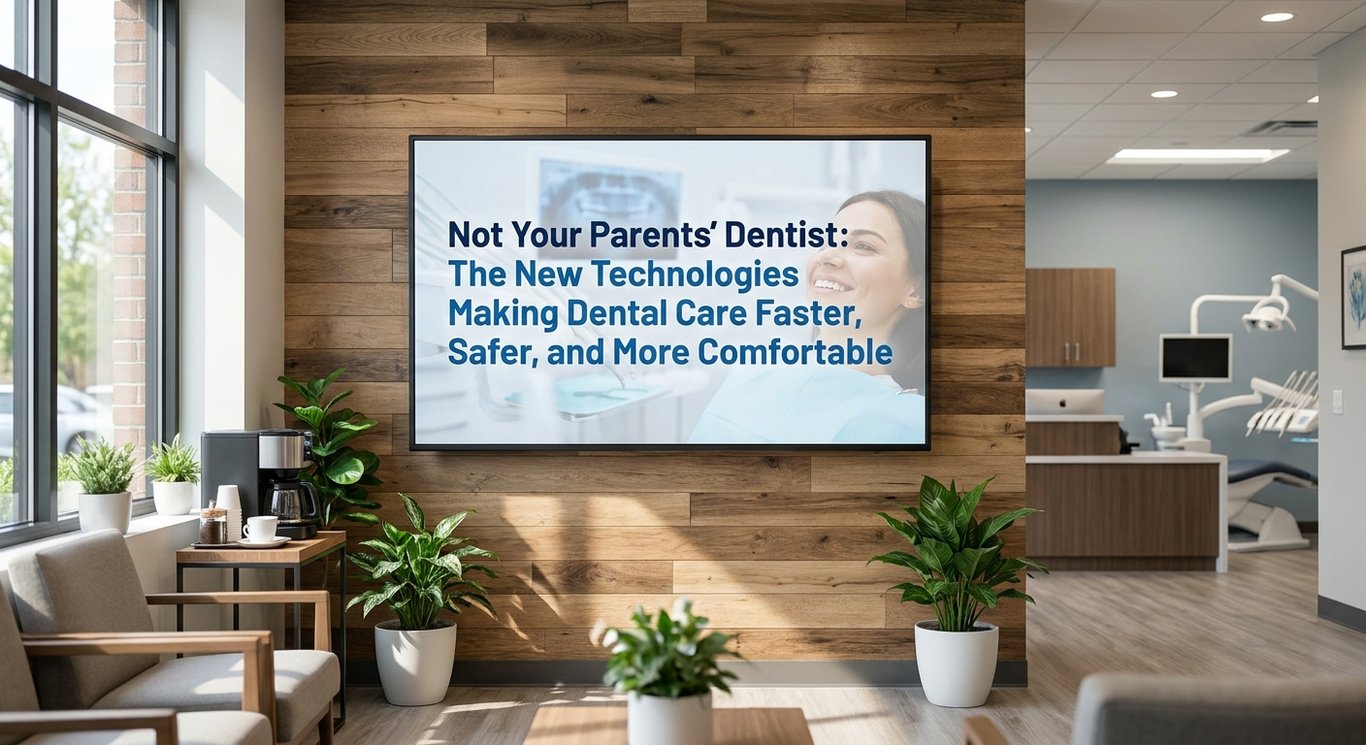
Not Your Parents' Dentist: The New Technologies Making Dental Care Faster, Safer, and More Comfortable
Published 18 min read
Introduction: Why modern dentistry feels so different now
Walk into a modern dental office and you might barely recognize it compared to what you grew up with. Today's dental visits are built around speed, precision, and comfort — and that shift is no accident. It's the result of a wave of new technologies that have quietly transformed how dentists diagnose problems, plan treatments, and care for patients. This article focuses on the innovations most commonly highlighted by authoritative dental and health sources, including digital imaging, CAD/CAM systems, artificial intelligence, dental lasers, 3D printing, and teledentistry. Each of these tools plays a real role in how modern dental care is delivered, and together they're changing what a trip to the dentist actually looks and feels like.
The main promise of modern dentistry comes down to a few big ideas: fewer appointments, less invasive procedures, better diagnosis, and a more patient-friendly experience overall. That's not just marketing language — it reflects genuine changes in how dental practices operate. Throughout this article, you'll learn what these tools actually do, why they matter for your health, and how they change the experience of everyday dental care. Whether you've been putting off a visit or you're just curious about what's new, this breakdown will give you a clear picture of where dentistry stands today.
What "not your parents' dentist" really means
The phrase "not your parents' dentist" captures something real: a fundamental shift from analog, manual workflows to digital, data-driven care. Older dental methods relied heavily on film X-rays that took time to develop, physical molds made from messy impression materials, and restorations that often required multiple appointments spread over weeks. Those approaches worked, but they were slow and sometimes uncomfortable. Today, many of those same tasks are handled digitally — with instant results, higher accuracy, and a lot less waiting around. The transition isn't just about gadgets; it's about rethinking how dental care is delivered from start to finish.
For patients, this shift has some very practical benefits. Visits tend to be shorter, communication is clearer because dentists can show you digital images on a screen, and treatment planning is more accurate because the tools provide more detailed information. There's also less discomfort in many procedures, partly because digital tools are more precise and partly because shorter procedures mean less time in the chair. Importantly, most modern practices don't rely on just one innovation — they use multiple technologies together, creating a connected workflow where each tool supports the next. That integration is what makes today's dental experience feel genuinely different.
Digital X-rays and imaging: faster diagnosis with less radiation
Digital X-rays have replaced traditional film-based radiographs in a large number of dental offices, and it's easy to see why they've become a standard topic in authoritative dental coverage. Instead of waiting for film to develop in a darkroom, digital sensors capture images almost instantly and display them on a screen right in front of you. That means your dentist can review, enlarge, and adjust the images in real time — making it easier to spot problems that might be missed on a smaller or lower-contrast film image. On top of that, digital X-rays generally expose patients to significantly less radiation than older film methods, which is a meaningful safety improvement for anyone who gets regular dental checkups.
Beyond standard digital X-rays, many practices now also use cone beam computed tomography, commonly called CBCT. This technology creates detailed three-dimensional images of your teeth, jawbone, nerves, and surrounding anatomy — something a flat two-dimensional X-ray simply can't do. CBCT is especially useful for planning dental implant placement, evaluating wisdom teeth before removal, and mapping out complex root canal treatments. It gives the dentist a much more complete picture of what's happening beneath the surface, which leads to more confident decisions and fewer surprises during procedures.
AI in dentistry: smarter detection and treatment planning
Artificial intelligence is making its way into dental offices in a genuinely useful way — not as a replacement for the dentist, but as a powerful support tool. AI software can analyze X-rays and intraoral images to help flag potential cavities, signs of gum disease, bone loss, and other concerns that might be easy to overlook during a busy clinical day. Many authoritative dental and health sources are careful to frame AI as a decision-support system rather than an autonomous diagnostic tool. The dentist still makes the final call, but AI can help ensure that nothing gets missed and that the review process is more consistent across patients.
Beyond detection, AI can also improve workflow efficiency in ways that benefit both the practice and the patient. It can help standardize how images are reviewed, reduce the chance of human error in busy environments, and even support patient education by visually highlighting areas of concern. Coverage from major dental organizations and health publications tends to focus on three key advantages: improved accuracy in early detection, reduced risk of misdiagnosis, and the ability to catch problems at a stage when treatment is simpler and less costly. In that sense, AI is less about replacing human judgment and more about making it sharper.
Intraoral scanners and digital impressions: no more messy molds
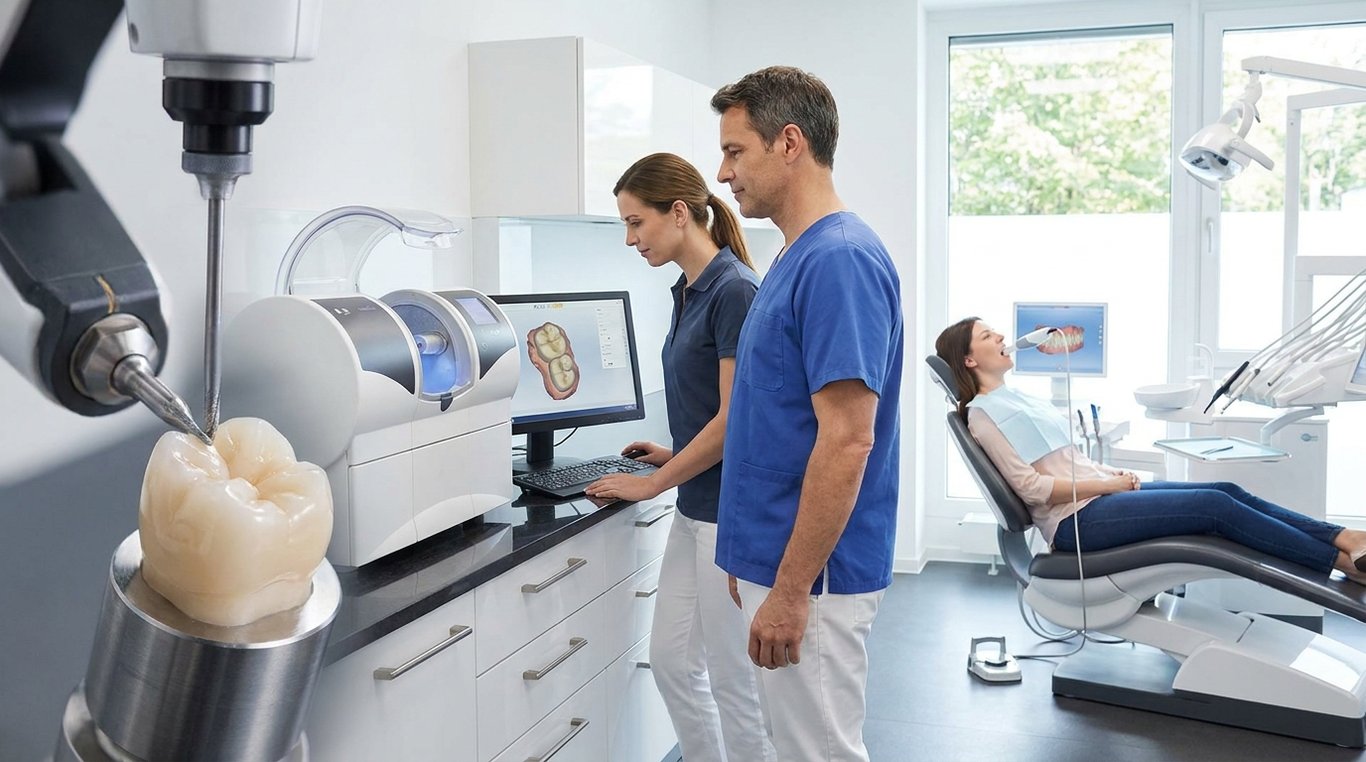
If you've ever had a traditional dental impression taken — the kind where a tray full of gooey material is pressed into your mouth and you have to hold still while it sets — you already understand why intraoral scanners are such a welcome change. These handheld devices use a small camera wand to capture thousands of images of your teeth and gums, which are then stitched together into a precise three-dimensional digital model in seconds. The process is faster, cleaner, and far more comfortable than traditional impression materials. For patients who have a strong gag reflex or anxiety about dental procedures, this alone can make a significant difference in how manageable a visit feels.
Once a digital scan is captured, it feeds directly into the rest of the treatment workflow. That data can be used to design and fabricate crowns, bridges, veneers, and orthodontic aligners with a level of precision that's hard to match with physical molds. Many modern dental workflows now rely on intraoral scanners as the starting point for same-day or short-turnaround care, because the digital file can be sent to design software or a milling machine almost immediately. It's one of those technologies that quietly makes everything else in the office work better.
CAD/CAM and same-day restorations: crowns in fewer visits
CAD/CAM stands for computer-assisted design and computer-assisted manufacturing, and it's the technology behind one of the most common questions patients ask when they hear about modern dentistry: can I really get a crown in one visit? The answer, in many cases, is yes — if the practice has the right equipment. The process works by taking a digital scan of the prepared tooth, using software to design a custom crown, and then milling that crown from a ceramic block right in the office. The whole process can often be completed in a couple of hours, compared to the traditional approach that requires two appointments and a week or two of waiting with a temporary crown in place.
For patients, the benefits of CAD/CAM are pretty straightforward. Fewer appointments means less time off work, fewer trips to the office, and less of the anxiety that comes with having a temporary restoration in your mouth for days. The process is also more streamlined — from the digital scan to the final cemented restoration, everything flows through one connected system. Authoritative dental sources frequently highlight CAD/CAM because it's one of the clearest examples of a technology that directly and tangibly changes the patient experience, not just the behind-the-scenes workflow.
Lasers in dentistry: less invasive treatment and faster healing
Dental lasers might sound like something out of a science fiction movie, but they're a genuinely practical tool in many modern practices. Lasers are used for a range of procedures including cavity detection, removal of decayed tissue, gum reshaping, treatment of gum disease, and certain soft-tissue procedures. Authoritative dental sources often describe lasers as a way to improve precision — they can target very specific areas without affecting surrounding healthy tissue the way traditional cutting instruments sometimes do. That precision translates into less tissue damage and, in many cases, a more controlled and predictable procedure.
From a patient perspective, one of the biggest draws of laser dentistry is the potential for a more comfortable experience. Many laser procedures involve less bleeding and less swelling than their traditional counterparts, and healing time can be faster as a result. Some patients also report needing less anesthesia for certain laser treatments, which is a significant perk for anyone who dreads injections. That said, lasers aren't the right tool for every situation — dentists choose based on the specific procedure, the location in the mouth, and the patient's individual needs. They're one option in a broader toolkit, not a universal solution.
3D printing and digital workflows: custom dental care on demand
3D printing has found a very practical home in modern dentistry. In dental offices and labs, printers are used to create study models, surgical guides for implant placement, clear aligners, temporary restorations, and in some cases final dental appliances. Major coverage of dental technology often connects 3D printing with two key advantages: faster turnaround time and more accurate customization. Because the printer works directly from a digital file — often the same scan captured by an intraoral scanner — there's less room for the kind of human error that can creep into manually fabricated items.
What makes 3D printing especially powerful is how it fits into a broader digital workflow. When scanners, design software, and printers are all connected, the entire process from initial scan to finished product becomes faster and more predictable. For patients, that means better-fitting appliances, fewer appointments to adjust or redo work that didn't fit quite right the first time, and a treatment process that runs more smoothly from beginning to end. It's a behind-the-scenes technology in many ways, but its impact on the patient experience is very real.
Teledentistry and remote consultations: care without always coming in
Teledentistry refers to the use of virtual communication tools — video calls, secure messaging, photo sharing — to provide dental consultations, triage symptoms, conduct follow-up appointments, and educate patients without requiring an in-person visit. It became much more widely adopted during the COVID-19 pandemic, but it has continued to grow as a standard part of modern dental communication. Authoritative dental and health sources often cite teledentistry as an important part of how practices can extend their reach and make care more accessible, particularly for patients who have difficulty traveling, live in areas with limited dental access, or just need quick guidance between scheduled visits.
Teledentistry is most useful in specific situations: checking in after a procedure, triaging an urgent symptom to decide whether it needs immediate attention, reviewing photos of a developing concern, or helping a patient understand their treatment options before committing to an appointment. It's not a full replacement for hands-on examination — there are things a dentist simply cannot assess without being in the room. But for the right situations, it can save patients significant time and help them get answers sooner rather than waiting days for an available slot. Think of it as a smart first step, not a complete solution.
Sedation and comfort technologies: reducing fear and anxiety
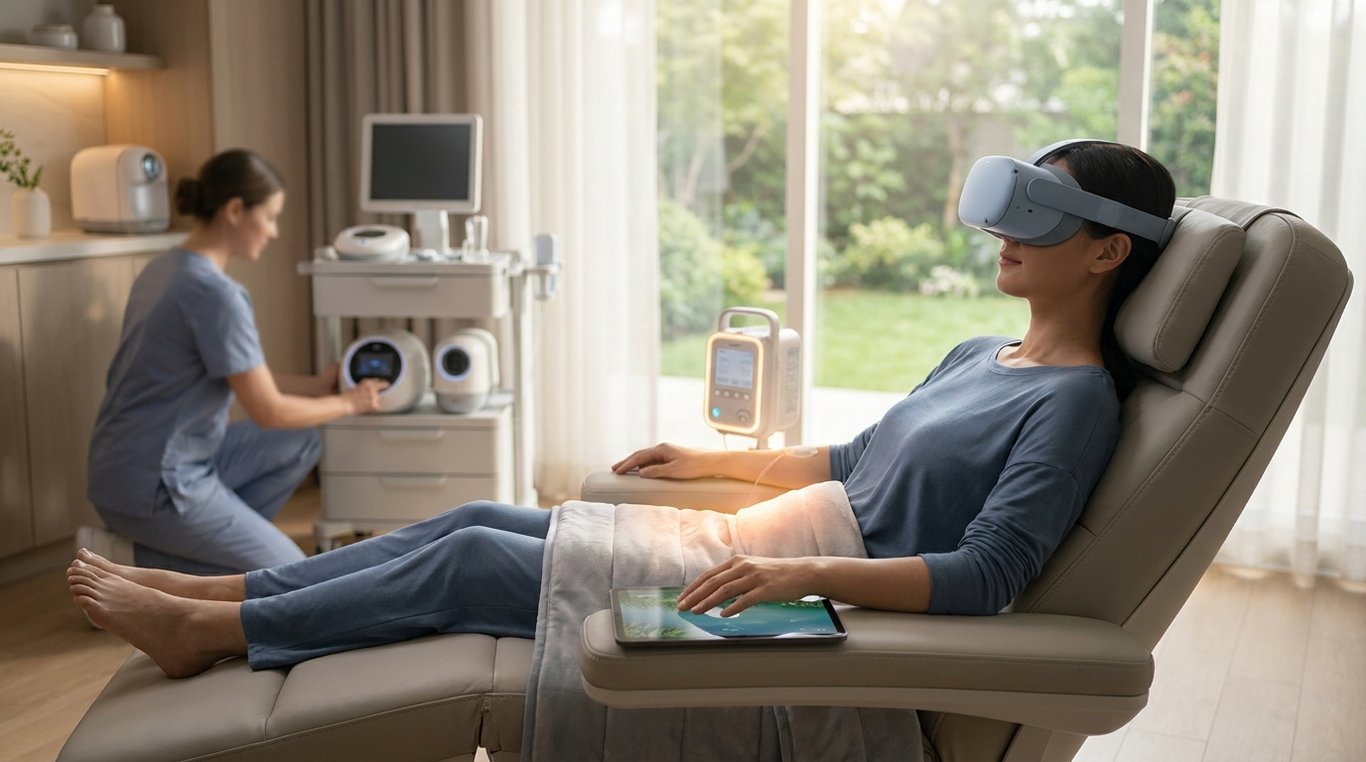
Dental anxiety is real, and it keeps a lot of people from getting the care they need. Modern dentistry has responded to this with a range of sedation options and comfort-focused approaches designed to make visits feel less stressful. Nitrous oxide — commonly known as laughing gas — remains a widely used and well-established option for mild to moderate anxiety. Other sedation methods are available for patients who need more support, and many practices now also offer comfort amenities like noise-canceling headphones, warm blankets, and patient-controlled entertainment to help create a calmer environment. These aren't just nice extras; they're part of a deliberate effort to make dental care more approachable for people who have historically avoided it.
Interestingly, comfort improvements in modern dentistry don't come only from sedation. Better diagnostics mean fewer surprises during procedures. More precise tools mean less collateral tissue disruption. Shorter procedures mean less time in an uncomfortable position. All of these factors combine to reduce the overall stress of a dental visit, even for patients who aren't using any sedation at all. People who avoided the dentist for years because of bad past experiences are often genuinely surprised by how different a modern visit feels — and that difference is what brings them back for regular care.
Preventive technology at home: smart toothbrushes and better self-care
The technology story in dentistry doesn't stop at the office door. Smart toothbrushes and app-connected oral health tools have become a growing part of the conversation around dental innovation. These devices use sensors to track brushing pressure, duration, and coverage, then send that data to a smartphone app where users can see exactly how well they're cleaning their teeth. Some even provide real-time feedback through vibrations or alerts. Many recent articles on dental technology now include these home tools as part of the broader innovation story, because prevention is ultimately what keeps patients out of the dental chair for anything more than a routine checkup.
A fair question is whether home technology really matters if your dentist already has all the advanced tools in the office. The answer is yes — and it's not even close. No amount of in-office technology can fully compensate for poor daily oral hygiene habits. Smart toothbrushes and monitoring apps help patients build and maintain better routines between visits, which directly reduces the buildup of plaque, the development of cavities, and the progression of gum disease. Prevention still reduces the need for treatment, and that's true no matter how advanced the tools in your dentist's office happen to be.
What patients should ask before choosing a tech-forward dental practice
Not every practice that calls itself "modern" is using the same tools or using them well, so it's worth knowing what questions to ask. When evaluating a dental office, consider asking whether they offer digital X-rays, intraoral scanning, same-day crowns through CAD/CAM, laser treatments, or teledentistry options. Ask how they handle impressions and whether they work with a digital workflow from scan to restoration. It's also reasonable to ask about their approach to patient comfort, including what sedation options are available. The right mix of technology depends on your specific needs — someone getting a crown has different priorities than someone being evaluated for orthodontic treatment — so the goal isn't to find an office with every possible tool, but to find one whose capabilities match what you actually need.
Beyond the technology checklist, it's worth evaluating a practice based on how they communicate and explain their recommendations. A genuinely patient-centered office will give you clear explanations of why a particular tool or treatment is being recommended, not just tell you they have the latest equipment. Authoritative dental websites consistently emphasize that technology should serve a functional purpose — improving comfort, accuracy, or efficiency — rather than existing as a marketing talking point. If a practice can explain how their tools directly benefit your care, that's a much better sign than a waiting room full of impressive-looking equipment with no explanation of what it does.
Cost, safety, and access: common concerns about modern dental technology
It's natural to wonder whether newer dental technology is actually safer and whether it comes with a higher price tag. On the safety side, many of the innovations discussed here are promoted specifically because they improve safety outcomes — digital X-rays reduce radiation exposure, AI tools reduce the chance of missed diagnoses, and laser procedures minimize tissue damage. These aren't just claims; they're reasons why professional dental organizations and health publications give these technologies positive coverage. As for cost, the picture is more complicated. Some technologies, like digital X-rays, have become standard enough that they don't add significant cost. Others, like same-day CAD/CAM crowns, may be priced similarly to traditional restorations or slightly differently depending on the practice. It's always worth asking about fees upfront.
Access and availability are also worth addressing honestly. Not every dental office uses the same tools, and not every community has equal access to tech-forward practices. Rural areas and lower-income communities may have fewer options when it comes to advanced digital workflows. That said, teledentistry has helped extend some services to patients who can't easily reach a physical office. For patients who do have access to multiple practices, the biggest difference in experience is often found in offices that have integrated several digital systems into one connected workflow — because it's the combination of tools, not any single one, that creates the most noticeable improvement in care.
FAQ: Common questions about modern dental technology
Patients searching online for information about new dental tools tend to ask the same core questions, and those questions are worth answering clearly. The FAQ section below addresses the most common ones — the kind that come up when someone is trying to decide whether a modern dental practice is worth seeking out, or when they're trying to understand what they've already experienced at their own dentist's office.
These answers are kept practical and straightforward, because most people asking these questions just want to know what something means for them personally — not a technical deep-dive. Here's what you need to know.
FAQ 1: Are digital X-rays safer than traditional X-rays?
Digital X-rays are widely used in modern dental offices partly because they provide instant, high-quality images and generally expose patients to significantly less radiation than traditional film-based radiographs. While no X-ray is completely without radiation, the reduction with digital systems is meaningful, especially for patients who need images taken regularly. For most people, this makes digital X-rays a clear improvement over the older alternative.
FAQ 2: Can I really get a crown in one visit?
Yes, same-day crowns are genuinely possible in offices that have CAD/CAM technology — meaning digital design software and an in-office milling machine. The dentist takes a digital scan of your prepared tooth, designs the crown on-screen, mills it from a ceramic block, and fits it the same day. It's not available everywhere, but in practices that have the equipment, it's a real option that eliminates the need for a temporary crown and a second appointment.
FAQ 3: Does laser dentistry hurt less?
For many procedures, yes — lasers are associated with less discomfort, less bleeding, and faster healing compared to traditional instruments. Some patients require less anesthesia for laser treatments, which is a significant benefit for those who dislike injections. However, the experience depends on the specific procedure being done and the individual patient, so it's worth asking your dentist whether a laser approach is appropriate for your particular situation.
FAQ 4: Is AI replacing dentists?
No. AI in dentistry is designed to support the dentist's decision-making, not replace it. AI software can help analyze X-rays and flag potential concerns with a high degree of consistency, but the dentist is still responsible for interpreting those findings, considering the full clinical picture, and deciding on a course of treatment. Think of it as a second set of very attentive eyes — useful, but not in charge.
FAQ 5: What is teledentistry best for?
Teledentistry works best for situations where you need guidance but don't necessarily need to be physically examined right away — things like triaging an urgent symptom, following up after a procedure, reviewing photos of a developing concern, or getting initial advice about a treatment option. It's a genuinely useful tool for saving time and getting faster answers, but it doesn't replace an in-person exam when hands-on evaluation or actual treatment is needed.
Conclusion: why the new era of dentistry matters
Modern dentistry has genuinely earned the right to say it's different from what came before. It's faster because of digital imaging and CAD/CAM systems that compress multi-visit processes into single appointments. It's safer because of better diagnostic tools, lower-radiation imaging, and AI-assisted detection that catches problems earlier. And it's more comfortable because of lasers that minimize tissue disruption, sedation options that ease anxiety, and digital workflows that reduce the overall time and invasiveness of procedures. These aren't isolated improvements — they work together to create a care experience that is meaningfully better for patients across the board.
If you've been putting off dental care because of bad memories, fear, or the assumption that it will be time-consuming and unpleasant, it's worth reconsidering. Look for a dental practice that uses modern technologies and don't be afraid to ask which specific tools they offer and how those tools might improve your care. The whole point of "Not Your Parents' Dentist: The New Technologies Making Dental Care Faster, Safer, and More Comfortable" is that treatment today is more efficient, more precise, and more patient-friendly than it has ever been — and that's a very good reason to make the appointment.