My Dental Implant Failed. Now What? A Patient's Guide to Revision and Recovery
Published 29 min read
Finding out your dental implant might be failing is the kind of news that stops you in your tracks. Maybe it started with a dull ache you kept dismissing, or you noticed the implant felt slightly loose when you bit down. Whatever the moment was, the worry that follows is completely understandable. A lot of patients also carry a quiet sense of guilt, wondering if they did something wrong, didn't clean well enough, or somehow caused the problem. The truth is, dental implant failure can happen even when everything is done correctly — the materials are modern, the surgeon is skilled, and the patient follows every instruction. You are not alone, and this situation is not hopeless. Understanding why your implant failed and what your realistic options are is the most important first step toward getting your oral health — and your confidence — back on track.
This guide is designed to walk you through the whole picture, from start to finish. You will learn how to tell the difference between a true implant failure and a minor problem that is easily corrected, and when symptoms are serious enough to call your dentist right away. We will cover the most common causes of failure, broken down into biological, technical, and lifestyle-related factors. From there, the guide explores your options for saving, revising, or replacing the implant, along with what recovery actually looks like day to day. We will also touch on how costs and insurance tend to work in these situations and, importantly, what you can do to protect any future implants from running into the same trouble. The bottom line is that once a proper evaluation is done, most patients have several solid, evidence-based paths forward.
Understanding Dental Implant Failure: What Does "Failure" Really Mean?
In simple terms, a dental implant has failed when it can no longer do its job reliably. More specifically, this means one of three things has happened: the implant has lost its stable connection to the jawbone, there is ongoing pain or infection that is not resolving, or the surrounding bone and gum tissue have broken down to the point where the implant cannot function safely. It helps to know that failure falls into two broad categories. Early failure happens when the implant never properly bonds with the bone in the first place, usually within the first few months after placement. Late failure, on the other hand, develops after the implant appeared to be working well — sometimes months or even years down the road — before problems gradually or suddenly emerge.
Beyond the timing, it also matters what part of the system is actually failing. Biological failure involves the body itself — things like bone loss, infection around the implant (called peri-implantitis), or a lack of osseointegration, which is the process where bone grows around and fuses to the implant surface. Technical failure, by contrast, involves the hardware — a cracked implant body, a broken abutment screw, or a crown that has come loose or worn down. These are very different problems that require very different solutions, and sometimes the implant post itself is perfectly fine while only a prosthetic component needs to be repaired or replaced.
Here is something worth keeping in mind before you spiral into worst-case scenarios: not every strange sensation around an implant means it has truly failed. Temporary soreness after a procedure, minor irritation of the gum tissue, or a crown that has worked itself slightly loose can often be corrected without touching the implant itself. The key is not to self-diagnose based on a Google search at midnight, and not to ignore symptoms and hope they go away on their own. A proper professional evaluation is the only way to know for sure what is happening — and the sooner you get one, the more options you are likely to have.
Common Signs Your Dental Implant May Be Failing
Your body is usually pretty good at sending signals when something is wrong, and a failing implant is no exception. The most common warning signs patients describe include a feeling that the implant or crown is loose or shifting, pain when chewing or biting down, a persistent throbbing or pressure sensation that does not go away, and visible swelling or redness in the gum tissue surrounding the implant. Bleeding when you brush around the implant site, or noticing a bad taste or unpleasant smell that lingers even after brushing, can also point to an infection brewing beneath the surface. Any one of these symptoms is worth reporting to your dentist — a combination of them is even more reason to act quickly.
Some signs are more urgent than others and should prompt you to seek care right away rather than waiting for your next routine appointment. Clear movement of the implant itself — not just the crown, but the actual post — is a significant red flag. So is visible pus around the implant, a fever paired with localized facial swelling, or a sudden noticeable change in how your bite feels, especially after any kind of trauma to the mouth. These symptoms suggest that something more serious is happening and that delay could lead to further bone loss or damage to the teeth and structures nearby. When in doubt, it is always better to call and be told it is nothing than to wait and let a manageable problem become a complicated one.
Timing can also tell an important story. Symptoms that appear within the first few weeks or months after placement — like persistent pain, swelling that does not settle, or the implant feeling loose early on — often point to a failure of osseointegration, meaning the bone simply did not bond properly with the implant. Symptoms that show up years later are more commonly linked to peri-implantitis, mechanical overload from grinding, or simple wear and tear on the hardware over time. If you can keep a brief diary noting when symptoms started, how often they occur, and what makes them better or worse, that information can be genuinely helpful to your clinician in narrowing down the cause and planning the right response.
Top Causes of Dental Implant Failure
Biological causes are among the most common reasons an implant fails, particularly in the early stages. Poor bone quality or insufficient bone volume at the implant site can prevent proper osseointegration from ever taking hold. Systemic health conditions play a significant role as well — uncontrolled diabetes, for example, impairs healing and immune response, while osteoporosis can affect bone density in ways that make stable integration more difficult. Immune-compromising conditions and certain medications can also interfere with the body's ability to heal around the implant. Smoking is one of the most well-documented risk factors, as it reduces blood flow to the gums and bone, slows healing, and significantly increases the chance of infection. Together, these biological factors can quietly undermine an implant even when the surgical technique was flawless.
Peri-implantitis deserves its own spotlight because it is one of the leading causes of late implant failure worldwide. Think of it as a more severe version of gum disease, but specifically targeting the tissue and bone around an implant. It begins with inflammation caused by plaque and bacteria accumulating at the gum line, and if left untreated, it progresses to bone loss that gradually destabilizes the implant. Missed maintenance appointments, inconsistent brushing and flossing, and a history of gum disease all increase a person's susceptibility. The encouraging news is that when peri-implantitis is caught early — before significant bone has been lost — there are treatment options that can stop its progression and, in some cases, allow the implant to remain in place.
Mechanical and technical causes are a separate but equally important category. Bruxism — the habit of clenching or grinding your teeth, often during sleep — places enormous repetitive force on implants that they are simply not designed to handle over the long term. Misaligned implant placement, whether too close to a neighboring tooth or at an angle that creates uneven stress, can also lead to problems over time. Poor prosthetic design, screws that fracture under load, or a single implant being asked to bear more chewing force than is reasonable are all mechanical contributors to failure. In many of these cases, the solution involves adjusting or replacing the prosthetic components rather than removing the implant itself, though that depends on how much damage has already occurred.
Planning and communication issues round out the picture and are worth acknowledging honestly. Incomplete medical histories, inadequate pre-treatment imaging, or a rushed treatment plan that skips important assessment steps can all set an implant up for trouble before it is even placed. Patients sometimes hesitate to mention medications, health conditions, or habits like smoking because they worry it will disqualify them from treatment — but that information is essential for safe planning. Choosing a clinician who takes the time to do thorough diagnostics, explain the process clearly, and set realistic expectations is one of the most important decisions a patient can make. Complications happen even in the best hands, but a well-planned case handled by an experienced provider gives any implant the strongest possible foundation for success.
Immediate Steps to Take If You Suspect Your Implant Has Failed
The moment you suspect something is wrong with your implant, the most important thing you can do is protect the area and get professional help as soon as possible. In the meantime, avoid chewing on that side of your mouth to reduce stress on the implant and surrounding bone. Keep the area gently clean — soft brushing and rinsing with warm salt water can help, but do not overdo it or probe the area aggressively. Whatever you do, resist the urge to try fixing things yourself. Tightening a screw with a household tool, taking leftover antibiotics from a previous prescription, or applying over-the-counter dental adhesives are all approaches that can make the situation worse. Every day of delay when an infection or bone loss is involved can mean more damage and fewer options down the line.
When it comes to contacting the right clinician, your first call should ideally be to the dentist or specialist who placed the implant, since they have your records, your imaging history, and the most context about your specific case. If that is not possible — perhaps you have moved, or the practice has changed — seek out a periodontist, oral surgeon, or prosthodontist who has specific experience managing implant complications. When you call, be prepared to describe your symptoms clearly: when they started, whether they are constant or come and go, what makes them better or worse, any recent trauma or illness, and any medications you are currently taking. This kind of information helps the office prioritize your appointment appropriately and makes the visit itself far more productive.
There are also a few things to actively avoid in this waiting period. Continuing to chew forcefully on a loose implant risks accelerating bone loss and could even fracture the implant body, turning a manageable problem into a much bigger one. Ignoring pus, a persistent foul taste, or swelling that is spreading is dangerous, as these can be signs of a spreading infection that needs prompt treatment. Using over-the-counter glues or dental repair kits designed for natural teeth is not appropriate for implants and can interfere with proper clinical assessment. And if you have been prescribed a course of antibiotics or anti-inflammatories by your dentist, do not stop taking them without guidance, even if you start to feel better. Early, professional intervention genuinely does improve the odds of either saving the implant or preserving the site for future treatment.
How Dentists Diagnose Implant Failure and Plan Revision
When you arrive for your evaluation, your dentist or specialist will begin with a thorough clinical examination. This typically involves checking whether the implant moves when gentle pressure is applied, probing the gum pockets around the implant to measure depth and assess tissue health, and evaluating the overall condition of the soft tissue. Your bite will also be assessed to see if the implant is absorbing more force than it should. It is worth knowing that pain alone does not automatically confirm failure — the exam is looking for objective, measurable signs that something is structurally or biologically wrong, not just your subjective experience of discomfort, which can have many causes.
Imaging plays a critical role in the diagnostic process. Periapical X-rays give a detailed view of the bone immediately surrounding the implant, while panoramic images provide a broader picture of the jaw. In more complex cases, a cone beam computed tomography (CBCT) scan offers a three-dimensional view that can reveal bone loss, fractures in the implant body or surrounding structures, and whether the implant was positioned in a way that may have contributed to the problem. These images are often compared to baseline X-rays taken at the time of placement, which is one reason why keeping your dental records organized and accessible is genuinely useful. The imaging helps the clinician determine whether what is happening is salvageable or whether removal is the more appropriate path.
Once the clinical and imaging data are in hand, the clinician works to identify the underlying cause — and this is where the treatment plan takes shape. Infection-driven bone loss typically points toward a plan involving cleaning and decontamination of the implant surface, antimicrobial therapy, and possibly regenerative procedures to rebuild lost bone. A fractured screw or damaged crown, by contrast, may simply require replacing that specific component without disturbing the implant itself. When both biological and mechanical factors are at play, the plan becomes more layered. Understanding the root cause is not just academic — it directly determines what treatment will actually work and what risks need to be managed going forward.
A thorough diagnosis also means reviewing your full medical and dental history. Your clinician will want to know about any systemic conditions, current medications (including supplements and over-the-counter drugs), whether you smoke, how consistent your oral hygiene routine has been, and whether you have any history of grinding or clenching. Prior complications with this or other implants are also relevant. This is not about judgment — it is about building the most complete picture possible so that the revision plan is tailored to you specifically, rather than being a one-size-fits-all approach. Open, honest communication at this stage makes a meaningful difference in the quality and safety of the outcome.
Can a Failed Implant Be Saved, or Does It Need to Be Removed?
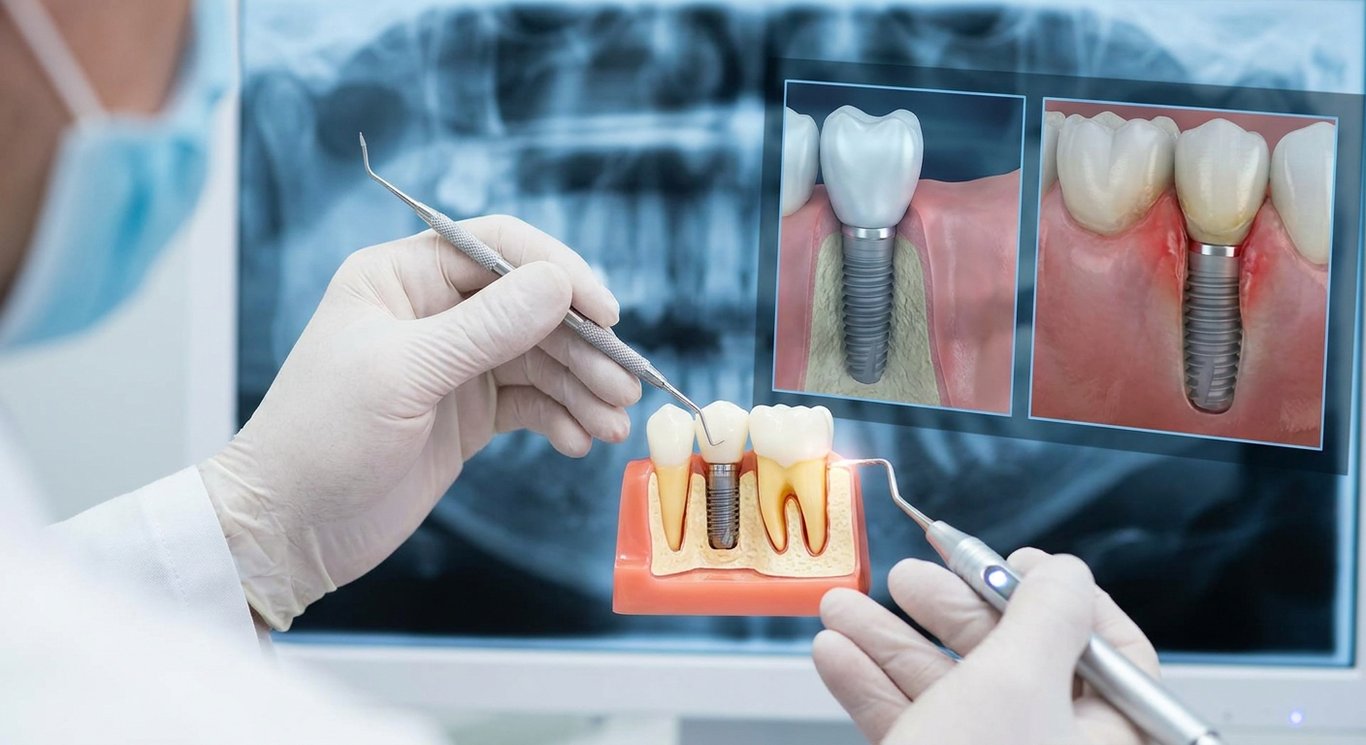
This is probably the question most patients are most anxious about, and the honest answer is: it depends. The general decision framework comes down to how much bone remains around the implant, whether the implant itself is structurally intact, and whether the underlying cause of the problem can be controlled. Some early or localized issues — such as mild peri-implantitis caught before significant bone loss, or a minor infection that has not spread — can be treated without removing the implant at all. True failure, however, particularly when there is obvious mobility, a fractured implant body, or advanced bone destruction, almost always requires removal. The goal is always long-term health and function, not preserving the implant at any cost.
When conditions are right for a salvage attempt, several approaches may be used. Mechanical debridement involves carefully cleaning the surface of the implant to remove bacteria and calculus, often using specialized instruments or laser therapy. This is typically combined with antimicrobial treatment — either locally applied or systemic antibiotics — to address the infectious component. In some cases, soft-tissue surgery is performed to access and clean the area more thoroughly, and regenerative techniques using bone grafting materials or membranes can be used to encourage new bone to grow back around an implant that still has adequate structural support. Success rates for these salvage procedures vary, and they are most predictable when the bone loss is moderate rather than severe and when the patient is committed to improving their home care and addressing risk factors like smoking.
There are situations where removal is simply the right call, and it is important not to view it as a defeat. Clear mobility of the implant, a fractured implant body that cannot be retrieved or repaired in place, severe bone loss leaving little or no support, or persistent symptoms that have not responded to previous treatment are all indicators that removal is the most appropriate next step. The procedure itself, known as explantation, is generally straightforward — the implant is carefully loosened and removed, the site is thoroughly cleaned of any infected or damaged tissue, and a bone graft is often placed at the same time to preserve the ridge and prepare for future options. Most patients are surprised by how manageable the procedure is compared to what they imagined.
Removal of a failed implant is not the end of the road — far from it. Many patients go on to receive a new implant in the same location after the site has healed and, if needed, been rebuilt with a bone graft. Others find that an alternative restoration suits their needs just as well. The important thing is that the failed implant is addressed properly so that the surrounding bone and teeth are protected, and so that whatever comes next is built on a healthy foundation. Most patients who go through this process come out the other side with a functional, comfortable smile — and a much clearer understanding of how to protect it going forward.
Treatment Options After Removal: Revision, Replacement, or Alternatives
One of the first decisions after a failed implant is removed involves timing — specifically, whether a replacement implant can go in right away or whether the site needs time to heal first. In some cases, when bone loss is minimal and the site is clean and healthy, a new implant (sometimes a slightly wider diameter to engage fresh bone) can be placed immediately alongside guided bone regeneration techniques. In other situations — particularly when there has been significant infection, substantial bone loss, or a need for extensive grafting — the site must be allowed to heal for several months before re-implantation is safe. Rushing this step can compromise the success of the new implant, so patience here genuinely pays off.
Bone grafting is often a central part of the recovery plan after implant removal, especially when peri-implantitis or prolonged bone loss has left the jaw ridge inadequate to support a new implant. Grafting involves placing bone material — which may come from your own body, a donor source, or a synthetic substitute — into the defect to stimulate new bone growth. The surgical steps are usually completed at the same appointment as the removal or at a separate procedure shortly after. Healing and full graft maturation typically takes several months, and during this time protecting the graft is critical: this means following dietary restrictions, avoiding smoking, taking prescribed medications, and attending all follow-up appointments. It is a commitment, but the result is a stronger, more stable foundation for whatever restoration comes next.
Not everyone will be a candidate for another implant, and that is okay. Fixed dental bridges remain an excellent option for replacing a single missing tooth or a short span of missing teeth, using the neighboring natural teeth as anchors. Removable partial dentures can replace one or more missing teeth with a prosthesis that can be taken out for cleaning. For patients who have lost many teeth, full dentures — whether conventional or implant-supported — can restore function and appearance effectively. Each of these alternatives has its own set of trade-offs in terms of maintenance, longevity, and how they feel in daily use, and none of them is universally inferior to an implant. The right choice depends on your specific anatomy, health, and lifestyle.
Whatever path you are considering, shared decision-making between you and your dental team is essential. Your clinician should walk you through the risks, benefits, expected outcomes, and realistic costs of each option — not just recommend the most expensive or technically complex one. You, in turn, bring equally important information to the table: your health status, your lifestyle, your budget, how much time you can commit to recovery, and what matters most to you in terms of function and appearance. When both sides of that conversation happen openly and honestly, the treatment plan that emerges is far more likely to succeed and far more likely to feel right for the person living with it every day.
Recovery Timeline and What to Expect After Revision
Recovery after implant removal and site treatment generally unfolds in distinct phases, and understanding them in advance makes the process feel much less daunting. The first phase is soft-tissue healing, which typically occurs over the first one to two weeks — the gum closes over the surgical site, initial discomfort settles, and the area begins to stabilize. If a bone graft was placed, the next phase involves graft integration, which takes considerably longer — usually four to six months, sometimes more, depending on the size of the graft and the individual's healing capacity. Only after the bone has matured sufficiently is it safe to place a new implant, if that is the chosen path. From there, the new implant itself needs time to osseointegrate before the final crown or prosthetic can be attached, adding another few months to the overall timeline. The full process from removal to final restoration can take anywhere from six months to well over a year in complex cases.
During the early post-operative period, it is completely normal to experience mild to moderate pain, swelling, and some bruising around the jaw and cheek. You may also notice temporary changes in how you chew or speak, particularly if a provisional restoration or denture is being worn in the meantime. Most of this discomfort is well managed with prescribed or over-the-counter pain medications, cold packs applied to the outside of the face in the first 24 to 48 hours, and sticking to soft foods while the site heals. Your dental team will give you specific instructions, and it is worth following them closely rather than improvising. If pain is worsening after the first few days rather than gradually improving, if swelling is spreading, or if you develop a fever, those are signs to call the office rather than wait for your next scheduled visit.
Follow-up appointments are not optional extras — they are a core part of the recovery process. In the weeks and months after surgery, your clinician will check that the soft tissue is healing properly, assess bone graft progress with imaging, and make any necessary adjustments to provisional restorations or dentures to ensure you are comfortable and that no undue pressure is being placed on the healing site. These visits also give you the opportunity to ask questions, flag any concerns early, and stay informed about where you are in the process. Patients who attend all their scheduled appointments consistently tend to have better outcomes, not because they are lucky, but because problems are caught and addressed before they have a chance to escalate.

Lifestyle, Oral Hygiene, and Risk Factors: Protecting Your Next Implant
Good oral hygiene is the single most controllable factor in the long-term success of a dental implant, and it deserves more than a passing mention. Plaque and bacteria that accumulate around the base of an implant are the primary drivers of peri-implantitis, which as we have discussed is one of the most common causes of late failure. Brushing twice daily with a soft-bristled toothbrush, cleaning between the implant and adjacent teeth with interdental brushes or implant-specific floss, and using an antiseptic mouthrinse if your dental team recommends one are all habits that make a genuine difference. Professional cleanings at the recommended frequency — which may be more often than twice a year for implant patients — remove the calculus and bacteria that home care cannot reach on its own.
Beyond hygiene, several modifiable risk factors significantly influence implant survival and are worth taking seriously. Smoking is at the top of the list: it constricts blood vessels, reduces oxygen delivery to healing tissues, impairs immune function, and roughly doubles the risk of implant failure compared to non-smokers. If you smoke, quitting before and after implant treatment is one of the most impactful things you can do. Uncontrolled diabetes affects healing and immune response in ways that are highly relevant to implant outcomes, so working with your physician to manage blood sugar levels is important. Bruxism — grinding or clenching — places mechanical stress on implants that they simply were not designed to handle indefinitely, and if this is a factor for you, it needs to be addressed proactively rather than after damage has already occurred.
Building protective habits into your daily routine is ultimately what separates patients who keep their implants for decades from those who face repeated problems. If you grind your teeth, wearing a custom-fitted night guard is non-negotiable. Attending regular implant maintenance appointments — not just general dental check-ups, but visits where the implant specifically is assessed — allows early changes to be caught before they become serious. Reporting new symptoms promptly, rather than waiting to see if they resolve on their own, gives your dental team the best chance to intervene effectively. And following the personalized home-care instructions your team provides, rather than defaulting to whatever routine you had before, reflects the reality that implants have specific needs that differ from natural teeth. These steps are not complicated, but they do require consistency — and that consistency is what protects your investment.
Costs, Insurance, and Communicating With Your Dental Team
The financial side of dealing with a failed implant can feel overwhelming, especially when you have already invested significantly in the original treatment. Costs associated with revision typically include the initial consultation and diagnostic imaging, the removal procedure itself, bone grafting if needed, a new implant placement, and the final crown or prosthetic restoration. Depending on your location, the complexity of the case, and the type of specialist involved, these costs can vary considerably — which is why requesting a detailed, itemized written treatment plan before committing to any procedure is so important. Knowing exactly what each phase will cost, and what is and is not included, prevents unpleasant surprises and allows you to plan appropriately.
Insurance coverage for implant-related revision work is highly variable and often frustrating to navigate. Some dental insurance plans will cover portions of surgical procedures, bone grafting, or prosthetic components, particularly if they are classified under medical necessity rather than cosmetic treatment. Others exclude implants and related procedures entirely. It is worth calling your insurance provider directly — not just relying on your dental office's interpretation — to ask about coverage for each specific procedure code. Request pre-authorization in writing before treatment begins whenever possible. If out-of-pocket costs are a concern, ask your dental office about payment plans, in-house financing, or third-party financing options such as healthcare credit lines, which can spread costs over time and make treatment more accessible.
Finally, the quality of your communication with your dental team matters more than many patients realize. Do not hesitate to ask your clinician directly about their experience with implant complications and revision procedures — this is a reasonable question, and a confident, experienced provider will answer it without defensiveness. Be open about your concerns, your budget constraints, and your lifestyle factors, because all of these affect what treatment plan makes the most sense for you. Ask for explanations of risks and alternatives in plain language, not just technical jargon. And make sure you understand what is included in the quoted fees — does it cover follow-up visits? Adjustments to the prosthetic? Emergency calls if something goes wrong? A dental team that communicates clearly and treats you as a partner in your own care is one of the most valuable assets you can have when navigating something as stressful as implant revision.
Frequently Asked Questions: My Dental Implant Failed. Now What?
How do I know if my implant has truly failed or just needs an adjustment? This is one of the most common questions patients ask, and the honest answer is that you cannot know for certain without a professional evaluation. Reversible issues — like a crown that has come loose from the abutment, minor gum irritation from a food particle, or temporary sensitivity after a cleaning — often look and feel alarming but can be resolved without touching the implant itself. True failure, by contrast, involves measurable bone loss visible on imaging, actual movement of the implant post, structural fractures, or persistent infection that is not responding to treatment. A clinical examination combined with up-to-date X-rays or a CBCT scan is the only reliable way to distinguish between these scenarios, which is why seeking professional assessment rather than self-diagnosing is so important.
Can a failed dental implant be replaced in the same spot? In many cases, yes — but the timing and approach depend on what is found when the failed implant is removed. If the bone in the area is still reasonably healthy and there is no active infection, it may be possible to place a new implant relatively soon, sometimes even at the same appointment as the removal. However, when significant bone loss has occurred, or when infection has compromised the surrounding tissue, the site typically needs to be cleaned, grafted, and allowed to heal for several months before a new implant can be placed safely. The good news is that even in cases requiring extensive site preparation, many patients go on to receive successful replacement implants after proper healing. It simply requires patience and a well-executed plan.
Will fixing a failed implant be painful? This is a very understandable concern, and the reassuring reality is that modern anesthesia and sedation options make these procedures far more comfortable than most patients expect. Implant removal, bone grafting, and revision surgeries are typically performed under local anesthesia, and sedation options — from nitrous oxide to IV sedation — are available for patients who are anxious or undergoing more extensive procedures. During the procedure itself, you should feel pressure and movement but not sharp pain. Post-operatively, some discomfort, swelling, and stiffness are normal and are usually well managed with prescribed pain medications, anti-inflammatories, and cold packs in the first 24 to 48 hours. Most patients report that the recovery was more manageable than they anticipated.
How long does recovery take after a failed implant is removed? Recovery unfolds in stages, and the total timeline varies depending on how much damage was present and what procedures are needed. Soft-tissue healing at the removal site generally takes one to two weeks for initial closure, though full tissue maturation takes longer. If a bone graft is placed, you are typically looking at four to six months for the graft to integrate sufficiently before a new implant can be placed. The new implant then needs another three to six months to osseointegrate before the final restoration can be attached. For straightforward cases without significant bone loss, the total timeline might be six to nine months. For more complex situations involving extensive grafting or multiple procedures, it can extend to eighteen months or more. Your clinician will give you a personalized estimate based on your specific situation.
What can I do to prevent another implant from failing? Prevention really does come down to a combination of consistent habits and proactive management of known risk factors. Maintaining excellent oral hygiene — brushing, interdental cleaning, and regular professional maintenance — is the foundation. If you smoke, quitting is one of the most impactful steps you can take for both implant success and overall health. If you have a systemic condition like diabetes, keeping it well controlled in collaboration with your physician matters enormously. Bruxism should be managed with a custom night guard rather than left untreated. Attending all scheduled implant check-up appointments allows early changes to be identified and addressed before they escalate. And following your dental team's post-operative and home-care instructions carefully — even when you start to feel fine — protects the healing process during the most vulnerable period. None of these steps is complicated, but together they make a substantial difference in long-term outcomes.
Conclusion: Moving Forward After Dental Implant Failure
A failed dental implant is genuinely discouraging — there is no point in pretending otherwise. But it is not the end of your options for a healthy, functional, and confident smile. By understanding what caused the failure, recognizing warning signs early, and working with an experienced dental team to evaluate and address the problem, most patients are able to move forward successfully — whether that means saving the implant, replacing it after proper site preparation, or choosing an alternative restoration that fits their needs just as well. The most important takeaways from this guide are straightforward: pay attention to warning signs and do not dismiss them, never ignore pain, looseness, swelling, or infection, and always seek a proper professional evaluation rather than attempting home remedies or simply hoping the problem resolves on its own.
If you are reading this because something feels off with your implant right now — persistent discomfort, swelling that is not going away, a loose feeling when you bite down, or any of the other warning signs described in this guide — please do not wait. Schedule a consultation with your dentist or a specialist experienced in implant complications, ask for a thorough diagnostic evaluation including imaging, and make sure you understand all of your available treatment options before making any decisions. Ask questions, be honest about your health history and habits, and advocate for yourself throughout the process. Taking ownership of your oral health — following personalized care instructions, managing risk factors, and staying consistent with maintenance — is the most effective way to recover fully from this setback and to give any current or future implants the best possible chance of lasting a lifetime.