From Drills to Lasers: A Patient's Guide to Modern Dental Technology
Published 23 min read
Introduction: Why Modern Dental Technology Matters for Patients
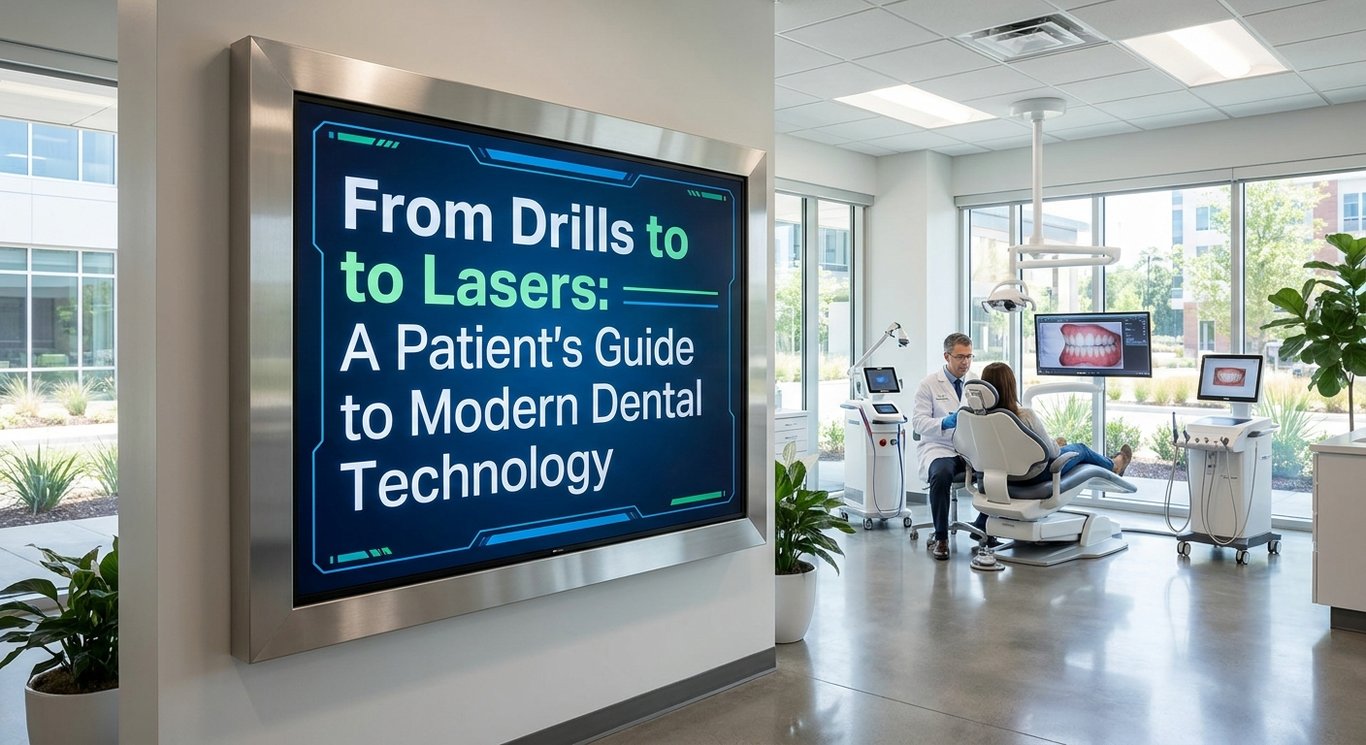
If your last mental image of a dental visit involves the whirring sound of a drill and the smell of something burning, you are not alone—but dentistry has changed dramatically. The shift from traditional mechanical tools to advanced technologies like dental lasers, digital imaging, and CAD/CAM systems is reshaping what it actually feels like to sit in the dental chair. These innovations are not just flashy gadgets for dentists to show off; they are changing how procedures are performed, making treatments faster, more precise, and far more comfortable for patients of all ages. Whether you are getting a routine cleaning or a complex restoration, the tools your dentist uses today are nothing like what your parents experienced.
Beyond the technical side, modern dental technology directly addresses the things patients care about most: less pain, shorter appointments, better-looking results, and stronger long-term oral health. For people who feel anxious about dental visits—and there are a lot of you out there—understanding what these technologies do and why your dentist is using them can make a real difference in how you feel walking through that door. This guide is designed to break everything down in plain language, so whether you are curious, nervous, or just want to be a more informed patient, you will leave with a clearer picture of what modern dentistry actually looks like.
From Traditional Drills to High-Tech Tools: How Dentistry Has Evolved
For most of dental history, the drill was the main event. Traditional high-speed drills are loud, they vibrate, and they generate heat—all of which contribute to the discomfort many patients associate with dental work. Beyond the physical sensation, the sound alone is enough to trigger anxiety in a significant portion of the population. Manual tools required dentists to work with a certain level of imprecision simply because human hands and mechanical instruments have natural limitations. Recovery from procedures could be uncomfortable, and patients often left with soreness that lasted for days. It is no wonder that "going to the dentist" became a phrase associated with dread rather than routine healthcare.
Thankfully, dentistry did not stay stuck in that era. Progress came in waves: first, more effective local anesthetics made numbing faster and more reliable. Then came electric handpieces that ran quieter than their air-driven predecessors, followed by digital X-rays that slashed radiation exposure and gave dentists clearer images almost instantly. Lasers entered the picture, offering a way to treat tissue without the noise and vibration of traditional instruments. Computer-guided design and manufacturing systems then made it possible to create custom restorations in a single visit. Each phase of this evolution had one clear goal—making dental care safer, more precise, and easier on the patient. That progression is exactly what we are going to explore throughout this guide.
Understanding Laser Dentistry: What It Is and How It Works
The word "laser" might bring to mind science fiction, but in dentistry, it is a very practical and well-established tool. At its core, a dental laser is a device that produces a focused beam of light energy, which can be used to cut, shape, or remove tissue with remarkable precision—no metal instruments required. There are two main categories of dental lasers that patients are likely to encounter: soft tissue lasers, which work on gums and other oral tissues, and hard tissue lasers, which can treat teeth and bone. Each type is calibrated to interact with specific materials in the mouth, so your dentist will choose the right kind based on what needs to be done.
Laser dentistry covers a surprisingly wide range of procedures. Dentists use lasers for cavity preparation, reshaping gum tissue, treating periodontal (gum) disease, removing small lesions or growths in the mouth, and even assisting with teeth whitening. One of the biggest advantages for patients is that lasers often cause less bleeding and swelling than traditional surgical instruments because the light energy seals blood vessels as it works. This means fewer stitches, faster healing, and in many cases, less need for anesthesia. For patients who dread needles as much as drills, that is genuinely good news.
Of course, it is important to have realistic expectations. Dental lasers are safe, thoroughly studied, and used by trained professionals who follow strict protocols—including protective eyewear for both the patient and the dental team. That said, lasers are not a universal solution for every dental problem. Some procedures still require traditional instruments, and many treatments use a combination of both. A dentist who recommends a laser for your gum treatment is not trying to impress you with technology; they are choosing the tool that is most appropriate for your specific situation. Understanding that distinction helps you trust the recommendation and ask better questions.
Digital X-Rays and 3D Imaging: Seeing More, Exposing Less
Digital X-rays have largely replaced traditional film-based X-rays in modern dental practices, and the reasons are straightforward. Instead of using chemical-based film that takes time to develop, digital sensors capture images almost instantly and display them on a screen right in front of you. The radiation exposure with digital X-rays is significantly lower than with older film systems—often up to 80 percent less—which is reassuring for patients who have concerns about repeated imaging over a lifetime of dental care. The images can also be enhanced, zoomed in, and adjusted on screen, giving your dentist a much clearer view of what is happening between and inside your teeth.
Beyond standard digital X-rays, advanced imaging technologies are taking diagnosis to another level entirely. Cone-beam computed tomography, or CBCT, creates a three-dimensional image of your teeth, jawbone, nerves, and surrounding structures in a single scan. This kind of detail is especially valuable when planning dental implants, complicated root canals, orthodontic treatment, or oral surgery, because it allows the dentist to see exactly where critical structures are located before making a single incision. Intraoral scanners are another game-changer—these handheld wand-like devices create a digital 3D map of your mouth without the gooey impression material that many patients find uncomfortable.
From a patient perspective, the benefits of advanced imaging go beyond just better pictures. More accurate imaging leads to more accurate diagnoses, which means problems can be caught earlier when they are easier and less expensive to treat. Patients also benefit from being able to see their own imaging on a chairside monitor, which helps dentists explain exactly what is happening and why a particular treatment is recommended. As for safety concerns, both digital X-rays and 3D scans are performed with appropriate protective measures and are only recommended when the clinical information they provide is genuinely needed. Your dentist is not taking X-rays just to fill time—they are building a complete picture of your oral health.
CAD/CAM and Same-Day Crowns: Custom Restorations in One Visit
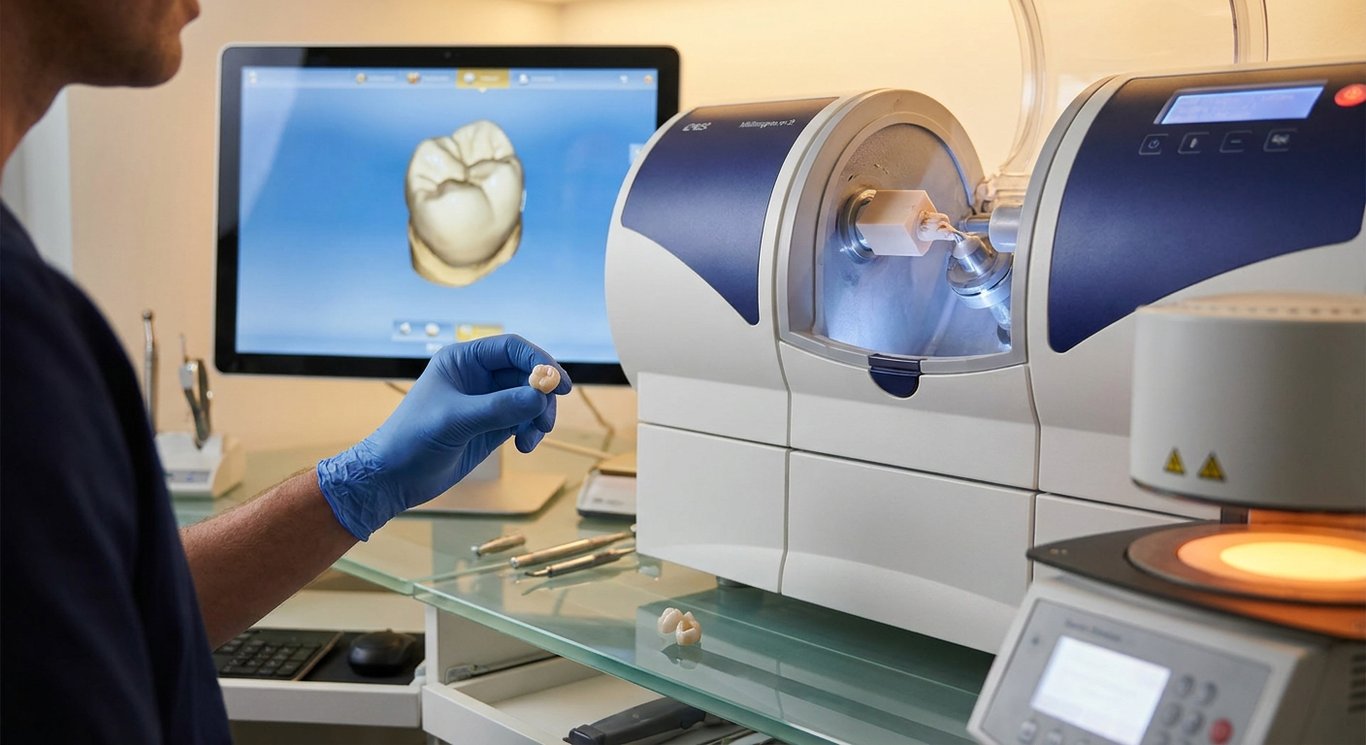
CAD/CAM stands for computer-aided design and computer-aided manufacturing, and it is one of the most patient-friendly innovations in modern dentistry. Traditionally, getting a crown meant your dentist would prepare the tooth, take a physical impression using putty-like material, send it off to a dental laboratory, and have you come back two to three weeks later for the final restoration—all while wearing a temporary crown that could feel awkward or fall off. CAD/CAM technology eliminates most of that process by allowing the dentist to design and mill a custom restoration right in the office, often in the same appointment. It is essentially a miniature dental factory sitting in the treatment room.
The process itself is pretty impressive from a patient's point of view. After preparing your tooth, the dentist uses a small intraoral camera to take a precise digital scan—no goopy impressions needed. That scan is fed into design software, where the restoration is shaped to fit your tooth and bite perfectly. The design is then sent wirelessly to an in-office milling machine that carves the crown from a block of high-quality ceramic material. Once it is ready, the dentist checks the fit, makes any minor adjustments, and bonds it in place—all in one visit. For patients with busy schedules or those who simply hate wearing a temporary crown, this is a significant quality-of-life improvement.
That said, CAD/CAM technology is not always the right choice for every situation. Same-day crowns work exceptionally well for back teeth and straightforward restorations, but some complex cosmetic cases—where very precise color matching or detailed shaping is needed—may still benefit from the artistry of a skilled dental laboratory technician. Your dentist's recommendation between a CAD/CAM crown and a lab-made one should be based on your specific tooth, your cosmetic goals, and the clinical demands of the case. Understanding that both options are valid and that each has its place helps you have a more productive conversation about which approach makes the most sense for you.
Comfort-Focused Innovations: Anesthesia, Noise Reduction, and Anxiety Management
One of the most meaningful advances in modern dentistry is the improvement in how local anesthesia is delivered. Computer-controlled anesthetic delivery systems, sometimes called "the Wand," use a microprocessor to regulate the flow of anesthetic at a slow, steady rate—which is actually what makes injections uncomfortable when done too quickly. Smaller gauge needles and better topical anesthetics applied beforehand also help reduce the initial sting. The result is a numbing process that is more predictable and far less jarring than what many patients remember from years past. For people whose dental anxiety starts the moment they see a needle, these improvements can genuinely change the experience.
The sensory environment of a dental office has also gotten a lot of attention. Quieter electric handpieces have replaced the high-pitched screech of older air-driven drills, and vibration-reducing technology in modern equipment cuts down on the uncomfortable buzz that travels through your jaw during treatment. Ergonomically designed dental chairs provide better support for your body, reducing the physical tension that comes from lying in an awkward position for an extended period. Some practices use noise-cancelling headphones or soft background music to mask clinical sounds. For children and highly anxious adults, these changes in the sensory environment can make the difference between a manageable visit and one that feels overwhelming.
Modern dentistry also recognizes that physical comfort is only part of the picture—emotional comfort matters just as much. Sedation options like nitrous oxide (laughing gas) and oral sedation medications are widely available and help patients relax without putting them fully to sleep. Many practices now offer entertainment distractions like ceiling-mounted TVs, patient-controlled music, or even virtual reality headsets that transport nervous patients somewhere far more pleasant than a dental chair. Digital tools also allow dentists to walk patients through procedures using visual explanations on a screen, which reduces the fear of the unknown. The message from modern dentistry is clear: your comfort—both physical and emotional—is part of the treatment plan.
Safety, Effectiveness, and Evidence: How Well Do These Technologies Work?
It is completely reasonable to wonder whether the technologies your dentist is using have actually been proven to work. The good news is that most modern dental technologies enter clinical practice only after going through rigorous research, regulatory review, and professional evaluation. Organizations like the American Dental Association and the Food and Drug Administration evaluate dental devices and materials before they reach patients. Reputable dentists are not chasing trends—they are selecting tools that have demonstrated real clinical value through peer-reviewed studies and professional guidelines. When your dentist uses a laser, a digital scanner, or a CAD/CAM system, it is because the evidence supports that choice.
Safety protocols surrounding these technologies are thorough and regularly updated. Dentists and their teams receive specific training and certification before using advanced equipment. Laser procedures require protective eyewear for everyone in the room. Digital imaging equipment is calibrated and maintained on a regular schedule to ensure accuracy. Infection control protocols apply to every device that comes near a patient, including intraoral scanners and camera tips that are either sterilized or covered with disposable sleeves. Lead aprons and thyroid collars are used during X-rays as an extra layer of protection. The point is that using modern technology does not mean cutting corners on safety—if anything, these tools come with more built-in safeguards than older methods.
Some patients worry about being an early adopter or a "test subject" for technology that has not been around long enough to know its long-term effects. That is a fair concern, and it is one you should feel comfortable raising with your dentist. Ask how long they have been using a particular technology, what research supports it, and whether professional organizations endorse it as a standard of care. A good dentist will welcome those questions and answer them clearly. If a technology is being promoted primarily because it sounds impressive rather than because it solves a specific clinical problem for you, that is worth probing further. Being an informed patient does not mean being a difficult one—it means being an active participant in your own care.
Costs, Insurance, and Accessibility of Modern Dental Technology
Advanced dental technology can influence what you pay for treatment, and it is worth understanding why. Practices that invest in equipment like CBCT scanners, CAD/CAM milling machines, or laser systems carry higher overhead costs, which can be reflected in procedure fees. However, the relationship between technology and cost is not always straightforward. In some cases, newer technology actually reduces overall expenses by shortening treatment time, eliminating the need for follow-up visits, or catching problems early before they become more complex and costly. A same-day crown, for example, might cost a similar amount to a traditional crown but saves you the cost and inconvenience of a second appointment and a temporary restoration.
When it comes to insurance, the good news is that most dental plans cover procedures based on what is being done, not which tool is used to do it. A crown is a crown, whether it was milled in-office or made in a lab. A gum treatment is a gum treatment, whether it used a laser or a scalpel. Where patients sometimes run into coverage issues is with procedures that cross into cosmetic territory, like laser teeth whitening or purely aesthetic gum contouring. It is always a smart move to call your insurance provider before treatment and ask specifically about coverage for the recommended procedure. Getting an itemized estimate from your dental office also helps you understand exactly what you are paying for.
Not every dental practice has access to the same level of technology, and that gap is real. Urban practices and specialty offices tend to have more advanced equipment than rural general dentistry offices, partly because of patient volume and partly because of the capital investment required. This does not mean you cannot access modern dental technology if you live outside a major city—it just means you may need to ask the right questions when choosing a provider. When you are evaluating a new dentist, it is entirely appropriate to ask what imaging and treatment technologies they use. If you need a specific procedure like implant placement or laser gum treatment, ask whether they offer it in-house or whether they refer to a specialist who does. Being proactive about these questions puts you in control of your care.
How to Talk to Your Dentist About Technology: Questions Every Patient Should Ask
Many patients sit quietly in the dental chair, nodding along without fully understanding what is happening or why. But being curious and asking questions is not only acceptable—it is encouraged. Dentists who invest in modern technology genuinely want their patients to understand the tools being used, because informed patients tend to be more comfortable, more compliant with treatment, and more satisfied with outcomes. If something your dentist recommends involves a piece of equipment you have never seen before, speaking up is the right move. Understanding the "why" behind a recommendation builds trust and reduces anxiety far more effectively than just being told to open wide.
There are some specific questions that are particularly useful to have in your back pocket. Asking "Why are you recommending this technology for my treatment?" gets to the heart of whether the tool is being used for your benefit or just because it is available. "What are the risks and benefits compared to traditional methods?" helps you weigh your options with complete information. "How long have you been using this technology?" gives you a sense of the dentist's experience level with it. And "Is this approach supported by research and professional guidelines?" helps you assess whether the recommendation is evidence-based. These are not confrontational questions—they are the kind of thoughtful inquiries that any good dentist will be happy to answer.
How your dental team responds to your questions tells you a lot about the practice. A patient-centered office will offer clear, jargon-free explanations, use visual aids like on-screen images or diagrams, and be willing to discuss alternatives without making you feel pressured. Transparency about costs and outcomes is another sign of a trustworthy practice. If you ask about a technology and the answer is vague, dismissive, or focused more on the equipment's novelty than its clinical benefit to you specifically, that is worth noting. Seeking a second opinion is always a reasonable option when you feel uncertain, and no ethical dental professional will take offense at that request. Your mouth, your choice—and the right dental team will support that.
Future Trends: What's Next After Drills and Lasers?
The pace of innovation in dentistry shows no signs of slowing down, and some of what is on the horizon sounds almost as futuristic as lasers did a few decades ago. Artificial intelligence is already being used in some practices to analyze X-rays and flag potential cavities or bone loss that a human eye might miss at an early stage. Robotic-assisted systems are being developed for implant placement, offering a level of precision that even the most skilled surgeon cannot replicate by hand alone. Regenerative dentistry—the idea of stimulating the body to regrow damaged tooth structure or bone—is an active area of research that could eventually reduce the need for fillings and implants altogether. Advanced materials that more closely mimic the strength and appearance of natural teeth are also continuously improving.
As exciting as all of this sounds, the most important thing to remember is that technology is a tool, not a replacement for human judgment and expertise. The dentist sitting across from you brings years of clinical training, the ability to read your individual situation, and the empathy to understand your concerns in a way that no algorithm or robot can replicate. Staying informed about emerging technologies helps you have better conversations with your dental team and make more confident decisions about your care. The future of dentistry is bright, and the patients who will benefit most from it are the ones who stay curious, ask questions, and view their dentist as a partner in their long-term health—not just someone they see when something hurts.
Conclusion: Making Confident Choices in Modern Dental Care
Modern dental technology—from lasers and digital imaging to CAD/CAM systems and comfort-focused innovations—exists for one primary reason: to make your experience better and your outcomes stronger. These tools reduce pain, improve precision, shorten treatment time, and help dentists catch problems earlier than ever before. But perhaps the most underappreciated benefit is what happens when patients actually understand these technologies. When you know why your dentist is using a digital scanner instead of putty impressions, or why a laser is being used on your gums instead of a scalpel, the whole experience becomes less mysterious and less intimidating. Knowledge is genuinely one of the best tools for managing dental anxiety.
Before your next appointment, take a few minutes to review the topics covered in this guide. Think about what questions you want to ask, what concerns you have not yet voiced, and what aspects of your treatment you would like to understand better. Bring those questions with you and use them. Pay attention to how your dental team communicates, whether they explain things clearly, and whether they treat your preferences and comfort as priorities. The information in this guide is meant to help you choose providers and technologies that align with your needs—because great dental care is not just about what happens to your teeth. It is about feeling respected, informed, and genuinely cared for every step of the way.
FAQ: Common Patient Questions About Modern Dental Technology
Are dental lasers really less painful than traditional drills?
Many patients do report noticeably less discomfort during laser procedures compared to traditional drilling, and there are real clinical reasons for that. Lasers work with focused light energy rather than mechanical force, which means there is no vibration, no pressure, and no heat from friction—three of the main culprits behind drill-related discomfort. Because lasers are so precise, they can often target only the affected tissue without disturbing the surrounding area, which reduces the need for extensive numbing. For certain soft tissue procedures, some patients do not require any anesthesia at all. That said, pain is highly individual, and the specific procedure being performed plays a big role in what you will actually feel.
It is also worth knowing that lasers and traditional tools are not always in competition with each other—they are often used together. A dentist might use a laser for gum treatment but still reach for a conventional handpiece for another part of the same procedure. The goal is always to use the right tool for the right job. If you are curious about whether laser use might make your specific treatment more comfortable, ask your dentist directly. They can walk you through what to expect based on your particular procedure and your history of sensitivity, giving you a much more accurate picture than any general answer can provide.
Is the radiation from digital X-rays and 3D scans safe?
Digital X-rays are significantly safer than the older film-based systems they replaced, using up to 80 percent less radiation in many cases. The doses involved are kept well below the safety thresholds established by health authorities, and protective measures like lead aprons and thyroid collars are standard practice. To put it in perspective, a full set of dental X-rays exposes you to less radiation than a short airplane flight. Dentists also follow the principle of taking X-rays only as often as clinically necessary, based on your individual risk factors and oral health history—not on a rigid schedule.
Three-dimensional CBCT scans do involve more radiation than standard digital X-rays, which is why they are not used for routine checkups. They are reserved for situations where the additional detail genuinely changes how treatment is planned—such as for complex implant cases, impacted teeth, or detailed surgical preparation. If your dentist recommends a CBCT scan, it is reasonable to ask what specific information it will provide and why that information is necessary for your care. A good dentist will explain the clinical justification clearly, and that conversation will help you feel confident that the scan is being recommended for the right reasons.
Why does my dentist recommend a same-day crown instead of a traditional crown?
A same-day crown made with CAD/CAM technology offers some genuinely appealing advantages for patients. The entire process—from digital scanning to final bonding—happens in one appointment, which means no temporary crown to deal with and no second visit two weeks later. The digital scan that replaces the traditional impression is more comfortable and often more accurate. The ceramic material used is durable and tooth-colored, and the computer-designed fit is precise. For patients who have busy schedules, dental anxiety, or simply do not want to deal with the hassle of a temporary restoration, the same-day option is often the more practical and comfortable choice.
There are situations, though, where a lab-made crown may still be the better recommendation. Cases involving very precise shade matching across multiple front teeth, complex bite adjustments, or unusual tooth anatomy might benefit from the hands-on craftsmanship of an experienced dental ceramist. If your dentist recommends a traditional crown over a same-day one, ask them to explain the specific reasons in the context of your case. And if they recommend the CAD/CAM option, feel free to ask the same question. Either way, understanding the reasoning helps you feel confident that the decision was made with your best outcome in mind.
Does using newer technology make dental treatment more expensive?
The relationship between technology and cost in dentistry is more nuanced than it might appear. Yes, dental practices that invest in advanced equipment carry higher overhead, and that can influence what they charge for certain procedures. But technology does not automatically mean a bigger bill. In many cases, it actually reduces costs over time—fewer appointments, fewer complications, earlier detection of problems that would have become much more expensive if left untreated. A same-day crown might cost a similar amount to a traditional one but saves you the time and expense of a second visit and a temporary restoration that might need to be replaced.
The most practical approach is to ask for an itemized treatment estimate before agreeing to any procedure, and to check with your insurance provider about coverage. Most dental plans cover procedures based on what is being done rather than which technology is used, so a crown is covered at the same rate whether it was milled in-office or made in a lab. Where costs can catch patients off guard is with elective or cosmetic treatments that fall outside standard coverage. Understanding your plan's specifics—and asking your dental office for help decoding them—goes a long way toward avoiding billing surprises and making decisions that fit both your oral health needs and your budget.
How can I know if my dentist is using technology that is truly beneficial and not just trendy?
The best way to evaluate whether a technology is genuinely useful or just a marketing tool is to ask about the evidence behind it. Find out how long the technology has been in clinical use, whether peer-reviewed research supports its effectiveness, and whether organizations like the American Dental Association endorse it as a standard or recommended practice. A dentist who is using a technology for the right reasons will be able to answer these questions without hesitation. If the response is mostly about how cutting-edge the equipment is rather than what specific clinical problem it solves for you, that is a signal worth paying attention to.
Beyond the evidence, pay attention to how the technology is being applied. A thoughtful dental practice uses tools to address specific patient needs—not to impress, upsell, or justify higher fees. Signs of a responsible approach include clear explanations of what the technology does and why it is being recommended for your situation, a willingness to discuss traditional alternatives, and transparency about costs and expected outcomes. If something feels off or you are not getting satisfying answers, seeking a second opinion from another dentist is always a reasonable and appropriate step. Your trust in your dental provider should be earned through clear communication and patient-centered care—not assumed just because the office has impressive equipment.