Dental Implants vs. Bridges vs. Dentures: Choosing the Right Tooth Replacement Option for You
Published 14 min read
What Are Dental Implants?
Dental implants are widely considered the gold standard for replacing missing teeth because they function just like your natural ones. These innovative devices consist of small titanium posts that are surgically placed directly into your jawbone to act as artificial roots. Once installed, they provide a remarkably sturdy foundation for replacement teeth that look, feel, and work exactly like the teeth you were born with. Ultimately, this creates a seamless smile that blends perfectly with your natural facial structure.
Moving on to the actual process, getting an implant is a multi-step journey that requires a bit of patience. The procedure begins with the surgical placement of the titanium post, followed by a crucial healing phase called osseointegration, where the jawbone literally fuses to the metal. After this healing period is complete, your dentist will attach a custom-made crown to the top of the post. While this entire process typically takes anywhere from three to nine months, the long-lasting results are well worth the wait.
Beyond their aesthetic appeal, dental implants boast incredibly high success rates and offer unique health benefits. Because the titanium post acts like a natural tooth root, it actively stimulates the jawbone every time you chew. This vital stimulation prevents the bone loss that usually occurs when a tooth goes missing, keeping your jaw strong and your facial structure intact. Thanks to this bone-preserving superpower, implants stand out as a premier choice for long-term oral health.
Pros and Cons of Dental Implants
There are numerous advantages to choosing dental implants, starting with their incredibly natural feel and appearance. They are built for serious durability, often lasting 25 years or even a lifetime with proper care. Furthermore, implants do not rely on your neighboring teeth for support, which means your healthy teeth remain completely untouched. Add in the fact that they preserve your jawbone and can be brushed and flossed just like natural teeth, and it is easy to see why they are so highly recommended.
On the flip side, there are a few drawbacks to consider before committing to this treatment. The most noticeable hurdle is the higher upfront cost, which typically ranges from $3,000 to $6,000 per implant. Additionally, the process requires minor surgery and demands that you have sufficient bone density, meaning some patients might need an extra bone grafting procedure before they can even begin. When you factor in the extended treatment time of several months, it becomes clear that implants require a significant investment of both time and money.
What Are Dental Bridges?
Dental bridges offer a reliable, fixed solution for filling the gap left by one or more missing teeth. Just as the name suggests, this prosthetic "bridges" the empty space using artificial teeth, which are known in the dental world as pontics. These pontics are firmly anchored in place by attaching them to dental crowns placed on the healthy teeth sitting on either side of the gap. As a result, you get a sturdy, non-removable replacement that blends right in with your smile.
If you are looking for a relatively fast fix, the procedure for getting a dental bridge is quite efficient. Unlike implants, there is no surgery involved, and the entire process usually takes just two to four weeks to complete. During your visits, the dentist will reshape the adjacent abutment teeth to make room for the crowns, take impressions, and then cement the final custom bridge into place. This quick turnaround makes bridges an attractive option for those who want to restore their smile without a lengthy wait.
While bridges are fantastic for restoring your ability to chew and smile confidently, they do have a structural limitation. They sit comfortably on top of the gums to close the gap, but they do not feature an artificial root going into the jaw. Because of this, the jawbone underneath the missing tooth does not receive any chewing stimulation, which means bone loss will still gradually occur in that specific area. Therefore, while bridges solve the visible problem beautifully, they do not address the underlying bone health.
Pros and Cons of Dental Bridges
The benefits of dental bridges make them a very popular middle-ground option for many patients. First and foremost, the treatment timeline is much faster than implants, allowing you to enjoy a complete smile in just a few weeks. They are also fixed firmly in place, providing excellent stability for chewing your favorite foods and speaking clearly. Furthermore, bridges offer a highly aesthetic result at a moderate price point, making them a practical and effective choice.
However, the disadvantages of dental bridges are important to weigh carefully. The biggest downside is that your dentist must permanently grind down the healthy adjacent teeth to fit the anchoring crowns, which can increase the risk of future decay or root canals. Additionally, bridges typically have a lifespan of 7 to 15 years before needing replacement, and cleaning underneath the artificial tooth can be tricky. Combined with the fact that they offer no bone preservation, bridges require diligent oral hygiene to prevent complications down the road.
What Are Dentures?
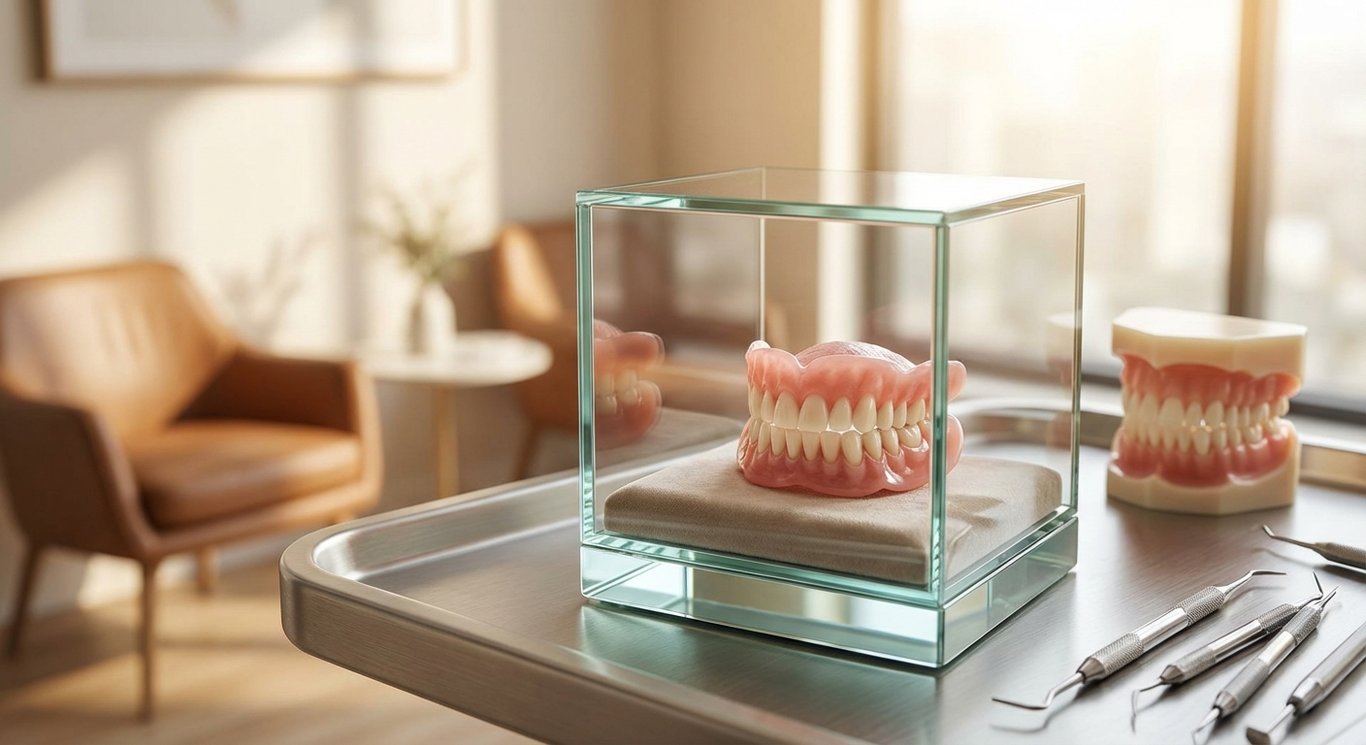
Dentures are classic, removable dental appliances designed to replace multiple missing teeth and restore the appearance of your smile. Depending on your specific needs, you might opt for a partial denture to fill in a few gaps or a full set to replace an entire arch of teeth. They are typically crafted from an acrylic base colored to look like natural gums, with realistic-looking artificial teeth attached. Because they are completely removable, you can easily take them out for cleaning and sleeping.
The process of getting fitted for dentures is entirely non-surgical and generally takes about three to six weeks. Your dentist will take a series of precise impressions and measurements of your jaw to ensure the final appliance fits as comfortably as possible. You can choose between conventional dentures, which are fitted after your gums have fully healed from any extractions, or immediate dentures, which are placed right away so you are never without teeth. This straightforward fitting process makes dentures an accessible option for almost anyone.
While dentures are incredibly adaptable for replacing many teeth at once, they do come with long-term structural challenges. Because they simply rest on top of the gums, they do not provide any stimulation to the underlying jawbone. Over time, this lack of stimulation leads to noticeable bone loss, which eventually changes the shape of your jaw and face. As the jawbone shrinks, dentures that once fit perfectly will start to lose their stability, requiring adjustments to keep them secure.
Pros and Cons of Dentures
Dentures bring several appealing advantages to the table, especially for those on a tight budget. They boast the lowest upfront cost of all tooth replacement options, making them highly accessible. The process is completely non-invasive, requiring no surgery and no permanent alteration of your remaining healthy teeth. Plus, they are incredibly versatile, capable of replacing anything from a few missing teeth to an entire mouthful with a single appliance.
Despite their affordability, the cons of dentures can significantly impact your daily life. Because they are not anchored into the jaw, they are prone to slipping or clicking while you eat and speak, often requiring messy adhesives to stay in place. They also offer the least natural feel of all the options and typically need to be relined or completely replaced every 5 to 10 years as your jawbone accelerates its shrinking process. Finally, the requirement to remove and clean them daily can be a tedious chore for many patients.
Comparing Dental Implants, Bridges, and Dentures
When comparing the stability and comfort of these three options, there is a clear hierarchy. Dental implants reign supreme, offering the most natural, rock-solid stability because they are fused directly into your skeleton. Bridges are also fixed and stable, but their strength is entirely reliant on the health of the neighboring teeth holding them up. Dentures, on the other hand, are the least stable option, as they merely rest on the gums and can shift around during daily activities.
Longevity is another major factor where these treatments differ significantly. Dental implants are a true long-term investment, often lasting 25 years or even the rest of your life with good oral hygiene. Dental bridges have a respectable but shorter lifespan, typically requiring replacement every 7 to 15 years due to wear and tear. Dentures have the shortest lifespan of the bunch, usually needing to be swapped out or professionally relined every 5 to 10 years as the shape of your mouth changes.
The impact each option has on your bone health and adjacent teeth is perhaps the most critical medical distinction. Implants are the only option that actively preserves your jawbone while completely sparing your neighboring teeth from damage. Bridges unfortunately require the irreversible grinding down of healthy neighbor teeth and do nothing to stimulate the bone beneath the missing tooth. Dentures are the hardest on your bone health, as the pressure they place on the gums can actually accelerate bone loss over time.
Finally, daily maintenance and aesthetic outcomes vary widely across the three choices. Implants are the easiest to care for, as you simply brush and floss them exactly like your natural teeth, and they offer the most lifelike appearance. Bridges look great but require special flossing tools, like threaders, to clean the tricky spaces underneath the artificial tooth. Dentures demand the most specialized care, requiring daily removal, soaking in special solutions, and careful brushing to keep them clean and odor-free.
Cost Comparison: Implants, Bridges, and Dentures
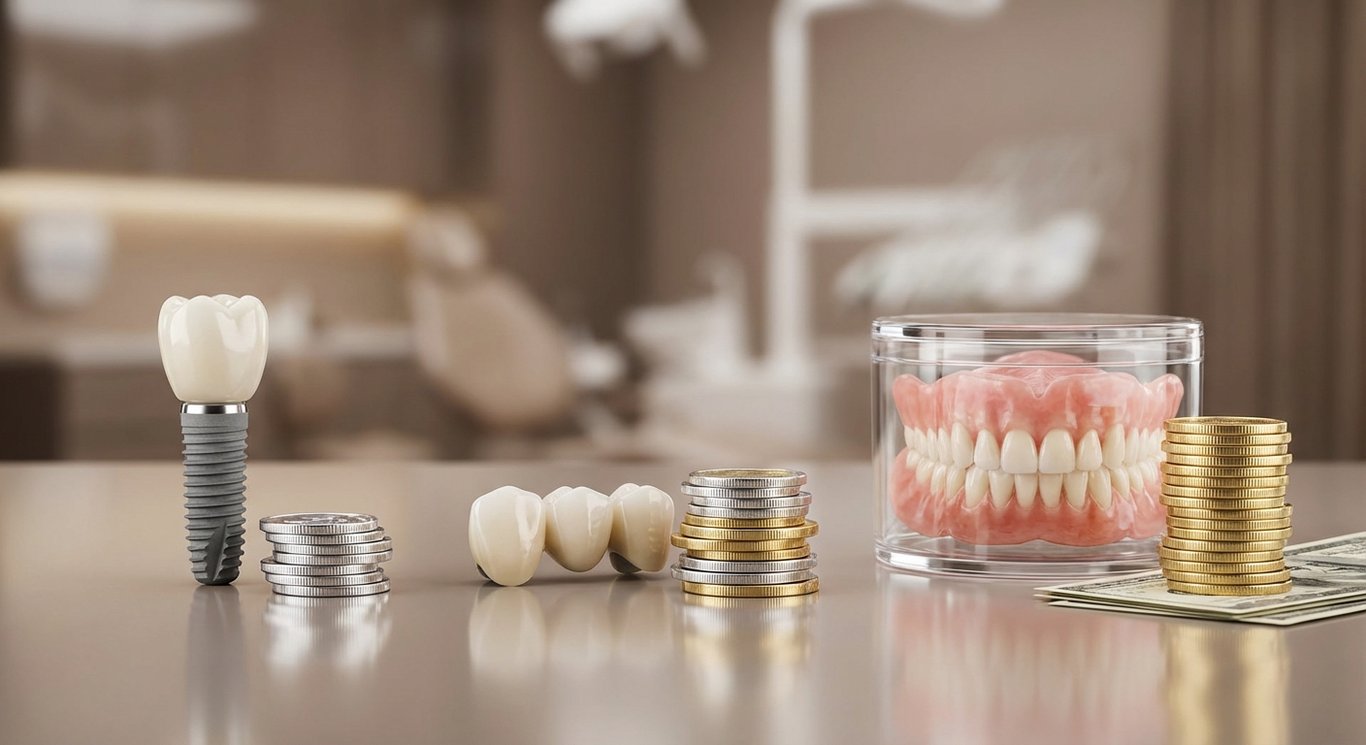
When looking at upfront costs, the price tags for these treatments reflect the complexity of the procedures. Dental implants carry the highest initial price, generally costing between $3,000 and $6,000 for a single tooth. Dental bridges fall comfortably in the middle, offering a moderate price point that is more manageable for many budgets. Dentures boast the lowest upfront cost by far, making them the most wallet-friendly immediate solution for replacing missing teeth.
However, the financial picture shifts dramatically when you evaluate long-term costs. Because dental implants are incredibly durable and rarely need replacing, their lifetime cost is often the lowest of the three. Conversely, bridges and dentures may seem cheaper at first, but they become more expensive over time. The recurring costs of repairs, relines, and complete replacements for bridges and dentures can easily add up over the decades.
Insurance coverage and a 10-year financial view should also play a role in your decision-making process. While dental insurance coverage varies wildly, many plans offer partial coverage for bridges and dentures, though they may cap benefits for implants. Even with less insurance help upfront, when you look at the costs over a 10-year period, implants frequently emerge as the best overall value. Investing a bit more initially can save you from a cycle of continuous dental expenses in the future.
Factors to Consider When Choosing
Selecting the right tooth replacement involves weighing several highly personal factors. You must consider the total number of missing teeth you have, the current density of your jawbone, and your overall physical health. Your personal budget and your desired timeline for completing the dental work are equally important elements to factor in. Balancing these practical considerations will help narrow down which treatment aligns best with your current situation.
Beyond the clinical factors, your daily lifestyle needs should heavily influence your final choice. Think about how much stability you need to confidently eat your favorite crunchy foods or speak without worrying about a shifting appliance. You should also prioritize your long-term oral health goals, deciding how important bone preservation and protecting your remaining natural teeth are to you. Ultimately, your choice should empower you to live your life without constantly thinking about your teeth.
Because every mouth is entirely unique, making this decision should never be done alone. It is absolutely essential to consult with your dentist for a personalized, comprehensive assessment. They will take detailed X-rays to evaluate your bone levels and discuss the pros and cons of each option specifically as they relate to your mouth. With professional guidance, you can make a confident, informed choice that suits your smile perfectly.
Hybrid Options: Implant-Supported Bridges and Dentures
If you are missing multiple teeth and want the best of both worlds, hybrid options like implant-supported bridges or dentures might be the perfect fit. These innovative solutions combine the rock-solid stability of dental implants with the multi-tooth replacement capabilities of bridges and dentures. Instead of replacing every single missing tooth with an individual implant, your dentist can strategically place just a few implants to securely anchor a larger prosthetic in place. This provides a secure, non-slip fit that traditional dentures simply cannot match.
The benefits of these hybrid solutions make them an incredibly attractive alternative to traditional methods. They strike an excellent balance between cost and comfort, giving you the secure feel of implants without the massive price tag of replacing a full mouth of individual teeth. Most importantly, because they still utilize titanium posts, they actively help preserve your jawbone health. For many patients, implant-supported options represent the ultimate sweet spot in modern restorative dentistry.
FAQ
Do dental bridges damage healthy teeth?
Yes, traditional bridges do require the permanent grinding down of the healthy adjacent teeth to make room for the supporting crowns. While this provides a strong anchor for the bridge, removing that protective enamel permanently alters those teeth. Consequently, this process increases the long-term risk of tooth decay and the potential need for root canals on those specific abutment teeth.
Are dentures uncomfortable?
Dentures can sometimes feel less stable and slightly uncomfortable, especially during the initial adjustment period. Because they rest on the gums, they can occasionally cause slipping, minor sore spots, or temporary speech issues. However, it is worth noting that modern materials and advanced fitting techniques have vastly improved the overall comfort and look of today's dentures compared to those from decades past.
Can I switch from dentures to implants later?
Yes, many patients successfully transition from wearing removable dentures to getting dental implants later on. Upgrading to implants is a very common path for those who eventually desire better chewing stability and freedom from messy adhesives. Keep in mind, however, that if you have worn dentures for a long time, you may need a bone graft to rebuild the jawbone before implants can be placed.
How long do dental implants last?
Dental implants are renowned for their incredible longevity, typically lasting 25 years or more. In fact, for many patients, the titanium implant post will last for an entire lifetime. Achieving this impressive lifespan simply requires maintaining excellent daily oral hygiene and keeping up with regular professional dental checkups.
Is bone grafting always needed for implants?
No, bone grafting is not a mandatory step for every single dental implant procedure. It is only required if your jawbone lacks the necessary thickness or density to securely hold the titanium post in place. If your bone is healthy and robust, the implant can be placed directly, and it will actually go to work preserving that healthy bone mass for years to come.
Conclusion
To summarize the key takeaways, your choice of tooth replacement comes down to your unique priorities. Dental implants offer the most natural, durable solution available, actively preserving your jawbone and protecting your remaining teeth. Bridges provide a fantastic, quick fixed replacement, but they do come at the cost of altering your neighboring teeth. Meanwhile, dentures serve as an affordable, non-invasive short-term fix, though they eventually lead to bone loss and instability. Ultimately, you should choose the option that best aligns with your health status, budget, and lifestyle needs for optimal results.
Now that you understand your options, it is time to take the next step toward reclaiming your smile. Schedule a consultation with your dentist today to evaluate Dental Implants vs. Bridges vs. Dentures: Choosing the Right Tooth Replacement Option for You through comprehensive exams and personalized advice for a confident smile.