Beyond the Drill: How Technology is Reshaping the Dental Experience
Published 18 min read
Introduction: What "Beyond the Drill" Means in Modern Dentistry
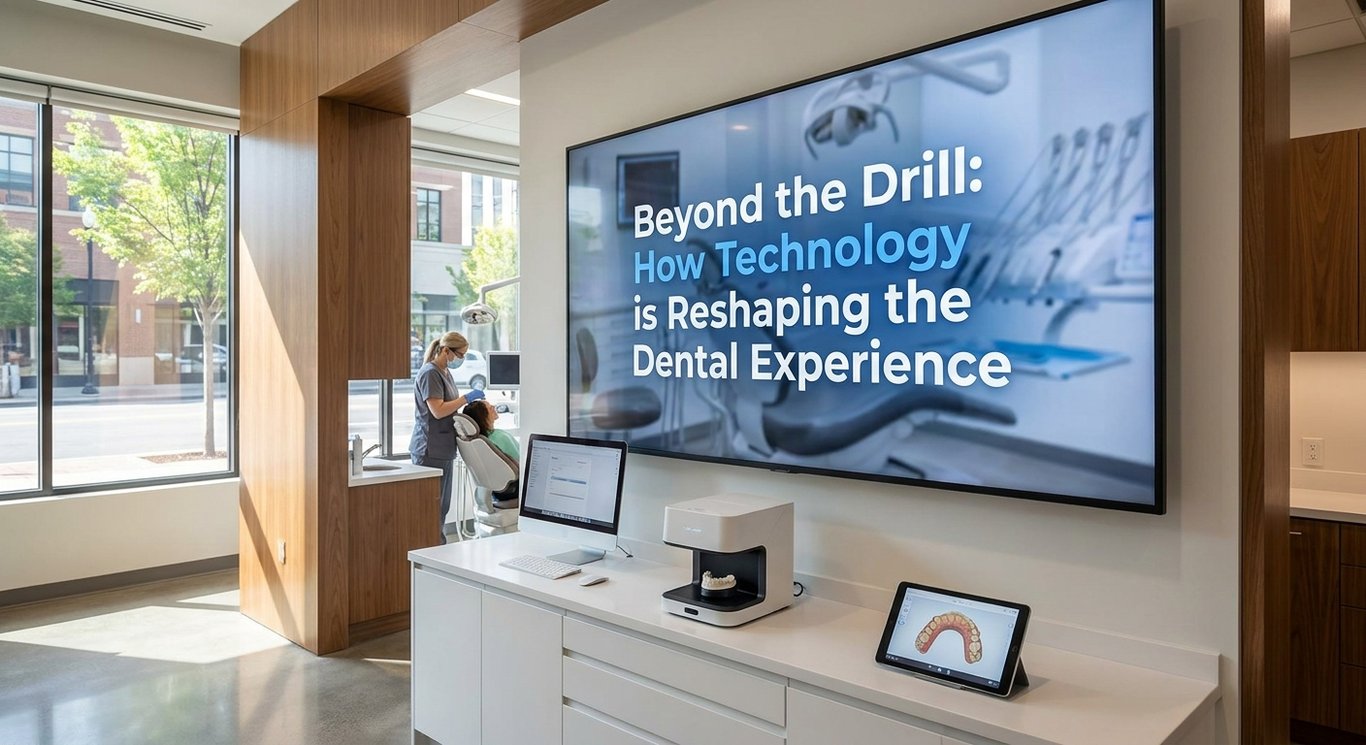
For a long time, the dental office meant one thing to most people: the sound of a drill, the smell of antiseptic, and a fair amount of anxiety. That image is changing fast. Modern dentistry is moving well beyond the traditional model of drilling and filling, shifting toward a more digital, preventive, and patient-centered approach. Technology is now improving nearly every part of the dental experience, from how dentists diagnose problems to how patients schedule appointments and understand their treatment options. The result is care that is faster, more precise, and a lot easier to sit through.
This article takes a close look at the biggest technologies currently reshaping dental care, why both patients and practices are embracing them, and what these changes actually mean for the person sitting in the chair. Whether you are curious about AI-assisted diagnosis, digital impressions, teledentistry, or virtual reality in the waiting room, this piece covers it all. By the end, you will have a much clearer picture of what modern dentistry looks like and why the phrase "beyond the drill" is more than just a catchy slogan.
What Is Digital Dentistry?
Digital dentistry is a broad term that refers to the use of digital and computer-based technologies to perform dental procedures and improve care. In simple terms, it means replacing many traditional, manual processes with tools that are faster, more accurate, and easier to use. This includes digital X-rays and imaging, intraoral scanners that create 3D models of your teeth, AI-assisted software that helps dentists spot problems in images, digital treatment planning platforms, and teledentistry tools that allow remote consultations. Together, these technologies form a connected ecosystem that supports better decision-making at every step of care.
What makes digital dentistry particularly powerful is how well these tools work together across the entire patient journey. A patient might start with a virtual consultation, move into a digital scan at their first in-person visit, have their treatment planned using AI-supported imaging, and then receive automated follow-up reminders after the procedure. Each step connects to the next, making visits more efficient and the overall experience far easier to navigate. For patients, this means fewer surprises and more clarity about what is happening with their oral health.
How Technology Is Improving the Patient Experience
One of the most immediate ways technology is changing dentistry is by making the experience more comfortable and less stressful. Digital impressions eliminate the need for messy putty molds that many patients find uncomfortable. Virtual consultations let people get professional guidance without leaving home. Interactive patient education tools, including 3D animations and digital visuals, help people understand exactly what a procedure involves before it starts. All of these changes add up to shorter appointments, less discomfort, and a significant reduction in the anxiety that keeps many people from seeking care in the first place.
Beyond the physical experience, AI and digital tools are also changing how dental practices communicate with their patients. Personalized messaging, automated educational content, and AI-powered chat tools can answer routine questions, explain treatment options in plain language, and help patients feel more informed and in control. Instead of leaving the office with a printed pamphlet they may never read, patients can access clear, tailored information whenever they need it. That kind of ongoing support makes a real difference in how people engage with their own oral health.
It is worth noting that many authoritative sources in dental health point to improved patient satisfaction as one of the most significant benefits of adopting modern dental technology. Better communication, more convenient access to care, and a more transparent treatment process all contribute to patients feeling more confident in their dental provider. When people trust the process and understand what is happening, they are more likely to follow through with recommended care, which ultimately leads to better health outcomes for everyone involved.
Digital Impressions and Intraoral Scanning
Digital impressions are exactly what they sound like: a digital version of the traditional mold-taking process. Instead of biting down into a tray of thick, gooey material and waiting for it to set, patients have a small wand-like scanner moved gently around their mouth. The scanner captures thousands of images per second and stitches them together into a precise 3D model of the teeth and gums. For patients who have a strong gag reflex or simply find traditional impressions unpleasant, this is a genuinely welcome change. The process is faster, cleaner, and significantly more comfortable.
From the practice side, intraoral scanning streamlines the entire workflow in ways that benefit both the team and the patient. Digital scans can be sent instantly to dental labs, eliminating the shipping delays that come with physical molds. The precision of digital models also tends to improve the fit of restorations like crowns, bridges, and veneers, as well as orthodontic aligners. Fewer remakes, fewer adjustments, and less chair time all point to a better experience on both ends of the dental chair.
Artificial Intelligence in Diagnosis and Treatment Planning
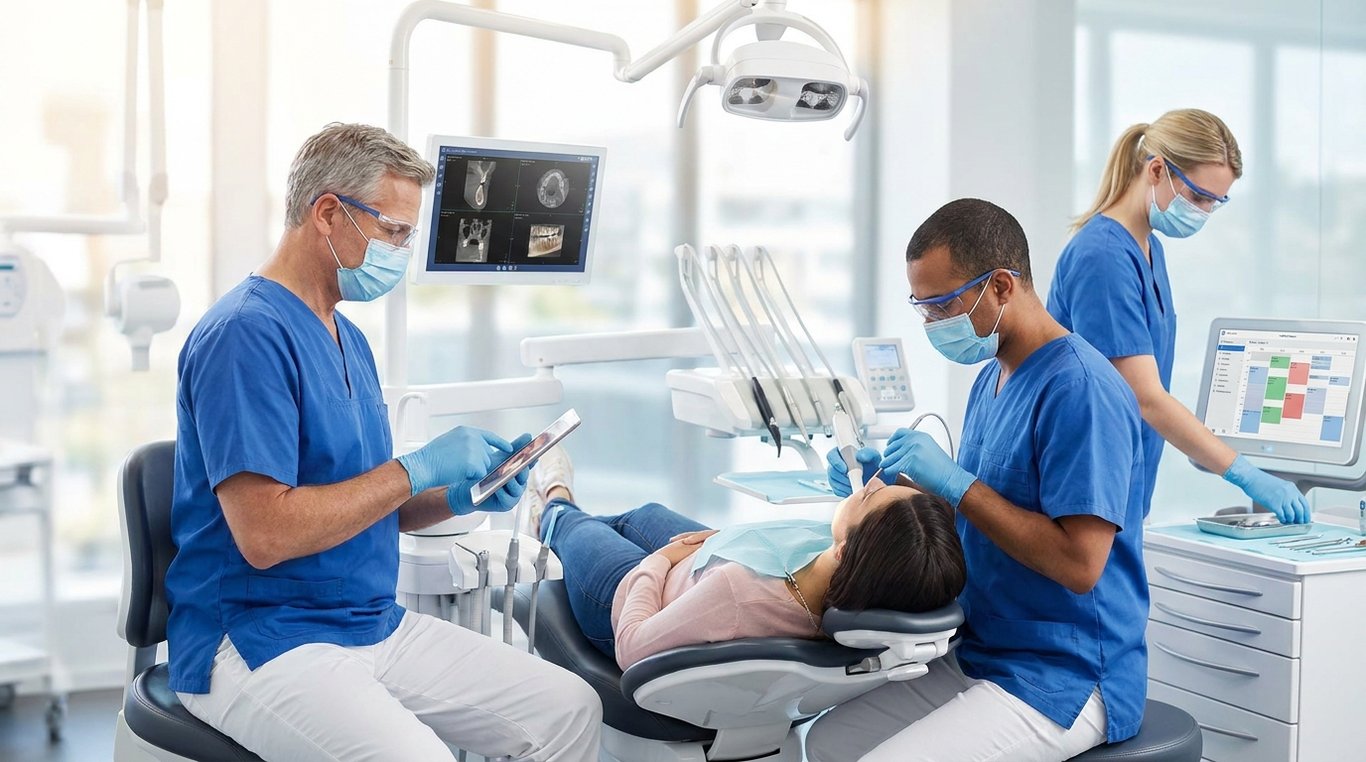
Artificial intelligence is making its way into dental diagnosis in some genuinely impressive ways. AI-powered software can analyze dental X-rays and images to flag potential cavities, bone loss, or other concerns that might be easy to miss on a quick visual review. These tools can also assist with treatment planning by pulling together data from imaging, patient history, and clinical records to help dentists map out the most effective course of action. Risk assessment tools powered by AI can even help identify patients who may be more likely to develop certain conditions, allowing for earlier intervention.
Many discussions around AI in dentistry highlight its ability to improve diagnostic confidence and support more personalized care. When a dentist has access to AI-assisted analysis alongside their own clinical judgment, they are working with more information than ever before. This does not mean AI is making the decisions, but it does mean that the decision-making process is better supported. The result is often faster, more accurate diagnoses and treatment plans that are tailored more closely to each individual patient's needs.
That said, it is important to keep a balanced perspective. AI in dentistry is designed to assist clinicians, not replace them. No algorithm can replicate the full scope of what a trained dentist does, from building patient relationships to performing hands-on procedures to exercising clinical judgment in complex situations. Accuracy, validation, and human oversight remain absolutely essential. The best outcomes happen when AI tools are used responsibly, with the clinician firmly in charge of every final decision.
Teledentistry and Remote Consultations
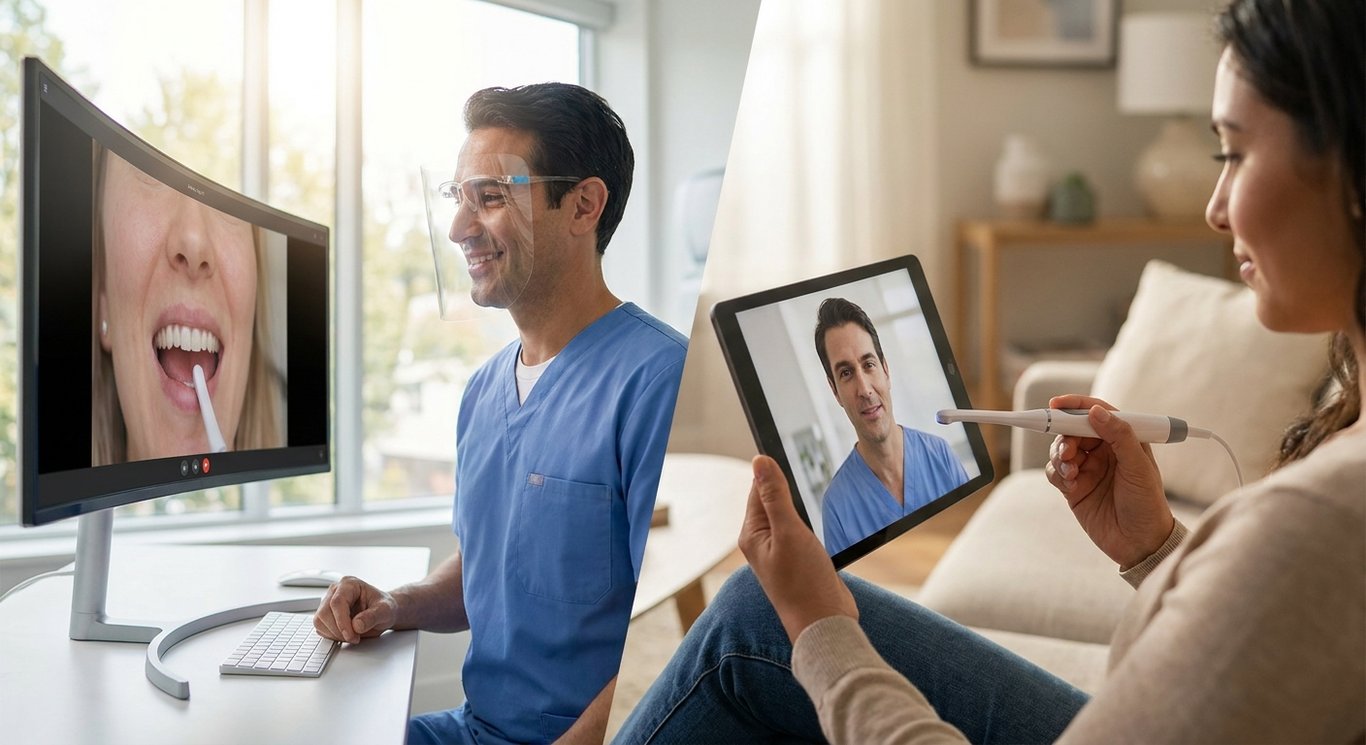
Teledentistry refers to the use of digital communication tools to deliver dental care or guidance remotely. This can include video consultations, photo-based screenings, real-time triage for dental concerns, follow-up appointments after procedures, and patient education sessions. While teledentistry cannot replace every in-person visit, it fills a meaningful gap for situations where a patient simply needs guidance, reassurance, or a professional opinion before deciding whether to come in. It is a practical, flexible option that fits well into the way many people manage their healthcare today.
The convenience factor is one of teledentistry's biggest selling points. For busy professionals who cannot easily take time off work, for people in rural or underserved areas who live far from a dental office, and for patients who need quick answers about a new symptom or post-procedure concern, remote consultations provide real value. Access to professional dental guidance should not depend entirely on geography or schedule, and teledentistry is helping close that gap in a meaningful way.
Patient Communication, Chatbots, and Automated Follow-Up
Modern dental practices are increasingly using AI-powered chatbots, automated reminder systems, and digital communication platforms to stay connected with patients between visits. These tools can handle appointment scheduling, send pre-visit instructions, answer frequently asked questions, and follow up after procedures to check in on recovery. For patients, this means getting the information they need without having to wait on hold or play phone tag with the front desk. For practices, it means a more organized, responsive communication system that keeps things running smoothly.
The impact of these tools on patient follow-through is significant. Missed appointments are a persistent challenge in dental care, and automated reminders have been shown to reduce no-show rates considerably. Beyond scheduling, chatbots can answer common questions about pain management, post-procedure care, and what to expect from upcoming treatments, even at 10 p.m. when the office is closed. That kind of around-the-clock support helps patients feel cared for and keeps them engaged with their oral health in a way that sporadic in-person visits alone cannot achieve.
Virtual Reality, Augmented Reality, and Anxiety Reduction
Dental anxiety is a very real barrier to care for a large portion of the population. Virtual reality (VR) and augmented reality (AR) are emerging as surprisingly effective tools for addressing this problem. Some practices are using VR headsets to transport anxious patients to calming environments during procedures, giving them something to focus on other than the sounds and sensations of dental work. Others use VR as a preparation tool, allowing patients to walk through a procedure virtually before it happens, which can significantly reduce fear by replacing the unknown with familiarity.
Beyond anxiety reduction, these technologies are also being used for patient education and treatment visualization. Augmented reality tools can overlay digital information onto real-world images, helping patients see what their teeth look like now versus what they could look like after treatment. This kind of visual storytelling makes it much easier for patients to understand and commit to a treatment plan. When something feels less intimidating and more understandable, people are far more likely to say yes to the care they need.
Personalized Treatment and Predictive Care
One of the most exciting shifts in modern dentistry is the move toward truly personalized care. Digital tools give dentists access to a much richer set of data than was available even a decade ago. High-resolution scans, detailed imaging, comprehensive digital records, and AI-assisted analysis all combine to give clinicians a more complete picture of each patient's unique oral health situation. Rather than applying a one-size-fits-all approach, dentists can now tailor treatment plans based on what the data actually shows for that specific individual.
Predictive care takes this a step further by using technology to identify risks before they become problems. Digital monitoring tools can track subtle changes in the teeth and gums over time, flagging early signs of decay, gum disease, or bite issues that might not yet be causing symptoms. This shifts the focus from reactive treatment, fixing problems after they develop, to proactive care that catches issues early and keeps them from getting worse. For patients, that often means less invasive treatment, lower costs over time, and better long-term oral health outcomes.
Faster, More Efficient Workflows for Dental Practices
Behind the scenes, digital technology is transforming how dental practices operate on a day-to-day basis. Digital workflows reduce the number of manual steps involved in everything from patient intake to lab coordination to billing. When records, images, and treatment plans are all stored and shared digitally, there is less room for miscommunication, lost paperwork, or delays. Staff can spend less time on administrative tasks and more time on patient care, which makes the entire appointment flow smoother for everyone in the building.
Efficiency gains also have a direct impact on costs and capacity. When digital tools reduce the time needed for impressions, lab communication, and case preparation, practices can see more patients without sacrificing quality. Faster turnaround times for restorations mean patients spend less time in temporary crowns or waiting for follow-up appointments. And when complex cases can be planned and coordinated digitally with greater precision, there are fewer delays and complications along the way. That is good for the practice's bottom line and even better for the patient's experience.
Privacy, Safety, and Trust in Dental Technology
As dental practices collect and use more digital data, questions around privacy and safety become increasingly important. Patient records, imaging data, and health information stored in digital systems need to be protected against unauthorized access and data breaches. AI tools used for diagnosis must be validated for accuracy and tested across diverse patient populations to ensure they do not introduce bias or produce unreliable results. Informed consent is also a key consideration, as patients have a right to know when and how digital tools, including AI, are being used in their care.
Authoritative guidance in this space consistently emphasizes the importance of compliance with data protection regulations, transparency about how technology is used, and keeping the clinician responsible for all final decisions. Technology should support trust, not undermine it. Practices that are open about the tools they use, how patient data is protected, and what role AI plays in the care process are better positioned to build the kind of lasting patient relationships that good dentistry depends on.
What Patients Commonly Ask About Dental Technology
When people search online about dental technology, a few questions come up again and again. Is it safer than traditional dentistry? Does it hurt less? Is it going to cost more? And perhaps most importantly, does it mean the dentist is being replaced by a machine? These are completely reasonable things to wonder about, and they reflect the natural uncertainty that comes with any significant change in how healthcare is delivered. The good news is that most of these concerns have straightforward, reassuring answers once the technology is explained clearly.
Understanding what dental technology actually does, and what it does not do, goes a long way toward building confidence in modern care. Digital tools are designed to make procedures more accurate, more comfortable, and more efficient. They are not designed to replace the human expertise, judgment, and communication that make a good dentist irreplaceable. When patients have access to clear, honest information about the tools being used in their care, they are better equipped to make informed decisions and feel genuinely comfortable with the process.
What the Future of Dental Technology Looks Like
The pace of innovation in dental technology shows no signs of slowing down. In the near future, AI systems will become more sophisticated, capable of detecting even subtler signs of disease and providing more nuanced treatment recommendations. Imaging technology will continue to improve in resolution and speed, giving clinicians an even clearer view of what is happening beneath the surface. Remote care capabilities will expand, making it possible for more people to access quality dental guidance regardless of where they live. And digital workflows will become increasingly connected, allowing seamless coordination between practices, specialists, and labs.
The long-term direction of all this innovation points clearly toward dentistry that is more preventive, more personalized, and more comfortable than what most people have experienced in the past. The goal is not just to fix problems faster but to prevent them from developing in the first place. As technology continues to evolve, the dental experience will increasingly feel less like something to endure and more like a proactive partnership between patient and provider, built around data, communication, and individualized care.
FAQ: Beyond the Drill: How Technology is Reshaping the Dental Experience
The questions patients ask most often about dental technology tend to cluster around a few key themes: comfort, cost, safety, and the role of the dentist. This FAQ section is designed to address those questions directly, in plain language, without the jargon that can make medical topics feel confusing or intimidating. Whether you are a long-time dental patient or someone who has been avoiding the dentist for years, these answers are meant to give you a clearer, more confident understanding of what modern dental care looks like.
The answers below are practical, concise, and focused on what matters most to real patients. If you are wondering whether new technology will make your next visit more comfortable, whether it will affect your bill, or whether it changes the role of your dentist, you will find honest, straightforward answers here. The goal is to replace uncertainty with clarity, and hesitation with confidence.
1. What technologies are changing dentistry the most?
The most visible changes in modern dentistry are being driven by a handful of key technologies. Digital impressions and intraoral scanners have replaced messy putty molds with fast, comfortable 3D scanning. AI-assisted diagnostic tools are helping dentists catch problems earlier and plan treatment more precisely. Teledentistry platforms are making professional guidance accessible without requiring an in-person visit. Automated reminders and AI chatbots are improving communication between patients and practices. And advanced digital imaging tools are giving clinicians a much clearer picture of oral health than traditional X-rays alone could provide. Together, these innovations are changing nearly every part of the dental experience.
2. Is digital dentistry more comfortable than traditional dentistry?
For most patients, yes. Many of the tools used in digital dentistry are specifically designed to reduce the discomfort associated with traditional procedures. Digital impressions eliminate the gagging and mess of putty molds. Faster appointment workflows mean less time in the chair. AI-assisted planning can reduce the need for repeat procedures by improving accuracy the first time around. Virtual reality tools can help anxious patients stay calm during treatment. None of this means every procedure is painless, but the overall experience tends to be significantly easier to tolerate, especially for people who have historically struggled with dental anxiety.
3. Can AI replace a dentist?
No. AI can assist a dentist by analyzing images, flagging potential concerns, and supporting treatment planning, but it cannot replace the clinical judgment, hands-on skill, and human communication that define good dental care. A licensed dentist is responsible for every diagnosis and every treatment decision. AI is a tool that makes the dentist's work more informed and efficient, not a substitute for their expertise. Think of it the way you might think of a GPS: it provides useful guidance, but the driver is still the one behind the wheel.
4. Does dental technology make treatment more expensive?
It depends on the technology and the practice, but the relationship between technology and cost is more nuanced than it might seem at first. Some digital tools do come with higher upfront costs that practices may pass on to patients. However, technology can also reduce the number of appointments needed, improve the accuracy of restorations so they last longer, and catch problems earlier when they are less expensive to treat. Over the long term, many patients find that technology-supported care actually delivers better value, even if individual procedures look similar in price to traditional options.
5. Is teledentistry a substitute for in-person visits?
Teledentistry is a valuable complement to in-person care, but it is not a complete substitute. It works well for initial screenings, follow-up consultations, post-procedure check-ins, and answering questions that do not require a physical exam. However, most dental procedures, including cleanings, fillings, extractions, and restorations, still require the patient to be physically present. Teledentistry is best thought of as a convenient way to access professional guidance and triage concerns quickly, with in-person visits reserved for the hands-on care that only a dental office can provide.
Conclusion: Why "Beyond the Drill" Matters for Patients and Practices
Dental technology is not just changing how dentists work; it is fundamentally reshaping what it means to receive dental care. From the moment a patient books an appointment to the follow-up message they receive after a procedure, digital tools are making every step more efficient, more comfortable, and more personalized. AI is helping clinicians make more confident diagnostic decisions. Digital workflows are reducing delays and improving coordination. And patient communication tools are keeping people informed and engaged in ways that traditional office visits alone never could. The shift "beyond the drill" is not a marketing phrase. It is a genuine transformation in how oral health care is delivered and experienced.
If you have been putting off a dental visit because of anxiety, inconvenience, or uncertainty about what modern dentistry actually looks like, now is a great time to take a closer look. Ask your dentist what digital tools they use and how those tools benefit your care. Explore whether teledentistry is available for your routine questions or follow-ups. Stay curious about the new options that are making dental care easier, faster, and more effective than ever before. Beyond the Drill: How Technology is Reshaping the Dental Experience is ultimately about one thing: smarter, more patient-friendly dentistry that puts your comfort, your health, and your understanding at the center of every visit.