Beyond the Chair: The Real-Life Impact of Dental Implants on Your Confidence and Lifestyle
Published 29 min read
Understanding Dental Implants and How They Work
Dental implants are a modern tooth replacement solution made up of three main components: the implant post, the abutment, and the artificial restoration. The implant post is a small titanium screw that is surgically placed into the jawbone, acting as the foundation for everything above it. The abutment is a connector piece that sits on top of the post, and the final restoration — which can be a crown, bridge, or denture — is attached to the abutment to complete the visible part of the replacement tooth or teeth.
What makes dental implants unique is that the implant post actually replaces the root of the missing tooth, not just the visible portion. Over time, the titanium post bonds with the surrounding jawbone through a natural process called osseointegration. This fusion creates a stable, secure base that mimics the function of a real tooth root, allowing the replacement teeth above to handle everyday tasks like chewing and speaking without shifting or slipping.
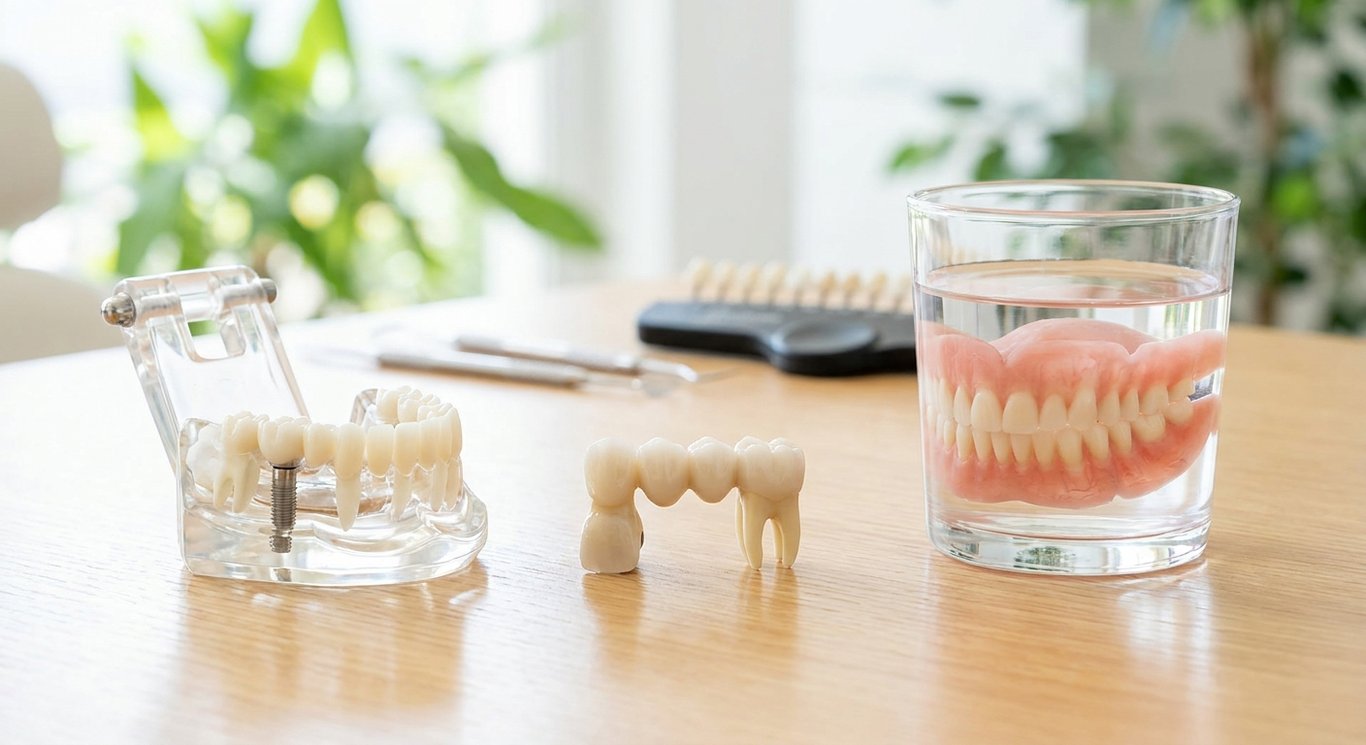
Compared to traditional bridges and removable dentures, dental implants work quite differently. A bridge relies on the neighboring teeth for support, which often means those healthy teeth need to be filed down to anchor the bridge in place. Removable dentures, on the other hand, sit on top of the gums and can move around during use. Implants stand on their own, don't require altering adjacent teeth, and are designed to stay fixed in the mouth — making them a structurally distinct option from both of those alternatives.
Why Missing Teeth Affect More Than Your Smile
Losing a tooth — or several teeth — affects a lot more than just the way your smile looks in photos. Chewing becomes harder, especially with tougher foods like meat or raw vegetables. Speech can also be affected, since teeth play a role in how certain sounds are formed. Beyond function, the gap left by a missing tooth can cause daily discomfort and make simple things like eating a meal feel more complicated than they should be.
There are also structural consequences that happen beneath the surface. When a tooth is lost, the jawbone in that area no longer receives the stimulation it needs from chewing forces, which can cause it to gradually shrink — a process known as bone resorption. At the same time, neighboring teeth may start to drift toward the empty space, which can throw off your bite and create alignment problems over time. These changes can compound each other, making the long-term effects of tooth loss more significant than many people initially expect.
Beyond the physical effects, tooth loss can take a real emotional toll. Many people feel embarrassed about gaps in their smile and start avoiding situations where others might notice — skipping social events, laughing with their hand over their mouth, or shying away from photos altogether. This kind of self-consciousness can quietly chip away at confidence and lead to social withdrawal. It's a side of tooth loss that doesn't always get talked about, but for many people, it's the part that affects their daily life the most.
How Dental Implants Can Improve Self-Confidence
One of the most commonly reported benefits of dental implants is a renewed sense of comfort in everyday social situations. When replacement teeth look natural and feel stable, patients often find it easier to smile freely, speak without hesitation, and engage in conversations without worrying about how their teeth look. That kind of ease — the ability to just be present without constantly thinking about your teeth — can make a meaningful difference in how someone carries themselves day to day.
There's also a psychological difference between wearing a removable appliance and having implant-supported teeth. Dentures that shift or click during conversation can create a constant background anxiety — a nagging worry that something might move at the wrong moment. Implant-supported restorations are designed to stay in place, which removes that layer of uncertainty. For many patients, simply knowing that their teeth aren't going to move gives them a level of mental comfort that removable options can't always provide.
That said, it's important to be realistic about what dental implants can and can't do for confidence. Results vary from person to person, and the emotional benefits depend on many factors — including how well the restoration fits, how natural it looks, and how comfortable the patient becomes with it over time. A well-executed treatment plan, honest communication with your dental provider, and realistic expectations going in are all essential parts of achieving an outcome you'll actually feel good about.
Eating, Speaking, and Everyday Comfort After Treatment
One of the practical advantages of stable, implant-supported teeth is the ability to chew a wider variety of foods with greater confidence. People who have struggled with loose or uncomfortable dentures often find themselves avoiding certain foods — things like apples, corn on the cob, or chewy bread — because chewing them is difficult or embarrassing. Implant-supported restorations, being anchored to the jawbone, can handle more chewing force, which may open up a broader range of food choices for many patients.
Speech is another area where implants can make a difference. Removable dentures that don't fit perfectly can shift while talking, causing slurring, clicking sounds, or difficulty forming certain words. Because implant-supported teeth are fixed in place, they tend to allow for more natural speech patterns. Patients who previously felt self-conscious about how they sounded while speaking often report feeling more at ease in conversations after their implants are in place.
It's worth noting, though, that adaptation takes time. Even well-made restorations may feel unfamiliar at first, and your bite may need adjustments after the final restoration is placed. If something feels off — whether it's the way your teeth come together, pressure in a specific spot, or general discomfort — that's something to bring up with your dentist promptly rather than waiting and hoping it resolves on its own. Getting the fit right is an ongoing part of the process, not a one-and-done event.
Dental Implants and Facial Appearance
When teeth are lost, the jawbone in that area can begin to shrink over time due to lack of stimulation. This bone loss can cause the face to take on a sunken or collapsed appearance, particularly around the cheeks and lower jaw. Because dental implants are placed directly into the jawbone, they provide the kind of stimulation that may help slow this resorption process — supporting the natural contours of the face in a way that a bridge or removable denture sitting on top of the gums cannot fully replicate.
Beyond bone support, the appearance of the restoration itself matters a great deal. A skilled dental team will take care to match the size, shape, shade, and positioning of the replacement tooth or teeth to the patient's existing smile and facial features. When this is done well, the result can look remarkably natural — blending in seamlessly rather than standing out as an obvious replacement. This kind of aesthetic planning is a critical part of the process and deserves just as much attention as the surgical side of treatment.
However, it's important to set appropriate expectations. While dental implants can restore missing teeth and help support facial structure, they are not a comprehensive solution for facial aging. They won't eliminate wrinkles, restore lost volume in soft tissue, or guarantee a specific cosmetic outcome. The goal is to replace what was lost as naturally and functionally as possible — and for most patients, that alone can be a significant improvement — but implants are a dental treatment, not a cosmetic procedure in the broader sense.
Who May Be a Candidate for Dental Implants?
Not everyone is automatically a candidate for dental implants, but many adults who are missing one or more teeth may qualify after a thorough evaluation. The key factors a dentist looks for include having enough jawbone to support the implant post, healthy gum tissue, and a commitment to maintaining good oral hygiene before and after treatment. Overall health also plays a role, since the body needs to be capable of healing well from a surgical procedure.
Certain factors can complicate the process or reduce the likelihood of successful integration. Smoking is one of the most significant risk factors, as it impairs healing and increases the chance of implant failure. Uncontrolled gum disease, poorly managed diabetes, autoimmune conditions, and certain medications — such as those that affect bone density — can also impact how well the body accepts and heals around an implant. This doesn't always mean implants are off the table, but these factors need to be discussed openly and honestly with your dental provider before moving forward.
The evaluation process for implant candidacy is more involved than a typical dental visit. It usually includes dental X-rays or 3D cone beam imaging to assess bone volume and structure, a review of the patient's complete medical history, an examination of the gums and surrounding teeth, and an assessment of the bite. This comprehensive look at the mouth and overall health gives the dental team the information they need to determine whether implants are appropriate and to design a treatment plan that accounts for each patient's individual situation.
In some cases, a patient may want implants but doesn't currently have enough bone in the right area to support them. When that happens, bone grafting may be recommended as a preparatory step. A bone graft involves adding bone material to the jaw to build up the area where the implant will be placed. This adds time to the overall treatment timeline, but it can make implant placement possible for patients who would otherwise not be candidates. Other preparatory procedures, such as treating gum disease or extracting a failing tooth, may also be needed before implant surgery can begin.
The Dental Implant Process From Consultation to Final Restoration
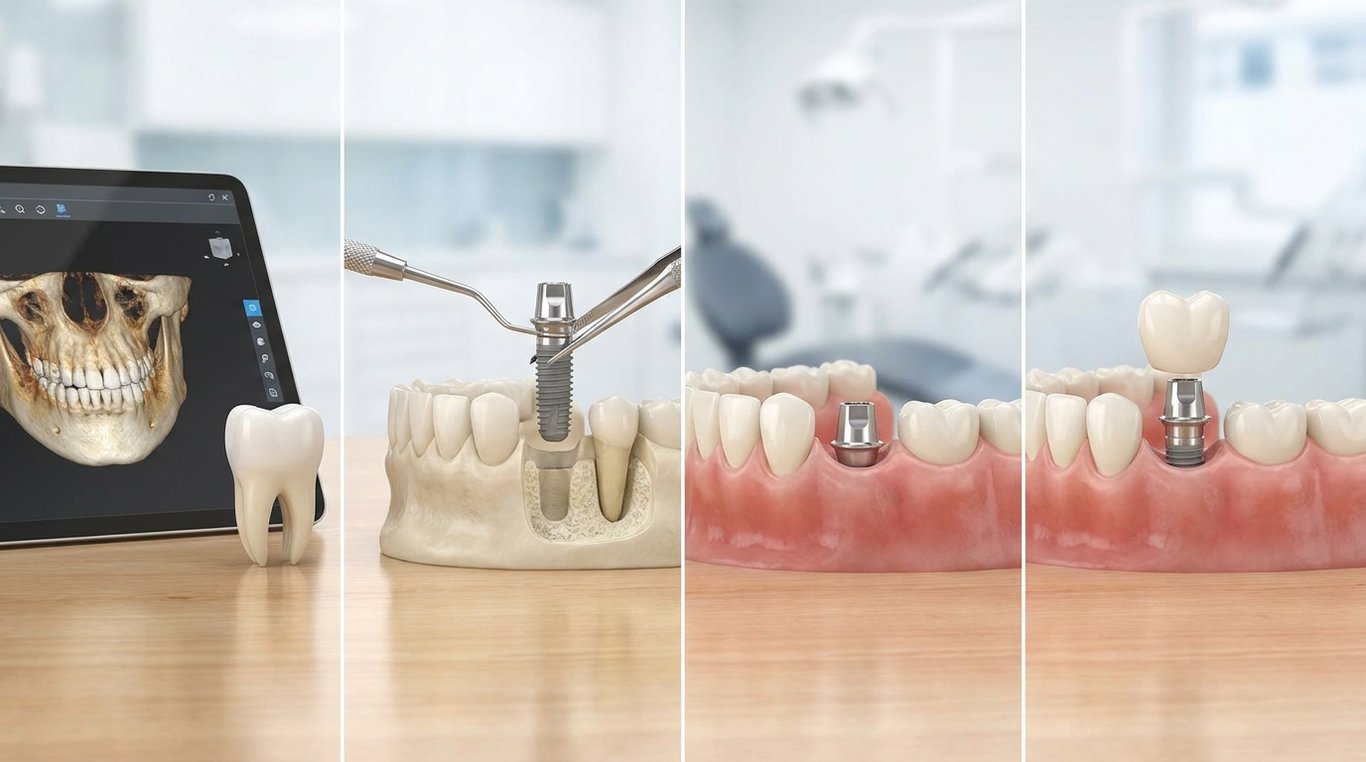
The journey toward dental implants begins with an initial consultation, and this appointment is more involved than it might sound. Your dentist will conduct a thorough examination of your mouth, take diagnostic imaging to assess bone structure, and discuss your goals and concerns. Importantly, this is also when alternatives like bridges or dentures should be presented and compared, so you can make an informed decision about which option is the right fit for your needs, health, and lifestyle.
Once treatment is planned and any preparatory work is complete, the next step is the surgical placement of the implant post. During this procedure, the dentist or oral surgeon makes a small incision in the gum tissue and carefully places the titanium post into the jawbone at the site of the missing tooth. The area is then closed and allowed to begin healing. The implant post serves as the artificial root that will eventually support the visible restoration above the gumline.
After the implant is placed, the healing phase begins — and this is where patience becomes essential. Osseointegration, the process by which the jawbone gradually bonds with the titanium post, takes time. Depending on the patient's bone density, overall health, and the complexity of the procedure, this phase can last anywhere from a few weeks to several months. Rushing this stage isn't an option; the implant needs to be fully stable before the next steps can proceed safely.
Once osseointegration is confirmed, the abutment is attached to the top of the implant post. This small connector piece serves as the link between the post and the final restoration. Impressions or digital scans of the mouth are then taken to create a custom crown, bridge, or denture that is designed to match the surrounding teeth in size, shape, and color. When the restoration is ready, it is attached to the abutment, completing the implant.
Throughout the process, your dentist may provide a temporary restoration to fill the gap while the permanent one is being made or while healing is taking place. This staged approach — moving carefully through each phase rather than rushing to the finish line — is what makes the outcome more predictable and durable. Following your dentist's instructions at every step, from post-surgical care to dietary restrictions during healing, plays a significant role in how well the treatment goes overall.
Recovery: What Real Life May Feel Like After Surgery
It's completely normal to experience some discomfort after implant surgery, and knowing what to expect ahead of time can make the recovery period much less stressful. Most patients experience soreness around the surgical site, some degree of swelling, possible bruising of the gums or face, and mild bleeding in the first day or two. These are typical responses to oral surgery and are not cause for alarm on their own. The intensity of these symptoms varies depending on how many implants were placed and the complexity of the procedure.
Managing recovery well involves following your dentist's specific instructions closely. This usually means sticking to soft foods for a period of time, avoiding pressure or trauma to the surgical area, keeping the area clean without disturbing the healing tissue, and taking any prescribed medications as directed. Activities that could disrupt healing — such as vigorous rinsing, using a straw, or eating hard or crunchy foods too soon — should be avoided. Rest and gentle care go a long way during the early days of recovery.
Full recovery doesn't happen overnight. While the initial soreness and swelling typically improve within the first week or two, complete bone integration takes considerably longer. Depending on the individual's healing capacity, the complexity of the surgery, and whether preparatory procedures like bone grafting were involved, the total healing period before final restoration can range from a few months to over a year. It's a process that requires patience, but the stability that results from proper healing is what makes the long-term outcome worthwhile.
While most recovery experiences are manageable, there are certain warning signs that should prompt a call to your dental office right away. These include pain that gets worse instead of better after the first few days, swelling that persists or increases significantly, unusual numbness or tingling that doesn't resolve, a fever, heavy or ongoing bleeding, or a feeling that the implant itself is loose or moving. These symptoms could indicate an infection, nerve involvement, or early implant failure — all of which need to be evaluated and addressed promptly.
Long-Term Maintenance and Protecting Your Investment
One of the most important things to understand about dental implants is that they require the same level of daily care as natural teeth — actually, they require just as much, if not more, attention. Brushing twice a day, cleaning between teeth with floss or an interdental brush, and using any other tools your dentist recommends are all essential habits for keeping the tissue around your implants healthy. Neglecting oral hygiene doesn't just affect your natural teeth; it directly threatens the long-term success of your implants as well.
Regular professional dental care is equally important. Routine examinations and professional cleanings allow your dental team to monitor the health of the gum tissue around the implant, check bone levels through X-rays, inspect the implant components for any looseness or wear, and assess the condition of the restoration itself. Problems caught early are almost always easier — and less costly — to address than those that are allowed to progress without intervention.
Two conditions that can develop around implants are peri-implant mucositis and peri-implantitis. Peri-implant mucositis is inflammation of the soft tissue surrounding the implant — similar to gingivitis around a natural tooth — and is often reversible with improved hygiene and professional treatment. Peri-implantitis is more serious; it involves inflammation that extends to the bone supporting the implant and can lead to bone loss and implant failure if left untreated. Both conditions are largely preventable with good oral hygiene and regular professional care, which is why skipping dental visits isn't a risk worth taking.
Lifestyle habits also play a significant role in how long an implant lasts. Smoking is one of the most damaging habits for implant longevity, as it impairs blood flow and healing and increases the risk of peri-implantitis. Excessive alcohol consumption, a poor diet, and teeth grinding (bruxism) can all put additional stress on the implant and restoration. If you grind your teeth at night, your dentist may recommend a night guard to protect the implant and surrounding teeth from the forces of grinding — a simple step that can make a real difference in the long run.
Dental Implant Risks, Complications, and Limitations
Like any surgical procedure, dental implant placement carries a set of possible risks that patients should be aware of before moving forward. These include infection at the surgical site, damage to nearby teeth or structures, sinus complications when implants are placed in the upper jaw near the sinus cavities, and nerve irritation that can cause temporary or, in rare cases, longer-lasting numbness or tingling. Inadequate healing — where the body doesn't fully integrate the implant — is also a possibility, particularly in patients with certain health conditions or risk factors.
Even after successful placement and integration, long-term complications can occur. The implant post itself can loosen over time, especially if subjected to excessive bite forces or if bone loss develops around it. The crown, bridge, or denture attached to the implant can fracture or become damaged with use. Gum recession around the implant may expose part of the post, affecting both appearance and health. Bite problems can develop if the restoration isn't properly aligned, and in some cases, the restoration may need to be repaired or replaced.
Certain factors increase the overall risk of complications. Smoking is consistently associated with higher rates of implant failure and infection. Poor oral hygiene allows bacteria to accumulate around the implant, increasing the risk of peri-implantitis. Untreated periodontal disease in the surrounding teeth creates an environment that is not conducive to implant success. Insufficient bone support, whether due to prior bone loss or anatomical limitations, can compromise stability. And patients who don't follow up consistently with their dental provider are more likely to miss early signs of problems that could have been addressed before becoming serious.
Before committing to treatment, patients should feel empowered to ask detailed questions about their individual risk profile. What is the likelihood of success given your specific health history? What are the realistic alternatives if an implant doesn't integrate? What happens next if a complication arises? A trustworthy dental provider will welcome these questions and provide honest, thorough answers — because informed patients who understand what they're getting into tend to have better experiences and outcomes overall.
Comparing Implants With Bridges and Dentures
When comparing dental implants, bridges, and dentures, several key differences stand out. Implants are the only option that replaces the tooth root, providing stability that comes from within the jawbone itself. Bridges are fixed in place but rely on adjacent teeth for support. Removable dentures are the most affordable upfront option but require adhesives, can move during use, and need to be removed for cleaning. In terms of appearance, all three can be made to look natural, but the level of stability and the cleaning requirements differ significantly between them.
One of the most notable distinctions between implants and bridges is what happens to the neighboring teeth. To place a traditional bridge, the teeth on either side of the gap must be shaped and reduced to serve as anchors — a permanent alteration to otherwise healthy teeth. Dental implants don't require this. They stand independently, leaving adjacent teeth untouched. For patients with healthy neighboring teeth, this can be a compelling reason to choose an implant over a bridge, even if the upfront process is more involved.
Removable dentures and implant-supported dentures occupy different ends of the spectrum when it comes to stability and convenience. Traditional removable dentures can be a practical solution, especially for patients who are missing many teeth and may not have sufficient bone for multiple implants. Implant-supported dentures, which snap onto a small number of strategically placed implants, offer far greater stability than conventional dentures while still being a more accessible option than replacing every tooth with an individual implant. The right choice depends heavily on the patient's specific situation.
Ultimately, there is no single "best" option for everyone. The ideal tooth replacement depends on a combination of factors: the patient's oral health, the amount of available bone, overall medical history, budget, personal preferences, and long-term goals. A thorough consultation with a qualified dental provider — one who presents all options honestly rather than steering toward a single solution — is the best way to figure out which path makes the most sense for your individual circumstances.
Cost, Treatment Time, and Questions to Ask Your Dentist
The cost of dental implants is not a single fixed number — it varies considerably depending on a range of factors. The number of teeth being replaced, the type of restoration used (a single crown, a bridge, or an implant-supported denture), whether diagnostic imaging like 3D cone beam scans are needed, and whether tooth extractions or bone grafting are required all affect the final price. Geographic location and the experience level of the provider also play a role. In general, a single implant with a crown tends to cost more upfront than a bridge or a denture, though the long-term cost picture can look different when maintenance and replacement needs are factored in.
It's also important to understand that a quoted price for the implant itself may not represent the total cost of treatment. The full investment often includes the surgical procedure, the abutment, the restoration, follow-up appointments, any preparatory procedures, and ongoing maintenance. Some offices offer financing options, and certain dental insurance plans may cover part of the cost — though coverage for implants varies widely. Getting a detailed, itemized estimate of the complete treatment cost before committing is an essential step in financial planning for this type of care.
Treatment timelines are equally variable. A straightforward single-tooth implant in a patient with adequate bone and no complicating health factors may be completed in a few months. But when bone grafting is needed, multiple implants are being placed, or complex rehabilitation is involved, the timeline can extend to a year or more. Understanding the projected timeline from the start — including the healing phases and the number of appointments involved — helps patients plan accordingly and avoids frustration when the process takes longer than expected.
Before starting treatment, there are several important questions worth asking your dental provider. What are your credentials and experience with implant placement? What materials will be used for the post and restoration? What are the realistic alternatives to implants in my case? What is your success rate, and how do you handle cases where an implant doesn't integrate? Are there any warranties on the restoration? What does the maintenance plan look like, and how much will follow-up care cost over time? What is the complete estimated cost, including all preparatory and follow-up procedures? These questions aren't just reasonable to ask — they're essential to making a fully informed decision.
How Dental Implants Can Influence Your Lifestyle
For many patients, the lifestyle changes that come with stable, well-fitted replacement teeth extend well beyond the dental office. Dining out becomes less stressful when you're not mentally editing the menu around what your teeth can handle. Social events feel more comfortable when you're not self-conscious about your smile. Travel is easier without the need to pack adhesives or worry about denture care on the road. Even professional interactions — presentations, meetings, or any situation where speaking clearly and confidently matters — can feel different when your teeth aren't a source of anxiety.
One of the more underappreciated lifestyle benefits of implant-supported teeth is the mental freedom that comes from predictable dental function. When your teeth stay where they're supposed to stay, you stop thinking about them as a potential problem. That mental bandwidth — the energy previously spent worrying about slippage, clicking, or appearance — becomes available for everything else in your life. For many patients, this quiet shift in daily experience is one of the most meaningful outcomes of treatment.
It's also worth acknowledging that the emotional adjustment to a new restoration takes time. Even when implants look and function beautifully, some patients need a period of getting used to the new sensation in their mouth. It might feel slightly different from what you're used to, and that's normal. Giving yourself time to adapt, staying in communication with your dental provider about anything that doesn't feel right, and approaching the process with patience rather than expecting an instant transformation will make the experience smoother overall.
As much as implants can enhance daily life, it's important to remember that the lifestyle benefits are not automatic or maintenance-free. They depend directly on how well you care for your implants, how consistently you attend professional appointments, and how seriously you take your overall oral health. Implants are a long-term investment in your quality of life — and like most worthwhile investments, they reward consistent attention and care over time.
Common Myths and Realistic Expectations About Dental Implants
One of the most common misconceptions about dental implants is that they are completely identical to natural teeth in every way. While well-planned implants can look remarkably natural and function very effectively, they are still a prosthetic replacement — not a biological tooth. The sensation of biting and chewing may be slightly different, the way pressure is transmitted through the implant differs from a natural root, and the surrounding tissue responds differently than it would around a real tooth. That said, for most patients, the functional and cosmetic potential of a well-executed implant is genuinely impressive, and the differences from natural teeth are often subtle enough to be barely noticeable in daily life.
Another myth worth addressing is the idea that implant surgery is a simple, risk-free procedure with guaranteed results. It is a surgical intervention, and like all surgeries, it carries real risks. Success depends on a combination of factors — the patient's health and bone quality, the skill and experience of the surgical team, the quality of the planning and materials used, and the level of aftercare provided by both the patient and the dental provider. Patients who go into treatment with a clear-eyed understanding of these factors are far better positioned to have a positive experience than those who expect a guaranteed perfect outcome.
Many patients also assume that once an implant is placed, it's a set-it-and-forget-it solution for life. In reality, while the implant post itself can last for many decades when well-maintained, the crown, bridge, or denture attached to it is subject to wear and may eventually need to be repaired or replaced. The gum tissue and bone around the implant also need ongoing care and monitoring. Thinking of dental implants as a permanent, maintenance-free solution sets unrealistic expectations — thinking of them as a long-lasting investment that requires consistent upkeep is far more accurate.
Finally, some patients hear about "same-day teeth" or "immediate loading" procedures and assume that everyone can walk out of the office with a permanent implant and final crown on the same day. While immediate loading is a legitimate option in carefully selected cases, it is not appropriate for every patient or every clinical situation. Many cases require a staged approach — with healing time between the implant placement and the final restoration — to ensure that the implant integrates properly and the outcome is stable and lasting. Your dentist will determine which approach is right for your specific situation based on clinical factors, not marketing language.
How to Measure Success Beyond Appearance
When evaluating the success of a dental implant, appearance is just one piece of a much larger picture. True success encompasses comfortable chewing function, clear speech, a stable bite, and healthy surrounding gum tissue and bone. A restoration that looks beautiful but causes discomfort, interferes with chewing, or is surrounded by inflamed gum tissue is not a fully successful outcome — no matter how good it looks in photos. Measuring success comprehensively means paying attention to how the implant functions and feels, not just how it appears.
Patient-reported outcomes are also a meaningful measure of success. How confident does the patient feel when smiling or speaking? Have they returned to social situations they previously avoided? Are they enjoying a wider variety of foods? Has their anxiety about their appearance decreased? These subjective experiences matter enormously, because the ultimate goal of dental implant treatment is to improve quality of life — and quality of life is something only the patient can fully evaluate. A restoration that checks every clinical box but leaves the patient feeling no better than before hasn't fully succeeded.
Objective follow-up assessments are equally important and should be a regular part of post-treatment care. These include evaluating gum health around the implant, monitoring bone levels through periodic X-rays, checking the stability and integrity of the implant itself, assessing the condition of the restoration for wear or damage, and confirming that the bite remains properly balanced. These assessments give both the patient and the dental team the data needed to catch any developing issues early and keep the implant functioning well for as long as possible.
FAQ: Dental Implants, Confidence, and Lifestyle
Do dental implants look and feel like natural teeth?
Well-planned dental implants can closely resemble natural teeth in both appearance and function. The crown is custom-made to match the size, shape, and shade of your surrounding teeth, and because the implant is anchored in the jawbone, it provides a level of stability that feels much closer to a natural tooth than a removable appliance. That said, most patients need a short adjustment period to get used to the new restoration, and the sensation of biting and chewing through an implant may feel slightly different from what you experienced with your natural tooth — not necessarily worse, just different. Over time, most patients find that the implant becomes a seamless part of their mouth.
How long does it take to recover from dental implant surgery?
The initial discomfort — including soreness, swelling, and bruising — typically begins to improve within the first several days to a couple of weeks after surgery. Most patients are able to return to normal daily activities relatively quickly, though they'll need to follow dietary restrictions and care guidelines during the early healing phase. Complete bone integration, however, takes considerably longer. Depending on the individual's healing, bone density, and the complexity of the procedure, osseointegration can take anywhere from a few weeks to several months before the final restoration can be placed. Patience during this phase is important, as rushing it can compromise the long-term stability of the implant.
Are dental implants painful?
The surgical placement of a dental implant is performed under local anesthesia, which numbs the area so that most patients feel pressure but not sharp pain during the procedure. Sedation options may also be available for patients who experience dental anxiety. After the anesthesia wears off, it's normal to experience soreness, swelling, and some discomfort at the surgical site — but this is typically manageable with the medications your dentist prescribes or recommends. Most patients find the discomfort to be less intense than they anticipated, and it generally improves steadily over the first few days following surgery.
How long do dental implants last?
Dental implants are designed to be a long-term tooth replacement solution, and with proper care, the implant post itself can remain functional for many years — potentially decades. However, longevity is not guaranteed and depends on a number of factors, including the quality of daily oral hygiene, the health of the surrounding gum tissue and bone, whether the patient smokes, the amount of bite force placed on the implant, and how consistently the patient attends follow-up appointments. The crown or restoration attached to the implant is also subject to normal wear and may need to be repaired or replaced at some point over the years, even if the implant post itself remains stable.
Can anyone get dental implants?
Many adults who are missing one or more teeth may be good candidates for dental implants, but not everyone qualifies automatically. A dentist must conduct a thorough evaluation that includes assessing bone volume and density, gum health, overall medical history, current medications, smoking habits, oral hygiene practices, and the body's general capacity for healing before recommending implants. Factors like insufficient bone, uncontrolled gum disease, certain systemic health conditions, or heavy smoking may affect candidacy or require that additional steps be taken before implant placement can proceed. The only way to know for sure whether implants are right for you is to schedule a comprehensive consultation with a qualified dental provider.
Conclusion: Moving Beyond the Chair With Greater Confidence
Dental implants offer a meaningful path toward restoring more than just a missing tooth. When properly planned and maintained, they can improve chewing function, support clearer speech, help preserve jawbone structure, and contribute to a more natural-looking smile — all of which can have a real and lasting impact on daily confidence and quality of life. But the outcomes that matter most depend on careful treatment planning, realistic expectations, healthy gum tissue, consistent oral hygiene, and regular professional care. Implants are not a magic solution, but for the right patient with the right approach, they can be genuinely life-changing.
If you've been living with missing teeth and wondering whether implants might be right for you, the best next step is a personalized consultation with a qualified dental provider. That conversation should cover your oral health in detail, compare all available alternatives, walk through the complete treatment timeline and cost, and help you build a plan that fits your life — not just your mouth. Moving beyond the chair with greater confidence starts with having the right information and the right team behind you. Schedule that consultation, ask the hard questions, and take the first step toward a smile that works as hard as you do.
Ready to explore your options? Reach out to a dental provider in your area to schedule a comprehensive implant consultation. Come prepared with your questions, your medical history, and an open mind — because the conversation you have in that chair could be the one that changes how you feel every time you walk out the door.