Beyond Silver and Gold: A Patient's Guide to Modern Dental Materials
Published 25 min read
Introduction: Why Dental Materials Matter More Than Ever
Walk into a dental office today, and you are entering a world that looks very different from the one your grandparents knew. Dentistry has moved far beyond the days when silver amalgam and gold were the only real options on the menu. The materials your dentist uses now can affect how your smile looks, how your teeth function under pressure, and even how your body responds at a cellular level. Whether you are getting a simple filling or a full crown, the material chosen plays a direct role in the long-term health of that tooth and the surrounding tissue. Aesthetics, bite function, and overall oral health are all tied together by one often-overlooked factor: what the restoration is actually made of.
Fortunately, patients today have more options than ever before. Modern dentistry offers a wide range of materials, including composite resins, glass ionomers, ceramics, zirconia, titanium implants, and more. Each comes with its own set of strengths, limitations, and ideal use cases. Being an informed patient means you can have a real conversation with your dentist rather than just nodding along. This guide will walk you through the most important categories of dental materials, what they do, and why understanding them matters for your care.
From Amalgam and Gold to High-Tech Solutions: How Dental Materials Have Evolved
Silver amalgam has been used in dentistry for well over 150 years, and gold has an even longer history as a restorative material. Amalgam is a mixture of metals, including silver, tin, copper, and mercury, that was valued for its strength and ease of placement. Gold, meanwhile, was prized for its durability and the way it could be shaped precisely to fit a tooth. For much of dental history, these two materials were considered the gold standard — quite literally in one case — because they could withstand the enormous forces generated by chewing and lasted for many years with relatively little trouble.
However, both materials come with real limitations that have become harder to ignore as patient expectations have grown. Silver amalgam contains mercury, which has raised ongoing health and environmental concerns, even though major dental and health organizations have generally considered it safe for most patients. Aesthetically, a mouth full of dark metallic fillings is not exactly what most people are hoping for. Gold, on the other hand, is expensive and highly visible, which makes it a tough sell for front teeth or for patients watching their budget. These drawbacks created a clear demand for something better.
That demand drove decades of research and innovation. By the late twentieth century, composite resins and ceramic materials had improved dramatically in strength and appearance. Digital manufacturing technologies added another leap forward. Today, dentists can choose from a sophisticated toolkit of materials engineered to match the look of natural teeth, resist wear, minimize biological reactions, and last for many years. The evolution from amalgam and gold to these modern solutions is one of the most significant advances in dental care, and it continues to move quickly.
Tooth-Colored Fillings: Composite Resin and Glass Ionomer Explained
Composite resin is probably the most commonly used tooth-colored filling material in modern dentistry. It is made from a mixture of plastic (resin) and tiny glass or ceramic particles that give it both strength and a natural-looking appearance. The material is applied in layers directly onto the tooth, shaped carefully, and then hardened using a special curing light. Because composite can be shaded to match the surrounding tooth structure almost exactly, it blends in far more naturally than amalgam. This makes it particularly popular for visible teeth, though it is widely used throughout the mouth for both small and medium-sized cavities.
Glass ionomer cement is a different type of tooth-colored material that works through a chemical bond with the tooth structure. It is made from a combination of glass powder and an organic acid, and one of its most notable features is that it releases fluoride over time, which can help protect the surrounding tooth from further decay. Because of this property, glass ionomer is frequently used in pediatric dentistry, around the gum line, and in areas where cavity risk is high. It is generally not as strong or as visually polished as composite resin, so it tends to be reserved for areas that do not bear heavy chewing forces.
When comparing these two materials, the differences come down to a few key factors. Composite resin offers superior aesthetics and better durability under biting pressure, making it the go-to choice for most visible restorations and load-bearing situations. Glass ionomer, while less durable, has the advantage of fluoride release and easier placement in moisture-prone areas. Cost-wise, they are generally similar, though composite can require more chair time. Your dentist will weigh cavity size, location, your cavity risk level, and your aesthetic goals before recommending one over the other — and in some cases, a combination of both materials may even be used.
Ceramic and Porcelain Restorations: Crowns, Veneers, and Inlays/Onlays
Ceramic and porcelain materials have become a cornerstone of modern restorative and cosmetic dentistry. These materials are used to create crowns, veneers, inlays, and onlays — restorations that range from covering an entire tooth to replacing just a portion of its surface. What makes ceramics so appealing is their ability to closely mimic the appearance of natural tooth enamel, including its translucency and subtle color variations. At the same time, modern ceramics are strong enough to handle the demands of everyday chewing, which makes them suitable for a wide range of clinical situations beyond just cosmetic cases.
Not all ceramics are created equal, though. Porcelain-fused-to-metal (PFM) crowns were once the industry standard, offering the strength of a metal substructure with a porcelain exterior for aesthetics. However, the metal base can sometimes show through as a dark line near the gum, and the porcelain layer can chip. All-ceramic and all-porcelain restorations eliminated the metal entirely, offering better light transmission and a more lifelike look. Zirconia-based ceramics represent the newest generation, combining exceptional strength with good aesthetics, making them especially popular for back teeth and full-coverage crowns where durability is critical.
For patients weighing ceramic options, there are some honest trade-offs to consider. On the positive side, ceramic restorations are highly durable, can last ten to fifteen years or longer with good care, and look remarkably natural. On the downside, they tend to cost more than composite fillings, and they can chip or crack under extreme forces — something to keep in mind if you grind your teeth. Zirconia is more resistant to fracture than traditional porcelain, but it can be harder on opposing teeth if not properly polished. Front teeth generally benefit most from all-ceramic materials, while back teeth may call for zirconia or PFM options depending on the bite situation.
Metal Alloys and Modern Alternatives: When Gold Still Makes Sense
Despite all the advances in tooth-colored materials, metal alloys have not disappeared from modern dentistry — and for good reason. Gold alloys, high-noble alloys (which contain a significant percentage of gold, platinum, or palladium), and base-metal alloys (such as nickel-chromium or cobalt-chromium) are still used regularly in specific clinical situations. You will most often see them in posterior (back) teeth, particularly molars, where biting forces are strongest. They are also commonly used in the metal frameworks of partial dentures and in some bridge designs where strength and precision fit are paramount.
The benefits of gold and metal restorations are genuinely impressive from a clinical standpoint. Gold, in particular, is remarkably biocompatible — meaning the body tolerates it very well with minimal inflammation or allergic reaction. It wears at a rate similar to natural tooth enamel, which means it is less likely to cause excessive wear on opposing teeth. Gold restorations also have an excellent track record for longevity, often lasting twenty years or more. For these reasons, some dentists still consider gold the technical benchmark for posterior restorations, even if patients rarely request it anymore.
Of course, the obvious drawback is that gold and metal alloys are highly visible, which is a dealbreaker for many patients. Gold is also expensive, and while its longevity may make it cost-effective over time, the upfront price can be a barrier. Base-metal alloys are cheaper but carry a higher risk of allergic reactions in sensitive individuals. As a result, most patients today opt for ceramic or composite alternatives when aesthetics are a priority. The key takeaway is that metal restorations are not outdated — they are simply the right tool for specific situations, and a good dentist will know when to recommend them.

Biocompatibility, Allergies, and Safety: Are Modern Dental Materials Safe?
Biocompatibility is a term that gets used a lot in dental material discussions, but what does it actually mean? Simply put, a biocompatible material is one that performs its intended function without causing harmful effects to the body. In dentistry, this means the material should not trigger significant inflammation, release toxic substances, or cause systemic health problems over time. Every material used in a patient's mouth comes into contact with saliva, gum tissue, and sometimes the bloodstream, so biocompatibility is not just a technical concern — it is a fundamental safety requirement.
Patient concerns about safety are completely understandable, and a few topics come up again and again. Mercury in amalgam fillings is the big one. The mercury in amalgam is bound within the alloy and behaves differently from the highly toxic methylmercury found in contaminated fish, but it does release small amounts of vapor over time. Major health organizations, including the World Health Organization and the American Dental Association, have maintained that amalgam is safe for most people, though some countries have moved to phase it out as a precaution. Metal allergies are another concern, particularly with nickel-containing alloys, which can cause reactions in sensitive individuals. Cobalt and chromium can also be problematic for some patients, and it is important to disclose any known metal sensitivities to your dentist before treatment.
The good news is that dental materials go through rigorous testing and regulatory review before they reach your dentist's office. In the United States, the FDA regulates dental materials as medical devices, and professional organizations like the American Dental Association maintain standards for material safety and performance. If you have known allergies, a compromised immune system, or specific health concerns, you should absolutely bring them up with your dentist. There are metal-free and mercury-free options available for virtually every type of restoration, and a dentist who is up to date with current research can help you navigate these choices confidently.
Durability, Longevity, and Cost: Choosing Materials That Fit Your Life
One of the most practical questions patients ask is simply: how long will this last? The answer depends heavily on which material is used, where in the mouth it is placed, and how much force it has to endure. Composite resin fillings typically last seven to ten years in clinical studies, though many last longer with good care. Ceramic crowns and inlays can last ten to fifteen years or more. Gold restorations are among the most durable, often exceeding twenty years. Amalgam fillings also have impressive longevity, commonly lasting fifteen years or more. The bottom line is that no material lasts forever, but some are better suited to high-stress environments than others — and back teeth that absorb the brunt of chewing forces will wear through restorations faster than front teeth do.
Cost is another layer of this decision, and it is more complex than just comparing price tags. Composite fillings are generally less expensive upfront than ceramic restorations, but a ceramic crown milled in-office using CAD/CAM technology may save on laboratory fees. Insurance plans vary widely in what they cover — many will pay for composite fillings on front teeth but may only cover the cost of an amalgam filling for back teeth, leaving the patient to pay the difference for a tooth-colored option. Gold restorations are typically not covered or only partially covered. It is worth thinking about long-term value rather than just the initial cost, since a more durable material that lasts twice as long may actually be the more economical choice over a decade.
Balancing all of these factors can feel overwhelming, but it does not have to be. The most useful thing a patient can do is walk into the appointment knowing their priorities. Do you care most about how it looks? Are you on a tight budget? Do you grind your teeth at night? Are you planning to be in that tooth for the long haul or is it already heavily compromised? Sharing this information openly with your dentist allows them to make a recommendation that fits your actual life — not just the textbook ideal. The right material is the one that checks the most boxes for your specific situation.
Aesthetic Considerations: Matching Natural Teeth with Modern Materials
One of the most impressive things about modern dental materials is how closely they can mimic the appearance of natural teeth. Tooth-colored materials like composite resin and ceramics are available in a wide range of shades that correspond to established color guides used throughout the dental industry. When placing a restoration on a visible tooth, dentists carefully select a shade that matches not just the overall color of your teeth but also the subtle variations in tone from the gum line to the tip of the tooth. Ceramics can even be layered by a skilled dental technician to replicate the way natural enamel and dentin interact with light, creating depth and dimension that a flat, uniform color simply cannot achieve.
Beyond basic color, the way a material handles light is a major factor in how natural it looks. Natural teeth are slightly translucent — light passes through them rather than bouncing straight off the surface. Modern ceramics and high-quality composites are engineered to replicate this translucency. Surface texture and gloss also matter, since a restoration that is too shiny or too flat will stand out against surrounding teeth. Digital shade-matching tools and intraoral photography have made it easier for dentists and lab technicians to capture and communicate the exact optical properties of a patient's natural teeth, leading to more accurate and satisfying aesthetic results than ever before.
That said, it is important to have realistic expectations. Even the best materials and the most skilled dentist cannot guarantee a perfect, invisible match in every case. Teeth change color over time due to age, diet, and habits like coffee drinking or smoking, and restorations do not respond to whitening treatments the way natural enamel does. Composite resin can absorb stains over time, particularly at the edges where it meets the tooth. Ceramic restorations are more stain-resistant but can still dull slightly with age. Patients should plan for the possibility that restorations may need polishing, touch-ups, or eventual replacement to maintain their appearance — and regular dental checkups are the best way to catch these issues early.
Digital Dentistry and CAD/CAM: How Technology Shapes Today's Dental Materials
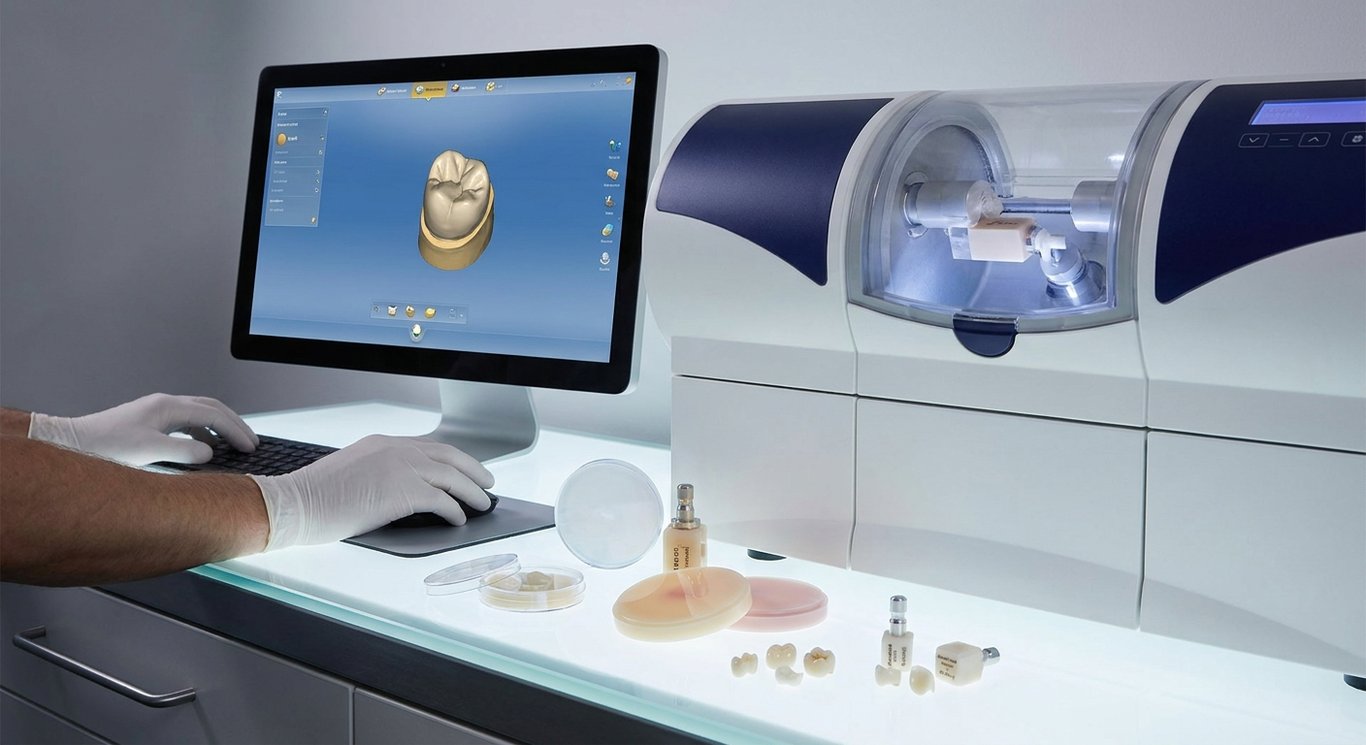
CAD/CAM stands for computer-aided design and computer-aided manufacturing, and it has genuinely transformed how dental restorations are made. Using a small intraoral scanner, a dentist can capture a precise three-dimensional image of a prepared tooth without the need for messy traditional impressions. That digital scan is then used to design a restoration on a computer screen, where the shape, size, and fit can be adjusted with remarkable accuracy. Once the design is finalized, a milling machine carves the restoration out of a solid block of ceramic, composite, or other material — often right in the dental office.
For patients, the benefits of CAD/CAM technology are very real and very practical. The most talked-about advantage is the ability to receive a crown or inlay in a single appointment, eliminating the need for a temporary restoration and a second visit. The fit of CAD/CAM restorations is highly precise because it is based on a digital scan rather than a physical impression that can distort. Patients also appreciate the streamlined experience — fewer appointments, less waiting, and no uncomfortable impression trays. The quality of in-office milled restorations has improved dramatically over the past decade and is now considered clinically comparable to many lab-fabricated options.
The digital revolution in dentistry does not stop at milling machines. Three-dimensional printing is beginning to play a role in fabricating surgical guides, temporary restorations, and even some permanent prosthetics. New materials are being developed specifically for CAD/CAM workflows, including high-strength zirconia blocks, multilayered ceramic discs that mimic the color gradient of natural teeth, and resin-ceramic hybrid materials that offer a middle ground between flexibility and strength. As these technologies continue to mature, patients can expect faster turnaround times, better aesthetics, and even more personalized restorations — all of which point toward a more comfortable and efficient dental experience.
Special Considerations: Implants, Dentures, and Orthodontic Materials
Dental implants are one of the most significant developments in modern dentistry, and the materials used in them are a big part of why they work so well. The implant itself — the part that goes into the jawbone — is almost always made from titanium or a titanium alloy. Titanium has a unique ability to fuse directly with bone through a process called osseointegration, which is what gives implants their remarkable stability over time. More recently, ceramic implants made from zirconia have become available as a metal-free alternative, which appeals to patients with metal sensitivities or strong preferences for non-metallic materials. Both options have good track records, though titanium remains the most widely studied and used.
Dentures and partial dentures rely on a different set of materials, each chosen for specific functional and comfort reasons. The base of a full denture is typically made from acrylic resin, which is durable, easy to adjust, and can be tinted to match the color of natural gum tissue. Partial dentures often incorporate a metal framework — usually cobalt-chromium alloy — for strength and a precise fit around remaining teeth. Flexible thermoplastic materials, such as nylon-based resins, offer an alternative to rigid acrylic for partial dentures, providing a more comfortable fit and a less visible clasp design. Patients should know that all denture materials require regular cleaning and periodic relining or replacement as the shape of the jawbone changes over time.
Orthodontic materials have also come a long way from the days of purely metal braces. Traditional metal brackets and wires are still widely used and remain highly effective, especially for complex tooth movements. Ceramic brackets offer a more discreet alternative, using tooth-colored or clear materials that blend in with the teeth, though they can be slightly more prone to staining and are generally more expensive. Clear aligner systems, made from transparent thermoplastic polymers, have become enormously popular for their near-invisible appearance and removability. Each material comes with trade-offs in visibility, comfort, and treatment capability, and the right choice depends on the complexity of the case and the patient's lifestyle preferences.
How Your Dentist Chooses the Right Material: Clinical and Lifestyle Factors
Choosing a dental material is not a one-size-fits-all decision, and your dentist is weighing a number of clinical factors every time they make a recommendation. The size of the cavity or damaged area is one of the first considerations — small cavities in low-stress areas are ideal for composite resin, while large restorations that replace significant tooth structure may require the added strength of a ceramic crown or metal alloy. Tooth location matters enormously, since front teeth are judged primarily on appearance while back teeth must handle significant biting forces. The condition of surrounding teeth, the presence of existing restorations, and the overall health of the gum and bone tissue all feed into the decision as well.
Beyond the clinical picture, your lifestyle plays a surprisingly large role in material selection. Patients who grind or clench their teeth — a condition called bruxism — put far more stress on restorations than average, which can rule out more fragile materials like thin porcelain veneers. Diet matters too: frequent consumption of acidic foods and beverages can accelerate the wear of composite resin. Oral hygiene habits influence how well any restoration holds up over time, since decay around the edges of a filling is one of the most common reasons restorations fail. Cosmetic priorities, medical history, and any known allergies or sensitivities round out the picture and help your dentist narrow down the best option.
The most productive dental appointments happen when patients come prepared to have a real conversation. Before your next visit, think about what matters most to you — is it how the restoration looks, how long it lasts, how much it costs, or whether it contains any specific materials you want to avoid? Write down your questions and bring them with you. Ask your dentist to explain why they are recommending a particular material, what the alternatives are, and what the trade-offs look like. A good dentist will welcome this kind of dialogue and use it to tailor their recommendation to your actual needs rather than defaulting to a one-size-fits-all approach. You and your dentist are a team, and the more information you bring to the table, the better the outcome is likely to be.
FAQ: Common Patient Questions About Modern Dental Materials
Patients have a lot of questions when it comes to dental materials, and that is a good thing. Being curious about what goes into your mouth is a sign of an engaged, health-conscious patient. The following questions come up frequently in dental offices, and the answers can help you walk into your next appointment feeling more informed and confident about the decisions ahead.
Are tooth-colored fillings as durable as silver amalgam?
Modern composite resin materials have improved dramatically over the past two decades, and for small to medium-sized cavities, they are considered highly competitive with silver amalgam in terms of durability. Studies show that contemporary composites can match amalgam performance in many clinical situations, and they have the added advantage of bonding directly to the tooth structure, which can actually help reinforce a weakened tooth rather than just filling the space. For patients and dentists who prefer to avoid mercury-containing materials, composite is now a genuinely reliable alternative in most cases.
That said, durability is not a fixed number — it depends on where the filling is, how large it is, and how much force it has to withstand. Very large restorations in back teeth that endure heavy chewing forces may still benefit from the proven strength of amalgam or may call for a different approach altogether, such as a ceramic inlay or crown. The quality of placement also matters significantly; a well-placed composite filling by an experienced dentist will outperform a poorly placed one of any material. Your dentist can give you a realistic assessment based on your specific situation.
Should I replace my old amalgam fillings with newer materials?
This is one of the most common questions dentists hear, and the answer is more nuanced than a simple yes or no. If an existing amalgam filling is failing — showing signs of cracking, leaking at the margins, or allowing decay to develop underneath — then replacement absolutely makes sense, and that is the perfect opportunity to choose a modern tooth-colored material. Similarly, if the filling is causing sensitivity, discomfort, or if there are visible cracks in the surrounding tooth structure, those are clinical reasons to address it promptly regardless of what material was used originally.
However, if an amalgam filling is intact, well-sealed, and showing no signs of failure, routine replacement purely for cosmetic reasons or out of concern about mercury is generally not recommended by major dental and health organizations. Removing a functioning amalgam filling actually releases more mercury vapor than leaving it in place, so the risk-benefit calculation does not favor elective removal in most cases. The best approach is to have your dentist evaluate your existing restorations at each checkup and make decisions based on clinical evidence rather than anxiety alone.
Which material is best for a front tooth versus a back tooth?
For front teeth, aesthetics are usually the driving force, and tooth-colored materials shine in this role. Composite resin is an excellent choice for small chips, cavities, or minor reshaping because it can be applied directly in a single visit and shaded to blend seamlessly with surrounding teeth. For larger restorations on front teeth — such as crowns or veneers — all-ceramic or lithium disilicate materials are often preferred because they offer superior translucency and a more lifelike appearance than anything with a metal component. The goal is a result that no one can spot from across the room.
Back teeth tell a different story. Molars and premolars absorb enormous forces during chewing — forces that would fracture thinner, more aesthetic materials under repeated stress. For large restorations in these areas, high-strength zirconia ceramics, gold alloys, or well-designed composite restorations may be more appropriate. The decision also depends on the size and type of restoration: a small cavity in a premolar can usually be handled beautifully with composite, while a heavily broken-down molar might need a full-coverage crown in a stronger material. Your dentist will evaluate the specific tooth before making a recommendation.
Are metal-free dental options always better?
Metal-free options have a lot going for them. Composite resins, ceramics, and zirconia are visually natural, do not conduct temperature the way metal does, and are free from concerns about metal allergies or sensitivity reactions. For patients who have known reactions to nickel, cobalt, or other metals, or for those who simply prefer to avoid metallic materials on principle, metal-free restorations are an excellent and clinically sound choice in most situations. The technology behind these materials has advanced to the point where they can handle a wide range of clinical demands that once required metal support.
However, "metal-free" is not automatically a synonym for "better." In certain high-stress situations — particularly large posterior restorations, long-span bridges, or cases where tooth structure is severely compromised — metal alloys or metal-supported restorations may still offer the best combination of strength, longevity, and fit. Gold, in particular, remains one of the most biocompatible and durable dental materials available. The best material is the one that meets the clinical requirements of the specific tooth and the patient's individual needs, not simply the one that fits a particular trend or preference.
How long do modern dental restorations typically last?
Lifespan estimates for dental restorations vary based on material, location, and patient factors, but here are some general ranges based on clinical research. Composite resin fillings typically last seven to ten years, though many last considerably longer. Ceramic crowns and inlays average ten to fifteen years or more. Gold restorations are among the longest-lasting, with studies showing average lifespans of twenty years or beyond. Dental implants, when properly placed and maintained, can last a lifetime in many patients. Amalgam fillings also have impressive longevity, often lasting fifteen years or more in suitable conditions.
These numbers are averages, and individual results can vary quite a bit. The single biggest factor in prolonging the life of any restoration is how well you take care of your mouth overall. Brushing twice a day, flossing daily, avoiding biting on hard objects like ice or pen caps, and attending regular dental checkups all contribute significantly to restoration longevity. Habits like grinding or clenching can cut the lifespan of even the best restoration in half, so addressing bruxism with a night guard is an important part of protecting your dental work. Think of restorations the way you think of car maintenance — regular upkeep makes a huge difference in how long they last.
Conclusion: Making Confident Choices About Dental Materials
Modern dentistry offers a remarkable array of materials, and the days when patients had to choose between silver and gold are long gone. From composite resins and glass ionomers to all-ceramic crowns, zirconia implants, and CAD/CAM-milled restorations, today's options are more sophisticated, more aesthetic, and more tailored to individual needs than ever before. Each material has its own strengths and limitations, and the right choice depends on a combination of clinical factors, personal priorities, and practical considerations like budget and lifestyle. Understanding these trade-offs puts you in a much stronger position to participate meaningfully in your own dental care rather than simply accepting whatever is suggested without context.
Use this guide as your starting point for more informed conversations with your dental team. Before your next appointment, take a few minutes to think about what matters most to you — whether that is appearance, durability, cost, avoiding certain materials, or some combination of all of these. Write down your questions and bring them along. Ask your dentist to walk you through the options for your specific situation and explain the reasoning behind their recommendation. Make it a habit to review your existing restorations at each checkup so you are never caught off guard by a failing filling. The more actively you engage with these decisions, the better your long-term outcomes are likely to be — because the best dental material is always the one that works best for you, your teeth, and the life you actually live.