Beyond "Drill and Fill": How Biomimetic Dentistry Aims to Preserve and Rebuild Natural Teeth
Published 29 min read
For generations, the standard response to a cavity was straightforward: drill out the decay, fill the hole, and send the patient home. It worked well enough, but it came with a hidden cost — each time a tooth was drilled, a little more of it was lost forever. Over the years, dentistry has been asking a better question: what if we could treat teeth more like the living structures they actually are, rather than just damaged objects that need patching? That shift in thinking has given rise to biomimetic dentistry, an approach that is changing how many clinicians think about tooth preservation, restoration, and long-term dental health.
Biomimetic dentistry is a tooth-preserving philosophy that aims to reproduce the natural tooth's structure, function, and appearance rather than relying solely on aggressive preparation and mechanical retention. It connects closely with minimally invasive dentistry, adhesive restorations, pulp preservation, and modern caries management. This article explores why preserving healthy enamel and dentin matters, how biomimetic treatments actually work, which materials and techniques are involved, what the evidence says, where the limitations lie, and how patients can figure out whether this approach is right for their specific situation.
What Is Biomimetic Dentistry?
The word "biomimetic" comes from two Greek roots: bios, meaning life, and mimesis, meaning imitation. In dentistry, it refers to the idea of imitating natural biological structures and processes when repairing or rebuilding teeth. In plain terms, biomimetic dentistry tries to treat a damaged tooth in a way that closely mirrors how the tooth was originally built — layering materials that behave like enamel and dentin, bonding them in ways that distribute stress naturally, and removing as little healthy tissue as possible. Importantly, it is not a single branded procedure or a specific product. It is a philosophy that guides how a dentist approaches diagnosis, preparation, material selection, and restoration.
The central goals of biomimetic dentistry include preserving natural tooth structure, maintaining pulp vitality, restoring normal function, reducing stress on the remaining tooth tissue, and delaying or avoiding more extensive treatment down the road. Think of it as trying to keep the tooth in the game as long as possible, in as close to its natural form as possible. Rather than removing healthy tissue just to create a mechanical lock for a filling or crown, the aim is to bond restorative materials directly to what remains — working with the tooth's biology rather than against it.
It is worth noting that biomimetic dentistry overlaps significantly with evidence-based minimally invasive dentistry, but the two are not always presented the same way. Depending on the dentist, the clinical situation, the materials available, and the treatment philosophy being followed, the approach may look quite different from one practice to another. What ties them together is the underlying commitment to conservation, adhesion, and biological compatibility — though how strictly those principles are applied will vary in real-world practice.
Why Moving Beyond "Drill and Fill" Matters
To understand why biomimetic thinking is gaining traction, it helps to look at what the traditional restorative cycle can look like over a lifetime. A small cavity gets a small filling. Years later, that filling breaks down or decay forms around it, and a larger filling is placed. Eventually, the tooth is weakened enough to need a crown. The crown may eventually fail, leading to root canal treatment, and if that fails, extraction and implant placement. Each step along this path is a response to the previous one, and each step generally involves removing more tooth structure. It is sometimes called the "restorative death spiral," and while it is not inevitable, it is a pattern that many dentists have seen play out over and over.
A key reason this cycle can accelerate is that removing healthy tooth tissue to create mechanical retention — the undercuts and grooves that hold a traditional filling in place — can actually weaken the tooth. Enamel and dentin work together as a sophisticated shock-absorbing system. When large portions are removed, the remaining structure is more vulnerable to cracking, especially under the repeated forces of chewing. Cracks are particularly problematic because they are often invisible until they cause pain, and by then, the damage may already be significant. Biomimetic principles try to interrupt this process early by conserving as much of that natural stress-distribution system as possible.
That said, it is important to be clear: conventional fillings, crowns, and root canal treatments remain appropriate and effective in many situations. Nobody is suggesting that traditional dentistry has been wrong all along. What modern care increasingly emphasizes is matching the least invasive treatment to the actual lesion, the tooth's remaining strength, the patient's caries risk, and their individual needs. Sometimes that means a traditional approach is genuinely the best option. The goal is thoughtful decision-making, not blanket rejection of proven treatments.
Core Principles of Biomimetic Tooth Restoration
- Preserve as much sound enamel and dentin as possible.
- Remove diseased tissue selectively rather than automatically removing all discolored or affected dentin.
- Protect the dental pulp and maintain tooth vitality whenever clinically predictable.
- Use adhesive materials that bond to the tooth instead of depending only on large mechanical preparations.
- Recreate the tooth's anatomy, contacts, occlusion, and stress distribution.
- Seal vulnerable areas against bacterial leakage and recurrent decay.
These principles sound logical, but applying them well requires careful diagnosis and clinical judgment. Treatment decisions should be based on a thorough assessment of the lesion's activity, how cleanable the area is, the presence of cracks, the bite, periodontal health, pulp status, and the patient's overall caries risk. The label "biomimetic" alone should never drive a treatment plan. What matters is whether the specific approach is appropriate for the specific tooth and the specific patient sitting in the chair.
How Biomimetic Dentistry Preserves Natural Tooth Structure
One of the most visible ways biomimetic dentistry differs from traditional approaches is in how the cavity is prepared. Conservative cavity preparation means removing only what is diseased or structurally unsound, rather than cutting a standardized shape to hold a filling mechanically. Selective caries removal takes this further — instead of automatically excavating everything that looks discolored, the dentist evaluates which tissue is truly infected and which is simply affected but still capable of remineralizing or being sealed effectively. Paired with modern adhesive bonding techniques, this approach can significantly reduce the amount of healthy enamel and dentin that gets sacrificed during treatment.
Deep lesions close to the pulp present a particular challenge. In some cases, it may be appropriate to leave a thin layer of sealed, affected dentin rather than risk exposing the pulp by removing every last trace of discolored tissue. This technique — sometimes called stepwise excavation or selective removal to soft dentin — is not a shortcut or a compromise. It requires a well-sealed restoration, careful patient selection, and ongoing monitoring to confirm that the pulp remains healthy and the sealed tissue is not progressing. When it works, it can mean the difference between a tooth that keeps its nerve and one that needs a root canal.
Beyond initial treatment, biomimetic thinking also applies to what happens when a restoration starts to age. Rather than automatically replacing an entire filling or onlay at the first sign of wear or minor chipping, a dentist following conservative principles will evaluate whether repair, refurbishment, or resealing is a realistic option. Repairing a restoration instead of replacing it preserves additional tooth structure that would otherwise be lost during the removal process. It is not always possible, but when it is, it represents exactly the kind of tissue-conserving decision that defines this approach.
Can Dentistry Actually Rebuild or Regenerate a Tooth?
This is where it is important to separate exciting science from current clinical reality. True biological regeneration — growing back a complete natural tooth with living enamel, dentin, and pulp — is not something that happens routinely in a dental office today. Research into tooth regeneration is genuinely fascinating and ongoing, but in everyday practice, "rebuilding" a tooth means restoring its shape, function, and appearance using restorative materials that mimic the tooth's natural properties. That is still a meaningful achievement, but it is not the same as regrowing what was lost.
Where genuine biological activity does occur is in the remineralization of early, noncavitated enamel lesions. When a cavity is still in its earliest stages — a white spot lesion that has not yet broken through the enamel surface — the tooth actually has a chance to recover. Saliva naturally carries calcium and phosphate ions that can re-deposit into weakened enamel. Fluoride strengthens this process. Reducing sugar frequency, improving plaque control, and using selected remineralizing agents can tip the balance back toward mineral gain rather than mineral loss. This is real, evidence-supported biology. The important caveat is that remineralization cannot reliably restore a large cavitated defect where the enamel surface has already collapsed.
Emerging technologies are pushing the boundaries further. Bioactive restorative materials, resin infiltration systems, calcium-phosphate technologies, and self-assembling peptide products are all being investigated or used clinically for their potential to support mineral deposition and interact more favorably with tooth tissue. Some of these are already available in clinical settings; others are still in development or have limited long-term evidence. The field is genuinely moving forward, but patients and clinicians alike should evaluate specific products against independent clinical evidence rather than marketing claims alone.
Common Biomimetic Techniques and Treatments
Adhesive Composite Restorations
Tooth-colored composite resin is one of the workhorses of biomimetic dentistry. Unlike traditional amalgam fillings, which relied heavily on mechanical retention, composite bonds chemically and micromechanically to both enamel and dentin. This bonding ability means the dentist can prepare a much more conservative cavity shape — removing only what is diseased rather than cutting undercuts and grooves to hold the material in place. Composite can also be layered and sculpted to recreate the natural anatomy of the tooth, including the subtle contours that affect how forces are distributed during chewing.
That said, composite is a technique-sensitive material with real limitations. It requires excellent moisture control during placement — even a small amount of contamination can compromise the bond. Polymerization shrinkage, which occurs as the material sets, can create internal stresses that may contribute to postoperative sensitivity or marginal gaps over time. Composite is also more prone to staining and wear than ceramic in some situations, and it may not be the best choice for every tooth or every patient. Understanding these trade-offs honestly is part of making a good treatment decision.
Indirect Bonded Restorations
When a tooth has lost more structure than a direct filling can reliably address, but still has enough remaining walls and cusps to avoid a full crown, bonded inlays, onlays, overlays, and partial-coverage restorations offer a middle ground. These restorations are fabricated outside the mouth — either in a dental laboratory or using chairside milling technology — and then adhesively bonded into place. Because they do not require the same aggressive preparation that a crown does, they can preserve significantly more of the natural tooth, particularly the healthy cusps and enamel that remain.
Choosing the right candidate for a partial-coverage restoration requires careful evaluation. The dentist needs to assess how many walls remain, whether the cusps are cracked or undermined, what the bite forces look like, whether adequate isolation is achievable, what the esthetic demands are, and whether the restoration can be maintained and repaired over time. Not every tooth that seems like a candidate actually is one. But when the conditions are right, a well-placed bonded onlay can be a genuinely tooth-saving option that a full crown preparation would have made impossible.
Fiber Reinforcement and Stress Management
In selected restorations, fiber-reinforced materials may be incorporated to help distribute occlusal forces and provide additional support to compromised tooth structure. The principle is similar to how rebar reinforces concrete — the fibers add tensile strength that the restorative material alone might not provide. This can be particularly relevant in teeth that have been significantly weakened by decay, previous restorations, or cracks, where managing stress distribution is critical to the restoration's long-term success.
However, fiber reinforcement is not a magic fix, and it is important to be realistic about what it can and cannot do. It does not make every severely fractured or structurally compromised tooth restorable. A tooth that has lost too much of its core structure, or one with a crack that extends below the gum line or into the root, may not be salvageable regardless of the material used. Clinical judgment — based on a thorough examination and honest prognosis — always takes priority over enthusiasm for any particular technique or material.
Resin Infiltration, Sealants, and Remineralizing Materials
For early lesions that have not yet cavitated, there are microinvasive options that can arrest or manage decay without conventional drilling. Resin infiltration works by drawing a low-viscosity resin into the porous network of a demineralized enamel lesion, effectively sealing it from the inside and halting further mineral loss. Pit-and-fissure sealants protect vulnerable grooves on the chewing surfaces of back teeth, reducing the risk of decay developing in those hard-to-clean areas. Both approaches are well-supported by evidence for appropriate indications and represent genuine alternatives to the drill in selected situations.
Remineralizing materials add another layer to the preventive toolkit. Fluoride remains the gold standard for supporting enamel remineralization, and its evidence base is extensive. Calcium-phosphate products, glass ionomer materials, and hydraulic calcium-silicate materials each have roles in specific clinical situations — whether that is releasing fluoride slowly over time, acting as a protective liner near the pulp, or actively interacting with the surrounding tooth tissue. The key word in evaluating any of these products is "evidence." A product marketed as bioactive or remineralizing should be assessed against peer-reviewed clinical data, not just manufacturer claims.
How Biomimetic Dentistry Approaches Tooth Decay
Understanding how biomimetic dentistry handles decay requires first understanding what decay actually is. Caries is not simply a hole in a tooth — it is a disease process driven by the interaction of bacterial biofilm, fermentable carbohydrates, saliva quality and flow, fluoride exposure, oral hygiene habits, socioeconomic factors, and individual susceptibility. Two patients can have the same-sized cavity and have very different underlying risk profiles, which means they may need quite different management strategies. Treating the lesion without addressing the disease process is a bit like mopping up water without turning off the tap.
This disease-centered view means that early detection and accurate lesion assessment are foundational to good care. Dentists using a biomimetic or minimally invasive approach will typically evaluate not just the size of a lesion, but whether it is active or arrested, how cleanable the affected surface is, what the patient's caries risk factors look like, and whether radiographs are needed to assess depth and spread. A lesion that is arrested and self-cleaning may need monitoring and preventive support rather than immediate drilling. One that is active, progressing, and in a hard-to-clean area needs prompt intervention.
Treatment decisions generally fall into three broad categories. Nonoperative prevention — diet counseling, fluoride, improved oral hygiene, and sealants — is appropriate for patients at elevated risk and for managing early noncavitated lesions. Microinvasive treatment, such as resin infiltration or sealants, suits selected early lesions where the structure is still intact but the lesion needs to be sealed. Minimally invasive operative treatment — conservative preparation and adhesive restoration — is indicated when a lesion has cavitated, is structurally compromising the tooth, or cannot be managed without removal of diseased tissue. The goal is always to match the intensity of treatment to the actual need.
Protecting the Dental Pulp and Preventing Root Canal Treatment
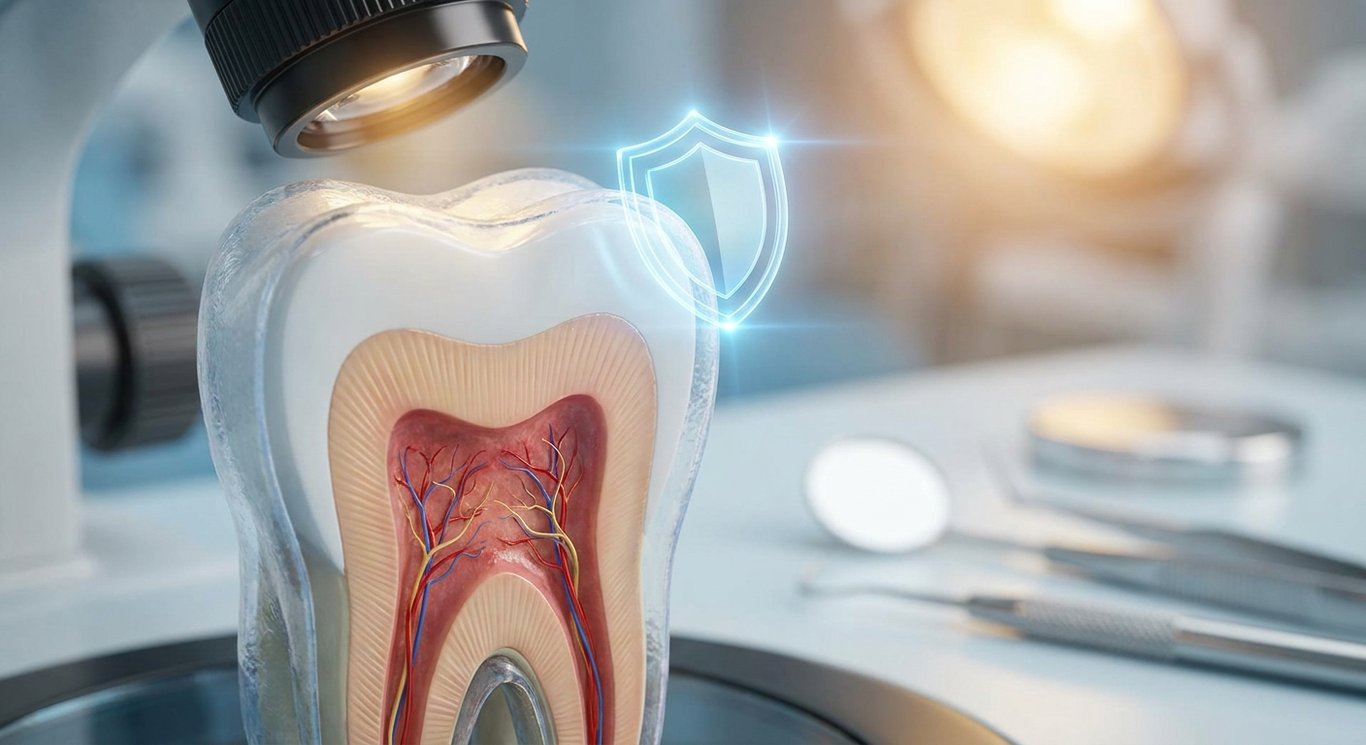
The dental pulp — the living tissue at the center of the tooth containing nerves, blood vessels, and cells — is worth protecting for good reason. A vital pulp allows the tooth to sense temperature and pressure, produce secondary dentin in response to threats, and maintain the tooth's biological integrity. Unnecessary heat from drilling, dehydration of the dentin, vibration, bacterial leakage through a poorly sealed restoration, deep excavation close to the pulp, and chemical irritation from certain restorative materials can all threaten pulp health. In some cases, these insults accumulate over multiple treatment episodes until the pulp can no longer recover.
Several strategies can help protect the pulp during restorative treatment. Selective caries removal avoids unnecessary excavation near the pulp chamber. Protective liners or bases — such as hydraulic calcium-silicate materials — can be placed over areas of thin remaining dentin to provide a biological seal and encourage the formation of reparative dentin. Effective isolation using a rubber dam reduces bacterial contamination and moisture interference. Adequate bonding seals the dentinal tubules against bacterial ingress. And timely follow-up allows the dentist to monitor pulp response and intervene early if symptoms develop. None of these steps is complicated, but together they make a meaningful difference.
It is equally important to be honest about the limits of pulp preservation. Biomimetic dentistry cannot guarantee that root canal treatment will never be needed. If the pulp has already developed irreversible inflammation, undergone necrosis, become infected, or been severely traumatized, no amount of conservative technique will reverse that. Similarly, an unrestorable tooth — one that has lost too much structure or has a fracture that cannot be managed restoratively — may ultimately require extraction regardless of the approach taken. Pulp preservation is a goal worth pursuing, but it is not always achievable, and honest prognosis is part of ethical care.
Materials Used in Biomimetic Restorative Dentistry
The material palette in biomimetic restorative dentistry is broader than many patients realize. Composite resin remains the most widely used direct restorative material, valued for its bonding ability and tooth-colored appearance. Ceramic materials — including feldspathic porcelain, lithium disilicate, and zirconia — are commonly used for indirect restorations like inlays, onlays, and veneers. Glass ionomer cement and resin-modified glass ionomer offer fluoride release and a degree of chemical adhesion to tooth structure, making them useful in specific situations such as lining cavities, restoring root surfaces, or treating high-caries-risk patients. Fiber-reinforced composites and hydraulic calcium-silicate materials round out the toolkit for specialized applications.
Comparing these materials requires looking at several factors simultaneously. Bonding ability, fracture resistance, esthetic quality, moisture sensitivity during placement, wear behavior, repairability, fluoride release, cost, and suitability for anterior versus posterior teeth all play a role in the selection process. Composite excels in esthetics and repairability but is more technique-sensitive. Ceramic is strong and highly esthetic but less forgiving if it chips. Glass ionomer is moisture-tolerant and releases fluoride but is weaker under heavy bite forces. No single material wins across all categories, which is why material selection is always a clinical decision based on the specific tooth and patient.
One phrase that deserves scrutiny is "bioactive." It has become something of a marketing buzzword in dentistry, applied to a wide range of products with varying levels of supporting evidence. A material described as bioactive may genuinely interact with tooth tissue in clinically beneficial ways — or the claim may be based on laboratory studies that have not yet translated to meaningful clinical outcomes. Material selection in biomimetic dentistry should be grounded in peer-reviewed evidence, manufacturer instructions, the specific clinical indication, and the dentist's training and experience with the material. "Bioactive" on the label is not a substitute for demonstrated efficacy.
Potential Benefits of Biomimetic Dentistry
- Greater preservation of healthy tooth structure.
- Potentially improved pulp protection in suitable deep lesions.
- More natural appearance and function.
- Repairable rather than immediately replaceable restorations in selected cases.
- Reduced need for aggressive mechanical retention.
- Possible reduction in sensitivity or fracture risk when the diagnosis and technique are appropriate.
These benefits are real, but they are not automatic. Achieving good outcomes with biomimetic techniques depends on a long list of variables: accurate diagnosis, effective isolation during bonding, appropriate material selection, careful restoration design, favorable bite forces, good oral hygiene, a low-sugar diet, regular maintenance visits, and the patient's overall risk profile. A conservative restoration placed poorly in a high-risk patient will not outperform a well-placed conventional restoration. The philosophy only delivers its potential when the execution matches the intention.
Limitations, Risks, and Controversies
Biomimetic dentistry is not without its challenges, and it would be misleading to present it as a straightforward upgrade over everything that came before. Adhesive techniques are genuinely technique-sensitive — contamination of the bonding surface, inadequate etching, incomplete curing, or poor isolation can all compromise the bond and lead to early failure. Postoperative sensitivity after composite placement is a common complaint, particularly in deep restorations. Over time, bonded restorations may experience chipping, wear, staining, marginal breakdown, or debonding, especially in patients with heavy bite forces or bruxism. Recurrent decay around restoration margins remains a risk regardless of the approach used.
Another legitimate concern is that some claims made under the biomimetic banner outpace the available long-term clinical evidence. Dentistry has a long history of enthusiastically adopting techniques and materials before the evidence base fully matures, and biomimetic dentistry is not immune to this pattern. Long-term randomized controlled trials comparing biomimetic approaches to conventional ones are still relatively limited in number. That does not mean the approach is wrong — much of it is grounded in sound biological principles and shorter-term evidence — but it does mean that marketing language should be evaluated critically, and that patients deserve honest information about what is well-established versus what is still being studied.
There are also clinical situations where a biomimetic approach is simply not the right fit. Large structural losses, severe cracks extending into the root, uncontrolled active decay, heavy unmanaged bruxism, poor isolation due to tooth position or patient cooperation, active periodontal disease, or a patient's inability to attend regular maintenance visits may all tip the balance toward a more conventional treatment. In these cases, recommending a traditional restoration, root canal treatment, a full crown, or even extraction is not a failure of philosophy — it is good clinical judgment. The goal is always the best outcome for the patient, not adherence to a label.
Biomimetic Dentistry Versus Traditional Restorative Dentistry
It is tempting to frame biomimetic and traditional dentistry as opposites, but that framing is more dramatic than accurate. Traditional restorative dentistry — fillings, crowns, bridges, root canal treatment — has an extensive evidence base and has served patients well for decades. It remains appropriate, effective, and sometimes the best option available. Biomimetic dentistry does not reject these treatments; it places a stronger emphasis on conservation, adhesion, stress management, and pulp preservation as guiding principles. The philosophical difference is in where the default sits: traditional dentistry defaults toward proven mechanical solutions, while biomimetic dentistry defaults toward the most conservative option that can achieve a predictable result.
In practice, the best treatment often combines elements of both approaches. A patient might receive minimally invasive caries control — fluoride, diet counseling, improved hygiene — followed by a conventional composite restoration when the lesion is ready to be treated operatively. Another patient might benefit from a bonded ceramic onlay instead of a full crown because enough healthy tooth structure remains to support partial coverage. The point is not to choose a camp but to choose the right treatment for the right tooth at the right time. A dentist who understands both philosophies is better equipped to make that call than one who is rigidly committed to either extreme.
What Happens During a Biomimetic Dental Appointment?
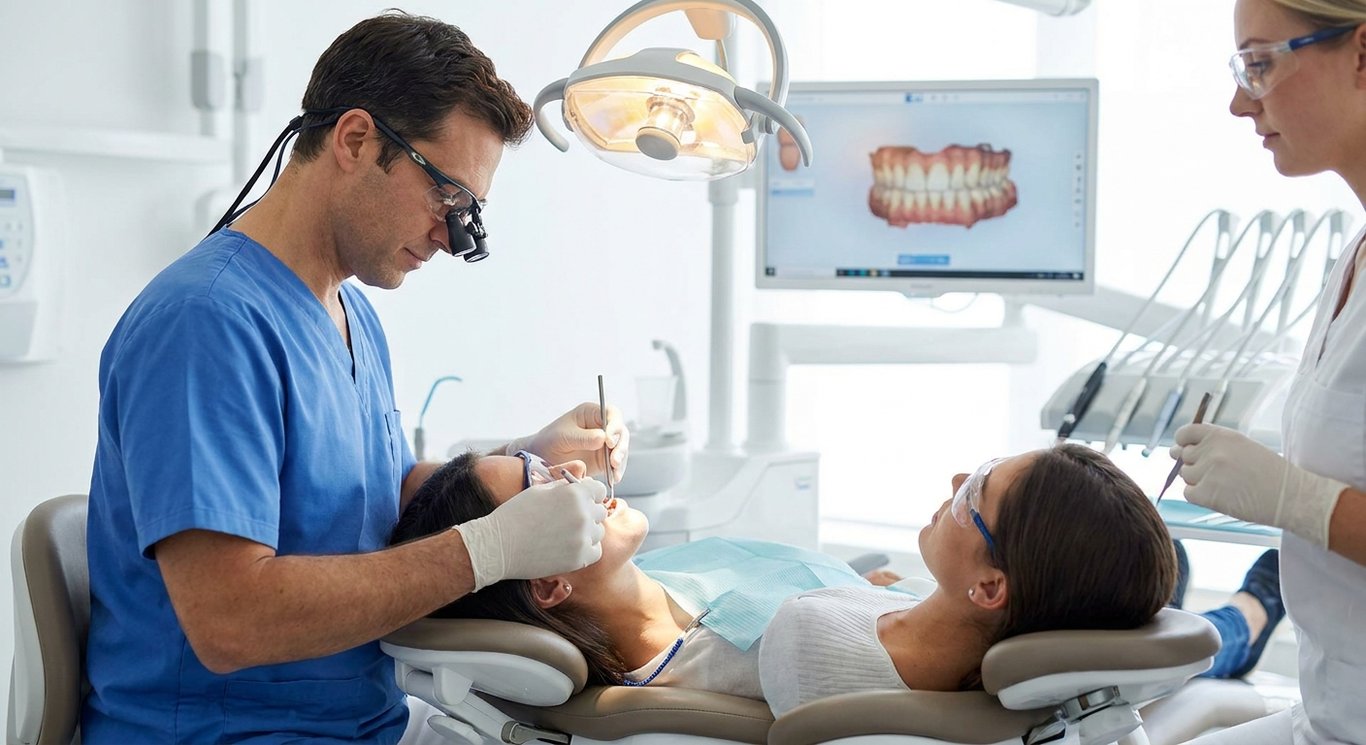
A biomimetic dental appointment typically begins with a thorough consultation that goes well beyond a quick look in the mouth. The dentist will review medical and dental history, ask about symptoms, take clinical photographs, evaluate the bite and jaw function, assess periodontal health, review caries risk factors, test pulp vitality, use transillumination to check for cracks, and take radiographs when they are clinically justified. This comprehensive assessment is not optional — it is the foundation on which every treatment decision rests. Without it, even the most sophisticated restorative technique is being applied without adequate information.
Following the assessment, the dentist should discuss the findings openly with the patient, including the alternatives available, the expected prognosis of each option, the likely maintenance requirements, the costs involved, and the realistic risks. Crucially, the conversation should also cover what happens if the tooth later develops symptoms, if the restoration fails, or if the condition progresses. Patients deserve to understand not just the best-case scenario but also the contingency plan. Informed consent in this context is not a formality — it is an essential part of ethical, patient-centered care.
When treatment proceeds, the general sequence involves administering local anesthesia, placing a rubber dam for isolation, performing conservative cavity preparation, selectively removing or sealing diseased tissue, applying the adhesive system, building the restoration in anatomically appropriate layers, adjusting the bite carefully, polishing the restoration, and scheduling follow-up. The details will vary depending on whether the restoration is direct or indirect, the materials used, and the complexity of the case. What stays consistent is the emphasis on precision, isolation, and respect for the remaining tooth structure throughout every step.
How Long Do Biomimetic Restorations Last?
Longevity is one of the most common questions patients ask, and it deserves an honest answer rather than a reassuring number pulled from the most optimistic study available. The lifespan of a biomimetic restoration depends on where in the mouth it is located, how large it is, which material was used, what the bite forces look like, whether the patient grinds their teeth, how well they maintain their oral hygiene, what their diet is like, how effectively the restoration was isolated during placement, and how consistently they attend maintenance visits. A small bonded composite in a low-stress area on a low-risk patient can last many years. A large bonded onlay on a bruxer who rarely comes in for checkups faces a very different set of challenges.
Maintenance is not optional — it is part of the treatment. Regular examinations allow the dentist to catch early signs of marginal breakdown, recurrent decay, cracking, or wear before they become serious problems. Professional preventive care keeps the oral environment as favorable as possible for restoration longevity. Patients who grind should be evaluated for a protective bite guard. Small defects in a restoration should be repaired promptly rather than left to progress. And any new symptoms — sensitivity, pain, or a change in how the bite feels — should be reported without delay. Biomimetic restorations are not set-and-forget solutions; they are part of an ongoing relationship between the patient and their dental team.
Who May Be a Good Candidate?
Biomimetic approaches tend to be most beneficial for patients who still have meaningful amounts of healthy tooth structure to preserve. This includes people with early or moderate structural damage from decay or wear, selected deep cavities where the pulp is still healthy, cracked teeth that remain restorable, failing restorations that can be repaired rather than fully replaced, or patients who have a strong preference for conservative treatment and understand the requirements that come with it. The common thread is that there is something worth saving — enough sound enamel and dentin to make conservation a realistic and clinically appropriate goal.
Candidacy, however, is never determined by preference alone. It requires an individualized clinical examination. Patients with active, uncontrolled decay that has not been stabilized, severe periodontal disease that undermines the foundation of any restoration, extensive fractures that compromise restorability, teeth that simply cannot be isolated adequately for adhesive bonding, or patients who are unable to maintain consistent oral hygiene and attend regular follow-up visits may need stabilization or a different treatment approach before conservative reconstruction becomes viable. The conversation with the dentist should be honest and specific to the actual condition of the teeth involved.
Questions to Ask a Dentist About Biomimetic Treatment
- What is the diagnosis, and is the lesion active?
- How much healthy tooth structure can be preserved?
- Is the pulp healthy, reversibly inflamed, or irreversibly compromised?
- What are the conventional and minimally invasive alternatives?
- What evidence supports the recommended material and technique?
- What is the expected prognosis and likely maintenance schedule?
- What happens if the restoration fails or symptoms develop?
- Does bruxism, my bite, or periodontal condition affect the plan?
Beyond these specific questions, patients should expect a clear written or verbal treatment plan, itemized costs before treatment begins, and a realistic discussion of risks — not just benefits. For complex, expensive, or irreversible treatment decisions, seeking a second opinion from another qualified dentist is entirely reasonable and should be encouraged rather than discouraged by any ethical provider. The goal of these questions is not to challenge the dentist's expertise but to ensure that the treatment plan is genuinely tailored to the patient's specific situation rather than driven by trend, habit, or financial incentive. A dentist who welcomes these questions is one worth trusting.
Frequently Asked Questions About Biomimetic Dentistry
Is biomimetic dentistry the same as minimally invasive dentistry?
The two concepts overlap significantly but are not identical. Minimally invasive dentistry focuses broadly on preventing disease, detecting lesions early, and conserving tooth tissue during treatment. Biomimetic restorative dentistry shares those goals but goes further — it additionally emphasizes reproducing the tooth's biological and biomechanical behavior through adhesive materials, conservative restoration designs, layering techniques, and stress management strategies that mimic how the natural tooth distributes forces. You can think of minimally invasive dentistry as the broader philosophy and biomimetic dentistry as a specific restorative expression of it.
Can biomimetic dentistry reverse a cavity without drilling?
In some cases, yes — but only for the earliest stage of decay. When a lesion is still noncavitated, meaning the enamel surface is intact even though the mineral content underneath has been weakened, it may be possible to arrest or remineralize it through preventive care, fluoride therapy, improved oral hygiene, dietary changes, sealants, or resin infiltration. This is real and clinically supported. However, once a cavity has broken through the enamel surface, or once the lesion is large enough to compromise the tooth's structure, restorative treatment is generally necessary. The drill is not always avoidable — but it can sometimes be delayed or avoided entirely for truly early lesions caught at the right time.
Can biomimetic dentistry replace a crown?
In selected cases, a bonded onlay, overlay, or other partial-coverage restoration can be a viable alternative to a full crown — and one that preserves significantly more natural tooth structure. This is most appropriate when the tooth still has sufficient remaining walls and cusps, the bite forces are manageable, isolation is achievable, and there are no cracks or structural issues that require full coverage for protection. When those conditions are met, a well-placed bonded ceramic restoration can perform very well. However, a full crown may still be the right choice when damage is extensive, when the tooth requires the additional protection and retention that full coverage provides, or when a partial restoration simply cannot be designed to function reliably.
Does biomimetic dentistry eliminate the need for root canals?
Not entirely, and it would be misleading to suggest otherwise. Pulp-preserving techniques — selective caries removal, protective liners, effective sealing, and careful isolation — can reduce unnecessary pulp irritation and may help avoid root canal treatment in suitable cases where the pulp is still healthy or only mildly and reversibly inflamed. But they cannot reverse every pulpal condition. Teeth with irreversible pulpitis, pulp necrosis, periapical infection, or certain types of traumatic injury will still need root canal treatment or extraction regardless of how conservative the restorative approach is. Pulp preservation is a worthwhile goal; it is not a guarantee.
Is biomimetic dentistry more expensive than ordinary fillings?
It depends on what is being compared. A conservative composite restoration and a basic amalgam filling may be priced similarly, but a bonded ceramic onlay fabricated in a laboratory will cost more than a simple filling — sometimes significantly more. Factors that influence cost include the diagnosis, the materials used, whether a dental laboratory is involved, the complexity and time required, the geographic location of the practice, and the patient's insurance coverage. It is also worth considering the bigger picture: a conservative restoration that preserves more tooth structure and can be repaired rather than replaced may offer long-term value even if the upfront cost is higher. Patients should compare complete treatment plans and ask about all costs before committing.
Key Takeaways and Next Steps
Moving beyond "drill and fill" represents a meaningful shift in how dentistry thinks about teeth — not as objects to be repaired mechanically, but as living structures worth preserving and protecting. Biomimetic dentistry aims to do exactly that through prevention, early diagnosis, selective tissue removal, pulp preservation, adhesive reconstruction, and repair whenever it is clinically appropriate. It is an approach grounded in sound biological principles and supported by a growing body of evidence. At the same time, it is not a guarantee of regeneration, a permanent solution, or a universal alternative to conventional treatment. The best outcomes come from applying the right technique to the right tooth in the right patient — not from applying a philosophy indiscriminately.
The most important next step for anyone curious about biomimetic dentistry is to schedule a comprehensive evaluation with a qualified dentist who can assess your specific teeth, bite, caries risk, and maintenance habits. Ask about both conservative and conventional options, and request a realistic prognosis that reflects your actual clinical situation rather than a best-case scenario. If the treatment plan is complex or expensive, a second opinion is a reasonable and responsible choice. Ultimately, a personalized plan built on thorough diagnosis, honest communication, and realistic expectations will serve you far better than any treatment label — including this one.