A Patient's Guide to Digital Dentistry: How Technology Is Creating Faster, More Comfortable Care
Published 27 min read
What Is Digital Dentistry?
Digital dentistry refers to the use of digital technologies — rather than traditional mechanical or analog tools — to carry out dental procedures and support patient care. Instead of relying solely on physical molds, film X-rays, and hand-drawn treatment plans, modern dental practices are increasingly using digital X-rays, intraoral scanners, computer software, artificial intelligence, computer-aided design and manufacturing (CAD/CAM), and 3D printing. These tools work together as part of a connected system. For example, a digital scan of your teeth can be sent directly to design software, which can then send instructions to a milling machine or 3D printer to create a custom restoration. The result is a more streamlined process that can be faster, more precise, and easier to understand as a patient.
It's important to understand, though, that digital tools do not replace your dentist. They support clinical judgment — they don't substitute for it. Your dentist still performs the examination, evaluates your symptoms, reviews your medical history, and makes the final call on any diagnosis or treatment recommendation. Think of digital technology as giving your dentist better information to work with and better tools to act on it. The relationship between you and your dental care provider remains at the center of everything, and no software or scanner changes that.
Why Dental Practices Are Moving to Digital Workflows
Dental practices are adopting digital workflows for a number of practical reasons that ultimately benefit patients. Digital systems can significantly improve efficiency — reducing the time it takes to capture impressions, process images, design restorations, and communicate with specialists or dental laboratories. Treatment planning becomes more thorough when dentists can view detailed 3D models, overlay X-rays, and run simulations before a single procedure begins. Customization also improves, because digital data can be used to design restorations and appliances that are tailored precisely to a patient's unique anatomy. Additionally, when multiple dental professionals are involved in a patient's care — such as a general dentist, orthodontist, and oral surgeon — digital records can be shared quickly and accurately, improving coordination across the team.
Beyond efficiency, digital records and connected systems can reduce delays and improve the overall continuity of care. When your records are stored digitally, they can be accessed, updated, and shared more easily than paper files or physical models. If you need a referral, your dentist can send your X-rays, scans, and notes to a specialist without you having to carry anything or wait for physical copies to be mailed. This kind of seamless information sharing means fewer gaps in communication, fewer repeated procedures, and a smoother experience for you as a patient — especially if your treatment involves multiple steps or providers over time.
Digital X-Rays: Faster Imaging With Less Waiting
Digital radiographs — commonly called digital X-rays — work differently from traditional film-based X-rays in several important ways. Instead of exposing a piece of film that must be chemically developed in a darkroom, digital X-rays use electronic sensors that capture the image almost instantly. The image appears on a computer screen within seconds, which means less time waiting and more time discussing what your dentist is actually seeing. Digital images can also be stored electronically, making them easy to retrieve, compare over time, and share with other providers. There's no risk of losing a physical film, and the images can be zoomed in, adjusted for brightness and contrast, and annotated directly on the screen.
Dentists use digital X-ray images to identify a wide range of concerns that aren't visible during a standard visual examination. These include cavities forming between teeth, early signs of bone loss around the roots, infections at the tip of a root, impacted wisdom teeth, cysts, and other structural issues beneath the gumline. Because digital images can be enhanced and viewed in detail, dentists may catch problems at an earlier stage — which often means simpler and less invasive treatment. Your dentist might also compare current images with ones taken during previous visits to track changes over time, which is a key advantage of having a digital record system.
Radiation safety is a reasonable concern for many patients, and it's worth knowing the facts. Digital X-rays generally use less radiation than traditional film X-rays to produce a comparable image. Even so, dentists follow the principle of taking only the images that are clinically necessary for your care — no more, no fewer. If you're curious about how much radiation is involved, how often X-rays are recommended for your situation, or what protective measures are in place (such as lead aprons or thyroid collars), you should absolutely ask your dental team. They should be happy to explain their approach and help you feel confident about the imaging process.
3D Imaging and Cone-Beam CT: Seeing More Than a Standard X-Ray
Cone-beam computed tomography — often called CBCT — is a specialized type of imaging that creates three-dimensional views of your teeth, jawbone, nerves, sinuses, and surrounding structures. Unlike a standard dental X-ray, which produces a flat, two-dimensional image, a CBCT scan captures hundreds of individual images as the scanner rotates around your head. These images are then reconstructed by software into a detailed 3D model that your dentist can rotate, slice through, and examine from virtually any angle. This level of detail can reveal things that simply aren't visible on a traditional X-ray, giving your dental team a much clearer picture of your anatomy before planning complex procedures.
CBCT imaging is most commonly used when a higher level of detail is genuinely necessary. Common applications include planning dental implant placement — where the dentist needs to know the exact height, width, and density of the bone — as well as evaluating impacted teeth before oral surgery, planning orthodontic treatment, assessing the anatomy of root canals before or during treatment, and diagnosing conditions that affect the jaw joints or sinuses. For example, before placing an implant, a CBCT scan allows the dentist to identify the exact location of nerves and sinuses, reducing the risk of complications. It's a tool that shines when precision really matters.
That said, CBCT is not something every patient needs at every visit. It involves a higher radiation dose than a standard dental X-ray, and dentists are trained to weigh the clinical benefit of the additional information against the exposure involved. The guiding principle is that imaging should only be prescribed when it will meaningfully influence diagnosis or treatment — not as a routine procedure. If your dentist recommends a CBCT scan, it's worth asking why it's needed for your specific situation, what it will reveal, and how the findings will be used. A good dentist will welcome those questions and give you a clear answer.
Intraoral Scanners: A More Comfortable Alternative to Traditional Impressions
An intraoral scanner is a small, handheld wand that your dentist or hygienist moves slowly around the inside of your mouth. As it moves, it captures thousands of images per second and stitches them together in real time to create a highly accurate three-dimensional digital model of your teeth and gums. The process typically takes a few minutes, and you can watch the model being built on a nearby screen as the scan progresses. There's no mess, no mixing of materials, and no waiting for anything to set — just a quick, clean digital capture of your oral anatomy.
Compared to traditional impression materials — those putty-like substances poured into a tray and held in your mouth for several minutes — intraoral scanning tends to be much more comfortable for most patients. The most obvious benefit is the elimination of the gag reflex trigger that many people experience with traditional impressions. If you've ever had to grip the armrests while fighting the urge to gag during a mold-taking session, you'll appreciate the difference. Digital scans can also be reviewed immediately, and if a portion of the scan is unclear or incomplete, the dentist can rescan just that area without starting over from scratch. The entire process is simply more patient-friendly.
The digital models created by intraoral scanners have a wide range of clinical uses. They can be used to design and fabricate crowns, bridges, inlays, onlays, and veneers. They're also used for creating dentures, clear aligner trays, night guards, retainers, and sports mouthguards. In orthodontics, digital scans have largely replaced plaster study models for treatment planning and monitoring progress. Essentially, any dental appliance or restoration that previously required a physical impression can now often be created from a digital scan — with greater accuracy and far less patient discomfort.
Digital Treatment Planning and Patient Visualization
Modern dental software allows dentists to bring together multiple types of data — including digital scans, clinical photographs, X-rays, and CBCT images — into a single planning environment. From there, they can evaluate different treatment options, anticipate anatomical challenges, and map out a step-by-step approach before any procedure begins. For example, when planning implant placement, a dentist can overlay the proposed implant position onto a 3D model of the patient's bone and nerve anatomy to confirm that the plan is both safe and achievable. This kind of thorough pre-treatment planning can reduce surprises during procedures and help ensure more predictable outcomes.
One of the most meaningful benefits of digital treatment planning for patients is the ability to actually see what's being proposed. Your dentist can show you images of your teeth, point out areas of concern, and in some cases demonstrate what a restoration or orthodontic result might look like before treatment begins. Some software can simulate tooth movement, show proposed veneer designs, or display a digital mock-up of a smile makeover. This visual communication can make it much easier to understand your treatment options, ask informed questions, and feel genuinely confident in the decisions you make about your care — rather than simply taking someone's word for it.
CAD/CAM and Same-Day Dentistry
CAD/CAM stands for computer-aided design and computer-aided manufacturing. In dentistry, this technology allows restorations like crowns, inlays, onlays, veneers, and bridges to be designed digitally and then fabricated by a milling machine or printer — often right in the dental office. The process starts with a digital scan of your prepared tooth, which is then used as the foundation for designing the restoration on a computer screen. The dentist or a trained technician shapes the restoration digitally, adjusting the contours, contacts, and bite until everything looks right. Then the design is sent to a milling unit, which carves the restoration out of a block of ceramic or composite material.
The same-day workflow typically unfolds in a logical sequence. First, the dentist prepares the tooth — removing decay or old material and shaping it to receive the restoration. Next, an intraoral scanner captures a digital impression of the prepared tooth and surrounding teeth. The dentist then uses design software to create the restoration, which is milled or printed while you wait — often in 15 to 30 minutes. After milling, the restoration is finished, polished, and checked for fit, bite, and shade before being bonded into place. From start to finish, the entire process can happen in a single appointment, which is a significant departure from the traditional multi-visit approach.
The potential advantages of same-day dentistry are real and worth appreciating. Fewer appointments mean less time off work or school, less time sitting in a dental chair overall, and no need to wear a temporary crown for weeks while waiting for a lab to fabricate the permanent one. Temporary restorations can sometimes come loose or feel uncomfortable, so skipping that stage entirely is a genuine benefit. That said, same-day treatment isn't the right choice for every situation. Some cases — particularly those involving complex bite issues, extensive tooth preparation, multiple restorations, or specific material requirements — may still be better served by a traditional laboratory-fabricated restoration. Your dentist will help you understand which approach makes the most sense for your needs.
3D Printing in Modern Dental Care
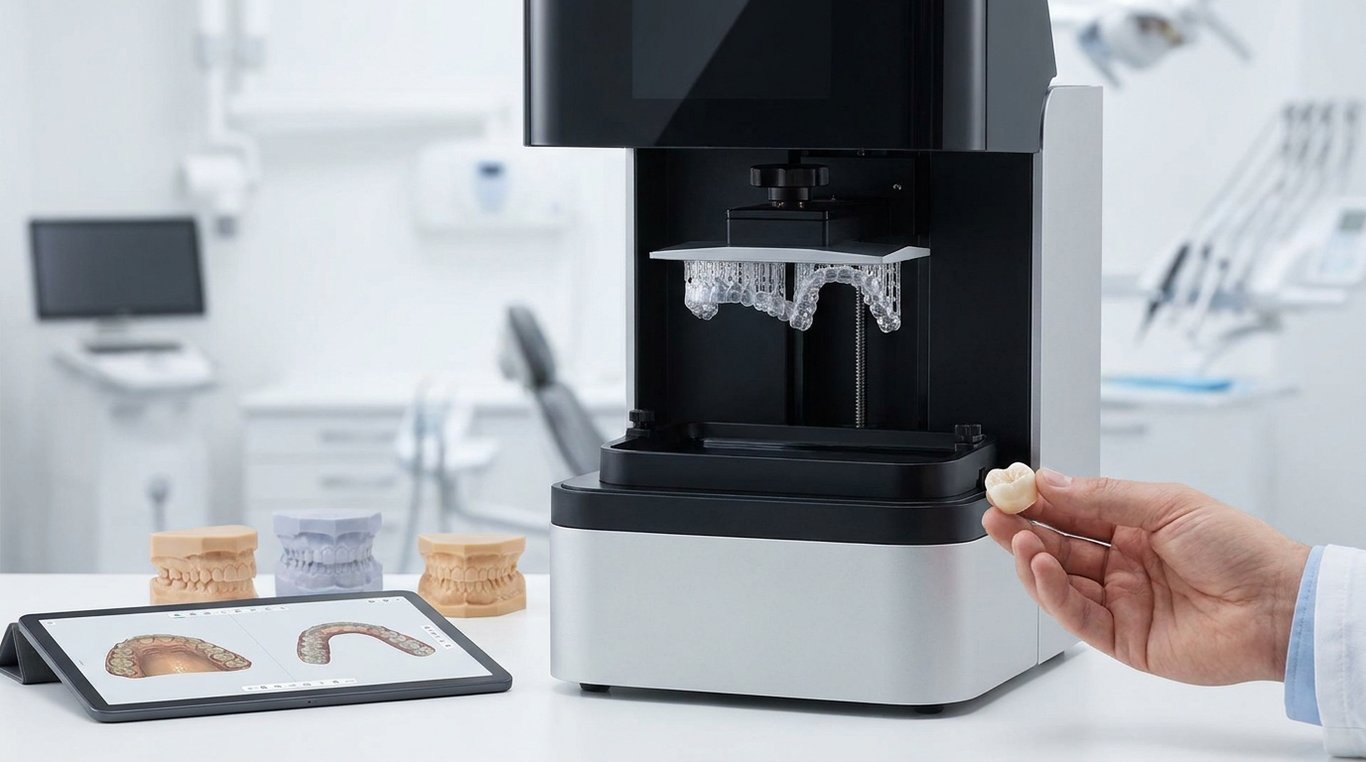
3D printing — also known as additive manufacturing — is increasingly being used in dental practices and laboratories to produce a wide variety of customized dental products. These include diagnostic study models, surgical guides for implant placement, orthodontic aligners and retainers, partial and full dentures, temporary crowns and bridges, and custom trays. The process works by building an object layer by layer from a digital file, using materials such as resin, nylon, or specialized dental composites. Because each item is created directly from a digital scan of the patient's mouth, the result is highly personalized and can be reproduced exactly if needed.
Beyond just manufacturing, 3D printing can also support the patient experience in meaningful ways. When a dentist can print a physical model of your teeth, you can hold it, look at it, and better understand what's being proposed. Surgical guides printed from your specific anatomy help the surgeon place implants with greater accuracy, which can improve outcomes and reduce recovery time. Manufacturing timelines can also be shorter compared to traditional lab processes, especially for simpler appliances. Overall, 3D printing adds another layer of customization and precision to modern dental care — and it's a technology that's still evolving rapidly.
Artificial Intelligence in Dentistry: What Patients Should Know
Artificial intelligence is beginning to play a meaningful supporting role in dental care, particularly in the area of image analysis. AI software can be trained on large datasets of dental radiographs to recognize patterns associated with cavities, bone loss, calculus buildup, and other conditions. When applied to a patient's X-rays, the software can highlight areas of potential concern for the dentist to review. Some AI tools also assist with organizing patient records, flagging overdue recall appointments, supporting treatment planning workflows, and even helping predict which patients may be at higher risk for certain conditions. These capabilities can help dental teams work more efficiently and catch things that might otherwise be easy to overlook.
However, it's critical to understand what AI tools actually do — and what they don't do. They provide decision support, not diagnosis. A qualified dentist must always review AI findings alongside the patient's symptoms, clinical examination findings, and full medical and dental history before drawing any conclusions. An AI flag on an X-ray is a prompt to look more carefully, not a final answer. The dentist interprets the data, considers the full clinical picture, and makes the judgment call. No AI system is authorized to diagnose, treat, or make decisions about your care — and any responsible dental practice will make that distinction clear.
Patients often have reasonable questions about AI and privacy, and those concerns deserve honest answers. You may want to know whether AI software is being used to analyze your images, who has access to those findings, and how your data is stored and protected. Reputable dental practices use secure, encrypted systems to store digital health information and follow applicable privacy laws and regulations. It's also fair to ask whether AI tools have been validated for accuracy and whether any known limitations or biases exist in the software. Asking these questions isn't being difficult — it's being an informed patient, and any practice using these tools should be prepared to answer them transparently.
How Digital Dentistry Can Make Treatment Faster and More Comfortable
One of the most immediately noticeable benefits of digital dentistry for patients is the improvement in comfort throughout the treatment experience. Replacing traditional impression trays with a handheld scanner eliminates the gagging, discomfort, and anxiety that many people associate with mold-taking. Digital X-rays produce images in seconds rather than minutes. Clearer images and 3D models allow dentists to communicate findings more effectively, reducing the uncertainty that can make dental appointments stressful. When patients understand what's happening and why, they tend to feel more at ease — and that matters just as much as any technical improvement.
Beyond comfort, digital workflows can meaningfully reduce the time and number of visits required for many treatments. When a crown can be designed, milled, and placed in a single appointment rather than two or three, that's a concrete time saving for a busy patient. When digital scans eliminate the need for a physical impression to be sent to an off-site lab, the turnaround time shrinks. When planning software allows a dentist to anticipate complications before they arise, procedures tend to go more smoothly and efficiently. For patients who have historically avoided the dentist because of time constraints or anxiety about lengthy procedures, these improvements can genuinely lower the barrier to getting care.
It's worth being realistic, though — digital technology doesn't make every procedure fast or simple. Treatment length still depends on many factors: the complexity of the procedure, whether laboratory fabrication is needed, how long healing takes between stages, and the individual needs of each patient. A dental implant, for example, still requires months of healing regardless of how advanced the planning technology is. Clear aligner treatment still takes time to move teeth safely. Digital tools improve efficiency and precision, but they work within the natural biological limits of dental treatment. Your dentist will give you a realistic timeline based on your specific situation.
Accuracy, Fit, and Personalized Restorations
One of the most significant advantages of digital dentistry is the potential for highly accurate, well-fitting restorations and appliances. When a detailed digital scan captures the precise dimensions of your prepared tooth, surrounding teeth, and bite relationship, that data can be used to design a crown, bridge, or aligner that fits your anatomy closely and functions the way it should. Unlike traditional impressions, which can distort slightly during removal or while being poured into a stone model, digital scans don't change once they're captured. This consistency can translate into restorations that require less adjustment at the delivery appointment and feel more natural from the start.
That said, digital precision doesn't eliminate the need for clinical verification at every stage. Before any restoration is permanently placed, your dentist must confirm that the scan quality was adequate, that the margins of the restoration fit properly against the tooth, that the contacts with neighboring teeth are correct, that the bite is balanced, that the shade matches, and that the overall result meets clinical standards. Technology can produce a well-designed restoration, but the dentist's eyes, hands, and judgment are what ensure it's actually right for you. Final placement is always a clinical decision — not an automated one.
What a Digital Dental Appointment May Look Like
If you're visiting a practice that uses digital workflows, your appointment will likely follow a familiar overall structure — but with some notable differences in how information is gathered and reviewed. You'll start with an updated medical history and a clinical examination, which remains the foundation of any dental visit. Your dentist or hygienist may then take clinical photographs of your teeth and gums using a digital camera, followed by digital X-rays. If a scan is needed, the intraoral scanner will be used in place of traditional impression materials. Once all the data is collected, your dentist will review the findings with you, often showing you the images on a screen and walking you through what they mean. Treatment options and recommendations will be discussed, and a plan will be developed collaboratively.
During an intraoral scan, you can expect the hygienist or dentist to move a small wand around the inside of your mouth in a slow, methodical pattern. It doesn't hurt — there's no pressure, no material setting in your mouth, and nothing to swallow. Most patients describe it as mildly unusual but not uncomfortable. You'll likely be able to see the 3D model building on a screen in real time, which many people find interesting. If you need to take a break, swallow, or ask a question at any point, just raise your hand — the scan can be paused and resumed. For CBCT imaging, you'll stand or sit while the scanner rotates around your head for about 10 to 30 seconds. It's completely painless and requires only that you stay still.
A little preparation goes a long way toward making your digital dental appointment run smoothly. Bring a current list of your medications, since some can affect treatment planning decisions. Let your dental team know about any health conditions, recent surgeries, or if there's any chance you might be pregnant — this is especially important when imaging is involved. If you experience dental anxiety, mention it ahead of time so the team can take extra steps to keep you comfortable. And don't hesitate to ask what technology will be used during your visit, what each step involves, and what the results will be used for. Being an active participant in your care leads to better outcomes and a more positive experience overall.
Costs, Insurance, and Access to Digital Dentistry
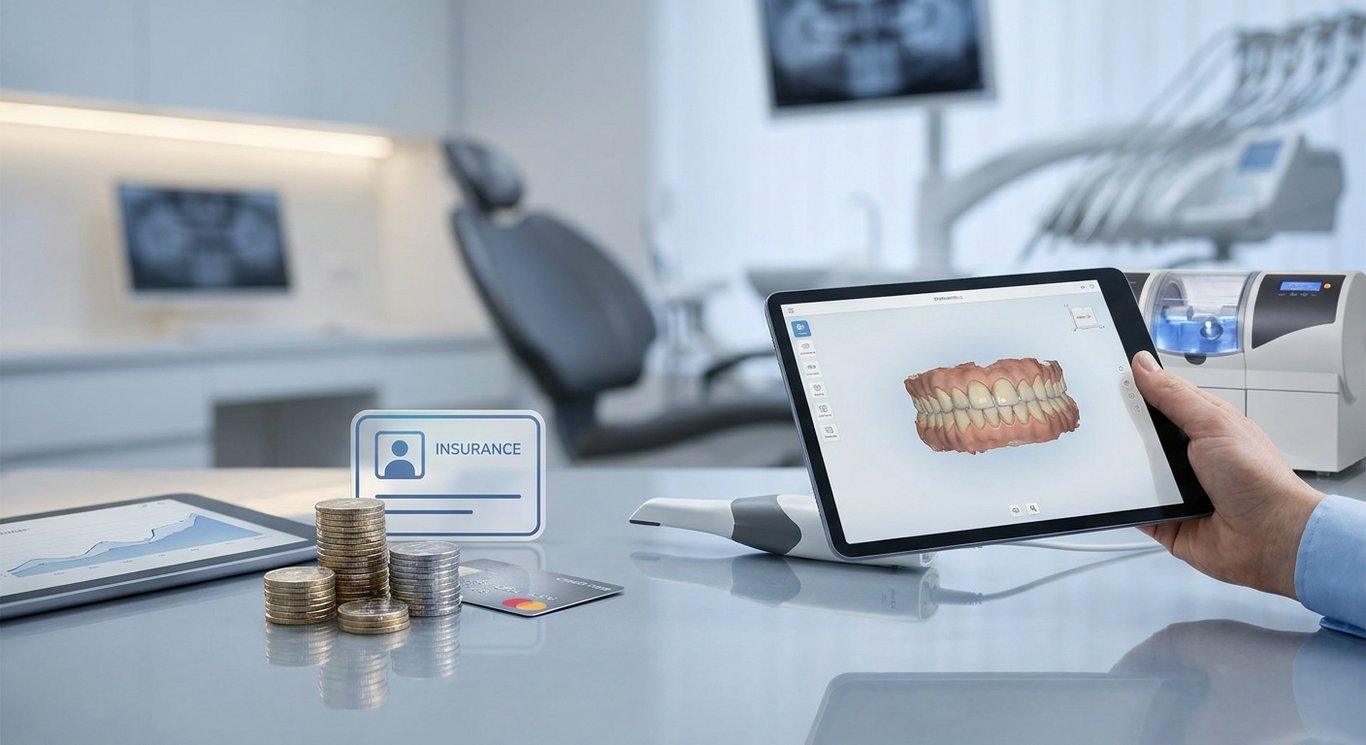
When it comes to the cost of digital dental care, the picture is a bit nuanced. In many cases, digital technology is simply part of how a procedure is performed, and the cost is included in the overall fee for that treatment — just as the cost of equipment and materials has always been built into dental fees. For example, if your dentist uses an intraoral scanner to take a digital impression for a crown, you're likely just being charged for the crown, not separately for the scan. In other situations — particularly for diagnostic imaging like CBCT — there may be a separate fee that shows up on your treatment estimate. Understanding how costs are structured at your specific practice helps you avoid surprises.
Before any treatment begins, it's always a good idea to ask for an itemized written estimate. This gives you a clear breakdown of what you're being charged for and why. Ask your dental team which items may be covered by your insurance plan, what your out-of-pocket responsibility will be, and whether the practice offers payment plans or financing options. It's also reasonable to ask whether choosing a different workflow — for example, a lab-fabricated crown instead of a same-day milled one — would change the cost. Some practices may charge differently depending on the method used, and knowing your options helps you make an informed financial decision alongside your clinical one.
Access to digital dentistry varies quite a bit depending on where you live and which practice you visit. Larger urban practices and specialty offices tend to have more advanced technology, while smaller or rural practices may offer more limited digital capabilities — not because of a lack of skill, but because of the significant investment required to purchase and maintain this equipment. The cost of intraoral scanners, CBCT units, milling machines, and AI software can be substantial, and not every practice can or will invest in all of them. This means that the digital tools available to you may depend on your geographic location, your insurance network, and the individual practice you choose. It's worth asking what technology a practice uses when you're selecting a new dental provider.
Safety, Privacy, and Limitations of Digital Dental Technology
Digital dental technology is generally designed with patient safety in mind, but a few important principles are worth understanding. Radiation-based imaging — including digital X-rays and CBCT — should always be prescribed based on clinical need, not used routinely without justification. Intraoral scanners come into contact with your mouth, so proper sterilization between patients is essential. Most modern scanners have removable, autoclavable tips that are sterilized between uses, and the main body of the device is disinfected according to infection control protocols. Staff training also matters enormously — even the best technology produces poor results if it isn't used correctly. Asking about staff training and equipment maintenance is a completely reasonable thing to do.
The privacy of your digital dental records is another important consideration. Your scans, X-rays, photographs, and clinical notes are stored electronically, which means they need to be protected against unauthorized access. Reputable dental practices use secure, encrypted systems, restrict access to authorized personnel, and comply with applicable health privacy laws. If your records are shared with a dental laboratory or specialist, that sharing should happen through secure channels. You have the right to know how your information is stored, who can access it, and under what circumstances it might be shared. If you have concerns about data privacy, ask your dental team directly — they should be able to explain their policies clearly and confidently.
Like any technology, digital dental tools have real limitations that patients should be aware of. Intraoral scanners can struggle in areas with excessive saliva, blood, or limited mouth opening, and scans can have gaps or errors that require retaking. Software has limitations in what it can design or simulate, and AI tools are only as good as the data they were trained on. Not every practice has access to every type of technology, and in some situations — such as full-arch implant cases or complex prosthodontic work — traditional laboratory fabrication by a skilled technician may actually produce a superior result. Digital dentistry is a powerful set of tools, but it isn't a universal solution, and experienced clinicians know when to use it and when to rely on other methods.
How to Choose a Dentist Using Digital Technology
If you're looking for a dentist who uses digital technology, it's worth doing a little homework before you commit. Some useful questions to ask include: What type of intraoral scanner does the practice use? Do they offer digital X-rays and CBCT imaging? Do they have in-office CAD/CAM milling, or do they send designs to an outside laboratory? Do they use AI-assisted image analysis? How often is the equipment serviced and calibrated? Are staff members formally trained in using these systems? Do they work with certified dental laboratories, and if so, how is digital data transferred securely? These questions will give you a much clearer picture of what to expect from the practice and how seriously they take the technology they've invested in.
At the same time, it's important not to choose a dentist based on technology alone. A practice with impressive equipment but poor communication, rushed appointments, or inadequate clinical training isn't serving you well — regardless of how modern the tools are. The qualities that matter most in a dental provider remain the same as they've always been: thorough diagnosis, clinical experience, clear communication, respect for informed consent, a commitment to safety, and a genuine interest in your long-term oral health. Digital technology is a valuable enhancement to good dentistry, but it's not a substitute for it. Choose a dentist you trust, who listens to you, and who uses technology thoughtfully in service of your care.
Frequently Asked Questions About Digital Dentistry
Is digital dentistry safe?
Yes — digital dental tools are generally designed to support safe, effective care. Intraoral scanners are non-invasive and painless, and they're sterilized between patients. Digital X-rays and CBCT imaging involve radiation, but the doses are carefully managed and imaging is only prescribed when it's clinically justified. As with any aspect of dental care, safety depends on proper use, well-maintained equipment, and qualified professionals interpreting the results. If you have specific concerns about a particular technology, your dentist should be able to explain how it's used, why it's recommended for your situation, and what safety measures are in place.
Are digital impressions more comfortable than traditional impressions?
Many patients find intraoral scanning significantly more comfortable than traditional impressions, primarily because there's no impression material to fill your mouth and no tray to hold in place. For people who experience a strong gag reflex, this difference can be substantial. That said, comfort can vary depending on factors like how wide you can open your mouth, whether you have sensitive teeth or gums, and the skill and technique of the person performing the scan. In most cases, patients who were previously anxious about impressions find the digital version much more manageable — and some even find it interesting to watch their teeth appear on the screen in real time.
Can a dentist make a crown in one day?
In many cases, yes — practices equipped with in-office CAD/CAM milling systems can design and fabricate certain crowns, inlays, onlays, and other restorations in a single visit. However, whether same-day treatment is appropriate for you depends on several factors, including the location and complexity of the tooth being restored, the material being used, your bite and occlusal needs, and whether any additional laboratory steps are required. Some restorations are better served by traditional laboratory fabrication, particularly when highly specific shade matching or complex bite adjustments are needed. Your dentist will evaluate your situation and let you know whether same-day treatment is a good fit.
Does digital dentistry cost more?
Not necessarily — and in some cases, it may actually save you money over time. While digital equipment represents a significant investment for dental practices, the costs are typically incorporated into procedure fees rather than charged as a separate premium. Same-day crowns, for example, may eliminate the cost and inconvenience of a temporary restoration and a second appointment. That said, some diagnostic imaging — particularly CBCT — may carry an additional fee. The best approach is to request a written, itemized estimate before any treatment begins, confirm what your insurance plan covers, and ask whether different workflow options would affect the total cost. Transparency upfront prevents surprises later.
Will artificial intelligence replace my dentist?
No — and this is an important distinction to understand clearly. AI tools currently used in dentistry are designed to assist dental professionals, not replace them. They can help flag areas of concern on X-rays, organize records, and support planning workflows, but they cannot examine a patient, take a medical history, exercise clinical judgment, or take responsibility for a diagnosis. Every treatment decision — including whether to trust an AI finding — remains the responsibility of a qualified dental professional. Diagnosis, informed consent, and patient care are fundamentally human responsibilities, and that isn't changing anytime soon. AI is a useful tool in the hands of a skilled dentist, not a replacement for one.
Key Takeaways: Making an Informed Digital Dentistry Decision
Digital dentistry has genuinely changed what's possible in dental care, and the benefits are real. More comfortable impressions, clearer visualization of dental anatomy, faster workflows for eligible treatments, personalized restorations built from precise digital data, and more thorough treatment planning are all meaningful improvements over older methods. For many patients, these advances translate into less anxiety, fewer appointments, and greater confidence in their care. But the most important thing to remember is that technology works best when it's paired with sound clinical judgment and honest, open communication between you and your dental provider. The best digital dental practice isn't the one with the most gadgets — it's the one that uses them thoughtfully in the service of your health.
If you're curious about how digital tools might improve your own dental care, the best next step is to schedule a consultation and start asking questions. Find out which technologies your dentist uses, what each procedure involves, how much it costs and what your insurance covers, and how your personal health information is protected. Ask about alternatives if something doesn't feel right for your situation. Use this guide as a starting point for those conversations — it's designed to help you walk into your next appointment feeling informed, prepared, and ready to advocate for yourself. Discussing "A Patient's Guide to Digital Dentistry: How Technology Is Creating Faster, More Comfortable Care" with a qualified dental professional is one of the best ways to figure out what modern dentistry can do for you specifically.