Beyond Implants: A Comparative Guide to All Tooth Replacement Options
Published 21 min read
Understanding Tooth Loss and Replacement Needs
Tooth loss is far more common than most people realize, and it happens for a surprising variety of reasons. Severe tooth decay, advanced gum disease (also called periodontal disease), facial injuries, and even certain medical conditions can all lead to losing one or more teeth. Beyond the obvious gap in your smile, missing teeth create real, everyday problems. Chewing becomes harder, which can affect your diet and nutrition. Speech patterns can shift, making certain sounds difficult to pronounce clearly. And of course, there's the confidence factor — many people feel self-conscious about their smile after tooth loss, which can affect social interactions and overall quality of life.
Replacing a missing tooth isn't just about looks, though that matters too. When a tooth is gone, the jawbone underneath it no longer receives the stimulation it needs to stay dense and healthy. Over time, this leads to bone loss, which can change the shape of your face and make future dental work more complicated. Neighboring teeth may also shift into the empty space, throwing off your bite. The good news is that there are more tooth replacement options available today than ever before — and implants, while excellent, are just one piece of the puzzle. From bridges and dentures to snap-in hybrids, there's a solution for nearly every situation and budget.
Overview of All Tooth Replacement Options
When it comes to replacing missing teeth, the options generally fall into a few main categories. Fixed restorations, like dental bridges, are cemented in place and stay in your mouth permanently. Removable options, like partial and full dentures, can be taken out for cleaning and sleeping. Then there are implant-supported hybrids — solutions that combine the stability of implants with the coverage of dentures — such as snap-in dentures and All-on-4 systems. Finally, there are smaller-scale alternatives like mini dental implants (MDIs) that offer a middle ground for patients who aren't candidates for traditional implants. Each category has its own strengths, and none of them is universally "the best."
Choosing between these options means weighing several important factors. Durability is a big one — some solutions last a lifetime with proper care, while others need to be replaced every several years. Cost plays a major role for most patients, as prices range from a few hundred dollars to tens of thousands. Invasiveness matters too, especially for patients who want to avoid surgery. And suitability is key — not every option works for every mouth. A patient with significant bone loss, for example, may not be a candidate for certain procedures without additional preparation work.
Perhaps the most important thing to understand is that tooth replacement is deeply personal. Two people with the same number of missing teeth might end up with completely different treatment plans based on their bone density, the health of their remaining teeth, their lifestyle, and their financial situation. Someone who plays contact sports might prioritize stability over cost. A retiree on a fixed income might lean toward affordability. A young professional might place more weight on aesthetics and long-term value. That's why a thorough conversation with your dentist is so essential — the "right" choice is the one that fits your unique circumstances.
Dental Bridges: Fixed Support Using Adjacent Teeth
A dental bridge is exactly what it sounds like — a prosthetic tooth (or teeth) that "bridges" the gap left by a missing tooth, anchored on either side by the neighboring teeth. The most common type is the traditional bridge, where the adjacent teeth are filed down and capped with crowns that support the false tooth in the middle. Cantilever bridges use only one anchor tooth, which is useful when there's only one healthy neighbor available. Maryland bridges use a metal or porcelain framework bonded to the backs of adjacent teeth, making them less invasive since the neighboring teeth don't need to be heavily reshaped. Bridges feel natural, function well for chewing, and are a well-established solution with a long track record in dentistry.
That said, bridges come with some notable drawbacks worth considering. The biggest concern with traditional bridges is that healthy adjacent teeth must be ground down significantly to accommodate the crowns — a permanent and irreversible change. If those teeth were perfectly healthy before, this can feel like a real trade-off. Bridges also typically last between 10 and 15 years before they need replacement, which means additional cost down the road. Because the false tooth doesn't connect to the jawbone, bone loss can still occur beneath it over time. Cleaning under a bridge requires special tools like floss threaders, and if the bridge isn't maintained well, decay can develop underneath the crowns.
Removable Partial Dentures: For One or More Missing Teeth
Removable partial dentures are designed to fill in specific gaps when some natural teeth still remain. They consist of replacement teeth attached to a base that's usually made of acrylic (plastic) or a combination of acrylic and a metal framework, which provides added strength and a slimmer fit. Small clasps or connectors attach the partial denture to the remaining natural teeth, holding it in place during the day. Partials are custom-made to fit the unique shape of each patient's mouth and can replace multiple missing teeth in different areas of the arch at the same time.
One of the biggest appeals of partial dentures is their affordability and the fact that no surgery is required. They're a practical, accessible option for patients who want to restore function and appearance without a major financial or physical commitment. However, they do come with some real-world challenges. Partials can feel loose or shift when eating or speaking, which some patients find frustrating. The clasps that hold them in place can put pressure on natural teeth over time. Some people experience soreness or irritation where the denture contacts the gums, especially during the adjustment period. With patience and proper fit, many patients adapt well — but it's important to go in with realistic expectations.
Full Dentures: Complete Arch Replacement
Full dentures are used when all of the teeth in an arch — either the upper, lower, or both — are missing or need to be removed. There are two main types: immediate dentures and conventional dentures. Immediate dentures are made in advance and placed in the mouth right after teeth are extracted, so the patient is never without teeth. Conventional dentures, on the other hand, are made after the gums and bone have healed from extractions, which typically takes a few months. The fitting process involves taking detailed impressions of the mouth and carefully matching the shape, size, and color of the dentures to the patient's facial structure. There's always an adjustment period where the mouth gets used to the new appliance — and patience is genuinely required during this time.
Full dentures are among the most affordable tooth replacement options available, generally ranging from about $1,500 to $3,000 for a full set. That accessibility makes them a lifeline for many patients. However, they're not without their challenges. Because dentures sit on top of the gums rather than integrating with the jawbone, they don't stimulate the bone — which means bone loss continues over time. This gradual change in jaw shape causes dentures to become loose, leading to slippage while eating or talking. Dentures typically need to be relined every five to eight years to maintain a good fit, and eventually replaced entirely. Adhesive products can help with stability, but many patients find them messy and inconvenient.
Snap-In and Implant-Supported Dentures
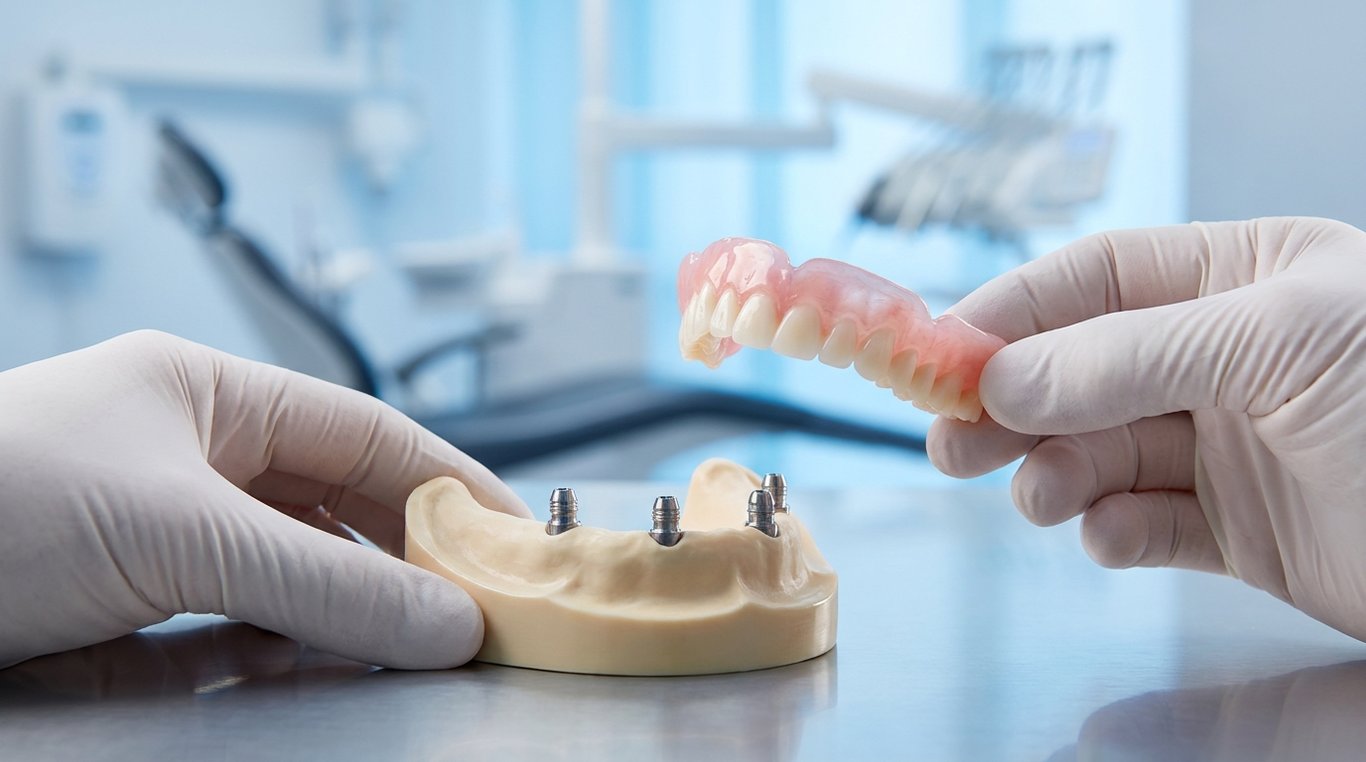
Snap-in dentures — also called overdentures — are a clever hybrid between traditional removable dentures and dental implants. Instead of relying solely on suction and gum contact for stability, snap-in dentures attach to small implants or implant anchors placed in the jawbone. The denture literally "snaps" onto these anchors, giving it a much more secure fit than conventional dentures. Patients can still remove them for cleaning, but throughout the day they stay firmly in place without the worry of slipping or shifting during meals and conversations.
For patients who are missing an entire arch of teeth, the All-on-4 or All-on-X systems offer a more comprehensive implant-supported solution. These systems use just four to six strategically placed implants to support a full arch of fixed or removable teeth. Because the implants are angled for maximum use of available bone, many patients who don't have enough bone for traditional full-arch implants can still qualify for All-on-4. The cost for these systems typically runs between $15,000 and $30,000 per arch, which is a significant investment — but for many patients, the results are life-changing.
The advantages of snap-in and implant-supported dentures over traditional dentures are substantial. Retention is dramatically better, meaning far less movement during eating and speaking. Because the implants do interact with the jawbone, they provide at least some stimulation that helps slow bone loss — a major benefit over conventional dentures. On the flip side, these options are considerably more expensive than basic dentures, and they still require some surgical procedure to place the implants. For snap-in dentures specifically, the prosthetic portion is still removable, which some patients see as a limitation compared to fully fixed options. Still, for many people, this middle-ground solution hits the sweet spot.
Mini Dental Implants (MDIs): Smaller Scale Solutions
Mini dental implants are a scaled-down version of traditional implants, roughly half the diameter of a standard implant. This smaller size makes them particularly useful for patients who have experienced significant bone loss and don't have enough bone volume to support a full-sized implant — at least not without extensive bone grafting. MDIs can be used to anchor dentures, providing much better stability than dentures alone, or in some cases to support small crowns in areas where spacing is limited. They've opened up implant-based solutions to a broader range of patients who previously had few options beyond traditional dentures.
The placement process for mini implants is considerably less invasive than that of standard implants. In many cases, they can be placed in a single appointment with minimal drilling, using only local anesthesia. Recovery time is shorter, and the overall procedure is gentler on the patient. This makes MDIs an appealing option for older patients or those with health conditions that make more extensive surgery risky. They're not the right choice for every situation — they're generally not as strong or as long-lasting as full-sized implants — but when traditional implants aren't feasible, mini implants can be an excellent and practical alternative worth discussing with your dentist.
Cost Comparison Across Tooth Replacement Options
Understanding the cost landscape for tooth replacement helps set realistic expectations before walking into a dental office. Dental bridges typically range from $2,000 to $5,000 depending on the number of teeth being replaced and the materials used. Partial dentures generally fall between $1,500 and $3,000, while a complete set of full dentures sits in a similar range. A single traditional dental implant, by comparison, usually costs between $3,000 and $6,000 per tooth when you factor in the implant post, abutment, and crown. Implant-supported systems like All-on-4 can reach $15,000 to $30,000 per arch, making them the most significant investment of all the options.
These base prices don't tell the whole story, though. Geographic location has a big impact — dental costs in major metropolitan areas tend to be significantly higher than in smaller towns or rural areas. The materials chosen also affect price considerably; zirconia crowns and bridges cost more than traditional porcelain-fused-to-metal options, but they're often more durable and more aesthetically pleasing. Additional procedures like bone grafting, tooth extractions, or treatment for gum disease before getting a restoration can add anywhere from a few hundred to several thousand dollars to the total. It's always worth asking your dentist for a complete treatment plan with itemized costs before committing.
Long-term costs are just as important to consider as upfront prices. A full denture might cost $2,000 today, but factor in relining appointments every few years, replacement sets every decade or so, and adhesive products — and the total cost over 20 years adds up significantly. Bridges, while less expensive than implants upfront, typically need replacement after 10 to 15 years, which means another $2,000 to $5,000 down the line. Traditional implants, despite their higher initial cost, often last a lifetime with proper care, potentially making them more cost-effective in the long run for younger patients. When comparing options, it pays to think in decades, not just today's bill.
Pros and Cons: Which Option Fits Your Lifestyle?
When you line up all the options side by side, some clear patterns emerge. Dental implants, when they're an option, offer unmatched durability — they can last a lifetime with proper care. Bridges offer good stability and a natural feel but come with a 10-to-15-year lifespan and the sacrifice of healthy adjacent teeth. Traditional dentures are the most affordable but require the most daily management and offer the least stability. Snap-in dentures and All-on-4 systems fall in the middle — more stable than traditional dentures, less invasive than full individual implants, but at a higher cost. Daily care varies too: bridges require floss threaders and careful cleaning around the crowns, while dentures need to be removed and soaked nightly. Implants, by contrast, are cared for just like natural teeth.
Matching the right option to your lifestyle really comes down to priorities. If you have strong, healthy teeth on either side of the gap and want a fixed solution without surgery, a bridge is a solid choice. If budget is your primary concern and you're missing many or all of your teeth, traditional dentures provide a functional, affordable solution. If you want better stability than dentures but aren't ready for full implant surgery, snap-in dentures or All-on-4 offer a compelling middle ground. And if you're an active person who wants to eat anything, forget about your teeth, and invest in a long-term solution, traditional implants or implant-supported fixed restorations may well be worth the higher upfront cost. There's genuinely no wrong answer — just the answer that fits your life.
Candidacy and Preparation for Non-Implant Options
Not everyone is an equally good candidate for every tooth replacement option, even the non-surgical ones. For bridges, the adjacent teeth need to be healthy and strong enough to support the additional load — teeth weakened by decay, large fillings, or gum disease may not be suitable anchors. For dentures, the overall health of the gums and remaining bone structure matters, as poorly fitting dentures over compromised tissue can cause ongoing irritation and sores. Patients with certain systemic health conditions, like uncontrolled diabetes, may need to get those conditions better managed before proceeding with any restorative dental work. Even for removable options, a healthy oral foundation makes for better outcomes.
Before any tooth replacement procedure begins, your dentist will conduct a thorough examination that typically includes X-rays and possibly 3D imaging to assess bone levels and the condition of remaining teeth. Detailed impressions or digital scans of your mouth are taken to ensure the restoration fits precisely. In some cases, preparatory steps are needed first — this might include extracting failing teeth, treating active gum disease, or waiting for extraction sites to heal before taking final impressions. It might feel like a lot of steps before you even get to the actual replacement, but this preparation phase is what sets the stage for a restoration that fits well, functions properly, and lasts as long as possible.

Long-Term Maintenance and Care Tips
Every tooth replacement option requires some level of daily care to stay clean, functional, and long-lasting. For dental bridges, the most important habit is cleaning underneath the false tooth — food and bacteria love to collect in that space, and without proper cleaning, decay can develop on the anchor teeth. Floss threaders or water flossers make this much easier. For dentures, the daily routine involves removing them, brushing them with a soft brush and denture cleaner (not regular toothpaste, which is too abrasive), and soaking them overnight to keep them moist and maintain their shape. Snap-in dentures follow a similar process, with the addition of cleaning around the implant attachments in the gums. Keeping the gum tissue healthy around any restoration is just as important as caring for the prosthetic itself.
Regular dental visits are non-negotiable for anyone with a tooth replacement, regardless of the type. Your dentist can spot early signs of wear, check the fit of dentures or bridges, and identify any issues with the surrounding teeth and gums before they become serious problems. Dentures typically need professional relining every few years as the jawbone changes shape, and they generally need full replacement every seven to ten years. Bridges should be checked regularly for loosening or decay around the crowns. Even implant-supported restorations benefit from routine professional cleanings. Knowing the expected lifespan of your specific restoration — and planning for it financially — takes a lot of stress out of the equation down the road.
Patient Stories and Real-World Outcomes
Patients who choose dental bridges often describe the experience positively in terms of how natural the restoration feels day to day. Once the adjustment period passes, most people forget the bridge is even there. However, a common theme in long-term bridge wearers is the challenge of keeping the area clean — many patients admit they didn't realize how much effort it would take to maintain hygiene under the bridge until they were already dealing with it. Those who stay on top of their cleaning routine tend to get the full lifespan out of their bridge, while those who struggle with maintenance sometimes face complications earlier than expected. Overall, bridges earn high marks for function and feel, with hygiene being the main ongoing challenge.
Patients who upgrade from traditional dentures to snap-in or implant-supported dentures frequently describe the change as transformative. The ability to eat foods they had avoided for years — crunchy vegetables, apples, even steak — is a commonly cited benefit. Many report that the confidence boost from not worrying about their teeth shifting during a conversation or a meal is enormous. The improved stability also reduces gum irritation, since the denture isn't rocking back and forth with every bite. For patients who had struggled with conventional dentures for years, snap-in solutions often represent a significant and very welcome improvement in daily quality of life — one that many wish they had pursued sooner.
FAQ
Are dental bridges better than dentures for single tooth replacement?
For replacing a single missing tooth, a dental bridge is generally considered the more practical fixed option compared to a removable partial denture. A bridge stays in place permanently, functions more like a natural tooth, and doesn't need to be removed for cleaning. The key requirement is that the teeth on either side of the gap are healthy and strong enough to serve as anchors — if they are, a bridge can be an excellent choice. A partial denture, while removable and less expensive, can feel less stable and may take more getting used to. That said, if the adjacent teeth are compromised or if surgery for an implant isn't an option, a partial denture remains a perfectly valid solution worth considering.
How much do non-implant options like dentures cost compared to implants?
Traditional full dentures typically cost between $1,500 and $3,000, making them significantly more affordable upfront than dental implants, which generally run $3,000 to $6,000 per single tooth. For patients replacing an entire arch, the cost difference is even more dramatic. However, it's important to factor in the long-term picture: dentures require relining, adjustments, and eventual replacement over the years, all of which add to the total cost over time. Implants, while expensive upfront, often last decades or even a lifetime with proper care, potentially making them more economical in the long run — especially for younger patients who will be living with the restoration for many years.
Can partial dentures prevent bone loss like implants?
Unfortunately, no — partial dentures do not prevent jawbone loss the way dental implants do. Implants are unique in that they integrate directly with the jawbone, mimicking the root of a natural tooth and providing the stimulation the bone needs to maintain its density. Partial dentures rest on top of the gums and don't transmit that stimulation to the underlying bone. Over time, the jawbone in areas beneath a denture can continue to resorb (shrink), which changes the shape of the jaw and causes the denture to fit less well. This is one of the most significant long-term disadvantages of denture-based solutions compared to implant-based ones.
What are snap-in dentures, and who are they for?
Snap-in dentures are removable dentures that attach to small implants or implant anchors placed in the jawbone, giving them a much more secure fit than conventional dentures that rely on suction alone. They're designed for patients who want the improved stability and confidence of implant-supported teeth but aren't ready for — or aren't candidates for — a fully fixed implant restoration. They're particularly popular among patients who have struggled with loose or uncomfortable traditional dentures and want a noticeable upgrade without undergoing extensive surgery. Because fewer implants are needed than for a full fixed restoration, snap-in dentures are also more affordable than comprehensive implant solutions like All-on-4.
How long do tooth replacement options like bridges last?
The lifespan of a tooth replacement depends heavily on the type of restoration and how well it's maintained. Dental bridges typically last between 10 and 15 years before they need to be replaced, though excellent oral hygiene and regular dental visits can sometimes extend this. Traditional full and partial dentures generally last around 5 to 8 years before they need significant relining or replacement, as the jawbone changes shape over time and affects the fit. Dental implants, when properly placed and cared for, can last 20 to 30 years or even a lifetime — though the crown on top may need replacement after 10 to 15 years. The quality of materials and the patient's daily care habits play a big role in how long any restoration actually lasts.
Conclusion
There is no single "best" tooth replacement option — and that's actually a good thing. The wide range of solutions available today means that almost everyone, regardless of their health situation or budget, can find a path to a functional, confident smile. From the fixed stability of dental bridges to the affordability of traditional dentures, from the innovative convenience of snap-in systems to the smaller-scale accessibility of mini implants, each option has a real place in modern dentistry. The key is understanding what each one offers — and what it asks of you in return — so you can make an informed decision with your dental provider.
As you weigh your options, keep a few core principles in mind. Cost matters, but so does long-term value — the cheapest option today isn't always the most economical over a decade. Durability and daily comfort should reflect your lifestyle and expectations. Invasiveness is a real factor, especially if surgery is a concern. Bridges offer fixed simplicity for patients with healthy adjacent teeth; dentures provide broad accessibility for those prioritizing affordability; and hybrid solutions like snap-in dentures or All-on-4 offer a compelling balance of stability and cost. Above all, preserving your oral health — including your jawbone — should be a central consideration in whatever choice you make.
If you've been putting off addressing tooth loss because the options felt overwhelming, consider this your nudge to take the next step. Schedule a consultation with your dentist to discuss which tooth replacement solution aligns best with your oral health, lifestyle, and budget. A personalized evaluation — including imaging, a full exam, and an honest conversation about your goals — is the only real way to know which path is right for your unique smile. The options are better than ever, and the right one for you is out there waiting to be found.